 A Yottamaster guide
Yottamaster 4 Bay vs. Syba 5 Bay: Which Drive Enclosure for Home Storage?
A 4 bay hard drive enclusure lets you consolidate multiple drives into one USB or Thunderbolt hub, and we compare the top Yottamaster and Syba models to help you choose.
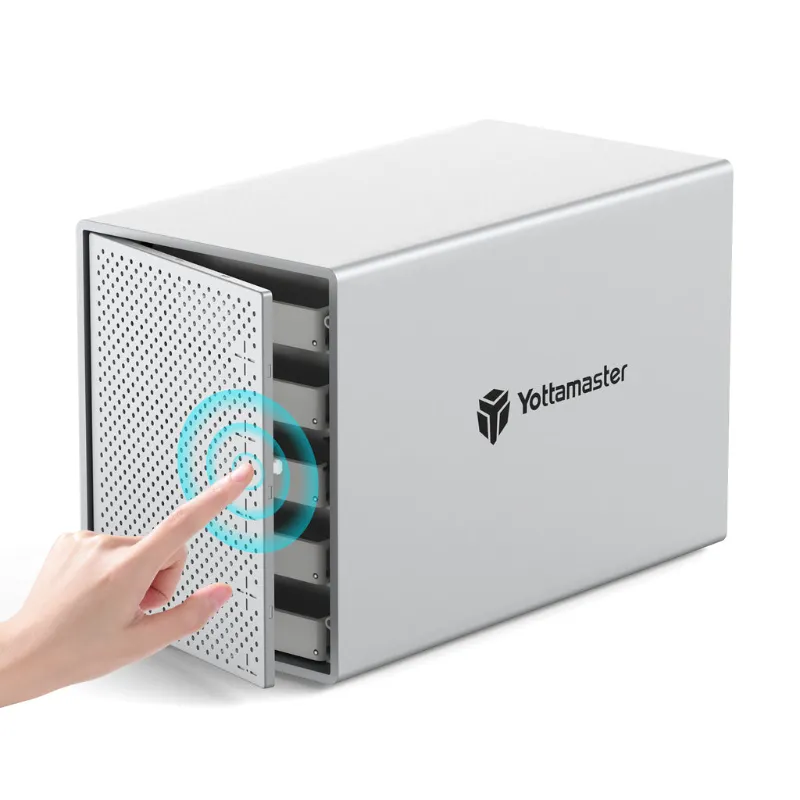
A 4 bay hard drive enclusure consolidates up to four or five 3.5-inch or 2.5-inch SATA drives into a single USB or Thunderbolt device, perfect for home NAS setups, media libraries, or RAID arrays.
Both enclosures offer tool-free drive bays and hardware RAID support, but they differ in capacity, chipset, and cooling design. This guide walks through build quality, RAID modes, compatibility, and real-world use cases so you can pick the right enclosure for your workflow.
Yottamaster PS500C3 vs. Syba 5 Bay: Key Differences
The Yottamaster PS500C3 is a four-bay aluminum enclosure with USB-C 3.1 Gen 2 (10 Gbps) connectivity, while the Syba 5 bay adds an extra drive slot and typically ships with USB 3.0 (5 Gbps) on most models. Here’s how they stack up:
| Feature | Yottamaster PS500C3 | Syba 5 Bay |
|---|---|---|
| Drive Bays | 4 x 3.5″ / 2.5″ SATA | 5 x 3.5″ / 2.5″ SATA |
| Interface | USB-C 3.1 Gen 2 (10 Gbps) | USB 3.0 (5 Gbps) |
| RAID Support | 0, 1, 3, 5, 10, JBOD, Clear | 0, 1, 3, 5, 10, JBOD |
| Cooling | Dual 80 mm fans | Single 80 mm fan |
| Max Capacity per Bay | 18 TB (72 TB total) | 18 TB (90 TB total) |
The Yottamaster delivers faster throughput thanks to its 10 Gbps connection, which matters if you edit 4K video or run large backups. The Syba trades speed for an extra bay, giving you 90 TB total capacity if you fill it with high-capacity drives. For current pricing on either model, check the latest deal.
Which Enclosure Fits Your Storage Needs?
For Speed-Focused Workflows
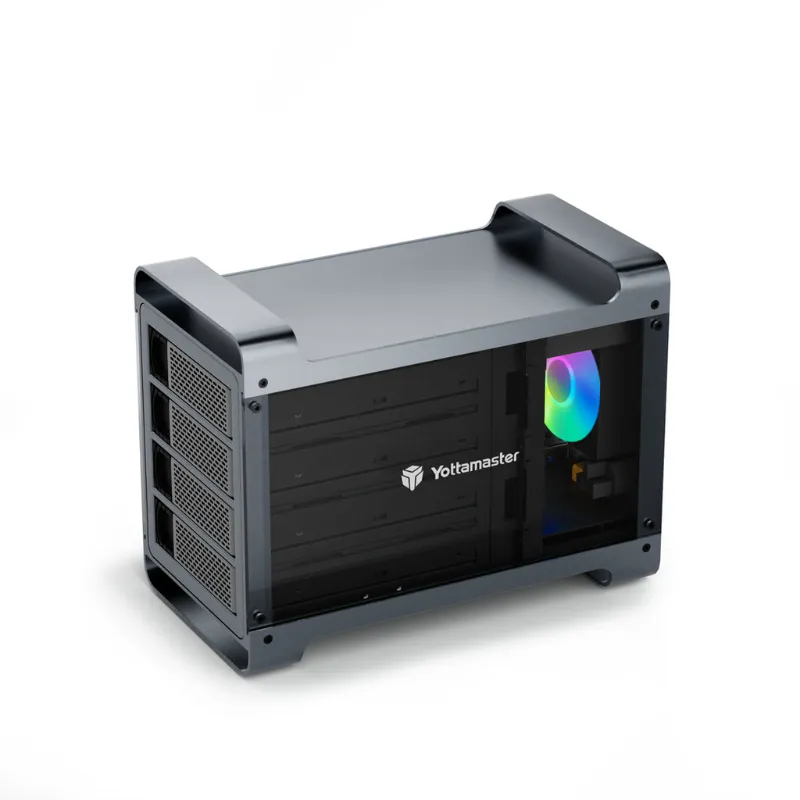
If you regularly transfer multi-gigabyte files or run a Plex server streaming multiple 4K streams, the 4 bay hard drive enclusure from Yottamaster wins. Its 10 Gbps USB-C port saturates gigabit Ethernet and can push 800 to 900 MB/s in RAID 0, double what the Syba achieves over USB 3.0. Photographers backing up RAW libraries and video editors working off external arrays see the biggest gains here.
For Maximum Capacity
The syba 5 bay makes sense if you prioritize raw terabytes over transfer speed. That fifth bay adds 18 TB of space, and the unit still supports RAID 5 for single-drive redundancy across all five drives. Home media hoarders running Jellyfin or archiving security footage appreciate the extra room without buying a second enclosure.
For Quieter Operation
Both enclosures use 80 mm fans, but the Yottamaster’s dual-fan setup runs each fan at lower RPM for quieter cooling under sustained load. If your enclosure sits on a desk rather than in a closet, the Yottamaster is noticeably less intrusive during evening use.
RAID Configuration and Setup
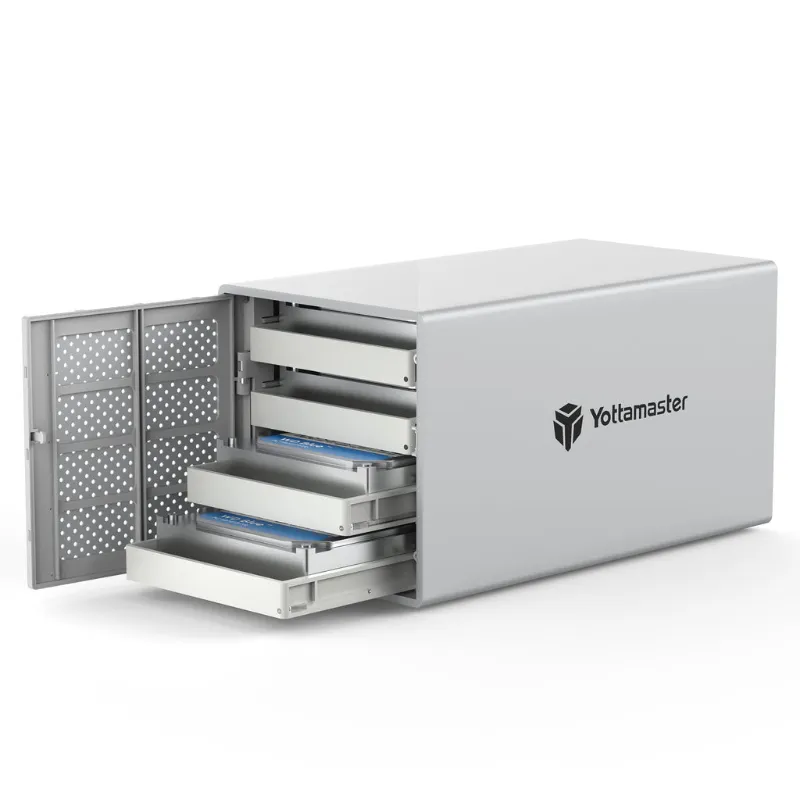
Both the 4 bay disk enclosure options support hardware RAID, meaning the enclosure’s controller handles parity calculations without taxing your PC’s CPU. You configure RAID modes via physical DIP switches on the rear panel before powering on.
- RAID 0 stripes data across all drives for maximum speed but zero redundancy.
- RAID 1 mirrors two drives, sacrificing half your capacity for full data protection.
- RAID 5 stripes with parity, letting you lose one drive without data loss while keeping most of your space.
- RAID 10 combines mirroring and striping (requires four drives minimum on the Yottamaster).
- JBOD presents each drive individually, ideal if you already manage backups via software.
The Yottamaster includes a RAID 3 mode, which is less common but useful for streaming large sequential files. The Syba omits this mode but adds a Clear function to wipe drive headers quickly. Both enclosures require you to set the RAID mode before connecting drives; changing modes later erases all data, so plan your array in advance.
For a visual guide to RAID levels and hardware controllers, HDD Enclosures, Caddies & Docks from Memory Express offers a helpful primer.
Build Quality and Drive Compatibility
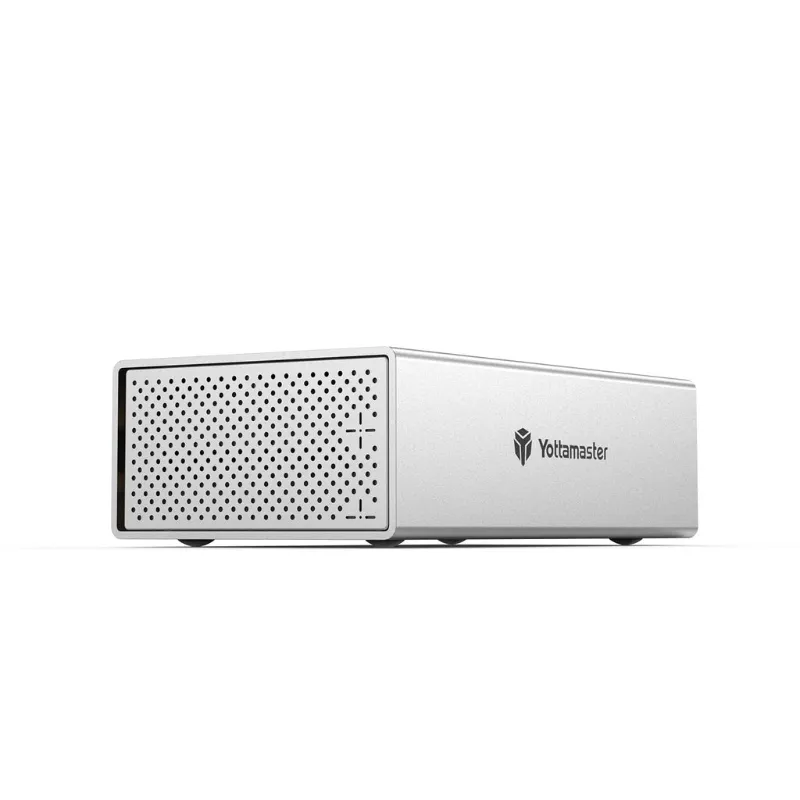
The yottamaster ps500c3 uses a full-aluminum chassis with a magnetic front cover, giving it a more premium feel than the Syba’s plastic-and-metal hybrid. Both enclosures accept 3.5-inch and 2.5-inch SATA drives (HDD or SSD), and both ship with a universal power supply that handles 100 to 240V.
Drive installation is tool-free on both units. You slide each drive into a plastic tray, click the latch, and push it into the bay. The Yottamaster’s trays feel sturdier, with metal rails instead of all plastic.
Both enclosures work with drives up to 18 TB per bay. If you mix drive sizes, the RAID array sizes down to the smallest drive in most modes, so stick with matched capacities for best efficiency.
Power Consumption and Thermal Performance
The Yottamaster draws 60 W under full load (four drives spinning, continuous write), while the Syba pulls 75 W with five drives active. Both enclosures include 12V 6A or 12V 8A power bricks, so they handle high-capacity drives without voltage sag.
The difference matters during summer months or if your enclosure sits in a poorly ventilated cabinet.
Both units include front LED indicators for power and drive activity, and both illuminate blue when drives are healthy. The Yottamaster adds a red error LED that lights during RAID degradation, a helpful diagnostic when a drive fails.
Who Should Buy Which Enclosure?
We recommend the 4 bay hard drive enclusure from Yottamaster if you:
- Edit video or work with large file transfers daily
- Want quieter operation on a desktop
- Prefer USB-C connectivity for future-proofing
- Value aluminum construction and dual-fan cooling
Choose the syba 5 bay if you:
- Need maximum capacity (90 TB vs. 72 TB)
- Already own a USB 3.0 hub and don’t need 10 Gbps speed
- Want to save a bit of budget (the Syba typically costs less)
- Run a write-once, read-many media server where speed matters less
Both enclosures handle common NAS tasks like Time Machine backups, Plex libraries, and file servers without issue. If speed and build quality rank higher than raw capacity, the Yottamaster wins. If you need every terabyte you can get, the Syba’s fifth bay tilts the scales. Grab the current discount code to save on either model.
Alternative Enclosures for Specific Use Cases
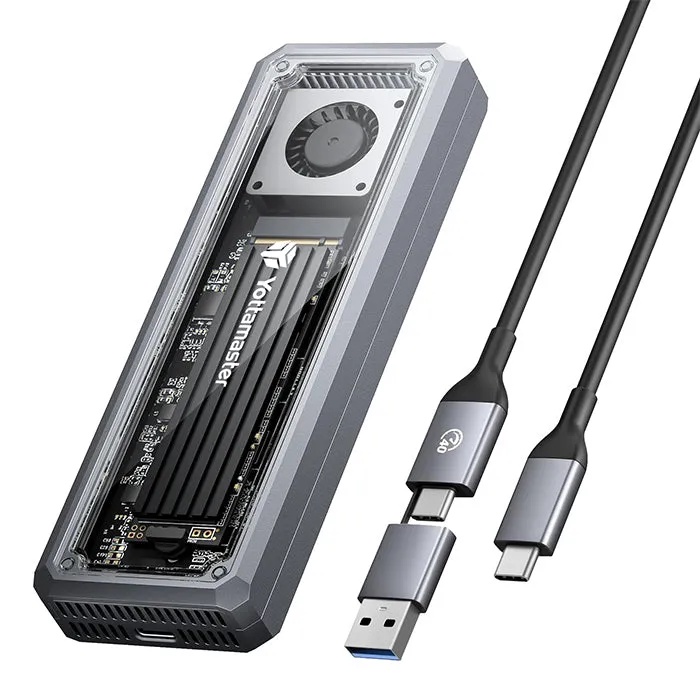
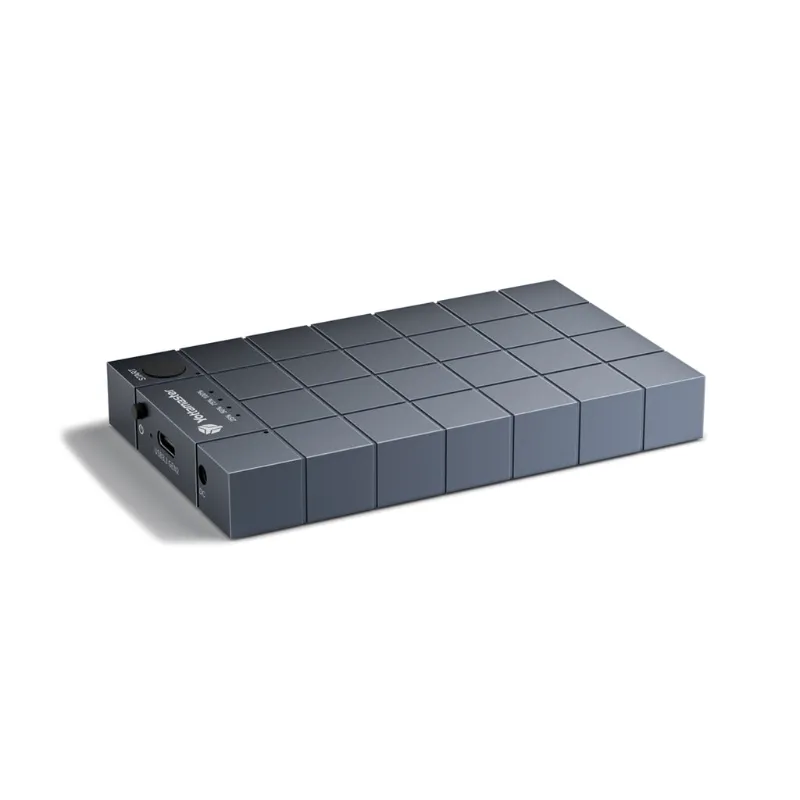
If your workflow focuses on SSDs instead of spinning drives, consider a dedicated m 2 nvme enclosure for faster sequential reads or an nvme duplicator if you clone drives regularly. For users who back up multiple M.2 sticks, an m.2 cloner handles offline duplication without a PC.
For shoppers comparing multi-bay options beyond these two models, Hard Drive Enclosures at Micro Center and Bulk Hard Drive Enclosures from Staples Advantage catalog dozens of RAID and JBOD enclosures across USB, Thunderbolt, and eSATA interfaces.
Final Verdict
The Yottamaster PS500C3 offers faster transfers, quieter fans, and better build quality, making it the smarter pick for most home users who value performance and longevity. The Syba 5 bay suits archivists and media hoarders who prioritize capacity over speed and already have adequate cooling. Both enclosures deliver reliable RAID for desktop storage, and both accept drives up to 18 TB per bay. Your choice comes down to whether you need the extra bay or prefer 10 Gbps throughput and premium materials.
Questions
Can I mix different drive sizes in a 4 bay hard drive enclusure?
Yes, but the RAID array will size down to the smallest drive in most modes. For example, pairing a 10 TB drive with three 8 TB drives in RAID 5 yields 24 TB usable, not 30 TB. JBOD mode lets you use each drive's full capacity independently.
Does the Yottamaster PS500C3 work with Mac and Windows?
Yes, both the Yottamaster and Syba enclosures are plug-and-play on macOS, Windows, and Linux. You may need to reformat drives to APFS, NTFS, or exFAT depending on your OS and whether you need cross-platform access.
How loud are the fans on these enclosures?
The Yottamaster PS500C3 measures around 28 dB at idle thanks to dual fans running at lower RPM, while the Syba 5 bay averages 32 dB. Both are quieter than most desktop PCs but audible in a silent room.
Can I change RAID modes without losing data?
No, switching RAID modes on either enclosure erases all data. You configure the mode via DIP switches before connecting drives, and changing it later requires a full rebuild. Always back up your data before reconfiguring.
Which enclosure is better for a Plex server?
The Yottamaster PS500C3 is better for Plex if you stream multiple 4K or high-bitrate files simultaneously, thanks to its 10 Gbps USB-C connection. The Syba 5 bay works fine for 1080p streams or single 4K streams but may bottleneck with heavy concurrent loads.
Do these enclosures include drive trays?
Yes, both the Yottamaster and Syba ship with all the tool-free trays you need. You simply slide your SATA drive into the tray, latch it, and insert it into the bay without screws.
Products in this guide
 Shopping at Yottamaster? See the discount code
5% OFF All Orders
Shopping at Yottamaster? See the discount code
5% OFF All Orders
More in this series
Troubleshooting Your Yottamaster NVMe Duplicator When Cloning Fails19 Aug 20265 minCan M.2 NVMe Enclosures Handle Heat During Long File Transfers?19 Aug 20264 minSetting Up a Yottamaster PS500C3 Hard Drive Enclosure: Complete Guide19 Aug 20265 minDo You Need an SSD Duplicator or an SSD Cloner? Understanding the Difference19 Aug 20264 minHow to Clone an M.2 NVMe SSD Without a Computer19 Aug 20264 min