 A Outdoor Master guide
Outdoor Master Paddle Board vs Traditional Hard Boards: Which Is Better for Beginners?
Choosing the right paddle board as a beginner often comes down to whether an inflatable or hard board fits your storage, transport, and budget needs.
Most beginners find that an inflatable paddle board offers easier storage and transport than a traditional hard board, making it the practical choice for anyone without a garage or roof rack. Hard boards deliver slightly better glide and responsiveness on flat water, but inflatables have closed the performance gap dramatically in recent years. If you are new to stand-up paddling, your decision hinges on how you plan to store, move, and use your board.
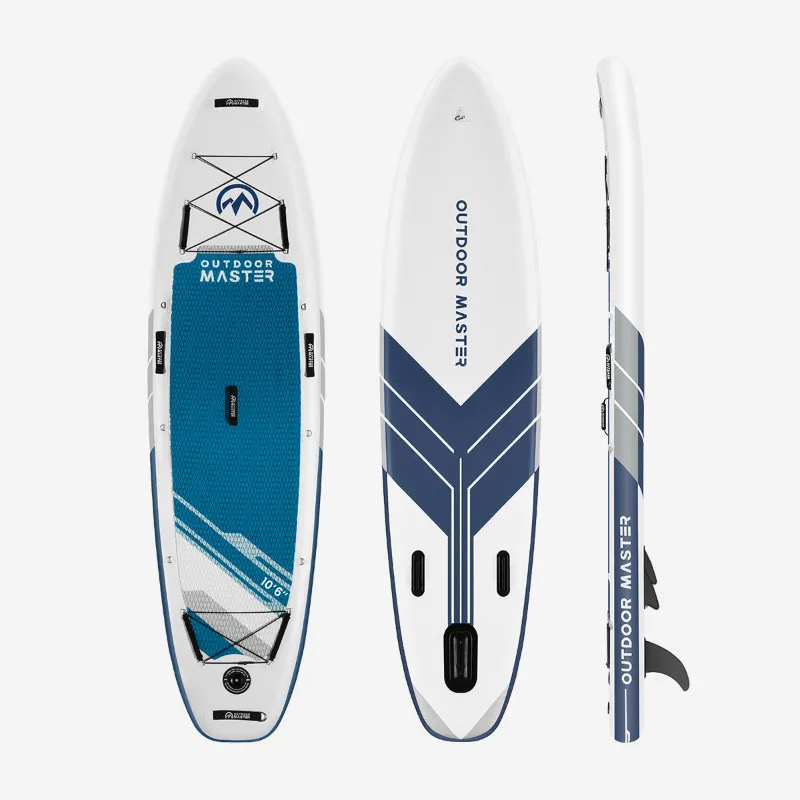
You can grab the code for 10% off the Outdoor Master paddle board and other gear before you commit.
What Makes Inflatable Paddle Boards Different
Inflatable boards use drop-stitch construction: thousands of polyester threads connect the top and bottom PVC layers, creating an air chamber that inflates to 12 to 15 PSI. When fully pumped, a quality inflatable feels remarkably rigid underfoot. You roll it into a backpack after deflating, which means you can store it in a closet, carry it on public transit, or check it as luggage on a flight.
Hard boards are built from foam cores wrapped in fiberglass, epoxy, or plastic. They deliver a solid platform with zero flex, but they weigh 25 to 35 pounds and require 10 to 12 feet of storage space. Transporting a hard board means roof racks, padding, and straps, which adds cost and complexity if you drive a sedan or live in an apartment.
Key construction differences:
- Inflatables fold into a 3-foot bag and weigh 15 to 20 pounds
- Hard boards need dedicated wall mounts or garage space
- Drop-stitch inflatables reach 12+ PSI for stiffness comparable to entry-level hard boards
- Epoxy hard boards offer the lightest weight and best glide in the hard-board category
Performance on the Water: Speed, Stability, and Responsiveness
Hard boards edge ahead in flat-water glide because their rigid hull cuts through chop with less drag. If you plan to paddle long distances on calm lakes or want to practice racing techniques, a hard board responds faster to subtle weight shifts and paddle strokes.
Inflatable boards feel slightly softer in the middle, especially in models under 6 inches thick. This minor flex absorbs small waves and makes the ride more forgiving for beginners still learning balance. Wider inflatables (32+ inches) offer excellent primary stability, so you spend less time falling and more time paddling. REI’s paddle board buying guide confirms that thickness and width matter more than construction type for beginner stability.
Performance trade-offs:
| Feature | Inflatable | Hard Board |
|---|---|---|
| Flat-water speed | Good | Excellent |
| Beginner stability | Excellent (wide models) | Good to excellent |
| Durability | High (bounces off rocks) | Moderate (dings easily) |
| Weight capacity | 250 to 350 lbs typical | 200 to 300 lbs typical |
If you paddle a few times per month on lakes or slow rivers, an inflatable paddle board delivers more than enough responsiveness.
Portability and Storage: The Deciding Factor for Many
Storage constraints push most beginners toward inflatables. A deflated board, pump, paddle, and repair kit fit into a backpack you can carry on one shoulder. You can stash it under a bed, in a car trunk, or in a hall closet without rearranging your home.
Hard boards demand car roof racks (adding $150 to $400 to your total cost) or a truck bed. If you rent or live in a small space, finding 11 feet of uninterrupted wall or ceiling clearance becomes a real challenge. Hard boards also risk UV damage if stored outdoors and can blow off racks in high winds if not secured properly.
For travel, inflatables win outright. You can check a rolled board as luggage, rent a car without racks, and paddle in remote locations accessible only by hiking trail. We have taken inflatables on flights to coastal destinations where renting a hard board would cost $50 per day.
Portability advantages:
- Inflatable boards pack into airline carry-on or checked luggage
- No roof racks or tie-down straps required
- One-person carry from car to water in a single trip
- Fits in apartment closets and small storage units
Check the latest price on the Outdoor Master inflatable option to see current bundles that include pump and paddle.
Durability and Maintenance Over Time
Inflatable boards resist impact damage better than hard boards. Drop-stitch PVC bounces off rocks, docks, and sandy beaches without denting or cracking. Small punctures from sharp objects are rare and repairable with a patch kit in under 20 minutes.
Hard boards chip and ding when they contact hard surfaces. Fiberglass and epoxy repairs require resin, sanding, and curing time. Even minor cosmetic damage can let water seep into the foam core, adding weight and weakening the structure. Plastic hard boards (roto-molded) handle abuse better but weigh significantly more and offer poor glide performance.
Both types need rinsing after saltwater use and UV protection during long-term storage. Inflatables should be stored partially inflated or loosely rolled to prevent creasing. Hard boards need wax removal if you apply traction wax, and you should inspect the fin box and leash plug annually for cracks.
Cost and Value: What You Get for Your Money
Entry-level inflatable boards start around $300 for a complete package with pump, paddle, leash, and bag. Mid-range models with dual-layer construction and better fin systems run $500 to $800. Premium inflatables with carbon rails and advanced shapes reach $1,200 but still include all accessories.
Budget hard boards begin near $400 for basic plastic models, but you need to add $100 for a paddle, $150+ for roof racks, and $30 for a leash. Quality fiberglass hard boards start at $700 bare and climb past $1,500 for epoxy or carbon construction. By the time you have a complete hard-board setup, you have often spent 40 to 60 percent more than an equivalent inflatable package.
Resale value favors hard boards slightly, especially premium epoxy models from recognized shapers. Inflatables depreciate faster, but their lower entry cost and included accessories still deliver better value for recreational paddlers who use their board 10 to 30 times per season.
Budget comparison:
- Complete inflatable package: $300 to $800 typical
- Hard board plus necessary accessories: $600 to $2,000+
- Roof rack system: $150 to $400 additional for hard boards
- Repair costs: $5 to $20 patch kit (inflatable) vs $30 to $100 fiberglass repair (hard)
Who Should Choose Each Type
Choose an inflatable paddle board if you live in an apartment, drive a sedan, want to travel with your board, or paddle casually on calm water. Inflatables suit beginners who value convenience and want to test the sport without a major financial commitment. Families often prefer inflatables because kids can bump into them without causing damage, and the boards double as floating docks for swimming.
Pick a hard board if you have dedicated storage space, own roof racks or a truck, plan to paddle several times per week, or want to progress into racing or surfing. Hard boards reward experienced paddlers who can exploit their superior glide and responsiveness. Coastal paddlers who launch from sandy beaches and paddle in moderate surf may also prefer the stability and drive of a hard board.
Many dedicated paddlers eventually own both: an inflatable for travel and spontaneous paddles, and a hard board for performance sessions close to home. Starting with an inflatable lets you learn the sport without the storage and transport barriers that cause many beginners to quit.
Making Your Final Decision
An inflatable paddle board removes the logistical friction that stops most beginners from paddling regularly. You avoid the storage Tetris, the roof-rack wrestling, and the fear of damaging an expensive hard board on your car or at the launch. For most new paddlers, convenience trumps the marginal performance advantage of a hard board.
Test both styles if possible. Rental shops and demo days let you compare how each type feels under your feet. Pay attention to how much effort setup and takedown require, because that 15-minute hassle factor determines whether you actually get on the water.
The Outdoor Master paddle board combines beginner-friendly width with a complete accessory package at a price that makes sense for recreational use. Visit our Outdoor Master discount code page to save 10% and get started without the guesswork.
Questions
Can inflatable paddle boards pop easily?
Quality inflatable boards built with drop-stitch construction are highly resistant to punctures. They can handle rocks, docks, and normal wear without popping. Small punctures are rare and easily repaired with a patch kit in minutes.
Do I need a special pump for an inflatable paddle board?
Most inflatable boards come with a dual-action hand pump that inflates on both the up and down stroke. Electric pumps are available as upgrades and save time, but the included hand pump works well for occasional paddlers and takes 5 to 8 minutes to reach full pressure.
How long does it take to inflate and deflate a paddle board?
Inflating to 12-15 PSI takes 5 to 8 minutes with a hand pump or 3 to 5 minutes with an electric pump. Deflating takes 2 to 3 minutes once you open the valve and roll the board from the nose toward the tail.
Will a hard paddle board perform better for surfing waves?
Hard boards offer quicker rail-to-rail response and tighter turns in surf, making them the preferred choice for dedicated wave riding. Inflatables can handle small waves and beach break but lack the precise control advanced surfers want in overhead conditions.
Can I leave my inflatable paddle board inflated all summer?
You can leave an inflatable board inflated for weeks or months as long as you keep it out of direct sunlight and avoid extreme temperature swings. Release a few PSI if temps will exceed 100°F to prevent over-pressure from heat expansion.
Are plastic hard paddle boards worth buying for beginners?
Plastic roto-molded boards are durable and affordable but significantly heavier and slower than fiberglass or inflatable options. They work for kids or very casual use but frustrate most beginners who want to cover distance or improve their technique.
Products in this guide
Shopping at Outdoor Master? See the discount code
10% OFF Sitewide
More in this series
 How Long Do Outdoor Master Ski Goggles Last with Regular Use?10 Aug 20264 min
 What Parents Need to Know Before Buying a Toddler Ski Helmet10 Aug 20266 min
 Complete Guide to Waxing Your Snowboard: When and How Often to Use a Wax Kit10 Aug 20265 min
 Do Neoprene Socks Actually Keep Your Feet Warm While Snorkeling?10 Aug 20264 min
 How to Choose the Right MIPS Ski Helmet for Your Head Shape and Riding Style10 Aug 20264 min