 A Outdoor Master guide
How Long Do Outdoor Master Ski Goggles Last with Regular Use?
Outdoor Master gives no lifespan for its goggles, but backs them with a 2-year warranty. Here is what wears out, how to clean and store them, and when a new lens is enough.
Outdoor Master does not publish a lifespan in seasons or ski days for its goggles, so the honest answer is that they last as long as the lens stays clear and fog-free and the frame, foam and strap hold up, which depends on how you clean and store them. What Outdoor Master does commit to is a 2-year warranty against defects in workmanship and materials, and on models with interchangeable lenses you can replace a damaged lens instead of the whole goggle. We keep the current code for Outdoor Master on its store page.
What Outdoor Master covers
Outdoor Master’s warranty page says its products are guaranteed free from defects in workmanship and materials for two years from the date of purchase, for the original buyer. Within that period it will, at its discretion, replace or refund a defective product, apart from reasonable shipping and handling charges. You need proof of purchase.
The warranty does not cover:
- Normal wear and tear.
- Damage from improper use or poor maintenance, or from ignoring the instructions in the manual.
- Damage from impact, twisting, compression or falls.
- Modified products, or goggles bought from unauthorised sellers.
So a goggle that fails because of a manufacturing fault in its first two years is covered; a lens scratched in a fall or worn out by rough cleaning is not. That makes care the main thing you control.
The parts that decide when to replace
Instead of counting seasons, check these four parts at the start of each winter and after any fall:
- The lens surface. Scratches in your line of sight that you notice while riding, especially in flat light, are a reason to replace the lens.
- The anti-fog layer. Outdoor Master’s goggles have an anti-fog coating on a double lens. If the inside now fogs where it did not before, the coating may be damaged.
- The foam and strap. Check that the face foam still seals against your face and the strap still holds the goggle firmly over your helmet.
- The frame. Look for cracks, especially around the strap mounts and the lens edge.
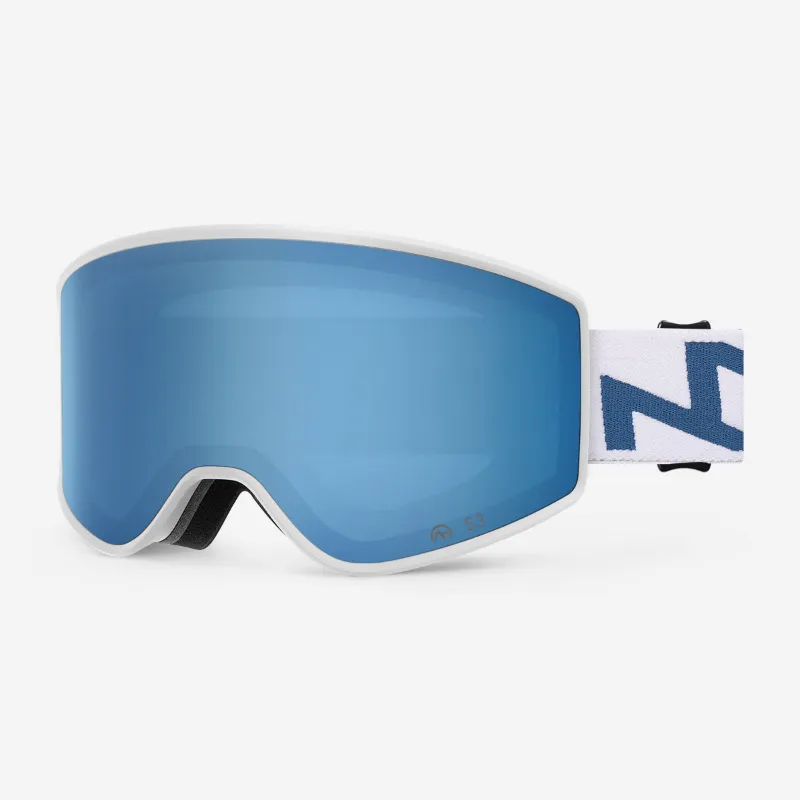
If only the lens is the problem and your goggle takes interchangeable lenses, a new lens may be all you need. Outdoor Master sells lens sets, and its FAQ says the lenses on its Ski Goggles PRO attach by magnets: hold the lens and pull to remove it. The PULSE cylindrical snow goggles use what Outdoor Master calls a lock and fit lens changing system.
Cleaning and storage that protect the lens
Outdoor Master’s FAQ gives one clear cleaning rule: to avoid damaging the anti-fog layer, clean the lens carefully with a soft cloth. Build the rest of your routine around that:
- Use the right cloth. The PULSE comes with a microfibre pouch that Outdoor Master says doubles as a cleaning cloth. Do not use paper towels or the sleeve of your jacket.
- Do not wipe the inside while it is wet. Let condensation or snow on the inside dry before you touch it.
- Dry them at room temperature after a day out, out of the case, before you put them away.
- Store them in a case or pouch. The PULSE comes with a protective case; for other models, a pouch keeps the lens away from keys and buckles in your bag.
- Do not leave them lens-down on hard or rough surfaces at lunch or in the car.
- Swap lenses with clean hands on interchangeable models, holding the lens by its edges.
Choosing a pair that suits how much you ski
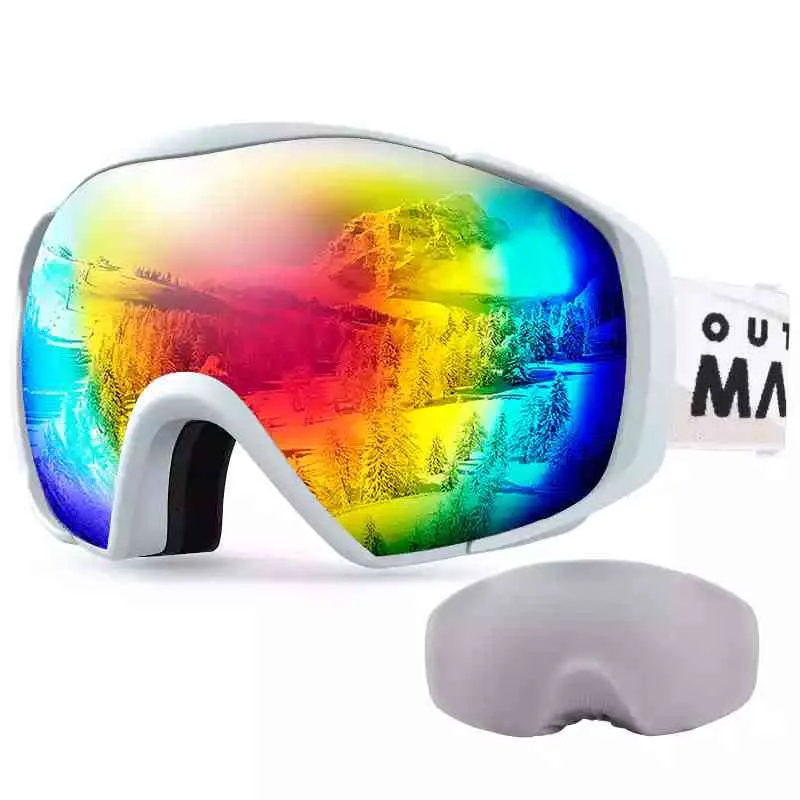
If you ski a few days a year and want a straightforward pair, the CLASSIC snow goggles are the model Outdoor Master positions for first-time skiers. Its page lists anti-fog, UV400 protection, an extra long strap for helmet compatibility and an over-the-glasses (OTG) design, in adult and teenager sizes, with a choice of lens tints listed by VLT (visible light transmission).
If you ski in changing light and would rather swap a lens than carry two goggles, choose a model with interchangeable lenses, such as the PULSE or Outdoor Master’s PRO series with magnetic lenses. Being able to replace just the lens also means a scratched lens does not retire the whole goggle.
On lens choice, Outdoor Master’s guide explains that a higher VLT lets more light through for cloudy days or night skiing, while a lower VLT suits bright, sunny days.
Before you buy
Outdoor Master’s product pages list 30-day returns alongside the 2-year warranty. Keep your receipt or order email, since the warranty needs proof of purchase, and contact Outdoor Master’s customer service with any claim.
Questions
How long do Outdoor Master ski goggles last?
Outdoor Master does not publish a lifespan. They last as long as the lens stays clear and fog-free and the frame, foam and strap hold up, which depends on care. Outdoor Master offers a 2-year warranty against defects.
What does the Outdoor Master goggle warranty cover?
Defects in workmanship and materials for two years from purchase, for the original buyer. It does not cover normal wear and tear, impact or fall damage, poor maintenance or modified products.
How should I clean Outdoor Master goggles?
Outdoor Master says to clean the lens carefully with a soft cloth to avoid damaging the anti-fog layer. Let a wet inner lens dry before touching it.
Can I replace just the lens?
On models with interchangeable lenses, yes. Outdoor Master sells lens sets, and its FAQ says the Ski Goggles PRO lenses attach by magnets and pull off. The PULSE uses a lock and fit lens system.
Do Outdoor Master goggles fit over glasses?
The CLASSIC is listed with an over-the-glasses (OTG) design, and the PULSE page says it is compatible with glasses.
Which lens VLT should I choose?
Outdoor Master's guide says a higher VLT lets more light through for cloudy days or night skiing, and a lower VLT suits bright, sunny days.
Products in this guide
Shopping at Outdoor Master? See the discount code
10% OFF Sitewide
More in this series
 What Parents Need to Know Before Buying a Toddler Ski Helmet10 Aug 20265 min
 When Should You Wax Your Snowboard? A Guide to Using a Wax Kit10 Aug 20263 min
 Outdoor Master MOBULA Snorkeling Set: 2-Piece or 3-Piece With Fins?10 Aug 20263 min
 Outdoor Master Paddle Board vs a Hard Board: What Beginners Should Know10 Aug 20263 min
 How to Choose the Right MIPS Ski Helmet for Your Head Shape and Riding Style10 Aug 20264 min