 A Langy Energy guide
UFO High Bay Light Buying Guide: Lumens, Coverage, and Warehouse Use
A ufo high bay light delivers focused, energy-efficient overhead illumination for warehouses, factories, and spaces with ceilings 15 feet or higher.
What Is a UFO High Bay Light and When Do You Need One?
A ufo high bay light delivers focused, energy-efficient overhead illumination for warehouses, factories, and spaces with ceilings 15 feet or higher. The “UFO” name comes from the round, disc-shaped housing that packs LEDs, driver, and heat sink into a compact, ceiling-mounted fixture. You’ll want one when you need bright, uniform coverage across large floor areas without the heat, flicker, or maintenance headaches of metal halide lamps.
If your space has tall ceilings and you’re tired of changing bulbs on a scissor lift every few months, this guide walks you through lumen requirements, beam angles, and how to match fixture specs to your actual coverage needs.
Lumen Output: How Much Light Your Space Actually Needs
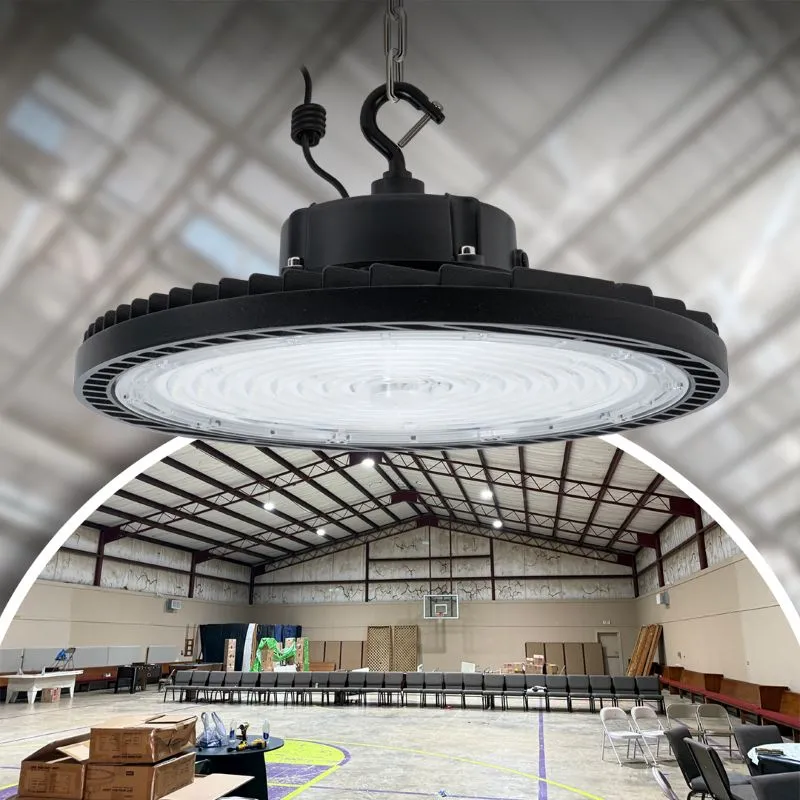
Lumen ratings tell you total light output, but the number you need depends on ceiling height and the work being done below. A 15,000-lumen ufo high bay light works well for general warehouse storage at 20 feet, while detailed assembly or inspection tasks may need 20,000 to 30,000 lumens per fixture to hit 50 foot-candles at floor level.
We measure brightness at the work surface, not at the fixture. Here’s how lumen output translates to real coverage:
| Ceiling Height | Lumens per Fixture | Typical Spacing |
|---|---|---|
| 15 to 20 ft | 12,000 to 18,000 lm | 20 to 25 ft apart |
| 20 to 30 ft | 18,000 to 25,000 lm | 25 to 30 ft apart |
| 30 to 40 ft | 25,000 to 35,000 lm | 30 to 35 ft apart |
Divide your total square footage by the spacing interval squared to estimate fixture count. A 10,000 sq ft warehouse with 25-foot ceilings and 25-foot spacing needs roughly 16 fixtures. Always round up and account for obstructions like racking or HVAC that block light.
Color temperature also matters. We recommend 4000K to 5000K for most industrial spaces because it renders colors accurately without the harsh blue cast of 6000K or the dim yellow of 3000K. Check the latest specs and pricing to see which color temperatures are available with your chosen lumen tier.
Beam Angle and Coverage Pattern
Beam angle controls how light spreads. A narrow 60-degree beam concentrates light in a tight circle directly below the fixture, while a wide 120-degree beam diffuses it across a larger area with lower peak intensity. Most ufo high bay lights ship with a 90- to 120-degree lens because it balances throw distance and even coverage.
For standard warehouses, a 120-degree beam minimizes fixture count and reduces dark spots between units. If you’re lighting a narrow aisle or need focused task light, a 60- or 90-degree reflector cone (sometimes sold separately) delivers more foot-candles in a smaller footprint. We’ve found that mismatched beam angles cause bright pools under each fixture and dim zones in between, so stick with one angle across the entire install.
Mounting height and beam angle work together. A 120-degree fixture at 30 feet creates a roughly 70-foot-diameter pool of usable light, with overlap starting around 35 feet from center. Run a quick layout in graph paper or CAD before you order to confirm spacing.
Wattage, Efficacy, and Energy Savings
LED efficacy, measured in lumens per watt, determines how much light you get for every dollar spent on electricity. Modern high bay LEDs deliver 130 to 160 lm/W, so a 150-watt fixture outputs 19,500 to 24,000 lumens. Compare that to a 400-watt metal halide, which produces around 20,000 lumens at 50 lm/W and burns 250 extra watts as heat.
Switching from metal halide to LED cuts energy use by 60 to 70 percent. A facility running fifty 400-watt metal halides for 12 hours a day at $0.12/kWh spends roughly $10,512 per year. Replace them with 150-watt LEDs and the bill drops to $3,942, saving $6,570 annually. Factor in zero bulb replacements for five years and the payback window shrinks to under two years.
Look for a fixture rated for at least 50,000 hours (roughly six years at 24/7 use). Cheaper units may claim high lumens but fail early due to inadequate heat sinking or low-grade drivers. Grab the current discount code and prioritize fixtures with IP65 or higher ingress protection if your space has dust, moisture, or temperature swings.
Installation: Hook, Pendant, or Surface Mount
Most ufo high bay lights include a steel mounting bracket with a hook eye or threaded pendant stem. Hook mounts let you hang the fixture from an existing chain or cable, while pendant mounts thread onto a rigid conduit pipe for a cleaner look. Surface mounts bolt directly to a ceiling joist or steel beam and sit flush, saving vertical space in lower bays.
We prefer pendant or chain mounts in true high bay applications (20 feet and up) because they simplify aiming and future repositioning. If you ever need to shift a fixture two feet left, you just move the chain anchor. Surface mounts lock you into one spot unless you drill new holes in structural steel.
Wiring is straightforward: line, neutral, and ground into a terminal block or quick-connect plug. Most units run on 100 to 277V AC, so they work with standard commercial circuits. If you’re retrofitting metal halide sockets, bypass or remove the old ballast and wire the LED driver directly to line voltage. Never reuse a ballast with an LED fixture; it adds resistance, flicker, and failure points.
Check local code for conduit requirements and whether a licensed electrician must sign off. Some jurisdictions allow facility maintenance staff to swap fixtures if the circuit is already in place.
Durability: Heat Sinking, IP Rating, and Lifespan
LED life depends on junction temperature, so the heatsink design matters more than the chip brand. Quality ufo high bay lights use die-cast aluminum fins that cover the entire back surface, pulling heat away from the diodes through passive convection. Cheaper units skimp on fin area and hit thermal runaway within a year, dimming to half output or failing outright.
An IP65 rating means the fixture is dust-tight and protected against water jets from any direction. IP65 is the baseline for warehouses, distribution centers, and light manufacturing. If you’re in a food processing plant with regular washdowns, step up to IP66 or IP67. For clean, climate-controlled spaces, IP54 is acceptable but offers less margin against dust buildup on the lens.
We’ve seen poorly sealed fixtures collect condensation inside the lens after a year, scattering light and accelerating LED degradation. Always confirm the IP rating in writing and check for a gasket around the lens perimeter before you mount anything.
Warranties range from three to five years. A five-year warranty signals confidence in driver and thermal design. Avoid any fixture with less than three years of coverage.
Who Should Buy a UFO High Bay Fixture?
UFO high bay lights suit warehouse managers, facility maintenance teams, and shop owners who need reliable, low-maintenance overhead lighting in spaces with ceilings above 15 feet. If you’re running a distribution center, machine shop, gymnasium, or production floor, this form factor delivers the best combination of throw distance, efficiency, and installation speed.
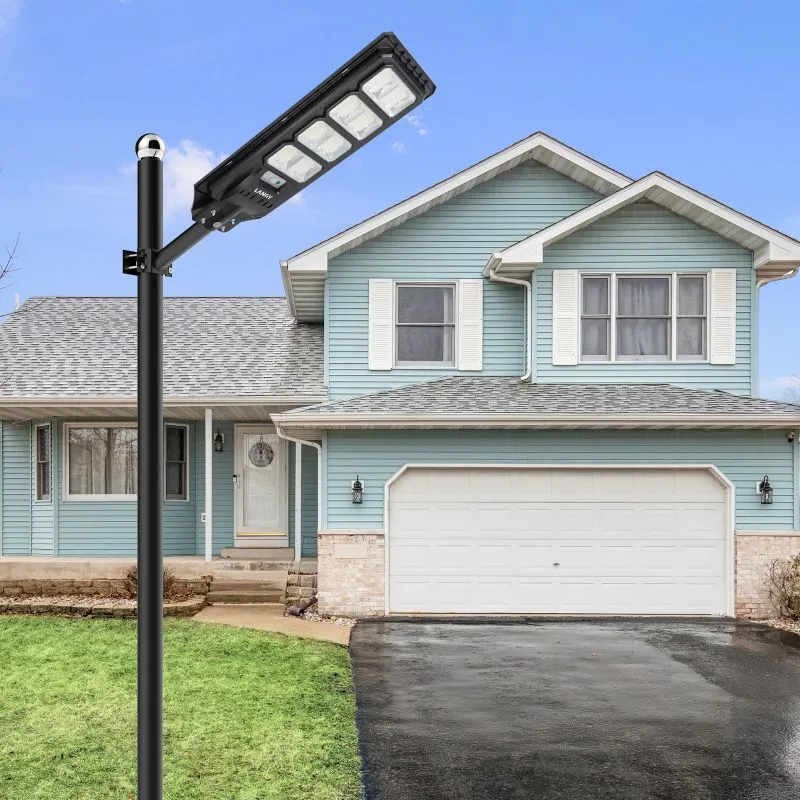
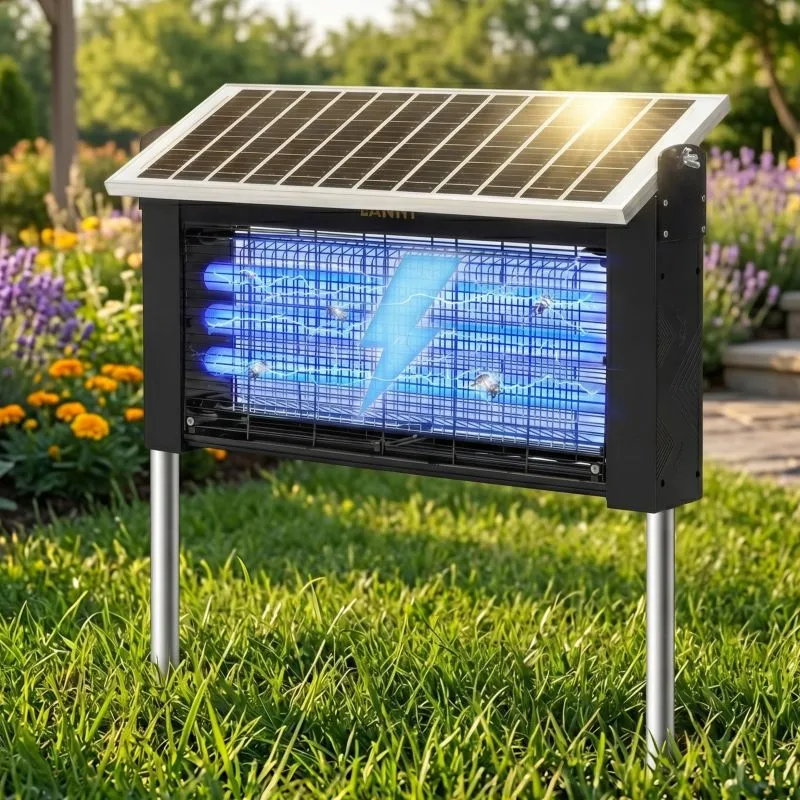
They’re less ideal for low-bay applications under 12 feet (standard LED shop lights or linear strips work better there) or outdoor areas (where you’d want a solar street light or 200 watt street fixture with a photocell and weather housing). For insect control in outdoor warehouse loading docks, pair your high bay install with a bug light or mosquito zapper to keep pests away from entry points.
We recommend ordering one fixture first, installing it, and measuring foot-candles at floor level with a light meter app or handheld meter. Once you confirm lumen output and spacing, scale the order to full coverage. Visit the store coupon page to apply the current 5 percent discount across the entire project and bring down per-fixture cost.
Questions
How many lumens do I need for a 20-foot ceiling warehouse?
For general warehouse storage with 20-foot ceilings, aim for 15,000 to 20,000 lumens per fixture, spaced 20 to 25 feet apart. Detailed tasks like assembly or inspection may require 25,000 lumens or more to reach 50 foot-candles at floor level.
What beam angle is best for a UFO high bay light?
A 120-degree beam angle works best for most warehouses because it spreads light evenly and reduces the number of fixtures needed. Narrow 60- or 90-degree beams are better for focused task lighting or narrow aisles.
Can I replace metal halide high bays with LED UFO fixtures?
Yes, LED UFO high bay lights are direct replacements for metal halide fixtures. Bypass or remove the old ballast, wire the LED driver to line voltage, and you'll cut energy use by 60 to 70 percent with zero warm-up time.
Do UFO high bay lights need special installation?
Most units install with a hook, pendant stem, or surface mount bracket and run on standard 100 to 277V AC circuits. If the circuit is already in place, many facilities handle the swap in-house, but always check local electrical code for permit requirements.
What IP rating do I need for a warehouse high bay light?
IP65 is the standard for warehouses and distribution centers, protecting against dust and water jets. Food processing or washdown environments should use IP66 or IP67, while clean, climate-controlled spaces can get by with IP54.
How long do LED UFO high bay lights last?
Quality LED high bay fixtures last 50,000 hours or more, which translates to roughly six years of continuous 24/7 use or over a decade at 12 hours per day. Look for at least a three-year warranty as a reliability indicator.
Products in this guide
 Shopping at Langy Energy? See the discount code
5% OFF All Orders
Shopping at Langy Energy? See the discount code
5% OFF All Orders
More in this series
How Long Do Bug Zappers Actually Last Before Replacement?20 Aug 20265 min Why Is My Attic Gable Fan Not Working? Common Troubleshooting Tips20 Aug 20265 minDo Solar Street Lights Last Through Winter? Longevity and Performance20 Aug 20265 minMosquito Zapper vs Bug Zapper: What Is the Difference?20 Aug 20265 min
 How to Install a Solar Attic Fan: Step-by-Step Guide for DIYers20 Aug 20266 min