 A Langy Energy guide
Do Solar Street Lights Last Through Winter? Longevity and Performance
A solar street light can last 5 to 7 years through winter weather when properly maintained, though cold temperatures and snow affect both charging efficiency and runtime.
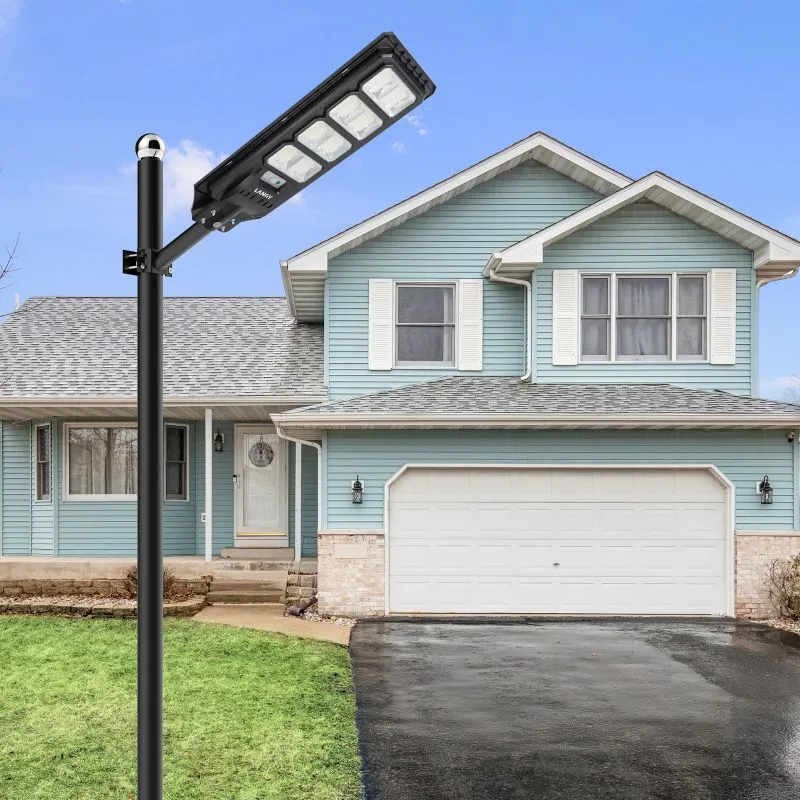
A solar street light will continue operating through winter, typically lasting 5 to 7 years or more, but cold weather, shorter days, and snow accumulation reduce charging efficiency and nightly runtime. Most quality units like the solar street light are designed with cold-weather tolerances, larger battery reserves, and durable housings that withstand freezing temperatures, though performance drops compared to summer months.
Winter poses three core challenges: reduced sunlight hours limit daily charging, low temperatures slow lithium battery chemistry, and snow or ice on the solar panel blocks energy collection. Understanding these factors and how to mitigate them helps you maintain reliable lighting year-round.
How Cold Weather Affects Battery Life and Runtime
Lithium iron phosphate (LiFePO4) batteries (standard in modern solar street lighting) lose 10 to 20 percent of their capacity when temperatures drop below freezing. The chemical reactions inside the cells slow down, reducing both the charge they can accept during the day and the energy they can deliver at night.
This means a 200 watt street light that runs 10 hours on a full summer charge might only deliver 7 to 8 hours in January, even with a full battery. The good news is that cold itself doesn’t permanently damage LiFePO4 cells the way it does lead-acid batteries; capacity returns when temperatures rise.
Key cold-weather battery behaviors:
- Charging efficiency drops below 32°F, especially under 14°F
- Discharge voltage sags faster in freezing conditions
- Self-discharge rates actually slow in cold storage
- Permanent capacity loss occurs only with repeated deep discharges in extreme cold
To offset winter capacity loss, we size battery banks 20 to 30 percent larger in cold climates or enable automatic dimming modes that extend runtime by reducing LED output after midnight.
Solar Panel Performance in Snow and Low-Light Conditions
Solar panels still generate power on cloudy winter days (typically 10 to 25 percent of rated capacity) but snow cover is the real enemy. Even a thin layer of snow blocks nearly all light, cutting generation to zero until the panel surface clears.
Mounting angle matters: panels tilted at 40 to 60 degrees shed snow faster than shallow-angle or horizontal mounts. Some installers in northern climates add 10 to 15 degrees of extra tilt beyond the standard latitude rule to encourage shedding and capture low winter sun.
Strategies to maintain winter charging:
- Manual clearing: Brush snow off panels after storms if accessible
- Hydrophobic coatings: Some panels repel moisture and help snow slide off
- Larger panel wattage: Oversizing by 30 to 50 percent compensates for shorter, cloudier days
- Dual-panel configurations: Split east-west arrays capture morning and afternoon light when the sun is low
The best units ship with oversized panels relative to LED wattage precisely because real-world conditions (especially winter) rarely match the laboratory test standard (1000 W/m² irradiance). Check current panel specs and winter runtime modes before you buy if you’re in a northern climate.
Component Longevity: LEDs, Controllers, and Housings
The LED chipsets and driver circuits in quality street lights outlast the battery by a wide margin. Typical component lifespans:
| Component | Expected Life | Winter Impact |
|---|---|---|
| LED modules | 50,000 – 100,000 hours (10+ years) | Minimal; cold improves LED efficiency |
| LiFePO4 battery | 2,000 – 3,000 cycles (5-7 years) | Reduced daily capacity, shorter runtime |
| Charge controller | 5 – 10 years | Moisture risk if seals fail |
| Aluminum housing | 15+ years | Corrosion from road salt in some areas |
LEDs actually run more efficiently in cold weather (light output increases slightly and heat-related degradation slows) so winter is easier on the light source than summer. The charge controller and wiring are the weak points: moisture intrusion through cracked gaskets or loose cable glands can cause shorts or corrosion, especially after freeze-thaw cycles crack sealant.
Inspect housing seals, cable entries, and mounting hardware every fall. Tighten bolts, replace worn gaskets, and apply dielectric grease to connectors to prevent winter moisture damage.
Maintenance Tips to Extend Winter Performance
Proactive maintenance before and during winter keeps your lighting reliable and extends overall lifespan:
- Clean panels in late fall: Remove dirt, pollen, and organic buildup so panels start winter at peak efficiency
- Check battery state-of-charge: Fully charge the battery before the first freeze; a partially charged battery is more prone to freeze damage
- Enable power-saving modes: Use motion sensors, dimming schedules, or split-night modes to stretch runtime on short-charge winter days
- Clear snow promptly: After heavy snowfall, clear panels within 24 hours to resume charging
- Monitor runtime: If lights go dark before dawn, either increase panel size, reduce nightly runtime, or add battery capacity for next season
For property managers overseeing multiple fixtures, we recommend a mid-winter performance audit, walk the site at 2 a.m. to confirm all lights are still on, then check panel surfaces the next morning for snow or shading issues.
Choosing the Right Solar Street Light for Cold Climates
Not all solar street lights are winter-ready. When shopping for cold-climate installations, prioritize these features:
- Cold-rated batteries: Look for LiFePO4 cells rated to -4°F or lower; some brands use internal heaters for extreme climates
- Oversized solar panels: Panel wattage should be 1.5× to 2× the LED wattage in northern zones
- Adjustable mounting: Tilt-adjustable brackets let you increase angle for winter sun and snow shedding
- IP66 or IP67 rating: Water and dust ingress protection prevents moisture damage during freeze-thaw cycles
- Smart controllers: Adaptive brightness and battery-protection modes prevent over-discharge in low-sun periods
If you’re comparing models, grab the discount code and review the battery temperature range and panel-to-LED ratio in the specs, those two numbers tell you whether a unit is engineered for year-round reliability or only mild climates.
Real-World Winter Lifespan Expectations
In practice, a well-maintained solar street light in a cold climate delivers 5 to 7 years of service before the battery requires replacement, and 10+ years before the fixture itself needs retirement. The battery is the consumable component; once it degrades below 70 percent of original capacity, nightly runtime becomes too short, and replacement makes economic sense.
Harsh winters accelerate battery aging slightly (expect the lower end of the cycle-life range) but proper sizing and maintenance offset much of that impact. Fixtures in moderate climates with occasional winter weather (Zone 6-7) see minimal longevity penalty, while those in deep-freeze zones (4 and colder) benefit from premium cold-weather batteries and larger panels.
Planning for 80 percent winter performance relative to summer gives you realistic expectations and prevents disappointment.
Check the latest pricing and cold-weather specifications for models rated to your climate zone, and factor battery replacement cost into your total-ownership budget, it’s the only major expense you’ll face over the fixture’s lifetime.
Questions
Can a solar street light work in below-zero temperatures?
Yes, most solar street lights with LiFePO4 batteries operate in below-zero temperatures, though capacity and runtime drop 10 to 20 percent. Look for models rated to -4°F or colder for reliable extreme-cold performance.
How often do I need to replace the battery in a solar street light?
Expect to replace the battery every 5 to 7 years, or after 2,000 to 3,000 charge cycles. Cold climates and frequent deep discharges shorten lifespan slightly, while proper maintenance extends it.
Does snow on the solar panel stop the light from working?
Yes, snow cover blocks nearly all sunlight and stops charging until you clear the panel. Tilting panels at 40 to 60 degrees helps snow slide off naturally, reducing the need for manual clearing.
Will my solar street light turn on every night in winter?
It depends on daily charge and battery reserve. If snow covers the panel for multiple days or sunlight is very limited, the battery may drain before dawn. Motion sensors and dimming modes help stretch runtime during low-charge periods.
What maintenance does a solar street light need before winter?
Clean the solar panel, check battery charge level, inspect housing seals and cable glands for cracks, and enable any power-saving modes. These steps maximize winter performance and prevent freeze-related damage.
Are LEDs affected by freezing temperatures?
No, LEDs actually perform better in cold weather, they run more efficiently and experience less heat-related degradation. Cold impacts the battery, not the light source itself.
Products in this guide
Shopping at Langy Energy? See the discount code
5% OFF All Orders
More in this series
 How Long Do Bug Zappers Actually Last Before Replacement?20 Aug 20265 min
 UFO High Bay Light Buying Guide: Lumens, Coverage, and Warehouse Use20 Aug 20266 min
 Why Is My Attic Gable Fan Not Working? Common Troubleshooting Tips20 Aug 20265 minMosquito Zapper vs Bug Zapper: What Is the Difference?20 Aug 20265 min
 How to Install a Solar Attic Fan: Step-by-Step Guide for DIYers20 Aug 20266 min