 A Cactus en Ligne guide
How to Use Pine Bark for Cactus Soil
What pine bark adds to a cactus mix, how it compares with the other substrates Cactus en Ligne sells, and how to mix and check a batch at home.
Pine bark goes into cactus soil as a coarse, organic add-in: it opens up the mix and gives it some structure, while mineral ingredients such as pumice or perlite handle the drainage. Cactus en Ligne sells pine bark chips sized 6 to 9 mm, alongside a ready-made cactus soil and several minerals, so you can build a mix from one order. Below we explain what each ingredient does according to the store’s own product pages and how to put them together for your plants. Our Cactus en Ligne discount code page lists the current code and how to use it.
What pine bark adds to a cactus mix
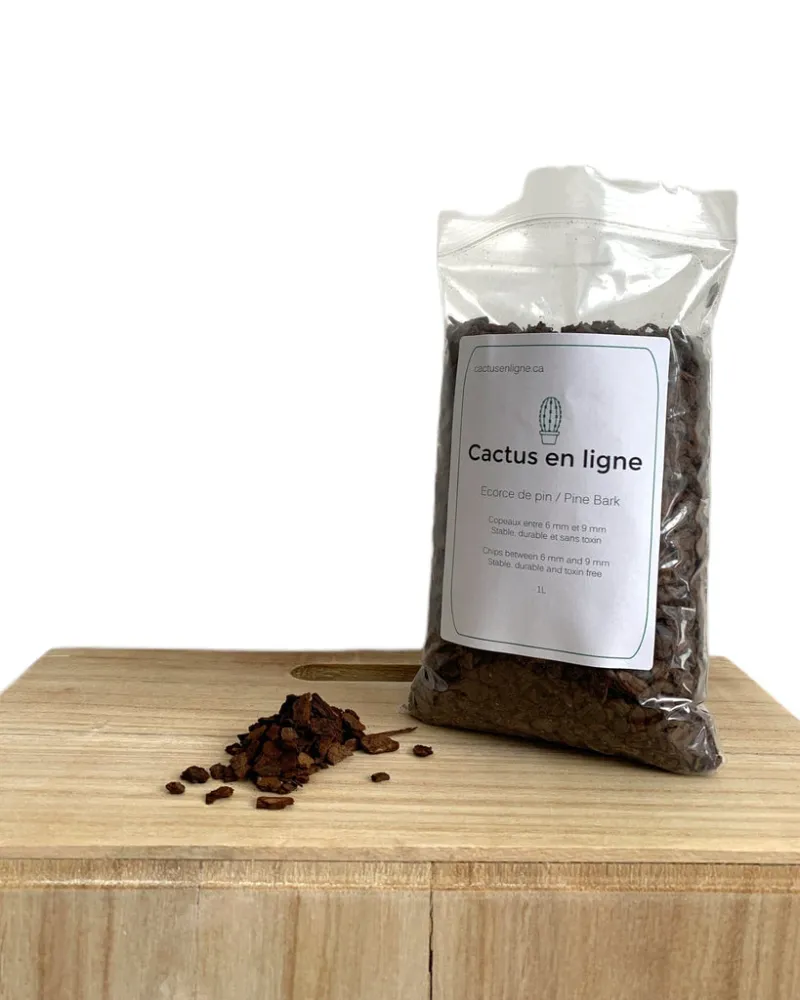
Cactus en Ligne describes its pine bark as chips between 6 mm and 9 mm that are stable, durable and toxin-free, made for adding organic matter to a soil mix. It comes in 1L, 3L and 6L bags, and the store lists 1L at about 310 grams, which makes it one of the lighter ingredients it sells.
That chip size is the point. Chips of 6 to 9 mm are larger than the store’s pumice (3 to 6 mm) and its lava rock (3 to 5 mm), so bark leaves bigger gaps in the pot. Bigger gaps mean air reaches the roots and water runs through instead of sitting in the bottom. Bark is also organic, so unlike stone it holds a little moisture in the wood itself. That makes it a middle ground between a peat-based soil and a purely mineral mix.
Because the chips are fairly large, they suit medium and large pots better than very small ones. In a 2 inch pot, a single 9 mm chip takes up a real share of the space, so a finer mineral such as perlite fills small pots more evenly.
The other substrates Cactus en Ligne sells
Here is what the store says about each of the ingredients you might combine with bark:
| Ingredient | What the store says | Role in a mix |
|---|---|---|
| Cactus and Succulent Soil | Coarse peat moss and coarse perlite, with limestone, a wetting agent and a starter fertilizer | The base of the mix |
| White Pumice | Volcanic stone, 3 to 6 mm, imported from Japan; keeps soil from getting mucky | Drainage, or a top dressing |
| Perlite | Volcanic rock that improves aeration and drainage | Light drainage, good for small pots |
| Turface MVP Clay | High-fired clay that retains moisture without reducing drainage and prevents compaction | Holds some water while staying open |
| Red and black lava rock | 3 to 5 mm (red) and 5 mm and under (black); suggested for the base of pots and top dressing | Drainage and a decorative top layer |
| Coconut peat | Coir that improves water retention, pH 5.5 to 6.5 | Better for tropical plants than for cacti |
| Pine bark | 6 to 9 mm chips, stable and toxin-free | Structure, air gaps, some organic matter |
The store also sells a starter kit with 3L of cactus soil, a moisture meter and a 2-7-7 liquid fertilizer, which is handy if you are potting your first plant.
How to mix pine bark into cactus soil
Cactus en Ligne does not publish a recipe with fixed percentages, so we do not give one. What you can do is build the mix in small batches and judge it by how it behaves in your home:
- Start with the store’s cactus soil as the base, since it already contains perlite.
- Add a mineral such as pumice or perlite for drainage. This is the ingredient to increase if your pots stay wet for days.
- Add pine bark for structure and air, especially in larger pots.
- Mix dry in a tub, then fill one trial pot and water it. Water should run out of the drainage hole freely, not pool on the surface.
- After a week, check how dry the soil is with a finger or a moisture meter, and adjust the next batch.
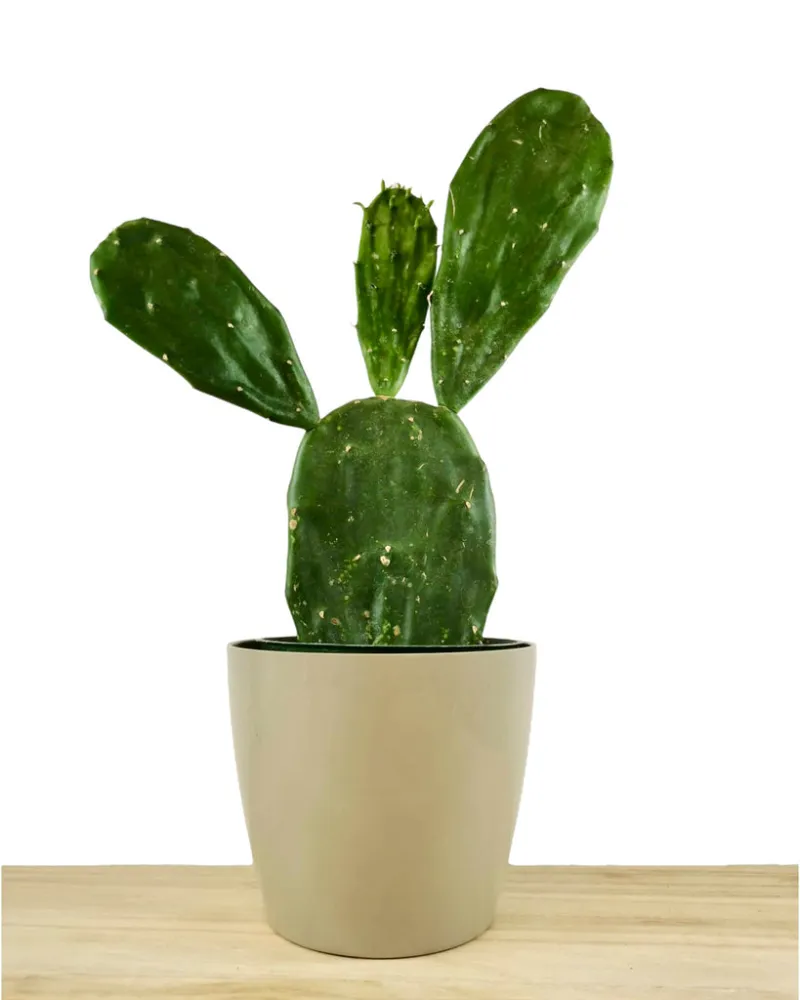
The care notes on each plant page tell you how dry the soil should get. For the Opuntia ficus indica, Cereus peruvianus, fairy castle cactus and moon cactus, the store says to water thoroughly only when the soil is completely dry, so a fast-draining mix with plenty of mineral content fits them. The store notes that Opuntia is adapted to a very hot, dry climate.
Which plants suit a bark mix, and when to repot
The dragon fruit cactus is the clearest case for a little more bark. Its care note asks for bright indirect light and watering about once every two weeks, letting the soil dry between waterings, and it is a jungle cactus rather than a desert one. A mix with more bark and less stone suits that gentler cycle.
Every plant from Cactus en Ligne ships in a standard grower’s pot with soil, so you do not need to repot the day it arrives. Repotting makes sense when you move a plant into a larger decorative pot, or when the nursery soil stays wet much longer than the care note suggests. Moon cactus is a special case: the store says it goes dormant in winter and the soil can stay completely dry until spring, so repot it in the growing season, not in its dry rest.
Two habits help any bark mix last. Pre-wet the bark lightly before potting so the chips do not float to the top on the first watering, and use a pot with a drainage hole. If a pot has no hole, the store suggests a layer of lava rock at the bottom to give extra water somewhere to go.
Questions
How do I use pine bark for cactus soil?
Mix it into a cactus soil base along with a mineral such as pumice or perlite. The bark adds structure and air gaps, and the mineral handles the drainage. Try a small batch and adjust until water runs through freely.
What size is the pine bark from Cactus en Ligne?
The store lists its pine bark chips at 6 to 9 mm. They come in 1L, 3L and 6L bags, with 1L at about 310 grams.
Is pine bark or pumice better for cacti?
They do different jobs. Pumice is a 3 to 6 mm volcanic stone the store sells for drainage, while pine bark is a larger organic chip that adds structure and holds a little moisture. Desert cacti such as Opuntia lean on the mineral side; the dragon fruit cactus suits a mix with more bark.
Does Cactus en Ligne sell a ready-made cactus soil?
Yes. Its Cactus and Succulent Soil combines coarse peat moss and coarse perlite with limestone, a wetting agent and a starter fertilizer. There is also a starter kit with soil, a moisture meter and a liquid fertilizer.
Do I need to repot a cactus from Cactus en Ligne right away?
No. Plants ship in a standard grower's pot with soil. Repot when you want a larger or decorative pot, or if the soil stays wet much longer than the plant's care note suggests.
Products in this guide
Shopping at Cactus en Ligne? See the discount code
10% OFF All Orders
More in this series
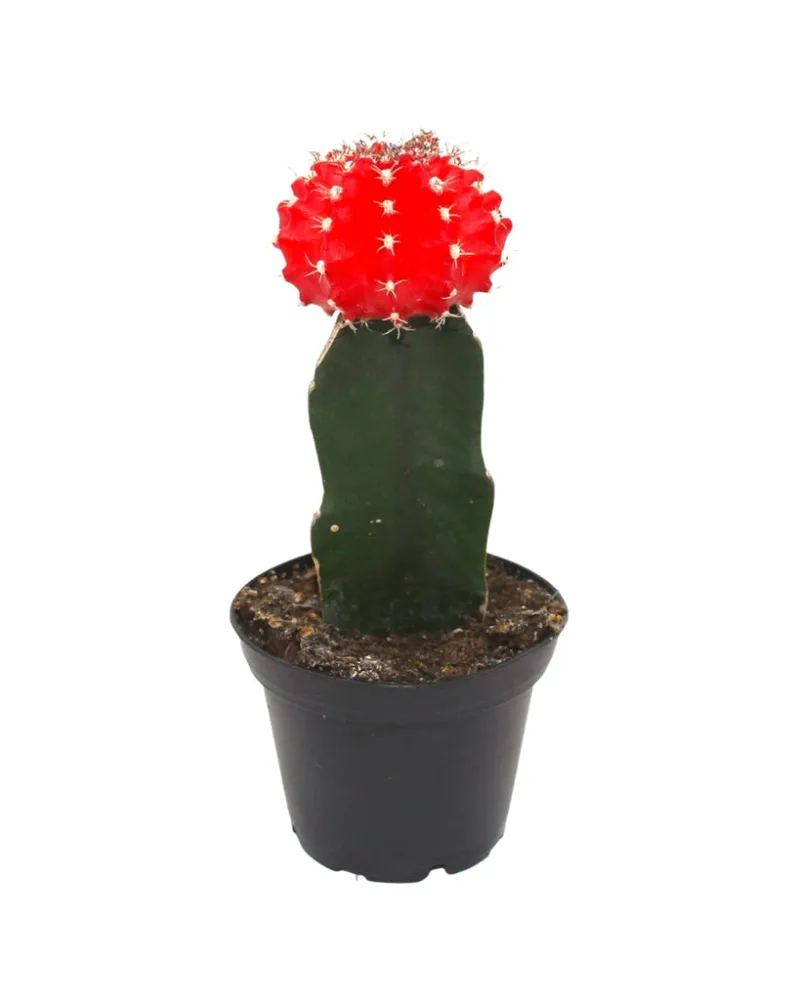 Do Grafted Moon Cactus Plants Live Long? How the Graft Works and What to Watch12 Aug 20263 min
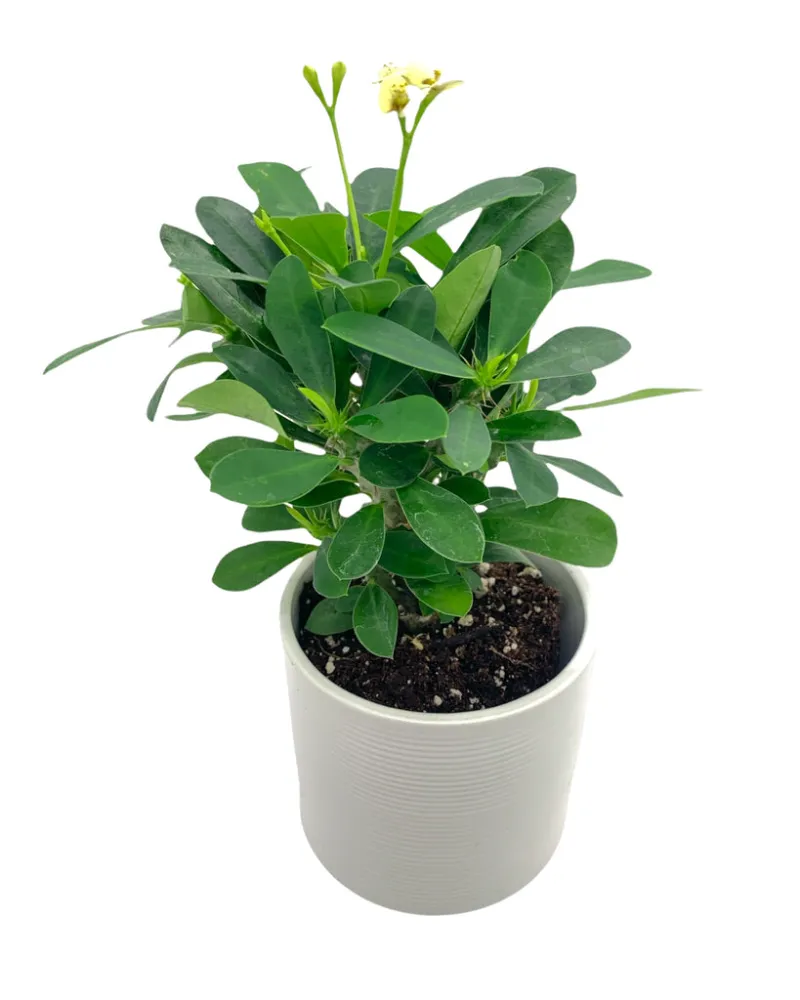 Why Is My Euphorbia Milii Dropping Leaves? Four Checks for Your Crown of Thorns12 Aug 20264 minCan You Eat Cactus Fruit From Opuntia Ficus Indica? What to Know Before You Grow One12 Aug 20263 min
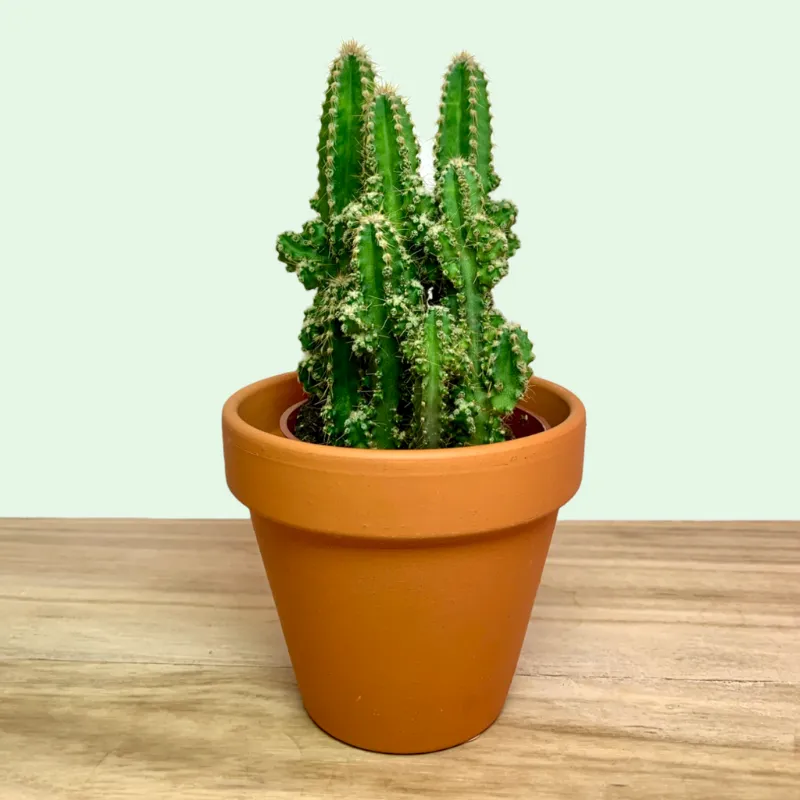 Fairy Castle Cactus vs Blue Torch Cactus: Which Columnar Cactus Is Right for You?12 Aug 20263 min
 How to Care for a Moon Cactus: Watering, Light, and Lifespan Tips12 Aug 20264 min