 A Magidome guide
Is a Cupola Kit Worth Adding to a Magidome Dome?
A cupola kit transforms your geodesic dome from functional shelter into a well-ventilated, architecturally striking structure.
Is a cupola kit worth it on a geodesic dome?
A cupola kit is worth adding to a geodesic dome when heat and humidity build up under the peak, as they often do in greenhouses, workshops and summer shelters. A cupola is a small raised structure at the top that lets hot air out and daylight in. It is less useful in a dome that is fully climate controlled, used mostly in winter, or exposed to strong wind. Whether it justifies the cost depends on how you use the dome and on your climate.
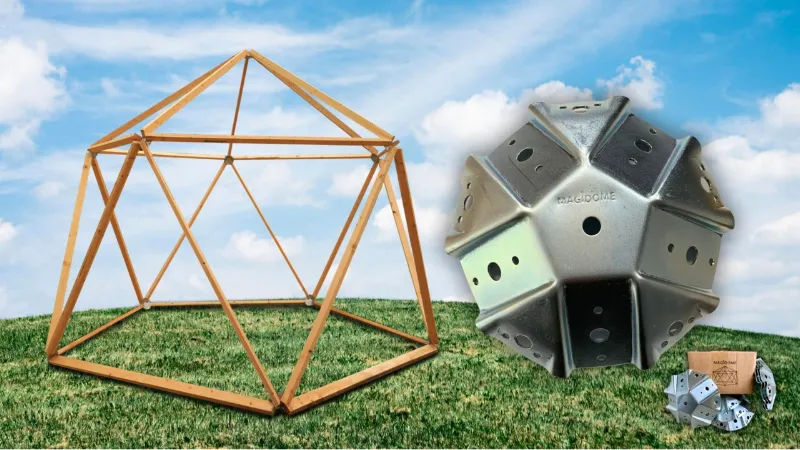
If you are building with a Magidome geodome connector kit, the practical question is fit. The top of a dome has a specific geometry, and a cupola has to match it. Below we cover how a cupola works, what to check before you order one, and when to skip it.
How a cupola ventilates a dome
Warm air rises. In a dome, it collects at the apex, which is the one spot with no wall to vent through. A cupola gives that air a way out. As hot air leaves at the top, cooler air is drawn in through lower openings such as the door or wall vents. This is called the stack effect, and it works without power.
A few points follow from that:
- You need low intake openings too. A vent at the top does little if no fresh air can come in lower down.
- The effect is strongest with a big temperature difference between inside and outside, such as a sunny greenhouse.
- Fixed openings cannot be adjusted. Louvers or covers let you close the cupola in cold or wet weather.
- Screens matter. Mesh keeps insects and birds out of an open apex.
For a dome used as living space, a cupola can reduce the load on fans or cooling, but it will not replace heating or air conditioning.
What to check before you buy a cupola kit
Cupolas for domes are less common than cupolas for barns, so read the listing closely. Before you order, confirm:
| Check | Why it matters |
|---|---|
| Top opening shape | The peak of a dome is often a pentagon, but it depends on the dome’s frequency and orientation |
| Strut and hub fit | The base has to bolt to your existing hubs or struts, such as steel geodesic dome connectors |
| Dome size | The cupola must match the diameter and strut lengths at the peak |
| Materials | Frame and panel materials affect weight, UV resistance and upkeep |
| Vent control | Whether openings can be closed, screened or fitted with louvers |
| Weather sealing | Gaskets, flashing and how the cupola meets your dome cover |
| What is included | Hardware, sealant, screens and instructions |
If anything on that list is unclear, ask Magidome support before buying, and see what Magidome currently lists for your dome size.
Installing a cupola on a dome frame
Every kit has its own instructions, but the general order is similar:
- Check the peak. Make sure the struts and hubs at the top are square, tight and match the cupola’s base.
- Assemble the base on the ground where you can, then lift it into place. Working at height is slower and less safe.
- Fix the base to the frame with the supplied hardware, using the same hub style as the rest of the dome where the kit allows it.
- Add the walls, roof and panels in the order the instructions give, checking alignment before tightening every bolt.
- Seal the joint between the cupola and the dome cover with the gaskets or sealant the kit calls for.
Plan for ladder or scaffold work at the highest point of the dome, and have a second person to help lift and hold parts. If your dome uses custom strut lengths or hubs, confirm compatibility first.
If you would rather build your own, suppliers such as MWI Components cupolas show the parts a traditional cupola uses, though you will still need to work out how the base meets a dome’s angles.
Dome cupola vs barn cupola vs DIY
Most cupola kits for sale are designed for barns, sheds and traditional pitched roofs, with square or rectangular bases that do not sit naturally on a dome’s peak.
| Option | Fit on a dome | Trade off |
|---|---|---|
| Cupola made for your dome system | Matches the peak geometry | Tied to one brand’s hubs and sizes |
| Standard barn cupola | Needs an adapter or curb | More styles and louver options, more fabrication |
| DIY build | Fully custom | Most time, and sealing is on you |
If you own a dome from another maker or a custom build, a metal cupola kit with an adapter ring is one route. Budget extra time and materials for the adapter.
Who should add a cupola, and who should skip it
A cupola makes the most sense for:
- Greenhouse and garden domes, where passive venting helps control heat and humidity
- Workshops and studios, where overhead light and airflow make long sessions more comfortable
- Glamping and event domes, where the look matters as much as the airflow
- Off grid shelters, where venting without fans saves battery power
Skip it, or wait, if your dome is fully climate controlled, used mostly in cold months, or sits in a high wind area where a raised peak adds exposure. Every opening at the apex is also a place for rain to find its way in, so plan to check the seals each season.
Cost and where to start
A cupola is an accessory, not a structural part. If your budget is tight, put money into the frame, cover and foundation first. Use the dome through a warm season, see where heat builds up, and add a cupola later if you need it. Leave the peak accessible so a later install is easier.
For the frame itself, Magidome sells a geodesic dome connector kit and geo dome connectors. Before you order any part, see the current Magidome discount code.
Questions
Is a cupola kit worth adding to a geodesic dome?
It is worth it when heat or humidity builds up at the peak, which is common in greenhouses, workshops and summer shelters. It adds less value in a fully climate controlled dome, a winter only dome, or a very windy site.
Can I put a barn cupola on a geodesic dome?
Usually not directly. Most barn cupolas have square or rectangular bases, while a dome's peak is often a pentagon. You would need an adapter ring or custom curb, which adds time and sealing work.
How does a cupola ventilate a dome?
Hot air rises and escapes through the cupola, which draws cooler air in through lower openings. This stack effect needs no power, but it only works well if the dome also has low intake vents.
Will a cupola leak in heavy rain?
Any opening at the peak can leak if the seal fails. Use the gaskets or sealant the kit specifies, choose vents that can be closed or covered, and inspect the seals each season.
What do I need to check before ordering a cupola for a Magidome dome?
Confirm the peak shape, dome size, hub and strut fit, materials, vent control and what hardware is included. If the listing does not answer all of those, ask Magidome support before you buy.
Products in this guide
Shopping at Magidome? See the discount code
5% OFF All Orders
More in this series
What Size Geo Dome Do I Need for a Backyard Greenhouse?17 Sep 20265 minHow Long Does a Geodesic Dome Last Outdoors? Durability and Weather Resistance Explained17 Sep 20266 minDo Geodesic Dome Connectors Work with Standard PVC Pipe?17 Sep 20266 minGeodome Kit vs. Buying Connectors Separately: Which Option Saves You More?17 Sep 20264 minHow to Build a Geodesic Dome: Step-by-Step Assembly Guide for Beginners17 Sep 20265 min