 A Magidome guide
Do Geodesic Dome Connectors Work with Standard PVC Pipe?
Geodesic dome connectors are compatible with standard PVC pipe when you choose the right diameter and frequency match for your structure.
Geodesic dome connectors work with standard PVC pipe as long as you match the connector’s socket diameter to your pipe’s outer diameter and choose the correct frequency for your design. Most commercial connector kits accommodate ½-inch, ¾-inch, or 1-inch Schedule 40 PVC, which you can buy at any hardware store. The real challenge is ensuring your connector geometry matches the angles your dome frequency requires.
Here’s what you need to know before you buy.
Matching Connector Socket Size to PVC Diameter
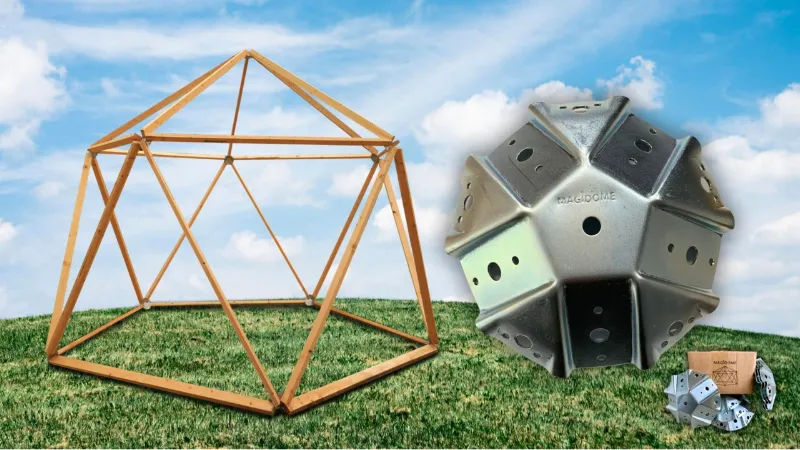
Standard PVC pipe comes in nominal sizes, but what matters for dome building is the actual outer diameter. A ½-inch Schedule 40 PVC pipe measures roughly 0.84 inches OD, ¾-inch measures about 1.05 inches OD, and 1-inch measures approximately 1.315 inches OD. Your geodesic dome connector kit must specify which size it accepts.
- Check the product specs for socket inner diameter before ordering
- Friction fit is ideal: connectors should grip the pipe snugly without adhesive for assembly flexibility
- Avoid loose fits that require tape or glue, which weaken under load and temperature swings
- Test one connector first if you’re buying in bulk for a large geo dome project
Most DIY geodesic dome connectors designed for PVC use ¾-inch pipe because it offers a good balance of strength, weight, and cost for structures up to 16 feet in diameter. For larger domes or high-wind areas, 1-inch PVC with compatible metal connectors adds rigidity without jumping to conduit or lumber.
Check the latest price to see current sizing options and bulk discounts on full kits.
Understanding Dome Frequency and Connector Angles
Geodesic domes are subdivided by frequency: 2v, 3v, 4v, and so on. Each frequency requires struts of different lengths and connectors with specific angles. A 2v geodesic dome uses two strut lengths and simpler hubs, while a 3v geodesic dome needs three lengths and more complex connectors with varied angles.
2v geodesic connectors are the most beginner-friendly. They work well for small garden cloches, chicken coops, and kids’ play structures under 10 feet. You’ll need two strut lengths and connectors that accommodate roughly 18-degree and 16-degree angles depending on your exact geometry.
3v geodesic dome connectors offer a more spherical shape and better load distribution. They’re popular for larger greenhouses and glamping domes, but require three distinct strut lengths and hubs that handle multiple angle combinations. If you’re serious about a 3v build, Natural Spaces Domes offers detailed component breakdowns that help you calculate what you need.
Most off-the-shelf geodome kit packages include pre-cut PVC or strut lengths calculated for you, which removes the trickiest part of the math.
Metal vs Plastic Connector Materials
Metal geodesic dome connectors made from galvanized steel or aluminum resist UV degradation and hold up outdoors for years. They handle heavier covering materials like polycarbonate panels or canvas tarps without flexing. The tradeoff is cost and weight, metal hubs typically run two to four times the price of plastic and add noticeable weight to tall structures.
Plastic connectors (usually ABS or high-impact polypropylene) work fine for temporary or seasonal domes and lightweight covers like polyethylene film. We’ve seen well-made plastic hubs last three to five years in full sun before brittleness becomes an issue. For a cupola kit or decorative accent dome, plastic is often the smarter choice.
- Metal: best for permanent installations, heavy covers, wind exposure above 40 mph
- Plastic: ideal for seasonal greenhouses, budget builds, experimental designs
- Hybrid approach: use metal connectors at the base and plastic higher up to save cost where stress is lower
If you plan to disassemble and move your dome regularly, plastic connectors with friction-fit PVC are faster to break down than metal hubs that may require fasteners.
DIY Alternatives: 3D Printing and Lumber Adapters
The rise of affordable 3D printers has opened up geodesic dome connectors 3d print as a real option for hobbyists. You can download open-source hub designs calibrated for specific frequencies and PVC sizes, then print them in PETG or ASA filament for outdoor durability.
Geo-dome.co.uk offers a detailed guide on making your own 3v hubs if you want to go fully custom.
For builders who prefer wood framing, geodesic dome connectors 2×4 adapters let you attach lumber struts to metal or heavy-duty plastic hubs. This approach works well for insulated living structures or sheds where you’ll add sheathing and need the screw-holding power of dimensional lumber. The angles are identical to PVC-based designs, but your strut lengths will differ slightly due to the thickness of the lumber.
Pros of DIY connectors:
- Full control over frequency, size, and angle precision
- Lower cost if you already own a 3D printer or have scrap materials
- Easy to iterate and customize for unusual shapes
Cons:
- Time investment in design, printing, or fabrication
- Consistency issues if you don’t have reliable equipment
- No warranty or support if a hub fails mid-build
Grab the code if you’d rather invest in a tested commercial kit and skip the trial-and-error phase.
What to Look For When Shopping
When you’re comparing geodesic dome connectors for sale, prioritize these factors:
- Stated compatibility: does the listing specify PVC size and Schedule rating?
- Frequency match: confirm the kit includes the strut count and hub angles for your chosen dome frequency
- Material specification: UV-stabilized plastic or corrosion-resistant metal for outdoor use
- Strut length guidance: quality kits include a cut list or formula so you’re not guessing
- Load rating or use case: look for mentions of snow load, wind rating, or intended applications
Avoid generic “universal” connectors that don’t specify angles or frequency. Those are often repackaged toy-grade parts that won’t hold up to weather or weight. A proper geodesic dome connector kit will state its geometry clearly and include all the hub variations you need.
Installation Tips for a Solid Build
Once you’ve confirmed your connectors fit your PVC, assembly is straightforward but benefits from a few pro tips:
- Dry-fit the entire base ring first to confirm strut lengths before you commit to the full structure
- Work from the bottom up in complete rows, partial assembly leads to misalignment
- Use a mallet for friction-fit connectors rather than forcing them by hand, which can crack plastic hubs
- Mark your strut lengths clearly with colored tape if you’re working with multiple sizes in a 3v or 4v dome
- Add a center lifting pole for larger domes to support the top pentagon while you complete the last row
If you’re building on soft ground, anchor the base connectors with rebar stakes driven through the PVC or use ground anchors rated for your dome’s wind load. We’ve seen too many beautiful domes turned into lawn ornaments after a storm because the base wasn’t secured.
For current pricing on complete kits with PVC included, check here: Magidome often bundles connectors with pre-cut struts and covers, which saves you the cutting and measuring.
Who Should Use PVC-Compatible Connectors
PVC-based geodesic domes shine for projects where you need:
- Portability: lightweight enough to disassemble and move seasonally
- Budget-friendly materials: PVC and plastic connectors cost a fraction of metal conduit or lumber kits
- Quick assembly: friction-fit systems go up in hours, not days
- Greenhouse or garden use: non-conductive PVC won’t interfere with grow lights or irrigation
- Experimental builds: easy to modify or expand as you learn what works
They’re less suited for permanent structures in extreme climates or domes you plan to insulate and heat. For those applications, consider a geodome kit built around metal connectors and either metal conduit or lumber struts that can handle insulation weight and thermal cycling.
The bottom line: geodesic dome connectors absolutely work with standard PVC pipe when you match size, frequency, and material to your project’s demands. The combination delivers an affordable, accessible entry point into dome building that you can scale from a backyard experiment to a functional garden structure.
Questions
What size PVC pipe fits most geodesic dome connectors?
Most geodesic dome connectors are designed for ¾-inch Schedule 40 PVC, which has an outer diameter of about 1.05 inches. Some kits also accommodate ½-inch or 1-inch PVC, so always check the product specifications before buying pipe.
Can I use regular hardware store PVC for a geodesic dome?
Yes, standard Schedule 40 PVC from any hardware store works perfectly with compatible connectors. Just confirm your connector kit specifies Schedule 40 sizing, and buy straight lengths without bends or fittings.
Do I need different connectors for a 2v vs 3v geodesic dome?
Yes, each dome frequency requires connectors with different angles and you'll need multiple strut lengths. A 2v dome uses simpler hubs and two strut sizes, while a 3v dome needs more complex connectors and three different strut lengths.
Are plastic dome connectors strong enough for outdoor use?
UV-stabilized plastic connectors work well for seasonal or lightweight domes and typically last three to five years outdoors. For permanent installations or heavy covers like polycarbonate, metal connectors offer better durability and load capacity.
Can I 3D print my own geodesic dome connectors for PVC?
Yes, you can 3D print connectors in PETG or ASA filament for domes under 12 feet. Print quality and layer adhesion are critical for strength, and you'll need designs calibrated for your specific PVC size and dome frequency.
How do I calculate strut lengths for PVC dome connectors?
Most quality connector kits include a strut cut list or formula based on your desired dome diameter and frequency. If you're designing from scratch, use an online geodesic calculator that accounts for your connector hub size and PVC outer diameter.
Products in this guide
Shopping at Magidome? See the discount code
5% OFF All Orders
More in this series
What Size Geo Dome Do I Need for a Backyard Greenhouse?17 Sep 20265 minHow Long Does a Geodesic Dome Last Outdoors? Durability and Weather Resistance Explained17 Sep 20266 minIs a Cupola Kit Worth Adding to a Magidome Dome?17 Sep 20264 minGeodome Kit vs. Buying Connectors Separately: Which Option Saves You More?17 Sep 20264 minHow to Build a Geodesic Dome: Step-by-Step Assembly Guide for Beginners17 Sep 20265 min