 A Magidome guide
Geodome Kit vs. Buying Connectors Separately: Which Option Saves You More?
A geodome kit delivers convenience and compatibility, but sourcing connectors separately can trim your budget if you already have materials on hand.
Geodome Kit vs Connectors: Which Saves You More?
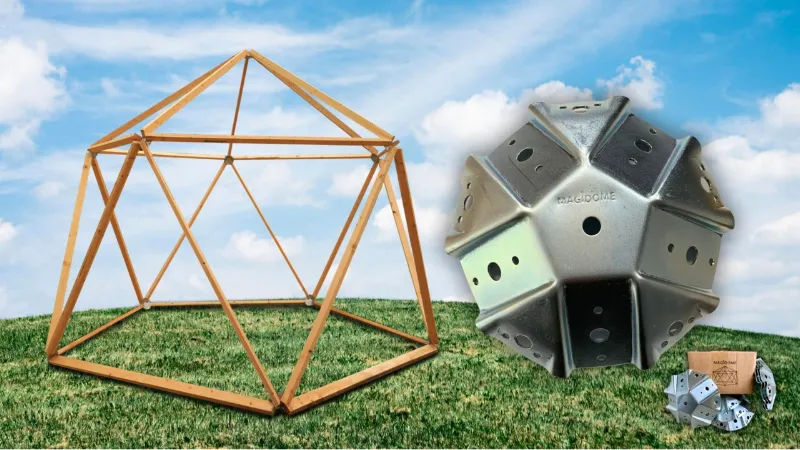
A geodome kit typically costs more upfront but includes pre-matched connectors, struts, and assembly instructions that eliminate guesswork. Buying geodesic dome connectors separately can reduce your total spend if you already own suitable poles or tubing, though you’ll shoulder the work of calculating angles, sourcing materials, and ensuring compatibility. The smarter choice depends on your budget, skill level, and whether you have leftover building materials sitting around.
What You Get in a Complete Geodome Kit
A geodome kit bundles connectors, pre-cut struts or tubing, fasteners, and detailed plans into one package. Many geodesic dome house kit options include weatherproof covering materials and door frames, so you can erect a shelter or greenhouse without hunting for parts across multiple suppliers.
Typical inclusions:
- Hub connectors engineered for the exact frequency and dome size
- Pre-cut or pre-measured struts in A, B, and sometimes C lengths
- Stainless-steel or galvanized hardware
- Assembly manual with labeled parts
- Covering options like polyethylene film or PVC panels
Because every component is matched, you avoid the frustration of discovering mid-build that your conduit diameter doesn’t fit the connector holes. If you’re new to geodesic dome structures, the included instructions walk you through icosahedron math without requiring a trigonometry refresher.
Buying Geodesic Dome Connectors Separately: When It Makes Sense
Purchasing only a geodesic dome connector kit works well when you already have poles, EMT conduit, or bamboo on hand. You’ll pay for the hubs alone and supply your own struts, which can slash costs by 30 to 50 percent if you source tubing locally or repurpose materials.
Best scenarios for connectors-only:
- You have leftover PVC, EMT conduit, or lumber from another project
- You want a custom dome size not offered in prefab kits
- You’re building multiple domes and can bulk-buy tubing at wholesale prices
- You enjoy DIY engineering and can calculate strut lengths yourself
The trade-off is time and precision. You’ll need to compute the exact A, B, and C strut lengths for your chosen frequency, cut materials to the millimeter, and verify that your tubing diameter matches the connector sockets. Online dome calculators help, but one measurement error can throw off the entire structure.
Cost Breakdown: Kit vs Connectors
Here’s how the two approaches compare for a typical 16-foot diameter 3V dome:
| Item | Complete Kit | Connectors Only |
|---|---|---|
| Hub connectors | Included | $80 to 150 |
| Pre-cut struts | Included | DIY (tubing ~$60 to 100) |
| Hardware & fasteners | Included | $15 to 30 |
| Instructions | Included | Free online plans |
| Total | $400 to 700 | $155 to 280 |
A geo dome kit costs more, but you’re paying for convenience, guaranteed fit, and often a warranty. If you budget your time at even $20 per hour, the 6 to 10 hours spent measuring, cutting, and troubleshooting connectors-only builds can erase much of the dollar savings. Check the latest price to see current offers before deciding.
Material Compatibility and Engineering Considerations
Not every connector works with every material. Geodesic dome connectors designed for 3/4-inch EMT conduit won’t accept 1-inch PVC pipe, and wooden struts require bolt-through hubs rather than slip-fit sockets.
Match your materials carefully:
- EMT conduit suits metal hubs with set-screw or compression fittings
- PVC pipe pairs with slip-fit or threaded plastic connectors
- Wood struts need bolt-flange or gusset-plate hubs
- Bamboo or fiberglass often requires custom adapters
Prefab dome house kits solve this by shipping connectors and struts as a matched set. When you buy connectors alone, verify the socket diameter, wall thickness tolerance, and fastener type before ordering tubing. Some suppliers like EKODOME and Easy Domes publish detailed compatibility charts to prevent mismatches.
Assembly Time and Skill Requirements
A complete geodome kit usually goes up in one or two days with a helper, thanks to color-coded struts and numbered connectors. Connectors-only projects demand extra prep: measuring each strut length with a dome calculator, cutting 30 to 80 pieces depending on frequency, deburring edges, and labeling every piece before you start assembling.
Skill comparison:
- Kit assembly: Basic hand tools, ability to follow instructions, moderate physical effort
- Connectors-only: Pipe cutter or saw, trigonometry or calculator use, precision measurement, problem-solving when parts don’t align
If you’ve never built a dome, a kit reduces the risk of costly mistakes. A cupola kit or small greenhouse dome makes an excellent first project before you tackle a connectors-only build.
Which Option Is Right for Your Project?
Choose a complete geodome kit if you value speed, guaranteed compatibility, and minimal risk. It’s ideal for first-time builders, anyone without a workshop full of tools, or projects where structural integrity matters (like a garden studio or event shelter).
Go with geodesic dome connectors alone when you have suitable materials already, enjoy hands-on engineering, or need a non-standard size. This route rewards experienced DIYers who can source tubing locally and don’t mind spending a weekend on prep work.
For most backyard greenhouse or glamping dome projects, the kit wins on convenience and time savings. Grab the code for 5% off your order, which narrows the price gap even further and makes the all-in-one option harder to beat.
Where to Buy and What to Watch For
Magidome offers both geodesic dome connector kit options and full packages, so you can compare side by side. Before you order connectors separately, double-check the hub count (a 3V dome needs 31 hubs, a 4V needs 81), verify your strut material compatibility, and confirm that fasteners are included or available separately.
Read reviews for reports of poor threading, loose set screws, or connectors that crack under load. Quality hubs cost more upfront but prevent mid-season collapses. When you order a full kit, look for warranties covering at least one season of outdoor use and customer support that answers technical questions.
Questions
Can I mix a geodome kit with my own materials?
Most kits are engineered as complete systems, so substituting struts or connectors can compromise structural integrity and void warranties. If you want to use custom materials, buying connectors separately and sourcing all struts yourself is the safer approach.
How do I calculate strut lengths if I buy only connectors?
Use a geodesic dome calculator (many are free online) by entering your desired diameter and frequency. The calculator will output exact A, B, and C strut lengths. Always add a small margin for connector depth when cutting your tubing.
Are geodesic dome connectors strong enough for a permanent structure?
Quality steel or reinforced plastic connectors handle snow loads and wind when paired with appropriate struts and proper anchoring. For permanent geodesic dome house kit projects, choose connectors rated for your climate and follow local building codes.
What size dome can I build with a typical connector kit?
Connector kits are sold by hub count, not diameter. A 16-foot 3V dome needs 31 hubs, while a 24-foot 4V dome requires 81. Check the product specs to match hub quantity with your target size and frequency.
Do I save money buying connectors separately for a large dome?
Savings increase with dome size because bulk tubing costs less per foot than pre-cut struts. For domes over 20 feet, buying connectors and sourcing your own materials can cut costs by 40 percent or more, provided you have the tools and time.
Products in this guide
Shopping at Magidome? See the discount code
5% OFF All Orders
More in this series
What Size Geo Dome Do I Need for a Backyard Greenhouse?17 Sep 20265 minHow Long Does a Geodesic Dome Last Outdoors? Durability and Weather Resistance Explained17 Sep 20266 minIs a Cupola Kit Worth Adding to a Magidome Dome?17 Sep 20264 minDo Geodesic Dome Connectors Work with Standard PVC Pipe?17 Sep 20266 minHow to Build a Geodesic Dome: Step-by-Step Assembly Guide for Beginners17 Sep 20265 min