 A WHLICKS guide
Do Knee Walkers Work Better Than Crutches for Ankle and Foot Injuries?
Senior walkers and knee scooters both outperform crutches for ankle and foot injuries, but the right choice depends on your balance, injury type, and mobility needs.
Senior walkers and knee scooters both offer significant advantages over crutches for ankle and foot injuries, with knee scooters excelling in speed and hands-free mobility while walkers provide superior stability for those with balance concerns.
Why Knee Scooters Beat Crutches for Most Ankle Injuries
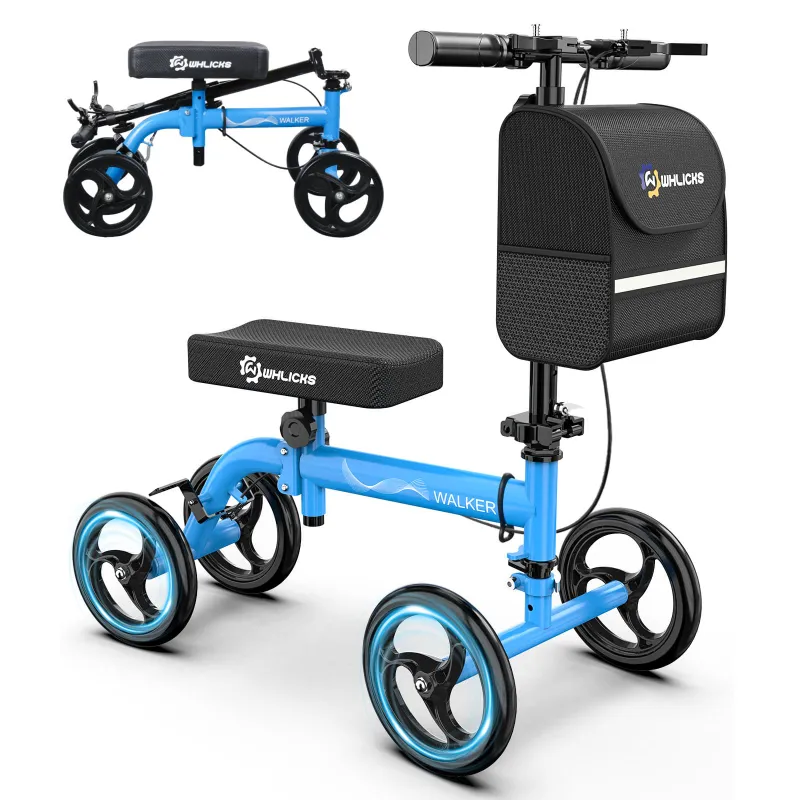
A knee walker scooter eliminates the upper-body strain and underarm pain that plague crutch users within days. Instead of bearing your full weight on your hands and shoulders, you rest your injured leg on a padded platform and steer with the handlebars. This design lets you move faster, carry items, and navigate longer distances without exhaustion.
Crutches demand significant arm and core strength, which many people lack after surgery or injury. Knee scooters require only the ability to balance on one leg and steer, making them accessible to a wider range of patients. Most people master a knee scotter within minutes, whereas crutch proficiency takes days of practice and often results in blisters, nerve compression, and falls.
The hands-free advantage matters in daily life. You can carry a coffee mug, open doors, and use your phone while riding a knee scooter. Crutches force you to set them aside for any two-handed task, creating constant interruption and fall risk.
When Senior Walkers Offer Better Support
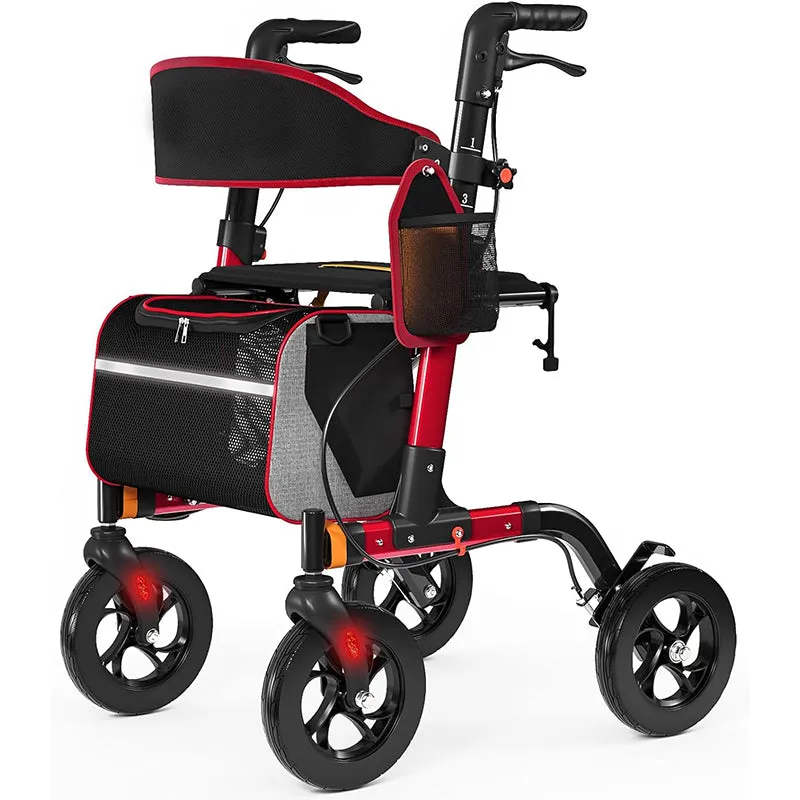
Senior walkers provide unmatched stability for patients with balance problems, upper-body weakness, or multiple health conditions. If you are recovering from ankle surgery but also manage arthritis, neuropathy, or general unsteadiness, a walker’s four-point base delivers the security a knee scooter cannot match.
The best walkers for seniors with balance problems feature wide frames, locking hand brakes, and non-slip grips. According to Consumer Reports testing, models with larger wheels handle outdoor terrain better than narrow-wheeled alternatives. We prioritize lightweight folding walkers for seniors who need to transport their aid in a car or store it compactly at home.
Senior walkers with seat options let you rest whenever fatigue hits, a critical feature during long recovery periods. These hybrid models function as both a walking aid and a portable chair, eliminating the need to scout for benches during errands. Rollz modern walkers pioneered this category with designs that fold into slim profiles without sacrificing seat strength.
For partial weight-bearing restrictions, a walker allows you to control exactly how much pressure you place on the injured foot. Knee scooters, by contrast, keep the injured leg fully elevated, which works only for strict non-weight-bearing orders.
Comparing Mobility Aids: Features That Matter
| Feature | Knee Scooter | Walker | Crutches |
|---|---|---|---|
| Stability | Moderate (requires one-leg balance) | High (four-point base) | Low (two-point, unstable) |
| Speed | Fast | Moderate | Slow |
| Upper-Body Strain | Minimal | Minimal | Severe |
| Terrain | Smooth surfaces only | Indoor/outdoor | Any (with difficulty) |
| Hands-Free | Yes | No | No |
| Portability | Folds, but bulky | Folds compact | Lightweight |
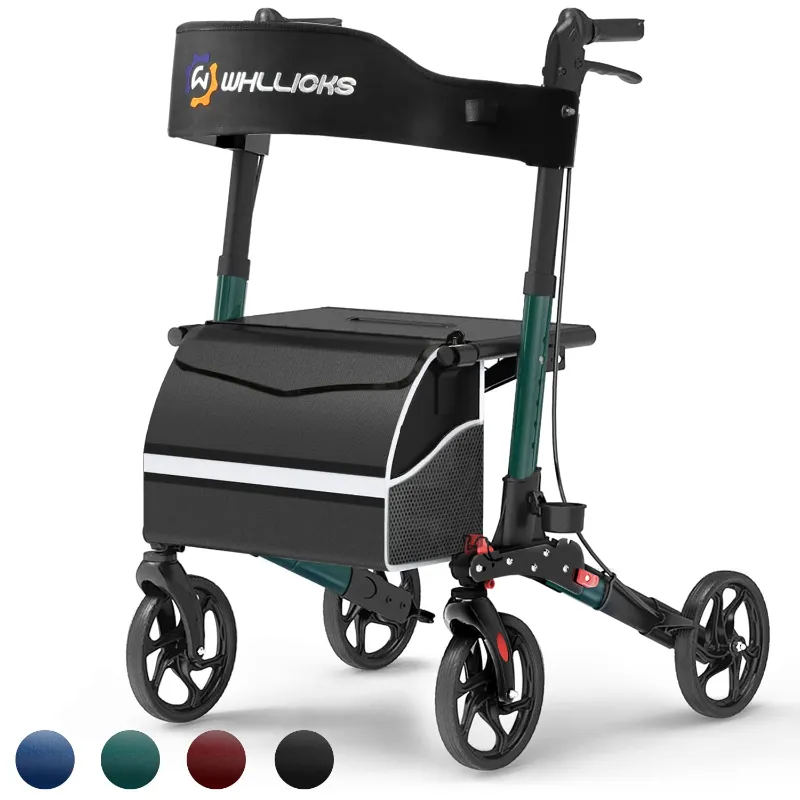
The knee roller tends to work well indoors but can struggle on uneven pavement, while walkers tend to handle both environments better thanks to wider wheels. Crutches technically work anywhere but exhaust users too quickly to be practical for daily activities.
Check the latest pricing and grab our 10% discount code to save on any of these mobility solutions.
Choosing Based on Your Injury and Lifestyle
Choose a knee scooter if you:
- Have strict non-weight-bearing orders for 6+ weeks
- Maintain good balance on one leg
- Need to move quickly around work or home
- Live in a single-story, smooth-floored environment
- Want to carry items while moving
Choose a walker if you:
- Experience dizziness, weakness, or balance issues
- Need partial weight-bearing support
- Have limited upper-body strength
- Require frequent rest breaks
- Navigate stairs daily (walkers are easier to manage on steps than scooters)
Stick with crutches only if:
- Your injury heals within 2-3 weeks
- You have exceptional upper-body fitness
- You must navigate tight spaces like narrow hallways or crowded areas
- You cannot afford a better option
Most orthopedic surgeons now recommend knee scooters over crutches for recovery periods exceeding two weeks. The reduction in secondary injuries (falls, shoulder strain, wrist pain) justifies the investment.
What About Other Mobility Options?
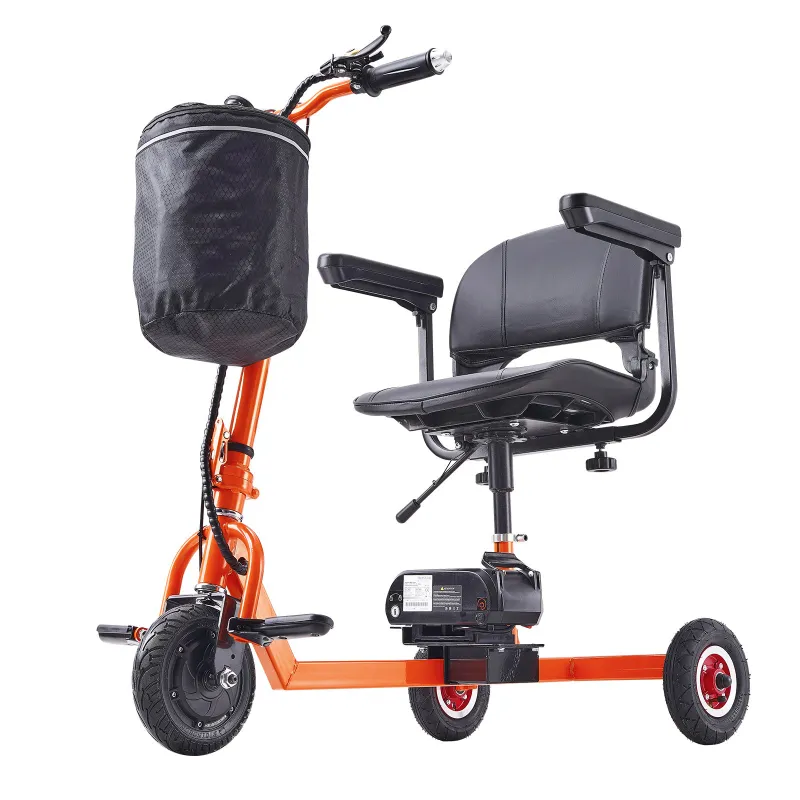
A 3 wheel mobility scooter suits patients who cannot bear weight on either leg or who face extended recovery periods spanning months. These powered devices cost significantly more than knee scooters but eliminate all physical effort, making them ideal for elderly patients or those with limited stamina.
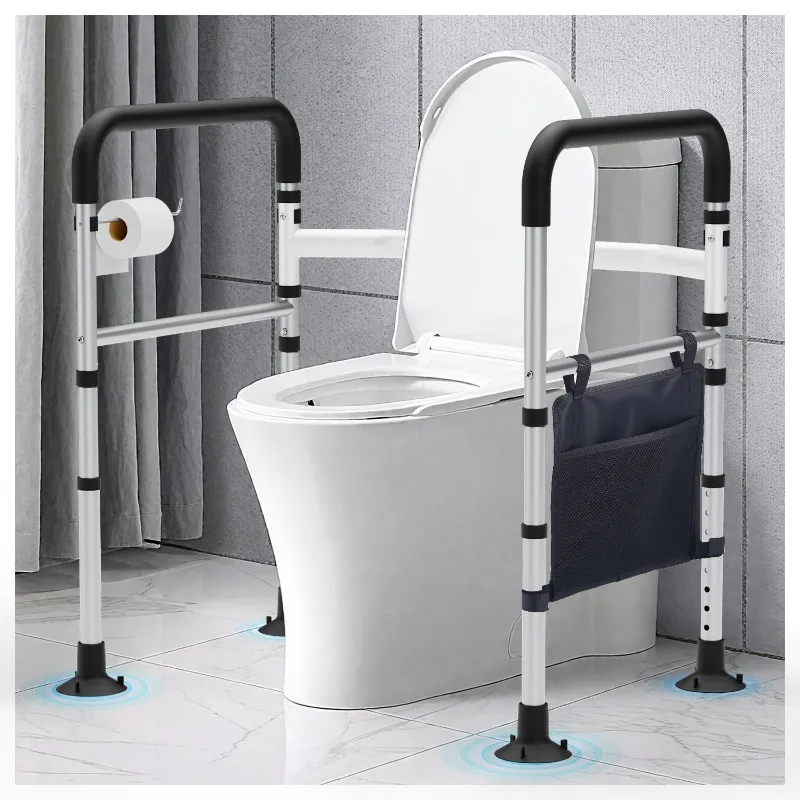
For patients who primarily need assistance standing from seated positions rather than walking aid, toilet safety rails prevent bathroom falls, the most common injury site during recovery. Pair these with a walker for comprehensive home safety.
Some patients benefit from transitioning between aids as healing progresses. Start with a knee scooter during strict non-weight-bearing phases, then switch to senior walkers with seat options as you begin partial weight-bearing exercises. This staged approach builds strength while maintaining safety. Wirecutter’s walker testing identifies models that work well for transitional recovery periods.
Getting the Most From Your Mobility Aid
Adjust the handlebar or grip height so your elbows bend at approximately 15 degrees when standing naturally. Incorrect height forces you into hunched or overstretched postures that cause back and shoulder pain within days.
For knee scooters, position the knee pad so your hip, knee, and ankle stay aligned. Too far forward and you will strain your hip flexors; too far back and you will lose steering control. Most quality models offer tool-free adjustments that let you dial in the perfect fit in seconds.
Practice turning in open spaces before attempting narrow doorways. Knee scooters have wider turning radii than you expect, and walkers require you to lift and reposition rather than pivot smoothly. We recommend measuring your home’s narrowest passages and confirming your chosen aid can navigate them before purchasing.
Visit our discount code page to access current pricing on knee scooters, walkers, and other recovery equipment with our exclusive 10% sitewide offer.
Maintenance and Long-Term Use
Inspect wheels weekly for debris, hair, and wear. Both knee scooters and walkers use similar wheel assemblies that clog easily and degrade stopping power. Most manufacturers include replacement wheels, but checking them proactively prevents sudden failures.
Tighten all bolts and joints monthly, especially if you use your aid outdoors. Vibration from sidewalk cracks and curbs loosens hardware faster than smooth indoor use. Carry a basic Allen wrench set for field adjustments.
Clean padded surfaces with disinfectant wipes after sweaty summer use or if multiple family members share the device. Knee pads and walker grips harbor bacteria that cause skin irritation during extended contact.
Store your mobility aid in a dry location. Garages and basements with high humidity corrode brake cables and rust bearings, shortening functional life from years to months. If you must store outdoors, use a waterproof cover and elevate the device off concrete.
Making Your Decision
Your recovery timeline, physical condition, and home environment should drive your choice more than cost alone. A knee scotter that sits unused because you lack the balance to operate it safely wastes more money than investing in the right walker from the start.
Consult your physical therapist or orthopedic surgeon before purchasing. They can assess your specific injury, strength, and home setup to recommend the most appropriate aid. Many insurance plans cover prescribed mobility devices, potentially reducing your out-of-pocket cost to zero.
Whether that is a knee scooter, walker, or another solution, proper support accelerates healing and prevents the secondary injuries that extend recovery by weeks or months.
Questions
Can I use a knee scooter if I have balance problems?
Knee scooters require good balance on one leg to operate safely. If you experience dizziness or unsteadiness, senior walkers provide a more stable four-point base that reduces fall risk during recovery.
How long does it take to learn to use a knee walker scooter?
Most users master basic knee scooter operation within 5 to 10 minutes of practice. Start in an open space to learn steering and braking before attempting narrow hallways or doorways.
Do walkers work better than knee scooters for going up stairs?
Yes. You can hop up stairs while holding a walker's frame for support, whereas knee scooters must be carried separately. For homes with stairs, walkers offer significantly more practical daily use.
Can I use a knee scooter outdoors on sidewalks?
Knee scooters work on smooth sidewalks but struggle with gravel, grass, and cracked pavement. Look for models with larger pneumatic tires if you need outdoor capability, or choose a walker with all-terrain wheels instead.
Which mobility aid is best for elderly patients recovering from ankle surgery?
Senior walkers typically suit elderly patients better because they accommodate existing balance issues, arthritis, and reduced upper-body strength that make knee scooters difficult to control safely.
How do I know if I need a walker with a seat?
Choose a walker with a seat if you experience fatigue during short walks, have heart or lung conditions, or need to rest frequently during errands. The seat eliminates the need to find chairs while out.
Products in this guide
 Shopping at WHLICKS? See the discount code
10% OFF Sitewide
Shopping at WHLICKS? See the discount code
10% OFF Sitewide
More in this series
What’s the Weight Limit on Toilet Safety Rails and How to Install Them Safely21 Aug 20266 min Transport Wheelchair or Standard Wheelchair: Which One Do You Actually Need?21 Aug 20266 min
 How Long Do Handicap Ramps Last and What Materials Hold Up Best?21 Aug 20264 min
 Shower Chair vs Shower Seat vs Bath Chair: What’s the Difference?21 Aug 20265 minHow to Choose the Right Mobility Scooter: 3-Wheel vs 4-Wheel for Seniors21 Aug 20265 min