 A Go Kalimba guide
Why the Kalimba Is the Perfect First Instrument for Adults
The kalimba the perfect first instrument for learning music as an adult because you can play melodies within minutes and no prior experience is required.
The kalimba the perfect first instrument for adults who want to learn music without years of practice or expensive gear. You can produce pleasant sounds on day one, stay motivated through the learning curve, and build real musical skills faster than traditional instruments. If you’ve always wanted to play something but worried about complexity or cost, here’s what you need to know.
Why the kalimba stands out as the perfect first instrument
Most people quit learning guitar, piano, or violin within months. The kalimba breaks that pattern because the barrier to entry is genuine. Your thumbs do the work, not finger strength or hand span. There’s no steep ramp where everything sounds bad for six weeks before it gets better.
Why is the Kalimba Such a great instrument to play? highlights the low learning curve as a core strength. You can sit down, follow a tutorial, and play a recognizable song the same day. That immediate win is rare in instrument learning and keeps you coming back.
The cost difference matters too. A decent beginner guitar runs 150-300 dollars. A quality kalimba costs a fraction of that, with many solid options under 50 dollars. Grab the code for 5% off all orders if you’re ready to start.
How quickly can you actually play?
The kalimba’s design does the heavy lifting for you. The tines are arranged so that your thumbs naturally fall on the notes of a scale. You don’t need to learn complex finger placements or develop calluses before basic playing becomes comfortable.
Within your first week, you can expect to:
- Play simple one-handed melodies
- Understand which tines create which notes
- Complete your first recognizable tune
Within a month of casual practice (20-30 minutes, 3-4 times weekly), you’ll handle two-handed patterns and improvise over basic progressions. Simple Ways to Play the Kalimba (with Pictures) walks through fundamental techniques step by step.
The kalimba the perfect first instrument partly because the feedback loop is short. You hear improvement immediately, which reinforces motivation in a way that delayed gratification never does.
Kalimba types and what suits a beginner
Kalimbas come in a few flavors, and knowing the differences helps you pick right.
| Type | Tine Count | Best For | Sound |
|---|---|---|---|
| Thumb Piano | 17-21 tines | Most beginners | Warm, organic |
| Concert Kalimba | 21-34 tines | Intermediate players | Brighter range |
| Electro-Acoustic | Any | Amplified play | Varies by model |
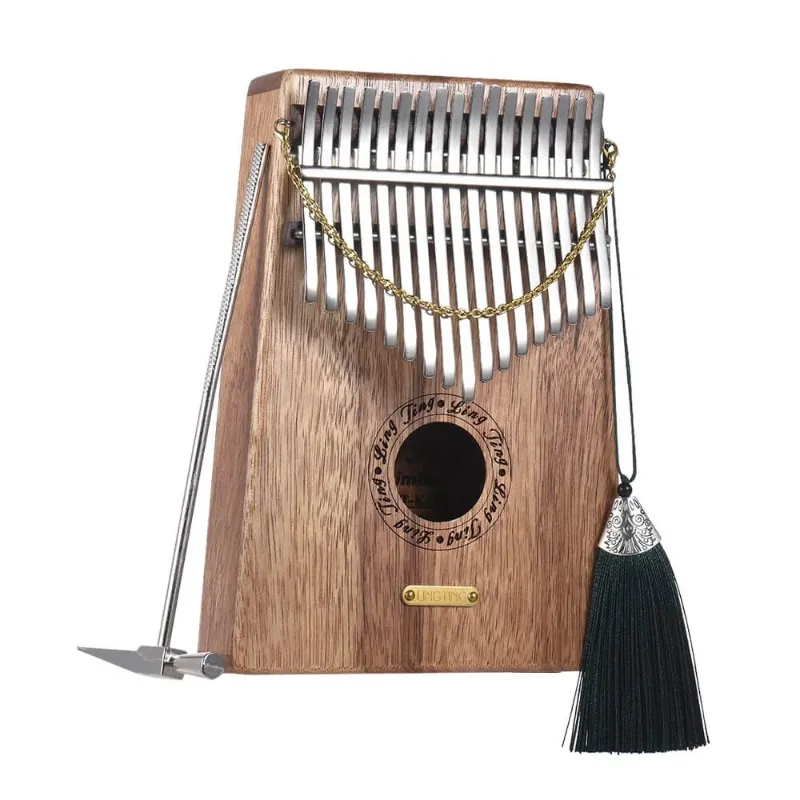
For your first kalimba, a standard thumb piano with 17-21 tines is ideal. It covers enough of the musical range to play real songs without overwhelming you with options. The smaller, lighter frame also fits adult hands comfortably.
Material matters more than you might think. Kalimbas made from solid wood or high-quality composite produce cleaner, more resonant tones than cheap plastic versions. African blackwood or sapele are common premium choices, but decent kalimbas also use engineered wood. Check the latest price on Go Kalimba to see what’s available now.
What you actually need to get started
The beauty of the kalimba the perfect first instrument is that you need almost nothing extra.
- The kalimba itself (obviously)
- Thumb picks (optional, but they protect your thumbnails and sharpen the tone)
- A soft carrying case (keeps it safe and makes you more likely to travel with it)
- A tuner app (free on your phone; helps you maintain pitch)
You don’t need an amplifier, a stand, a music theory degree, or a dedicated practice space. A 10-minute session on your couch counts. That accessibility removes friction between wanting to play and actually playing.
Care and maintenance keep it sounding great
Kalimbas are surprisingly durable, but a few simple habits extend their life and keep the tone consistent.
- Store it in a dry place. Humidity warps the wood and throws the tuning off.
- Clean the tines gently with a soft cloth to remove dust and skin oils.
- Retune occasionally. Most kalimbas drift slightly over time, especially in temperature swings.
- Avoid dropping or applying pressure to the tines. They’re metal, but the mounting can loosen.
If a tine does come loose or bend, most manufacturers sell replacement parts. Many players never need to use them, but it’s good to know the support exists.
Who benefits most from learning kalimba
The kalimba the perfect first instrument for adults specifically because the learning style matches how adult brains work. You’re not building muscle memory obsessively. You’re understanding patterns, making conscious choices, and hearing the results immediately.
You benefit if you:
- Work a full-time job and can’t commit 2+ hours daily to practice
- Have tried and quit other instruments before
- Want to decompress without high stakes or competition
- Play by ear or want to explore improvisation
- Have any prior music background (reading sheet music helps but isn’t required)
Parents often find the kalimba perfect for household entertainment too. Kids naturally gravitate toward it, and the sound is genuinely pleasant, not the screechy frustration of learning recorder or violin.
Moving forward from beginner to next steps
Once you’re comfortable with basic melodies, the path forward is yours. Some players dive into fingerstyle and percussive techniques. Others explore extended tunings or even build custom kalimbas. A few transition skills to related instruments like mbira or mountain dulcimer.
The kalimba doesn’t force you down any single direction. It’s genuinely a lifelong instrument, not just a novelty starter tool. That flexibility is part of why it works so well as an entry point.
Start with a solid beginner model, commit to 20-30 minutes a few times a week, and give it three months before deciding. Most players report it clicks much faster than they expected. Grab the code for your purchase and get started today.
Questions
Can I learn kalimba without any music background?
Yes. The kalimba requires no prior music knowledge. The tines are arranged so you naturally play notes in key, and tutorials teach you by thumb position, not sheet music. Many players learn entirely by ear or video guides.
Is the kalimba the perfect first instrument compared to guitar or piano?
For most adults, yes. The kalimba has a shorter learning curve, lower cost, and produces pleasing sounds immediately. Guitar and piano have steeper initial ramps and require more finger strength or hand span development.
How much should I spend on my first kalimba?
A solid beginner kalimba ranges from 30 to 80 dollars. Avoid models under 20 dollars, as the sound quality suffers. Mid-range options offer the best balance of affordability and tone. Check the current offer for discounts before purchasing.
Do I need to read sheet music to play kalimba?
No. Many kalimba players learn by watching tutorials, following thumb patterns, or ear training. Sheet music helps if you want to play specific songs, but it's optional.
How often do I need to tune my kalimba?
Most kalimbas hold tuning well if stored in a stable environment. Check tuning every few weeks or if you notice the sound drifting. Temperature and humidity changes are the main culprits for detuning.
Can adults actually get good at kalimba or is it just a toy?
Adults can reach genuine musical skill on kalimba. Many professionals perform complex fingerstyle arrangements and improvisation. It's not a toy for serious players, though the low barrier to entry makes it accessible as a hobby too.
Shopping at Go Kalimba? See the discount code
5% OFF All Orders
More in this series
 How to Keep Your Kalimba in Tune: Maintenance Tips and When to Use a Kalimba Tuner11 Sep 20264 minCaring for Your Kalimba: Cleaning, Storage, and Tine Maintenance11 Sep 20264 minThe Best Kalimba Sizes and Key Configurations Explained11 Sep 20264 minKalimba vs. Tongue Drum: Which Instrument Is Right for You?11 Sep 20263 minHow to Tune a Kalimba for Beginners: a Step-by-Step Guide11 Sep 20264 min