 A Go Kalimba guide
The Best Kalimba Sizes and Key Configurations Explained
Kalimba sizes and key configurations explained: from beginner-friendly 8-key models to advanced 34-key setups, here's how to pick the right one for you.
Kalimba sizes and key configurations explained comes down to one simple truth: the number of keys determines both how easy the instrument is to learn and what songs you can play. We’ll walk you through each size, the sound differences, and which setup matches your skill level and musical goals.
Understanding Kalimba Key Counts
Kalimbas range from 8 keys on the smallest models to 34 keys on professional instruments. Each configuration changes the learning curve, portability, and musical range. A beginner typically starts with 8 to 17 keys, while intermediate players move to 21-key models, and advanced musicians gravitate toward 34-key kalimbas for richer, more complex arrangements.
The key count also affects how the instrument is tuned. Most kalimbas use a pentatonic or diatonic scale, which means some notes are missing compared to a full piano. This is intentional, it makes melodies harder to play wrong, which is why beginners love the instrument.
8-Key Kalimbas: The Portable Option
8-key models are the smallest and lightest kalimbas available. They’re ideal for travel, casual playing, or testing whether you’ll stick with the instrument before investing in a larger one.
- Ultra-portable and easy to hold
- Limited to simple, pentatonic melodies
- Great for kids or adult beginners
- Fastest learning curve since fewer keys means fewer choices
- Typically the most affordable option
8-key kalimbas won’t handle complex songs, but they sound full and authentic. If you’re buying for someone unsure about long-term commitment, this is the safest entry point.
17-Key Kalimbas: The Beginner Sweet Spot
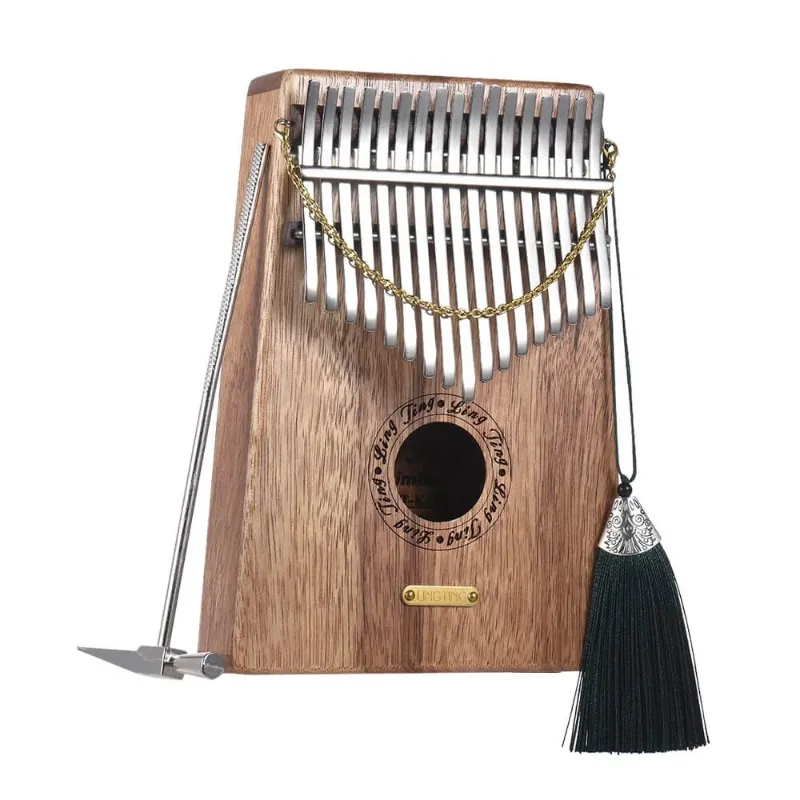
17-key models are the most popular starting point for adults. They give you enough range to play recognizable songs within a few weeks of practice, without overwhelming a newcomer.
- Can play most popular melodies and simple arrangements
- Still portable and affordable
- Good enough for casual home playing
- Longer learning curve than 8-key but manageable for adults
- More satisfying than 8-key once you’ve played a few weeks
A 17-key kalimba typically includes both the natural notes and some sharps/flats, expanding what you can play. Check current pricing and grab the 5% OFF code at Go Kalimba to see popular 17-key models.
21-Key Kalimbas: The Intermediate Bridge
21-key kalimbas sit between beginner-friendly and advanced. They’re for people who’ve mastered a 17-key model or are serious from day one.
- Significantly wider range and tonal depth
- Can handle intermediate-level songs and arrangements
- Better suited for finger independence exercises
- More expensive but still portable
- Popular choice for hobby musicians who play regularly
At this level, you’ll notice a jump in sound quality and musical possibility. If you’re buying as a gift for someone who already plays music (even another instrument), a 21-key is a smart upgrade path.
34-Key Kalimbas: The Professional Standard
34-key kalimbas are the choice of advanced and professional players. This is where 34-key Kalimba music theory analysis becomes relevant, more keys open up chromatic playing and complex arrangements.
- Full range of notes across multiple octaves
- Chromatic tuning allows any song to be played
- Requires solid technique and music theory knowledge
- Larger and heavier than smaller models
- Professional-grade sound quality
- Steeper price point
A 34-key kalimba is an investment. It’s best for people who already play other instruments or who are committed to serious practice. The learning curve is steeper, but the musical rewards are proportional.
Key Configuration and Tuning Systems
Beyond size, how a kalimba is tuned matters just as much. Most kalimbas ship tuned to C pentatonic, meaning they use a five-note scale that limits the “wrong” notes you can play. This tuning is beginner-friendly and sounds beautiful for folk-like melodies.
Some kalimbas, especially 21-key and larger models, come with or can be tuned to diatonic or chromatic systems. Our full kalimba purchase guide covers tuning systems in depth if you’re ready to explore options beyond the standard pentatonic setup.
The tines (metal keys) themselves are usually made from aluminum, steel, or alloy, all of which sound similar. What matters more is the board: quality hardwood like mahogany or walnut resonates better than cheaper materials.
Choosing the Right Size for Your Skill Level
| Skill Level | Recommended Size | Best For |
|---|---|---|
| Absolute beginner | 8-key or 17-key | Testing commitment, learning rhythm |
| Active learner | 17-key or 21-key | Playing songs within weeks, steady practice |
| Experienced musician | 21-key or 34-key | Advancing technique, exploring arrangements |
| Professional | 34-key | Performances, complex compositions |
If you’re buying for someone else, ask whether they play music already. If no, start with 17-key. If yes, jump to 21-key. A 34-key should only go to someone with real musical training or serious dedication.
For beginners specifically, this guide on choosing kalimbas for beginners breaks down the 18-key and 21-key decision with practical advice.
How Portability and Sound Trade Off
Smaller kalimbas are easier to carry but quieter and less resonant. A 34-key kalimba needs a stand or table to sound its best, it’s not a casual grab-and-play instrument. An 8-key fits in a backpack but won’t fill a room. A 17-key hits the middle ground: portable enough for travel but loud enough for home enjoyment.
If you play sitting down at home, go bigger. If you travel or play outdoors, prioritize size and weight. Check the latest pricing and current offers to compare models across different sizes at Go Kalimba.
Making Your Final Choice
The right kalimba size depends on your commitment level, available time, and budget. Beginners almost never regret starting with a 17-key model, it’s the safest investment. If you already play music, skip to 21-key. If you’re a casual player, 8-key is honest and fun. Professionals and serious hobbyists will eventually want a 34-key, but it’s not a first purchase for most people.
Kalimba sizes and key configurations explained ultimately come down to this: bigger isn’t always better, but the wrong size will frustrate you. Match the instrument to where you actually are, not where you wish to be.
Questions
What's the difference between 17-key and 21-key kalimbas?
A 17-key kalimba covers the basics with enough range for beginner and intermediate songs. A 21-key adds sharps and flats, letting you play a wider variety of music and develop better finger technique. Start with 17-key unless you already play another instrument.
Are kalimba sizes and key configurations explained in terms of how many hours I need to practice?
Smaller kalimbas (8-17 keys) let you play simple songs within 2 to 4 weeks of casual practice. Larger models (21-34 keys) require more technique but open up more music, plan months of regular practice to get comfortable with 21+ keys.
Can I switch from an 8-key to a 17-key kalimba later?
Yes, absolutely. Switching is easy because the layout and finger patterns are similar. Many people start with 8-key to learn, then upgrade to 17-key once they're confident. Just note that 8-key might feel limiting faster than you'd expect.
Is a 34-key kalimba worth it for a beginner?
No. A 34-key is harder to play, more expensive, and will frustrate beginners who haven't developed finger strength or hand independence yet. Wait until you've mastered a 17 or 21-key model before considering a 34-key.
Which kalimba size is best for travel?
An 8-key or 17-key kalimba is portable enough to pack in a bag or carry-on. A 21-key is still manageable but bulkier. A 34-key needs careful protection and isn't practical for frequent travel.
Do more keys mean better sound quality?
More keys give you a wider range and tonal depth, but sound quality also depends on the materials (board wood and tine metal) and build quality. A well-made 17-key sounds better than a cheap 34-key.
Shopping at Go Kalimba? See the discount code
5% OFF All Orders
More in this series
 How to Keep Your Kalimba in Tune: Maintenance Tips and When to Use a Kalimba Tuner11 Sep 20264 minWhy the Kalimba Is the Perfect First Instrument for Adults11 Sep 20264 minCaring for Your Kalimba: Cleaning, Storage, and Tine Maintenance11 Sep 20264 minKalimba vs. Tongue Drum: Which Instrument Is Right for You?11 Sep 20263 minHow to Tune a Kalimba for Beginners: a Step-by-Step Guide11 Sep 20264 min