 A FNIRSI guide
How to Choose Between the FNIRSI LCR-P1 and DE-5000 LCR Meters
The fnirsi lcr-p1 vs de-5000 debate boils down to whether you need hobbyist portability or pro-grade accuracy for your component testing bench.
FNIRSI LCR-P1 vs DE-5000: Which LCR Meter to Buy?
When comparing the fnirsi lcr-p1 vs de-5000, the LCR-P1 delivers fast automatic component detection and a compact form factor ideal for hobbyists and field repairs, while the DE-5000 offers laboratory-grade accuracy and detailed measurement parameters that professional techs and engineers demand.
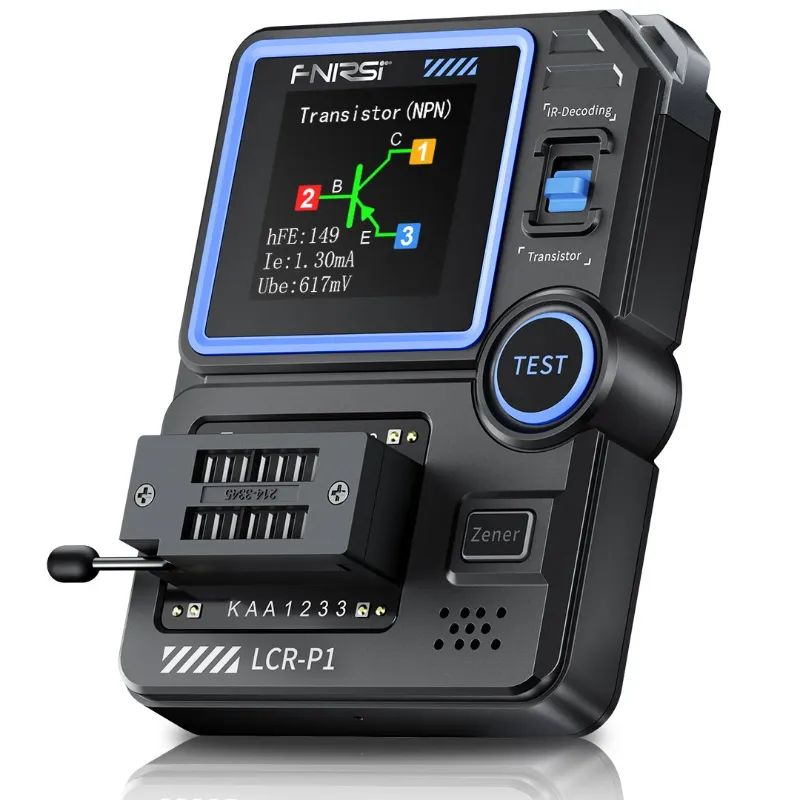
Both meters measure inductance (L), capacitance (C), and resistance (R), but they target different users. The fnirsi lcr-p1 excels at quick sorting and go/no-go checks in a portable package, while the DE-5000 provides multi-frequency testing and tighter tolerances for precision circuit design. Your choice depends on whether speed and portability or lab-grade specs matter more for your projects.
Key Differences Between the LCR-P1 and DE-5000
Understanding where these meters diverge helps you match features to your actual workflow.
Measurement accuracy separates hobbyist from professional tools. The DE-5000 specifies 0.1% basic accuracy for capacitance and resistance, with inductance accuracy around 0.2%, making it suitable for calibration-sensitive applications. The LCR-P1 provides typical accuracy in the 1% to 2% range, which handles component sorting, repair verification, and most hobby electronics without issue. If you design RF circuits or calibrate equipment, the DE-5000’s tighter specs justify the investment.
Test frequency and modes affect which components you can characterize. The DE-5000 offers selectable test frequencies (100 Hz, 120 Hz, 1 kHz, 10 kHz, and 100 kHz), letting you measure impedance behavior across the spectrum and evaluate ESR at multiple points. The LCR-P1 uses a fixed test frequency optimized for general component identification. For passive parts in audio, power, or digital circuits, single-frequency testing works fine. For tuned circuits and EMI filters, multi-frequency data is essential.
Speed and workflow matter when you sort hundreds of components. The fnirsi lcr-p1 vs de-5000 comparison often highlights the LCR-P1’s automatic detection, it identifies whether you inserted a resistor, capacitor, or inductor and displays the result in under a second. The DE-5000 requires you to select the measurement mode manually, adding a step but giving you control over range and frequency. Hobbyists sorting salvaged parts prefer the LCR-P1’s speed; techs documenting measurements for reports value the DE-5000’s configurability.
Build and durability reflect their intended environments. The DE-5000 ships in a rigid case with a tilting stand, Kelvin test leads, and SMD tweezers, designed to live on a bench. The LCR-P1 fits in a pocket, runs on a rechargeable battery, and uses a simpler ZIF socket for through-hole leads.
Measurement Range and Component Coverage
| Feature | FNIRSI LCR-P1 | DE-5000 |
|---|---|---|
| Capacitance range | 0.01 pF to 100 mF | 0.01 pF to 100 mF |
| Inductance range | 0.01 µH to 100 H | 0.01 µH to 10 H |
| Resistance range | 0.01 Ω to 100 MΩ | 0.01 Ω to 100 MΩ |
| Test frequencies | Single (auto) | 100 Hz to 100 kHz |
Both meters cover the full range of common passives, from SMD ceramics to large electrolytics and power chokes. The LCR-P1 extends inductance measurement to 100 H, useful for relay coils and transformer primaries, while the DE-5000 stops at 10 H but adds ESR and dissipation factor (D) readouts that reveal component quality. Check the latest price to see which meter fits your budget.
Practical Use Cases for Each Meter
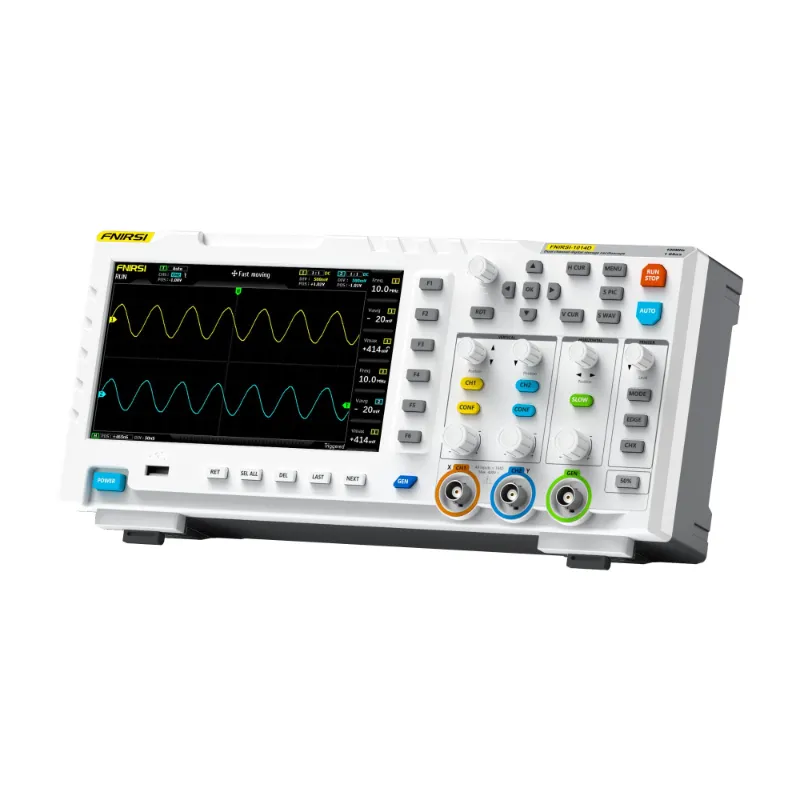
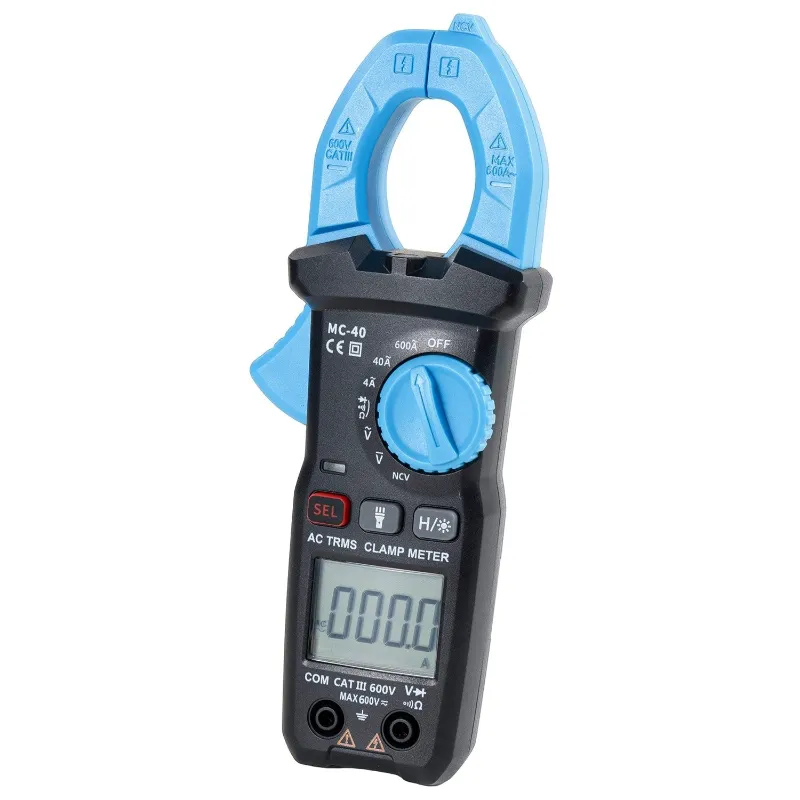
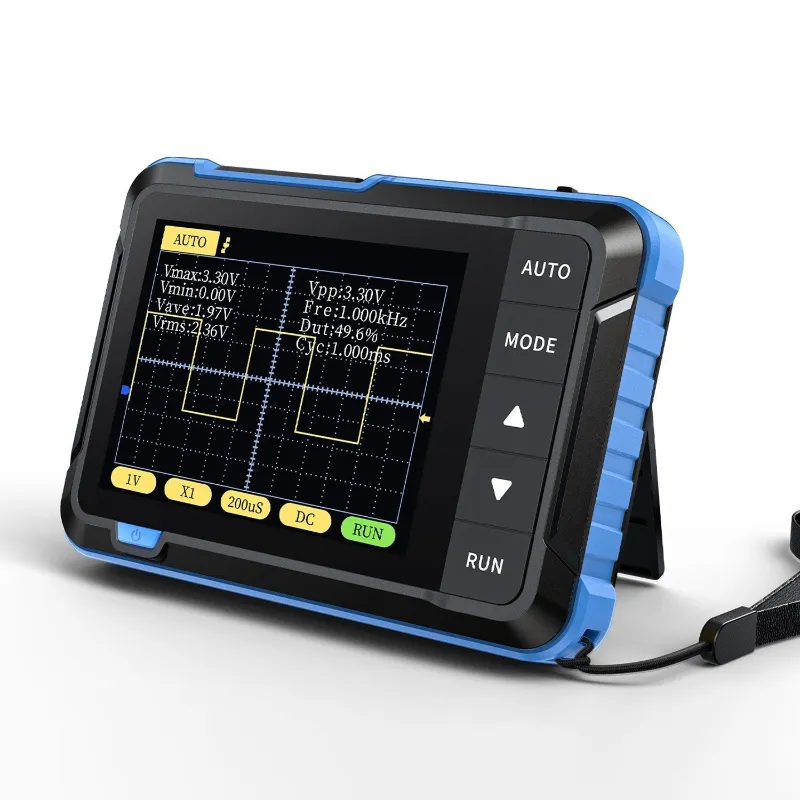
Hobbyists and repair techs appreciate the LCR-P1’s portability and instant results. If you salvage components, verify unmarked capacitors, or troubleshoot guitar pedals and vintage gear, the automatic mode and battery power let you work anywhere. The form factor pairs well with other portable tools like a fnirsi oscilloscope or multimeter clamps in a mobile kit. Community feedback on the LCR-P1 Tester highlights its value for quick component checks during builds.
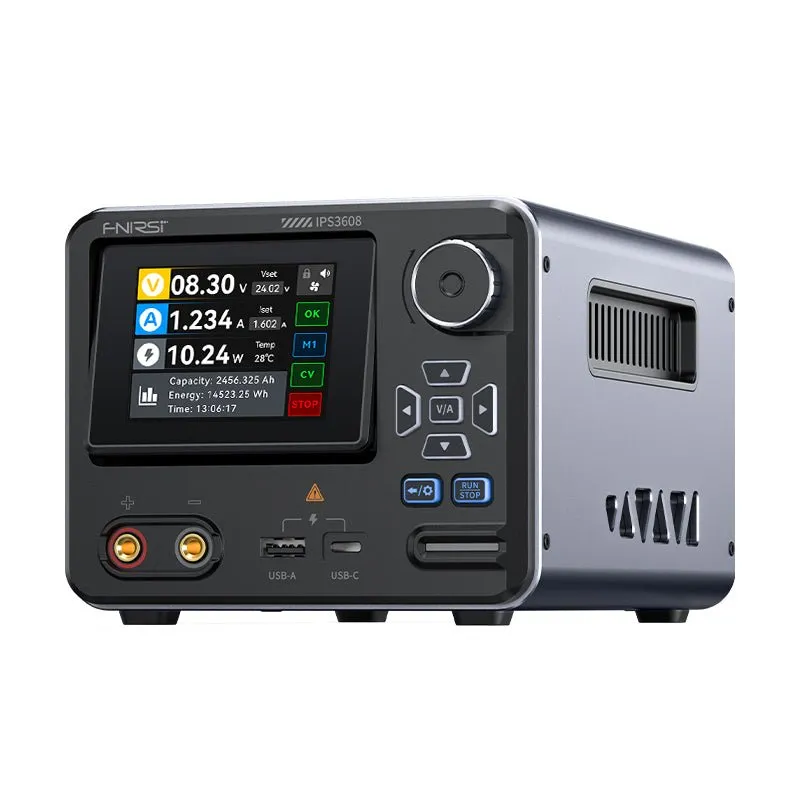
Professional engineers and calibration labs lean toward the DE-5000 when measurement traceability and documentation matter. If you design filters, match capacitors for crossover networks, or qualify incoming parts against datasheets, the selectable test frequency and detailed readouts (Q, D, ESR, Z, θ) provide the data you need. The DE-5000 also connects to a PC for logging, a feature the LCR-P1 lacks. Lab techs often pair it with a bench fnirsi ips3608 power supply for a complete passive measurement station.
Electronics educators find the LCR-P1’s simplicity ideal for teaching component identification, while the DE-5000 suits advanced courses covering impedance, resonance, and component behavior across frequency. Both meters help students verify hand-wound inductors or measure capacitor ESR in power supply labs.
Accuracy, Reliability, and Limitations
Specification sheets tell part of the story, but actual performance depends on the components you measure and how you use each meter.
- Resistors: check values against a known reference component when precision matters, especially near the low and high ends of each meter’s range.
- Capacitors: readings on ESR and capacitance can vary with frequency and component condition. If the LCR-P1 reports a capacitor as “good” but you suspect it is failing, cross check with a meter that reports ESR directly.
- Inductors: very low inductance values are the hardest for any meter to read consistently, so expect more variation at the extremes of each device’s range.
Discussions on LCR meters compared confirm that the DE-5000’s multi-frequency capability catches frequency-dependent behavior the LCR-P1 misses. For sorting donor boards or verifying replacements, the LCR-P1’s speed and “good enough” accuracy win. For design validation and failure analysis, the DE-5000’s detail and precision are worth the extra cost.
Price, Value, and Where to Buy
The fnirsi lcr-p1 typically sells for a fraction of the DE-5000’s list price, making it the budget-friendly entry point for hobbyists building their first component test bench. The DE-5000 commands a premium but includes Kelvin clips, SMD tweezers, and software, reducing the need for separate accessories. Both offer strong value in their segments.
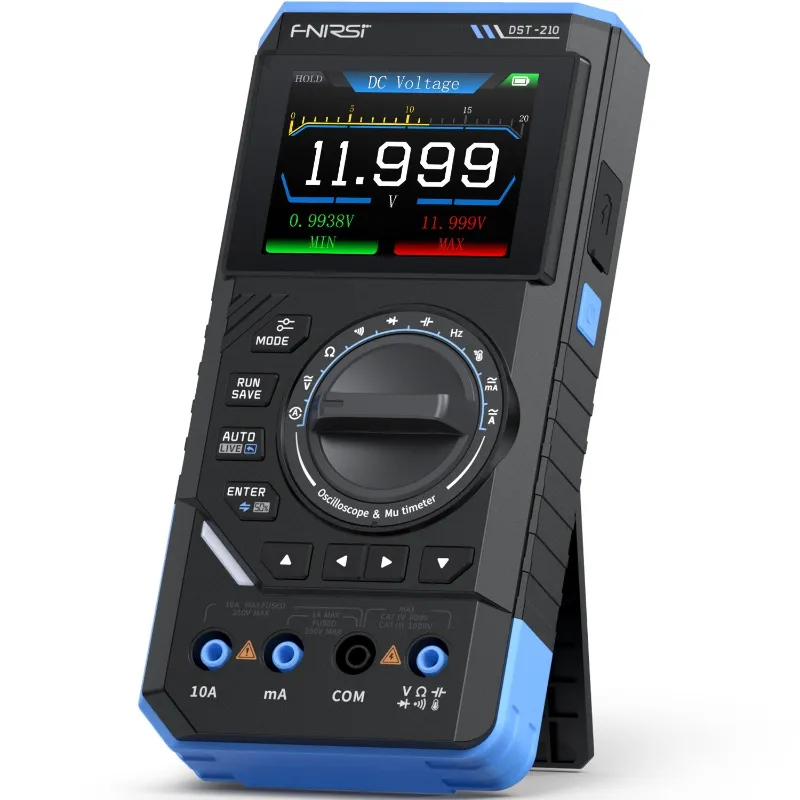
If you already own basic test gear like a dst-210 digital tester or fnirsi dso152 oscilloscope, adding the LCR-P1 rounds out your portable kit without doubling your investment. For professional shops, the DE-5000 complements higher-end equipment and provides measurement confidence that cheaper meters cannot.
Grab the code for 6% off your FNIRSI order to save on the LCR-P1 and compatible accessories.
Our Recommendation: Which Meter Fits Your Bench?
Choose the FNIRSI LCR-P1 if you need a fast, portable meter for component sorting, repair work, and hobby projects where 1% to 2% accuracy suffices. Its automatic detection, battery operation, and compact size make it ideal for mobile techs, makers, and anyone learning electronics. The price point also makes it a low-risk first LCR meter.
Choose the DE-5000 if you require lab-grade accuracy, multi-frequency testing, and detailed parameters like ESR and dissipation factor for professional design, calibration, or quality control. Engineers, RF designers, and serious hobbyists who document measurements or match components will appreciate the extra precision and features. The included accessories and PC connectivity add long-term value.
Match your choice to your accuracy requirements, workflow, and whether you test components at your desk or on the go. Either meter pairs well with other FNIRSI tools to build a complete test setup.
Questions
Is the FNIRSI LCR-P1 accurate enough for component matching?
The LCR-P1 provides 1% to 2% typical accuracy, which works for general sorting and go/no-go checks but may not be tight enough for precision matching in crossover networks or RF circuits. For those applications, the DE-5000's 0.1% to 0.2% accuracy is a better fit.
Can the DE-5000 measure SMD components directly?
Yes, the DE-5000 includes SMD tweezers with Kelvin contacts that let you measure surface-mount resistors, capacitors, and inductors without soldering leads. The LCR-P1 requires you to insert components into its ZIF socket or solder temporary leads.
Which LCR meter is better for measuring ESR in capacitors?
The DE-5000 displays ESR directly and lets you test at multiple frequencies to see how series resistance changes, making it the better choice for evaluating capacitor health. The LCR-P1 does not report ESR separately.
Does the FNIRSI LCR-P1 work with very small capacitors under 10 pF?
The LCR-P1 can measure down to 0.01 pF in spec, but real-world accuracy and stability below 10 pF suffer from test lead capacitance. The DE-5000's higher test frequency and Kelvin connections provide more reliable readings in that range.
Can I use the LCR-P1 for in-circuit testing?
Neither the LCR-P1 nor the DE-5000 is designed for in-circuit testing. Both require isolated components because parallel circuit paths and active devices skew readings. Always lift at least one lead before measuring.
How long does the LCR-P1 battery last on a charge?
Typical use delivers several hours of intermittent testing per charge. The auto-off feature helps conserve battery when you set the meter down between measurements, extending runtime for field work.
Products in this guide
 Shopping at FNIRSI? See the discount code
6% OFF All Orders
Shopping at FNIRSI? See the discount code
6% OFF All Orders
More in this series
Which FNIRSI Multimeter Clamps Work Best for HVAC and Automotive Testing?3 Aug 20265 minTroubleshooting Common Issues with the FNIRSI IPS3608 Power Supply3 Aug 20265 minFNIRSI DSO152 Oscilloscope: What Can It Actually Measure?3 Aug 20264 min Can the FNIRSI Pocket Geiger Counter Accurately Detect Radiation Levels?3 Aug 20264 min
 FNIRSI HS-02A Soldering Iron Review: Is It Worth It for Electronics Work?3 Aug 20264 min