 A FNIRSI guide
Can the FNIRSI Pocket Geiger Counter Accurately Detect Radiation Levels?
A pocket geiger counter from FNIRSI can accurately detect radiation levels for home testing and field work when you understand its sensor type and calibration.
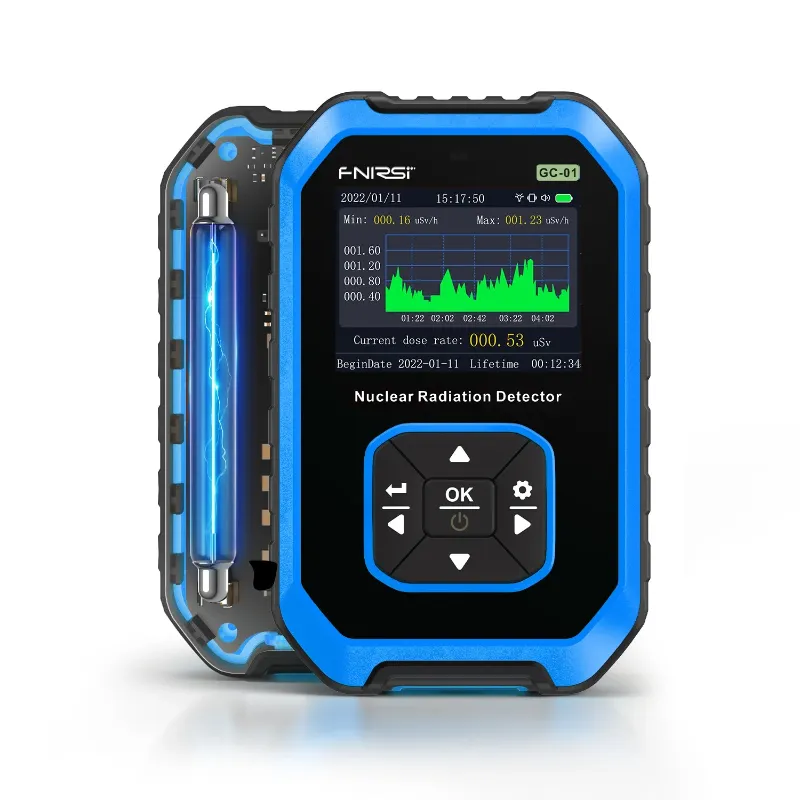
Yes, a pocket geiger counter from FNIRSI can accurately detect radiation levels for most civilian applications, including home safety checks, mineral prospecting, and environmental monitoring. The accuracy depends on the sensor technology, calibration quality, and the type of radiation you’re measuring.
How Accurate Are Pocket Radiation Detectors
Modern pocket radiation detectors use Geiger-Müller tubes or solid-state sensors to count ionizing particles. FNIRSI’s geiger counter radiation detector models typically measure beta, gamma, and X-ray radiation with sensitivity down to 0.01 µSv/h, which covers the range most users need for detecting elevated background radiation or contaminated materials.
The key limitations are:
- Energy response: Most pocket units are calibrated for Cs-137 gamma energy (662 keV), so readings for other isotopes may require correction factors
- Dose rate vs. count rate: Budget models display counts per minute (CPM) rather than dose in µSv/h, requiring manual conversion
- Dead time: At very high radiation levels above 10 mSv/h, sensors can saturate and underreport
For comparison, a nuclear radiation detector with spectroscopy features can identify specific isotopes, while simpler geiger counter models give you total ionizing radiation without nuclide discrimination.
What Makes the Best Pocket Geiger Counter
The best pocket geiger counter balances portability, sensitivity, and readout clarity. Here’s what separates reliable units from toys:
- Sensor tube size: Larger tubes (e.g., SBM-20 or M4011) detect more particles per second, improving low-dose accuracy and response time
- Calibration certificate: Factory calibration against a known Cs-137 or Co-60 source ensures the dose conversion is trustworthy
- Audible clicking: Real-time audio feedback lets you sweep an area without watching the screen
- Data logging: Internal memory or Bluetooth export helps document exposure over time
- Battery life: 40+ hours of continuous use means you won’t lose readings mid-survey
FNIRSI’s analog geiger counter models offer straightforward needle or LCD displays, while digital versions include threshold alarms and averaging modes. Both are valid; check the latest price to see which fits your budget.
Comparing FNIRSI Radiation Detection to Other Test Gear
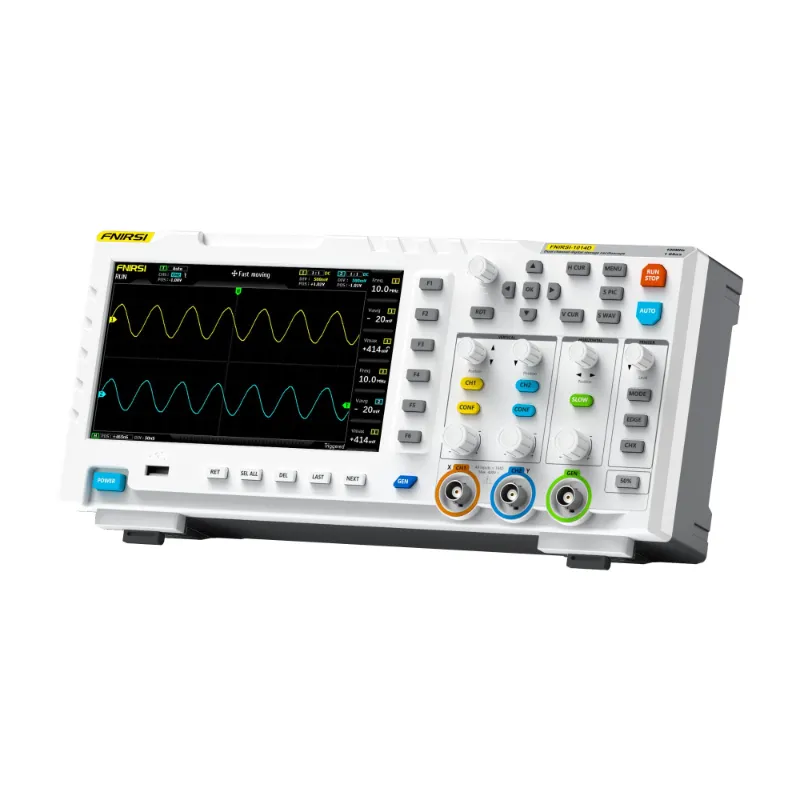
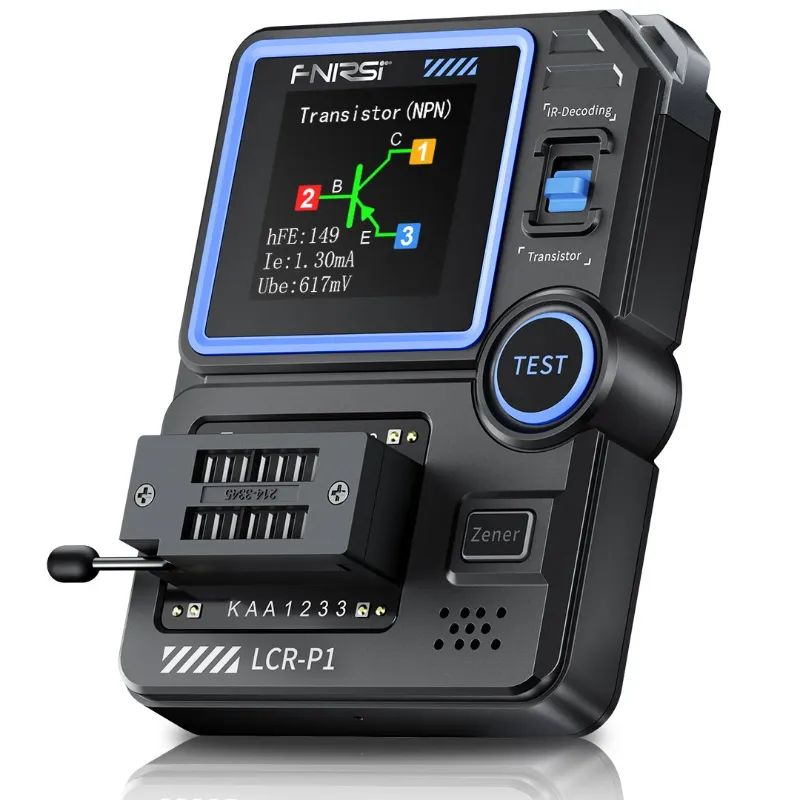
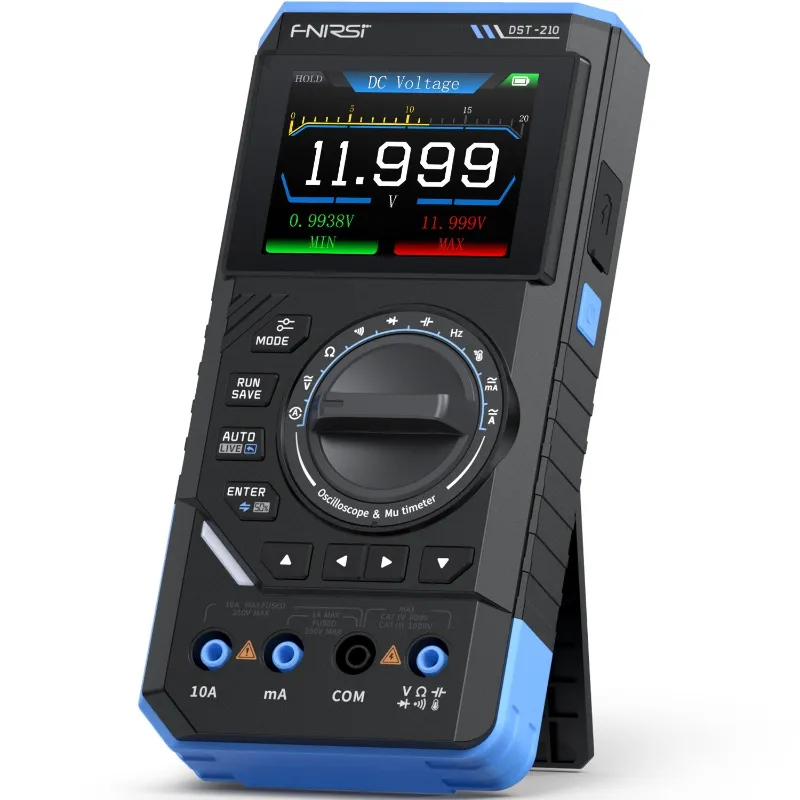
FNIRSI is better known for precision electronics test equipment, including the fnirsi oscilloscope, fnirsi lcr-p1 component testers, and the dst-210 multimeter. Their geiger counters share the same build philosophy: compact, affordable, and feature-complete for hobbyists and field technicians.
| Feature | Pocket Geiger Counter | LCR Meter | Oscilloscope |
|---|---|---|---|
| Primary use | Ionizing radiation | Component testing | Waveform analysis |
| Portability | Shirt pocket | Handheld | Benchtop or handheld |
| Typical price | $80 to $250 | $50 to $150 | $100 to $400 |
| Battery runtime | 40 to 80 hours | 20 to 30 hours | 3 to 6 hours |
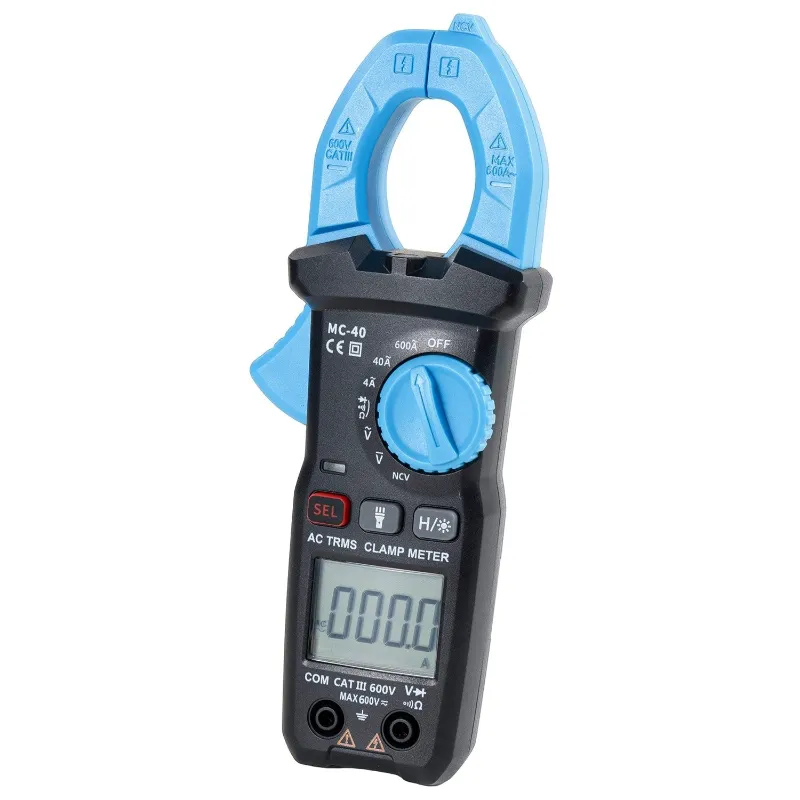
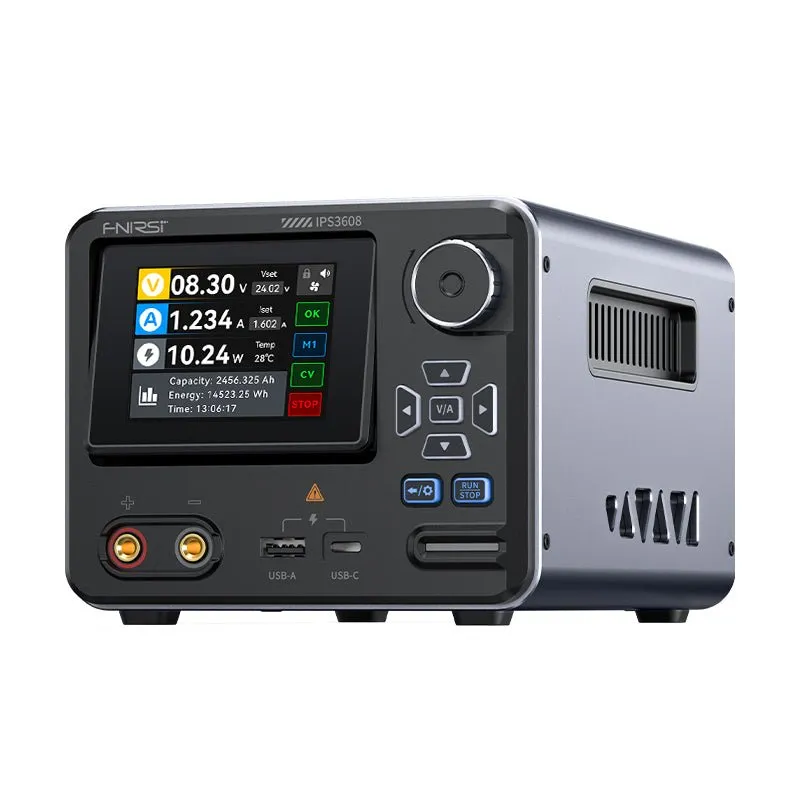
If you already own multimeter clamps or the fnirsi ips3608 power supply for electronics work, adding a radiation detector rounds out your diagnostic toolkit for salvage electronics, vintage watch dials, and tile or granite testing.
For a deeper dive into sensor technology, Radiacode’s pocket radiation detectors offer gamma spectroscopy in a similarly compact form factor, and TruePrepper’s geiger counter guide benchmarks sensitivity across consumer models.
How to Use a Pocket Geiger Counter for Reliable Readings
To get accurate measurements, follow these field-tested practices:
- Warm up the sensor: Let the unit stabilize for 30 to 60 seconds after power-on; initial readings often spike or drift
- Average over time: Radiation is a random process, so take 2 to 3 minute averages rather than trusting instant peaks
- Measure background first: Record your local background (typically 0.05 to 0.20 µSv/h) in a known-clean area, then compare suspect items against that baseline
- Distance matters: Inverse-square law applies; moving from 1 cm to 10 cm away drops the reading by ~100×
- Shield the back: Some detectors are more sensitive from one side; consult the manual and orient the sensor window toward the source
We also recommend cross-checking suspicious readings with a second device or a different measurement location. False positives from electrical noise or mechanical shock do occur, especially in cheaper units.
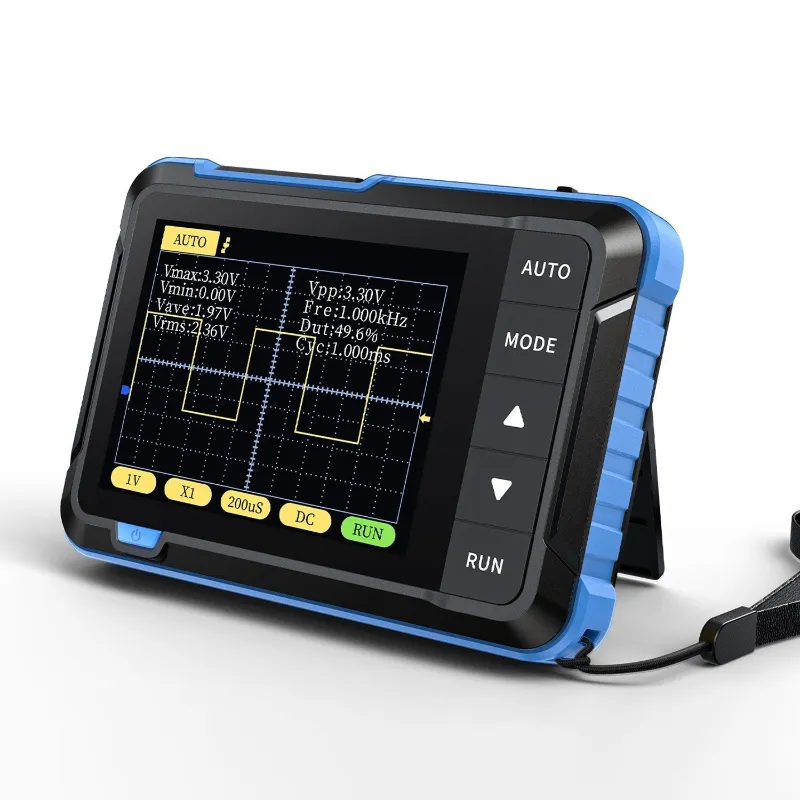
If you’re testing components or circuit boards for thorium-doped ceramics, a fnirsi dso152 oscilloscope won’t help, but a geiger counter will immediately flag gamma emitters.
When to Upgrade from a Basic Analog Geiger Counter
An analog geiger counter with a mechanical meter is rugged and needs no calibration updates, but it lacks the features that make field work efficient. Consider upgrading to a digital pocket radiation detector if you need:
- Dose accumulation: Track total exposure over a shift or project
- Alarm thresholds: Audible or vibration alerts when you exceed a preset limit
- Data export: USB or Bluetooth logging for compliance documentation
- Compensated energy response: Automatic correction for different gamma energies
FNIRSI’s digital models and competing units from GQ, Radex, and Mazur typically add these features for $50 to $100 more than a bare-bones analog meter. Grab the code for 6% off all orders if you’re ready to step up.
For hobbyists building DIY detectors, Instructables’ simplest geiger counter project demonstrates the core circuit, though factory-calibrated units remain more reliable for quantitative work.
Who Should Buy a Pocket Geiger Counter
A pocket geiger counter is a practical investment if you:
- Collect or resell vintage items (watches, glassware, optical lenses, camping lantern mantles)
- Prospect for uranium or thorium-bearing minerals
- Test building materials (granite countertops, tile, reclaimed brick)
- Work in healthcare, research, or industrial radiography and want a personal dosimeter backup
- Travel to areas with known contamination (Chernobyl exclusion zone tours, Fukushima vicinity, former nuclear test sites)
It’s less useful for alpha particle detection (most pocket units have plastic or metal windows that block alpha) or for verifying food contamination (you’d need a gamma spectrometer to identify Cs-137 or I-131 in produce).
Each tool has a distinct niche, and together they cover most field diagnostic scenarios.
Final Thoughts on Accuracy and Value
The FNIRSI pocket radiation detector delivers reliable ionizing radiation measurements for under $150, making it one of the most accessible entry points into radiation safety. While it won’t replace a $3,000 spectroscopy system, it accurately identifies elevated radiation in real-world conditions and provides the dose-rate data you need to make informed safety decisions.
Before you buy, verify the current discount and bundled accessories on our FNIRSI discount code page. Most units ship with a calibration certificate, user manual, and lanyard, but battery type and carry case vary by model.
Questions
How accurate is a pocket geiger counter compared to professional equipment?
Pocket geiger counters are typically accurate within ±15-20% of laboratory-grade instruments for gamma and beta radiation. This precision is sufficient for field screening, safety checks, and detecting elevated radiation, though nuclear facilities and regulatory compliance work require certified dosimeters.
Can a pocket radiation detector identify specific radioactive isotopes?
Most pocket geiger counters measure total ionizing radiation (counts per minute or dose rate) without identifying the source isotope. You need a gamma spectrometer with energy discrimination to pinpoint Cs-137, Co-60, or other nuclides.
What is normal background radiation on a geiger counter?
Typical background radiation reads between 0.05 and 0.20 µSv/h (5 to 20 µR/h) depending on altitude, local geology, and building materials. Readings consistently above 0.30 µSv/h warrant investigation of the source.
Do FNIRSI geiger counters detect alpha particles?
Most FNIRSI pocket models use sealed Geiger-Müller tubes or thin-window sensors optimized for beta, gamma, and X-ray detection. Alpha particles are blocked by the enclosure, so you'll need a dedicated alpha survey meter with a mica-window pancake probe for alpha sources.
How long does the battery last in a pocket geiger counter?
FNIRSI and similar pocket radiation detectors typically run 40 to 80 hours on AA or AAA batteries in continuous-on mode. Battery life shortens if you use backlighting, alarms, or Bluetooth data logging features.
Can I use a pocket geiger counter to test food for contamination?
Basic geiger counters can detect elevated gamma radiation on food surfaces, but they cannot measure low-level internal contamination or distinguish safe from unsafe levels for consumption. Food safety testing requires gamma spectroscopy and sample preparation to meet regulatory detection limits.
Products in this guide
 Shopping at FNIRSI? See the discount code
6% OFF All Orders
Shopping at FNIRSI? See the discount code
6% OFF All Orders
More in this series
Which FNIRSI Multimeter Clamps Work Best for HVAC and Automotive Testing?3 Aug 20265 minTroubleshooting Common Issues with the FNIRSI IPS3608 Power Supply3 Aug 20265 minFNIRSI DSO152 Oscilloscope: What Can It Actually Measure?3 Aug 20264 minHow to Choose Between the FNIRSI LCR-P1 and DE-5000 LCR Meters3 Aug 20265 min FNIRSI HS-02A Soldering Iron Review: Is It Worth It for Electronics Work?3 Aug 20264 min