 A Udexreal guide
VR Gloves vs Controllers: Which Is Better for Full-Body VR Gaming?
StretchSense vr gaming gloves offer finger-level tracking and natural hand movement, while controllers provide haptic feedback and broader game compatibility.
Stretchsense vr gaming gloves deliver natural hand tracking and finger-level precision, while traditional controllers offer haptic feedback and universal game support.
How VR Gloves and Controllers Differ in Tracking and Input
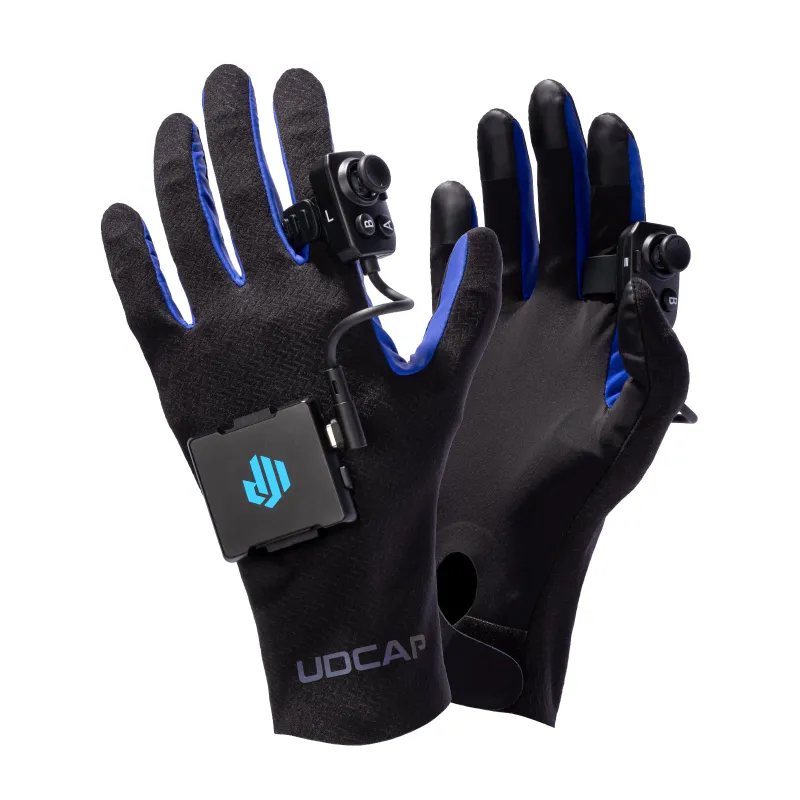
Controllers use infrared LEDs and gyroscopes to track position and rotation, translating button presses and joystick movements into in-game actions. You grip plastic, press triggers, and the system interprets your intent. Haptic gloves replace that abstraction with direct hand and finger tracking, reading each joint’s position through flex sensors or computer vision.
The Udexreal dexcap and similar haptic vr gloves map your real hand gestures to virtual ones without requiring you to hold anything. Pinch to grab, spread fingers to release, and gesture naturally. Controllers require you to learn button layouts and hold a device, but they work seamlessly across nearly every VR title on Quest, PCVR, and PlayStation VR2.
Key tracking differences:
- Controllers deliver six-degrees-of-freedom (6DOF) positional tracking with sub-millimeter precision for the controller body, but finger presence is simulated or limited to trigger/grip binary states.
- VR gloves track individual finger curl, splay, and joint angles, offering up to 10+ degrees of freedom per hand for nuanced interactions like sign language, musical instruments, or detailed object manipulation.
- Latency is nearly identical in 2025 models, both hovering around 10-20 milliseconds, but glove calibration can add setup time.
Check the latest pricing on Udexreal’s lineup to compare glove and controller bundles with our exclusive discount.
Immersion and Haptic Feedback: What You Feel Matters
Controllers excel at delivering vibration-based haptic feedback. When you fire a gun, clash swords, or feel raindrops, motors inside the controller buzz with varying intensity and pattern. It’s convincing enough to ground you in the experience, especially in action games where physicality matters.
VR gloves approach immersion differently. Instead of vibration, many models use force feedback, pneumatic resistance, or electroactive polymers to simulate object weight, texture, and resistance. The stretchsense vr gaming gloves employ stretch sensors that resist your finger motion when you grasp a virtual object, creating a tactile sense of solidity. High-end haptic glove systems add localized actuators on fingertips for texture simulation.
Immersion trade-offs:
- Controllers provide broader, body-level feedback (rumble through your palms), but lack per-finger nuance.
- Gloves deliver fingertip-specific sensations and natural hand presence (seeing your real hand shape in VR), but often lack the punch of a strong controller rumble.
- Social VR in platforms like VRChat heavily favors gloves. VRChat gloves let you wave, point, and use hand gestures that are read instantly by other players, enhancing communication.
For rhythm games, shooters, and melee combat, controllers remain the gold standard. For creative tools, social interaction, and simulation training, gloves win.
Game and Platform Compatibility
Controllers are plug-and-play with virtually every VR game. Meta Quest, SteamVR, and PlayStation VR all ship with controllers as the default input, so developers build around them. Gloves, by contrast, require either native game support or third-party driver layers that emulate controller input.
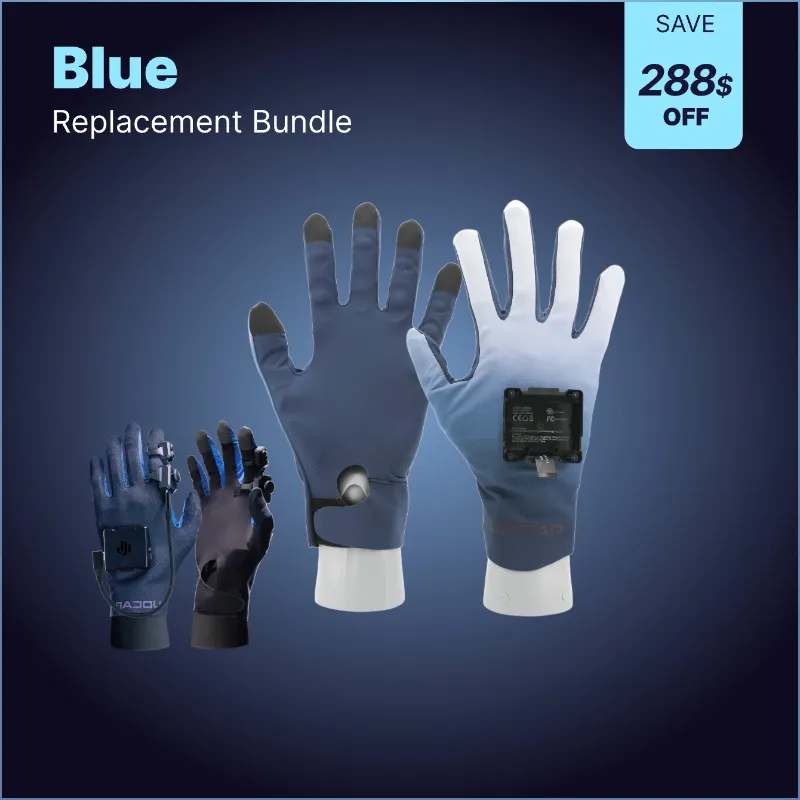
As of early 2025, fewer than 15% of VR titles natively support glove input. The udcap vr gloves and similar models ship with software that maps hand gestures to controller buttons, letting you play most games with varying degrees of success. Simple interactions (grab, point, trigger) translate well. Complex games with multi-button combos or precise joystick aiming feel clunky.
Compatibility snapshot:
| Input Method | Native Game Support | Setup Complexity | Best For |
|---|---|---|---|
| Controllers | 99%+ of VR titles | Plug and play | All-around gaming, competitive play |
| VR Gloves | ~10-15% native, 60%+ via emulation | Driver install, per-game mapping | Social VR, training sims, creative apps |
If you plan to play a wide library, keep controllers as your primary input. If you focus on social platforms, creative tools like Tilt Brush, or simulation work, vr gloves quest 3 and similar offerings provide a step up. Some users keep both: controllers for gaming sessions, gloves for social hangouts or productivity.
Grab our discount code to save 10% on Udexreal gloves and controller bundles.
Comfort, Battery Life, and Practical Considerations
Controllers last 20-40 hours on a charge or disposable AA batteries, and you can swap batteries mid-session. Haptic vr gloves typically run 3-6 hours per charge due to the power demands of sensors and haptic actuators, and you cannot hot-swap batteries while wearing them. Plan to recharge between extended sessions.
Weight and fit matter more with gloves. A poorly sized glove will slip, causing tracking errors and discomfort. Measure your hand circumference and finger length carefully. Most udcap vr glove models offer S/M/L sizing with adjustable wrist straps, but expect a break-in period. Controllers are one-size-fits-all and require no calibration beyond the headset’s guardian setup.
Comfort comparison:
- Controllers rest in your palm; you can set them down between actions. Wrist strain is rare.
- Gloves stay on continuously. Extended wear (2+ hours) can cause sweaty palms, especially in warmer rooms. Look for moisture-wicking liners.
- Full-body VR setups pair gloves with body trackers for legs and hips. The vr hand tracker modules work alongside gloves to capture wrist rotation and forearm position, rounding out the full-body tracking chain.
Who Should Choose Gloves Over Controllers?
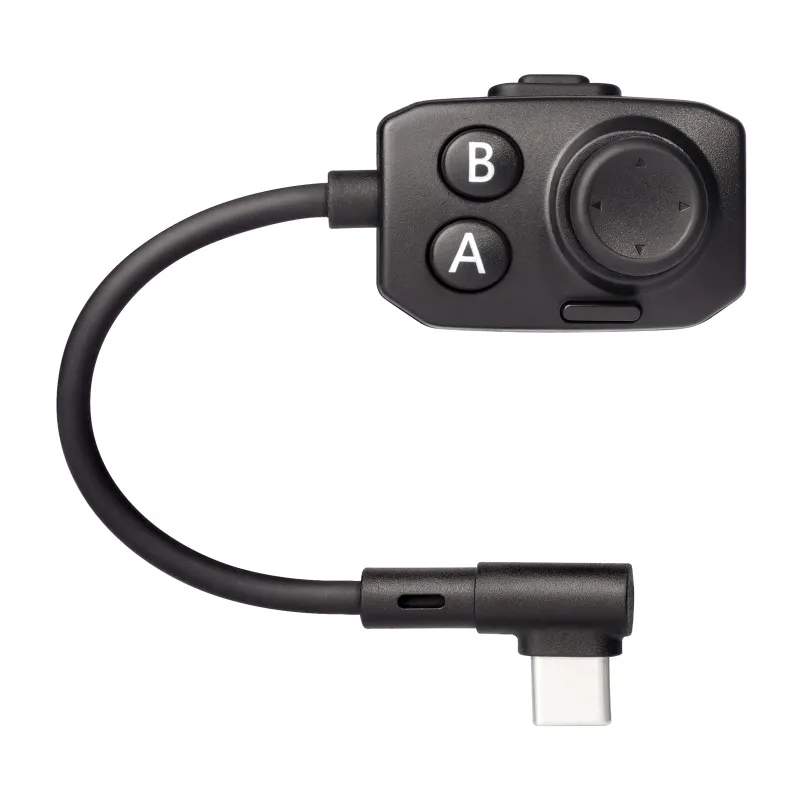
You will benefit most from VR gloves if you spend significant time in social VR platforms, work in VR training or design applications, or prioritize hand presence and natural interaction over game library breadth. The module controller hybrid approach, which combines a minimal wrist-mounted controller with finger tracking gloves, splits the difference for users who want both haptic feedback and hand tracking.
Choose gloves if you:
- Play VRChat, Horizon Worlds, or other social platforms where gestures and expressiveness matter.
- Use VR for professional training (surgery simulation, mechanical assembly, sign language instruction).
- Create art, music, or 3D models in VR and need precise finger control.
- Already own full-body tracking hardware and want to complete the immersion chain.
Stick with controllers if you:
- Play a wide variety of VR games, especially fast-paced shooters, rhythm titles, or competitive multiplayer.
- Prioritize plug-and-play convenience and long battery life.
- Have a limited budget (controllers are included with most headsets; gloves are an additional purchase).
Controllers dominated in precision gaming, while gloves excelled in creative and social contexts. For most users, controllers remain the primary input, with gloves serving as a specialty tool for specific use cases.
Visit our Udexreal coupon page to explore current bundles and see which configuration fits your setup and saves you the most.
Questions
Do stretchsense vr gaming gloves work with Meta Quest 3?
Most VR gloves, including StretchSense models, require third-party driver software to emulate controller input on Quest 3. Native hand-tracking games work directly, but emulation quality varies by title.
Can I use VR gloves and controllers at the same time?
Some hybrid systems let you mount a minimal controller module on your wrist while wearing gloves, combining haptic feedback with finger tracking. Pure glove setups replace controllers entirely.
How long do VR glove batteries last compared to controllers?
VR gloves typically run 3-6 hours per charge due to sensor and haptic power draw, while controllers last 20-40 hours on a charge or disposable batteries.
Are haptic gloves worth it for VRChat?
Yes. VRChat and similar social platforms benefit enormously from natural hand gestures, finger tracking, and expressive communication that gloves enable. Many dedicated social VR users consider them essential.
Will VR gloves work with Beat Saber and other rhythm games?
Gloves can emulate controller input for rhythm games, but the lack of a physical grip and precise haptic feedback makes them less accurate than controllers for competitive or expert-level play.
What size VR gloves should I buy?
Measure your hand circumference at the knuckles and your middle finger length from base to tip, then consult the manufacturer's sizing chart. Most models offer S/M/L with adjustable wrist straps for a secure fit.
Products in this guide
Shopping at Udexreal? See the discount code
10% OFF All Orders
More in this series
StretchSense vs Udexreal Dexcap: Which VR Hand Tracking System to Buy20 Aug 20264 minHow Long Do VR Haptic Gloves Last? Durability and Care Tips20 Aug 20264 minDo Haptic VR Gloves Work with SteamVR and VRChat? Compatibility Guide20 Aug 20264 minHow to Set Up Finger Tracking Gloves with Meta Quest 320 Aug 20265 minDo Udexreal Haptic Gloves Improve VRChat Immersion?20 Aug 20265 min