 A Babytone guide
Why Parents Choose Babytone Sleep Monitors Over Other Newborn Pulse Oximeters
Parents choose Babytone's pulse oximeter for newborn care because it pairs clinical-grade accuracy with the comfort and ease of use that busy families need at home.
Parents choose Babytone’s pulse oximeter for newborn monitoring because it combines clinical accuracy with the simplicity and comfort that families need when tracking their baby’s oxygen levels and heart rate at home.
What Makes a Pulse Oximeter for Newborn Different
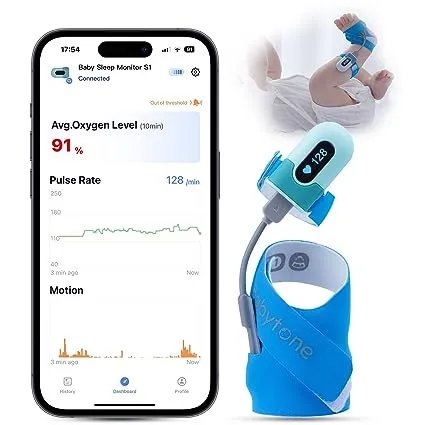
A pulse oximeter for newborn use differs from adult models in three critical ways: sensor size, accuracy range, and placement flexibility. Newborns have smaller limbs, thinner skin, and different oxygen saturation baselines than older children and adults. Babytone designs its baby pulse oximeter and related models specifically for these needs, with soft sensors that fit snugly without restricting blood flow or causing discomfort during sleep.
Pulse oximetry works by shining light through the skin to measure how much oxygen your baby’s blood is carrying. For newborns, normal oxygen saturation ranges between 95% and 100%; readings below 90% warrant immediate attention. This is why placement and fit matter so much, a loose or improperly positioned sensor gives false readings and defeats the purpose of monitoring.
Babytone Sleep Sock vs. Traditional Ankle and Foot Monitors
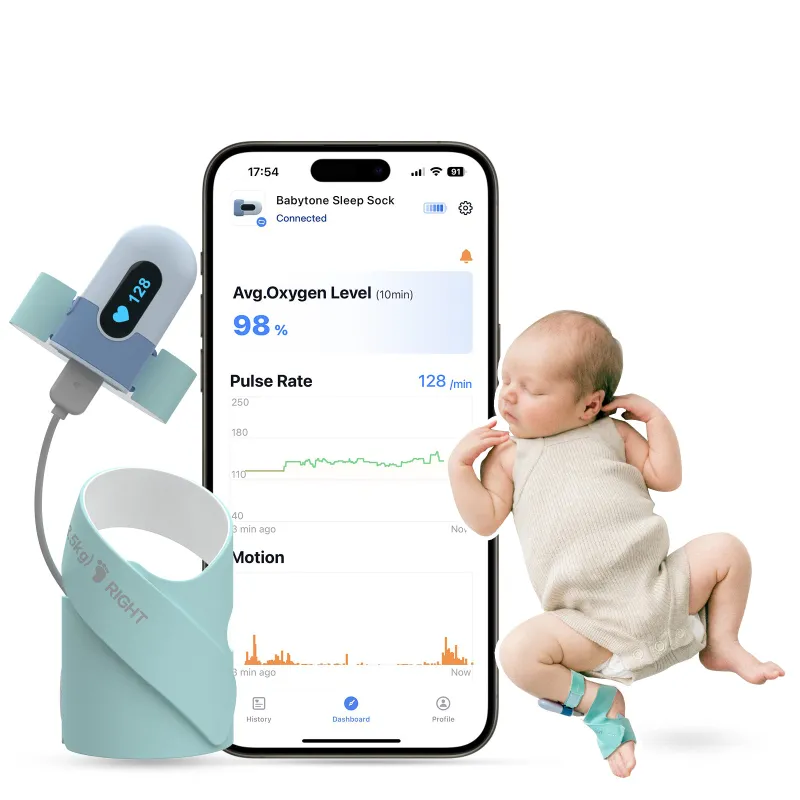
The core difference between Babytone models comes down to comfort, durability, and how long your baby can wear the sensor safely. The babytone sleep sock wraps around the foot like a tiny sock, distributing pressure evenly and staying in place during active sleep and movement. The newborn ankle monitor and newborn foot monitor use clip or strap designs that are quicker to put on but can slip or pinch if your baby kicks or rolls.
| Feature | Sleep Sock | Ankle Monitor | Foot Monitor |
|---|---|---|---|
| Wear time | 4-6 hours continuous | 2-4 hours continuous | 2-3 hours continuous |
| Comfort during sleep | Excellent (no pressure points) | Good (minimal restriction) | Fair (clip can irritate) |
| Ease of repositioning | Moderate (requires removal) | Quick (adjustable strap) | Quick (simple clip) |
| Best for | Overnight monitoring, napping | Daytime checks, short sessions | Occasional spotchecks |
For parents doing infant pulse oximeter for home use over extended periods, like monitoring a baby recovering from respiratory issues or a high-risk NICU graduate, the sleep sock design reduces the risk of skin irritation and sensor drift. If you’re doing quick daily checks or responding to specific concerns, the clip-style infant pulse ox monitor offers faster setup.
Where to Put Pulse Oximeter on Infant: Placement and Sensor Fit
Where to put pulse oximeter on infant care is a practical question that directly affects reading accuracy. Babytone sensors work best on the foot or ankle where there’s reliable blood flow and minimal movement during sleep. The big toe or the inner arch of the foot are ideal sites because they have thin skin and plenty of capillaries close to the surface.
Placement tips that work:
- Clean and dry the skin before applying the sensor
- Wrap or clip the sensor snugly but not tightly (you should fit one finger between the sensor and skin)
- Avoid placing the sensor over bony areas or folds of skin
- Keep the sensor away from nail polish or thick calluses, which can block light
- Check the sensor every 30 minutes during use to ensure it hasn’t slipped
If you’re using the oximeter for infants for the first time, position it in good lighting so you can see the LED display clearly. Most Babytone models show a waveform graph on screen, a steady, smooth curve means the sensor is reading well. A jagged or flat line suggests repositioning is needed.
Why FDA Approval and Clinical Accuracy Matter
An FDA approved infant pulse oximeter has been tested to deliver reliable readings within a specific margin of error. Babytone models meet these standards, which means the numbers you see on screen reflect your baby’s actual oxygen saturation within 2-3 percentage points. This precision is especially important if your pediatrician is using home readings to monitor a condition like apnea, heart defects, or respiratory recovery.
The American Academy of Pediatrics recommends pulse oximetry screening for all newborns to detect critical congenital heart disease before symptoms appear. If your baby’s hospital stay or pediatrician notes suggest ongoing monitoring, a clinical-grade baby oxygen monitor like Babytone’s is the right tool.
Understanding Normal Oxygen Levels and When to Worry
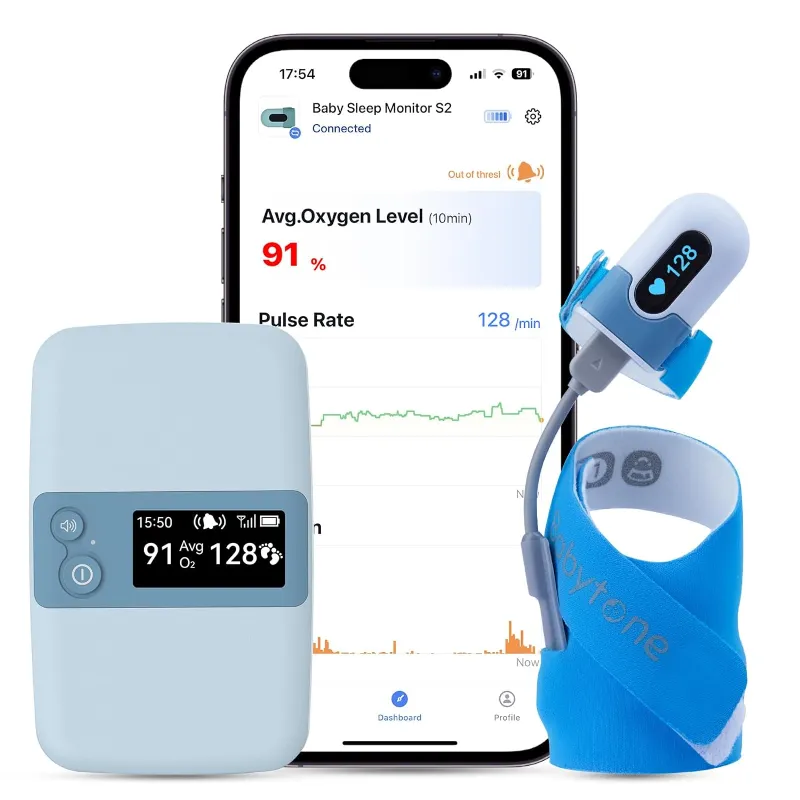
Normal baby oxygen level for a healthy newborn is 95% to 100%. A temporary dip to 92-94% during sleep or crying is usually not concerning, especially if it returns to normal within a minute. However, readings that stay below 90%, or frequent drops below 90%, warrant a call to your pediatrician.
Watch the baby, not just the number. If your baby looks well (breathing easily, feeding normally, alert and active) a single low reading might be a sensor issue. If your baby is pale, breathing faster than usual, or unusually sleepy, contact your pediatrician immediately regardless of the reading.
Babytone’s pulse oximeter for newborn models include audible and visual alarms that sound when readings drop below a threshold you set. This lets you monitor without staring at the screen all night, reducing parental anxiety while keeping you aware of real changes.
Getting Started: Setup, Cost, and Where to Buy
Babytone monitors are widely available online and at select retailers. To find the best current pricing and grab the code for 15% off, check the store directly. Most families start with the sleep sock or ankle monitor model depending on whether they plan extended wear or quick daily checks.
Setup is simple: charge the base unit (usually 2-3 hours on first use), power it on, and attach the sensor. Most infant sleep monitor models sync wirelessly to a parent app, so you get readings on your phone without keeping the base unit within arm’s reach. Pair this with your pediatrician’s guidance on what readings to log and when to call with concerns.
Check the latest price and explore Babytone’s full range of newborn monitoring options to find the model that fits your family’s needs and situation.
Questions
Can I use a pulse oximeter for newborn monitoring at home without a prescription?
Yes. While hospitals use clinical-grade pulse oximeters, consumer models like Babytone are available for home use. If your pediatrician recommends home monitoring for a specific condition, they will guide you on what readings to track and when to report them. Always use your doctor's guidance, not the device alone, to make health decisions.
How long can my baby wear an infant pulse oximeter safely?
Continuous wear time depends on the model. Babytone's sleep sock is designed for 4-6 hours, while clip-style monitors are typically safe for 2-4 hours before requiring a skin break. Check the device manual for your specific model, and inspect the sensor site for any redness or irritation after use.
What does a baby oxygen level of 88 mean?
A reading of 88% is below the normal range for healthy newborns (95-100%) and warrants attention. If this is a one-time dip that returns to normal within a minute and your baby appears well, it may be a sensor positioning issue. If readings consistently fall below 90% or your baby shows signs of distress, contact your pediatrician.
Where to put pulse oximeter on infant for the most accurate reading?
Place the sensor on your baby's foot or ankle, typically on the inner arch or big toe where skin is thin and blood flow is strong. Avoid bony areas, folds of skin, or sites with nail polish. Wrap snugly enough to prevent slipping but loose enough that you can fit one finger underneath.
Is a Babytone baby pulse oximeter FDA approved?
Babytone pulse oximeters meet FDA standards for consumer use and clinical accuracy. Before purchasing for medical monitoring, confirm the specific model's regulatory status with the manufacturer or your pediatrician to ensure it suits your baby's needs.
Can I use the same pulse oximeter for my newborn and older child?
Infant and adult pulse oximeters differ in sensor size and design. Babytone makes models sized for newborns and infants specifically. Using an adult-sized sensor on a newborn can result in inaccurate readings or discomfort, so stick with a newborn-specific device for your baby.
Products in this guide
Shopping at Babytone? See the discount code
15% OFF All Orders
More in this series
Babytone Oxygen Monitor Care and Maintenance: Keeping Your Infant’s Device Clean and Accurate14 Sep 20264 minDo Babytone Foot Monitors and Ankle Monitors Really Work for Newborn Safety?14 Sep 20265 minBabytone Sleep Sock vs. Traditional Infant Pulse Oximeter: Which Monitor is Right for Your Baby14 Sep 20264 minHow to Choose a Babytone Pulse Oximeter for Newborns: What Parents Need to Know14 Sep 20264 min