 A Babytone guide
Do Babytone Foot Monitors and Ankle Monitors Really Work for Newborn Safety?
A newborn foot monitor tracks oxygen levels and heart rate through a sock or ankle band, but effectiveness depends on consistent use and proper fit.
Do Newborn Foot Monitors Really Work?
A newborn foot monitor tracks oxygen levels and heart rate through wearable technology, but effectiveness depends on consistent use, proper fit, and realistic expectations. These devices don’t prevent emergencies but can alert you to changes in real time, making them a supplementary safety tool rather than a replacement for medical care.
The core question parents ask: can a newborn foot monitor catch problems early? The answer is nuanced. These monitors measure pulse oximetry (blood oxygen saturation) and heart rate from the foot or ankle. When data stays within normal ranges, they provide reassurance. When readings dip outside safe zones, they send alerts. However, Mayo Clinic research on SIDS baby monitors emphasizes that no consumer monitor has proven to prevent SIDS or sudden death. What they do offer is continuous visibility into your baby’s vital signs throughout the day and night.
How a Newborn Foot Monitor Works
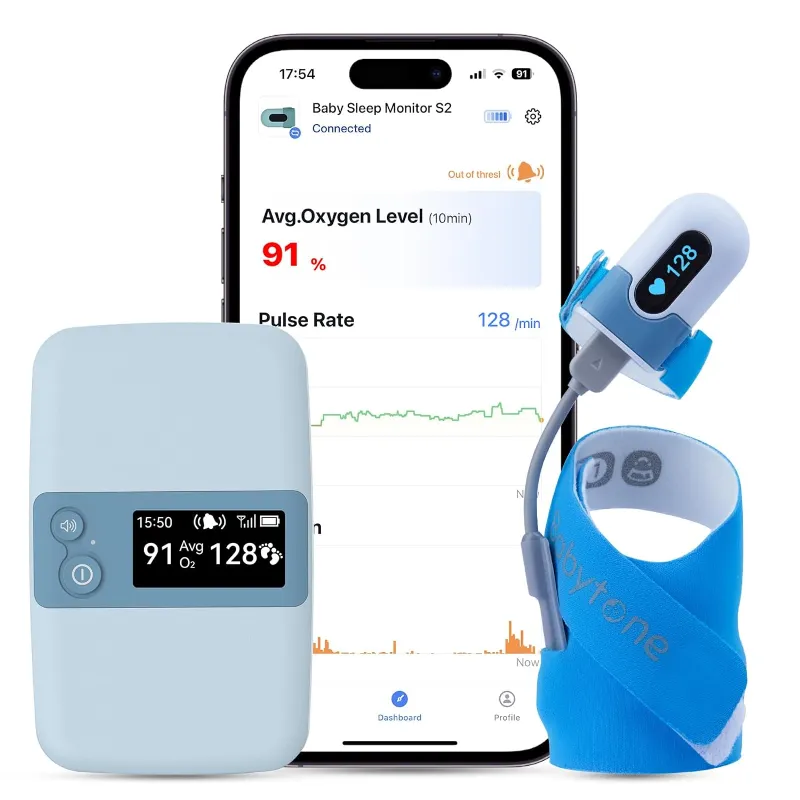
The newborn foot monitor uses light-based sensors (infrared LED technology) placed against the skin to measure blood oxygen saturation and pulse. Here’s the process:
- A small sensor clip or sock slips onto your baby’s foot or ankle
- Light passes through the skin and is absorbed by blood hemoglobin
- The device calculates oxygen percentage (SpO2) based on light reflection
- Heart rate is derived from pulsing blood flow
- Data streams to your phone or base station in real time
- Alarms trigger if readings fall outside your preset safe range
The baby oxygen monitor or oximeter newborn sits passively on your baby’s foot for hours, making continuous monitoring possible without active intervention. Unlike traditional pulse oximeters used in hospitals (which are bulkier and meant for short-term readings), a newborn foot monitor is designed for extended wear on sleeping or resting babies.
Babytone vs. Owlet: What’s the Real Difference?
Parents often compare the Babytone system to similar devices like the Owlet Dream Sock. Both use ankle or foot sensors to track oxygen and heart rate. The key differences come down to comfort, alert sensitivity, and price.
| Feature | Babytone | Owlet Dream Sock |
|---|---|---|
| Wear location | Foot/ankle sock | Ankle sock |
| Alert types | Customizable ranges | Preset clinical ranges |
| Data history | Mobile app logging | Cloud storage |
| Pricing | Check current offer | Higher entry price |
| Material | Soft fabric blend | Proprietary sock design |
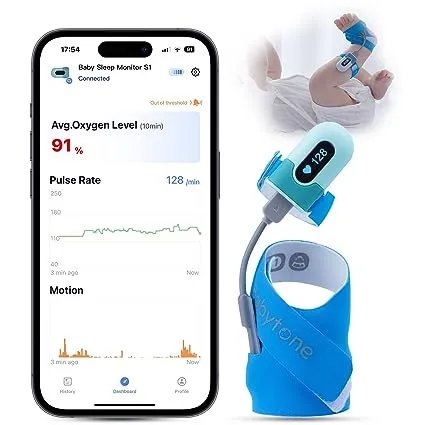
The infant pulse ox monitor from Babytone positions itself as a more affordable entry point into continuous monitoring. The babytone sleep sock is designed specifically to be comfortable enough for all-night wear without irritating delicate skin. If you’re testing whether a newborn foot monitor fits your family’s needs, starting with a lower-cost option makes sense.
Accuracy and Sensor Placement Matter
The accuracy of any baby pulse oximeter depends entirely on sensor placement and skin contact. Babytone’s design puts the oximeter for infants on the foot where blood flow is reliable even during sleep. However, movement, poor fit, or skin contact issues can trigger false alerts or missed readings.
To get reliable data:
- Ensure the pulse oximeter infant sock fits snugly without cutting off circulation
- Check for direct skin contact with the sensor pad
- Avoid thick clothing between sensor and skin
- Re-position if you notice gaps or slipping
- Clean the sensor regularly to maintain optical clarity
Many parents report that the learning curve involves tuning out false alarms in the first week. Once you understand your baby’s normal patterns and adjust sensitivity settings, the system becomes less noisy. The newborn ankle monitor style offers better positioning stability than loosely worn clips.
Who Benefits Most from a Newborn Foot Monitor?
Not every family needs continuous oxygen monitoring. A pulse oximeter for newborn monitoring is most valuable if:
- Your baby was born premature and oxygen levels are a medical concern
- Your family has a history of heart or respiratory conditions
- Your pediatrician has recommended home monitoring post-discharge
- You have severe anxiety and checking vitals manually helps you feel grounded
- You want detailed data to share with your pediatrician at checkups
For low-risk, full-term newborns in stable health, a newborn foot monitor is optional and driven more by parental preference than medical necessity. Some parents find the peace of mind worth it; others find constant alerts more stressful than helpful.
Setup, Comfort, and Daily Use
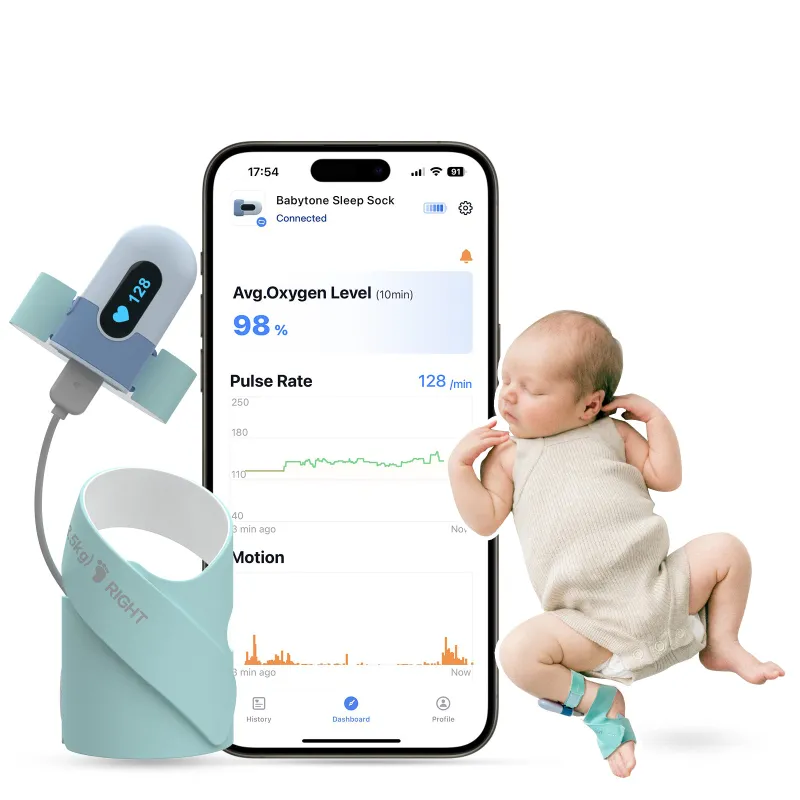
Getting started with a baby pulse ox or infant sleep monitor involves minimal setup. You’ll download the Babytone app, pair the base station via Bluetooth, slip the sock onto your baby’s foot, and set your alert thresholds. Most parents report the sock is comfortable enough that babies forget it’s there within a day or two.
Comfort tips for extended wear:
- Wash the sock regularly to prevent skin irritation
- Rotate between both feet to avoid pressure marks
- Size up if your baby’s foot grows; ill-fitting socks lose contact with sensors
- Let skin breathe during diaper changes by removing the sock for 30 minutes
- Store the sock in a cool, dry place to preserve elastic and sensor integrity
Battery life typically runs 8 to 12 hours per charge, so nightly charging is standard. Grab the code if you’re ready to try it, 15% OFF All Orders can offset the initial investment.
Real Talk: What a Newborn Foot Monitor Cannot Do
Parents deserve honesty about limitations. A newborn foot monitor is not a replacement for proper sleep positioning, room-sharing without bed-sharing, back sleeping, or avoiding soft objects in the crib. The Owlet Dream Sock and similar systems have faced regulatory scrutiny because marketing sometimes overstated their ability to prevent SIDS. These monitors measure two things only: blood oxygen and heart rate. They cannot detect every health emergency, do not diagnose disease, and are not approved by the FDA as medical devices for SIDS prevention.
What they actually do is give you a window into your baby’s cardiopulmonary status in real time. If your baby’s oxygen drops below safe levels or heart rate spikes or dips unexpectedly, you’ll know immediately. That knowledge matters for peace of mind and for catching certain conditions early, but it is not the same as preventing tragedy.
Should You Invest in a Newborn Foot Monitor?
A newborn foot monitor works best when expectations are clear: it’s a supplementary safety tool that provides reassurance and data, not a medical device that prevents emergencies. If you’re considering one, check the latest price to see if the cost aligns with your budget. Many parents find that continuous monitoring answers questions they’d otherwise spend hours worrying about. Others prefer traditional intermittent pulse oximetry checks at the pediatrician’s office.
The decision ultimately comes down to your comfort level with technology, your baby’s health history, and whether real-time vital-sign data would genuinely reduce your anxiety or amplify it. There’s no wrong choice, only the one that works for your family.
Questions
What is a newborn foot monitor and how does it differ from a pulse oximeter?
A newborn foot monitor is a continuous wearable device (usually a soft sock) that tracks blood oxygen and heart rate throughout the day or night using light-based sensors. A traditional pulse oximeter is a clip-on device used for short, spot-check readings at a doctor's office. The foot monitor stays on your baby for extended periods, while a pulse oximeter is meant for brief measurements.
Can a newborn foot monitor prevent SIDS?
No. No consumer monitor has been proven to prevent SIDS. A newborn foot monitor can alert you to drops in oxygen or heart rate in real time, but SIDS prevention relies on safe sleep practices like back sleeping, room-sharing, and avoiding soft objects. Use the monitor as a reassurance tool, not a SIDS prevention device.
How accurate are newborn foot monitors like Babytone?
Accuracy depends on proper fit, sensor contact, and placement. When the sock is snug and the sensor makes good skin contact, readings are generally reliable. Movement, loose fits, or gaps can cause false alarms or missed data. Most parents report accuracy improves once they learn proper placement and adjust sensitivity settings.
Is a newborn foot monitor worth the cost?
That depends on your baby's health history and your comfort level. If your baby was premature, has respiratory concerns, or your pediatrician recommends monitoring, it's valuable. For low-risk, full-term babies, it's optional and driven by personal preference. Many parents find the peace of mind worth the investment; others find alerts more stressful.
How long can a baby wear a newborn foot monitor at a time?
Most soft-sock designs are safe for extended wear (8 to 12 hours or more) as long as the sock is clean, fits properly, and doesn't restrict circulation. It's good practice to rotate between feet, let skin breathe during diaper changes, and inspect the foot for any marks or irritation regularly.
What should normal oxygen and heart rate readings be for a newborn?
Normal newborn blood oxygen (SpO2) ranges from 95 to 100 percent, though readings slightly below 95 percent can be normal during sleep. Normal newborn heart rate is 120 to 160 beats per minute at rest. Your pediatrician or the device manual will specify the alert thresholds that make sense for your baby's age and health.
Products in this guide
 Shopping at Babytone? See the discount code
15% OFF All Orders
Shopping at Babytone? See the discount code
15% OFF All Orders
More in this series
Why Parents Choose Babytone Sleep Monitors Over Other Newborn Pulse Oximeters14 Sep 20264 minBabytone Oxygen Monitor Care and Maintenance: Keeping Your Infant’s Device Clean and Accurate14 Sep 20264 minBabytone Sleep Sock vs. Traditional Infant Pulse Oximeter: Which Monitor is Right for Your Baby14 Sep 20264 minHow to Choose a Babytone Pulse Oximeter for Newborns: What Parents Need to Know14 Sep 20264 min