 A MAXKGO guide
What to Look for in a 12S ESC for Your Electric Skateboard or E-Bike
Find the right 12s esc for your electric skateboard or e-bike with our guide to specs, firmware, and the best ESC options we have tested.
Choosing the right 12s esc for your electric skateboard or e-bike determines your top speed, hill climbing ability, and how much heat your system can handle before thermal throttling kicks in. A 12S ESC (12 series lithium polymer, 44.4 V nominal / 50.4 V full) is the voltage ceiling for most high performance personal electric vehicles, and picking the wrong one means either leaving torque on the table or cooking your controller on the first long hill.
What Makes a 12S ESC Different from Lower Voltage ESCs
A 12s esc operates at a nominal 44.4 V and peaks at 50.4 V on a full charge. That is roughly twice the voltage of a typical 6S build. The benefit is lower current draw for the same power output, which means thinner phase wires, less heat in the motor windings, and higher efficiency at cruising speed. The trade off is that every component downstream (FETs, capacitors, PCB traces, and the BMS) must be rated for at least 60 V to survive voltage spikes from regenerative braking. Many hobby grade ESCs top out at 6S or 8S, so a true 12S ESC uses higher voltage MOSFETs (often 100 V rated) and bulkier heatsinks to shed the waste heat.
Key Specs to Check When Choosing a 12S ESC
Before you add anything to your cart, verify these three ratings:
- Voltage input range. Some ESCs labeled 12S accept a range of 6S to 12S. That is fine for flexibility, but make sure the low voltage cutoff is programmable so you do not drain your cells below 3.0 V per series group.
- Continuous current vs. burst current. A 12S ESC that claims 200 A burst but only 50 A continuous will sag hard under full throttle. Look for a continuous rating at least 20% above your motor’s peak current draw.
- BEC or auxiliary output. If you power your receiver, lights, or display from the ESC, check the BEC voltage and current rating. The castle creations 12s esc Cobra 5 HV, for example, offers a 20 A peak BEC, which is generous for accessories.
VESC Based vs. Traditional Firmware: Why AM32 and VESC Matter
The firmware running on your ESC controls throttle response, braking curve, and how well the system handles sensorless startup. The two main ecosystems for a 12S ESC are VESC (open source, extremely configurable) and AM32 (a simpler, sensorless focused alternative). Our team prefers the am32 configurator for builds where we want a clean browser based setup without compiling firmware. It works well with many common hardware platforms and gives you direct control over motor timing, PWM frequency, and current limits.
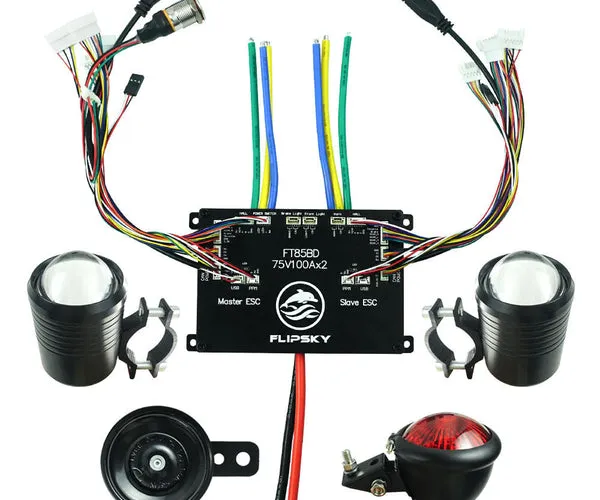
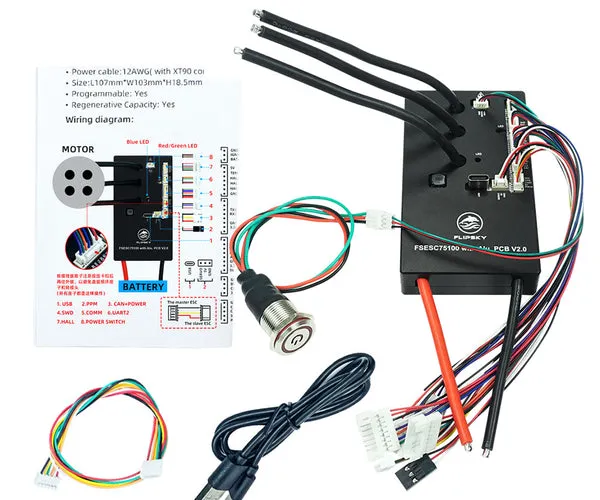
For riders who want full data logging, field oriented control, and Bluetooth tuning from a phone app, a VESC based ESC like the flipsky 75100 is the standard. The 75100 handles 12S natively, pushes 100 A continuous, and pairs with the VESC Tool for live motor detection. If you need a smaller footprint, the flipsky ft85bd offers the same 12S support in a more compact package with an integrated heatsink.
Single vs. 4 in 1 ESC: Which Configuration Fits Your Build
A single 12S ESC drives one motor, while a 4 in 1 esc packs four independent ESCs on one board. For most e-bikes and single motor longboards, a single 12S ESC is simpler and cheaper. But for a dual motor mountainboard or a 4WD electric skateboard, a 4 1 esc saves wiring weight and keeps the enclosure clean.
The 80a 4 in 1 esc is a popular middle ground: it handles four motors at 80 A each, fits in a standard deck enclosure, and shares a single capacitor bank across all channels. If you are building a board that needs torque vectoring or traction control, the 4 in 1 esc also simplifies the CAN bus wiring between each channel. For a kart or a heavy off road build, we often recommend the 4 in 1 esc over four separate units to reduce point of failure in the wiring harness.
Battery and BMS Pairing for Your 12S System
A 12S ESC is only as good as the battery that feeds it. You need a 12S lithium ion pack (12 cells in series) with a BMS that can handle the peak discharge current of your ESC. The 4 bms kart is a 12S BMS designed for higher current applications like go karts and heavy e-bikes. It balances each cell group and provides over current protection that matches the demands of a 12S ESC under load.
For battery monitoring at the cell level, the ltc6813 is a dedicated battery monitor IC that gives you accurate voltage and temperature data for each series group. If you are building a drop in replacement for a specific platform, the onewheel pint battery module shows how a compact 12S pack can be arranged with a custom BMS, though you will need to adapt the connector to your ESC.
Real World 12S ESC Options We Recommend
| ESC Model | Voltage | Continuous Current | Best For |
|---|---|---|---|
| flipsky 75100 | 12S (50.4 V) | 100 A | Dual motor mountainboards, e-bikes |
| flipsky ft85bd | 12S (50.4 V) | 85 A | Compact single motor builds |
| 80a 4 in 1 esc | 12S (50.4 V) | 80 A per channel | 4WD boards, heavy karts |
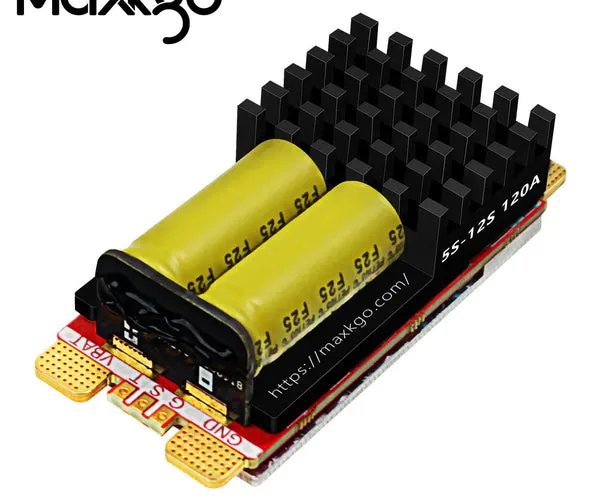
The 12s esc category covers all of these options, and we recommend matching the continuous current rating to your motor’s specs rather than oversizing by a huge margin. A 100 A ESC on a motor that draws 40 A peak will run cool, but the extra weight and cost may not be worth it. The hobbywing 12s esc discussions on the Arrma forum show how the RC car community has pushed 12S ESCs hard in 1/5 scale vehicles, and the same thermal management lessons apply to skateboards and e-bikes.
Where to Buy with the Best Price
You can check the latest price on any of the products listed above, including the flipsky 75100, 4 in 1 esc, and flipsky ft85bd. If you are pairing a motor with your ESC, the hobbywing 12s motor deals are also worth a look to keep the whole drivetrain on the same voltage platform. Our exclusive 2% off sitewide code is active on the store coupon page, so grab the code before you check out.
Questions
Can I run a 12S ESC on a 10S battery?
Most 12S ESCs have a minimum input voltage around 6S or 8S, so a 10S battery will work as long as the ESC supports that voltage range. Check the datasheet before connecting, because the low voltage cutoff may need to be reprogrammed for 10S chemistry.
What gauge wire should I use for a 12S ESC build?
For a 12S ESC pulling 80 100 A continuous, we recommend 10 AWG silicone wire for the main battery leads and at least 12 AWG for the phase wires to the motor. Thinner wire creates voltage drop and heat buildup at the connectors.
Does the flipsky 75100 need an external BEC?
The flipsky 75100 has a built in 5 V BEC rated at 1 A, which is enough for a basic receiver and remote. If you are powering lights, a display, or a fan, add an external BEC or a separate 12 V step down converter.
What is the difference between a 12S ESC and a 12S VESC?
VESC is a specific open source firmware and hardware standard for ESCs. A 12S VESC is a 12S ESC that runs VESC firmware, giving you full control over motor parameters, regenerative braking, and data logging. Not all 12S ESCs are VESC compatible.
Can I use a 12S ESC with a 3D printed enclosure?
Yes, but ensure the enclosure has ventilation slots or a dedicated fan mount. A 12S ESC under load generates significant heat, and a closed 3D printed PLA enclosure can trap that heat and cause thermal shutdown.
How do I program a 12S ESC for an e-bike?
If your ESC is VESC based, use the VESC Tool app or desktop software to set motor detection, current limits, and throttle curves. For AM32 based ESCs, use the AM32 configurator in a browser. Always run a no load test before your first ride.
Products in this guide
 Shopping at MAXKGO? See the discount code
2% OFF Sitewide
Shopping at MAXKGO? See the discount code
2% OFF Sitewide
More in this series
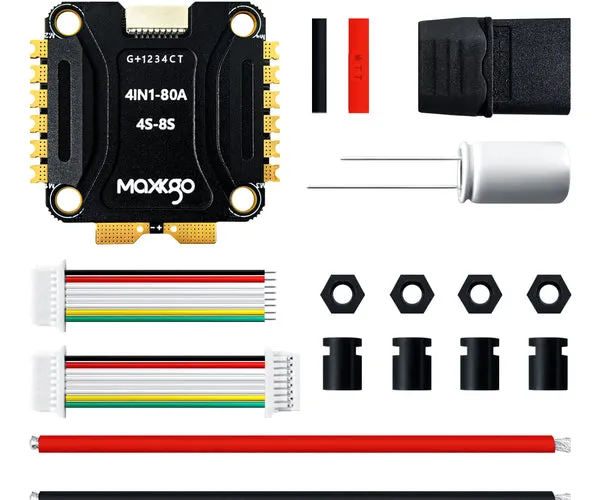 How to Wire a 4-in-1 ESC With a BMS for a Clean DIY Build5 Sep 20266 min
 Can You Use a Onewheel Pint Battery Module With a Flipsky ESC?5 Sep 20265 minFlipsky FT85BD VESC ESC Not Working? Common Issues and Fixes5 Sep 20264 min4-in-1 ESC vs Individual ESCs: Which Is Right for Your Build?5 Sep 20266 min
 How to Configure Your Flipsky 75100 ESC With the Am32 Configurator5 Sep 20264 min