 A Timeusb guide
LiFePO4 Battery Charger vs Standard Chargers: Why Lithium Needs Different Technology
A lifepo4 battery charger requires different technology than standard chargers because lithium chemistry demands precise voltage and current profiles to charge safely and last long.
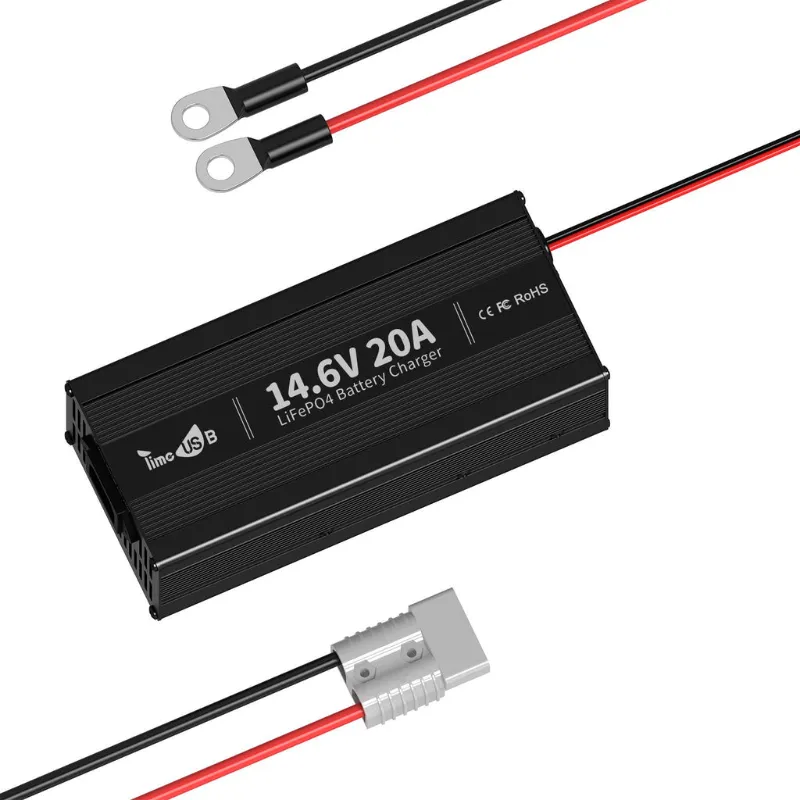
A lifepo4 battery charger uses fundamentally different technology than standard lead-acid chargers because lithium chemistry demands precise voltage and current profiles to charge safely. If you use the wrong charger, you risk damaging your battery, voiding the warranty, or creating a safety hazard.
Why a LiFePO4 Battery Charger Is Not Interchangeable With Standard Chargers
Standard chargers were built for lead-acid batteries, which tolerate a wide range of charging voltages and currents. A lifepo4 lithium battery has much tighter tolerances. It needs a charger that stops charging at exactly the right voltage (typically 3.65V per cell for LiFePO4) and manages current carefully to avoid cell stress.
Standard chargers often use a bulk-and-float approach designed for lead-acid chemistry. They push high current until they hit a voltage threshold, then taper down. This works for lead-acid because the chemistry is forgiving. LiFePO4 cells do not tolerate overcharging. Overcharge by even 0.1V per cell and you degrade the battery and shorten its lifespan significantly. Many standard chargers lack the precision to stop at the right point.
A proper lifepo4 battery charger includes a Battery Management System (BMS) or communicates with your battery’s BMS to ensure safe charging. It monitors cell voltage individually, temperature, and discharge state to deliver the exact current and voltage your battery needs at each stage of charging.
LiFePO4 Battery Charger Voltage and Current Specifications by Voltage Class
Choosing the right charger means matching it to your battery’s voltage. Here is how specifications differ across common classes:
| Voltage Class | Typical Float Voltage | Bulk Charge Current | Best For |
|---|---|---|---|
| 12V | 14.4V, 14.6V | 10A, 100A | Single battery systems, marine, RV |
| 24V | 28.8V, 29.2V | 20A, 60A | Larger RV systems, golf carts |
| 36V | 43.2V, 43.8V | 15A, 50A | 36v trolling motor battery applications |
| 48V | 57.6V, 58.4V | 20A, 80A | 48v golf cart batteries, large off-grid systems |
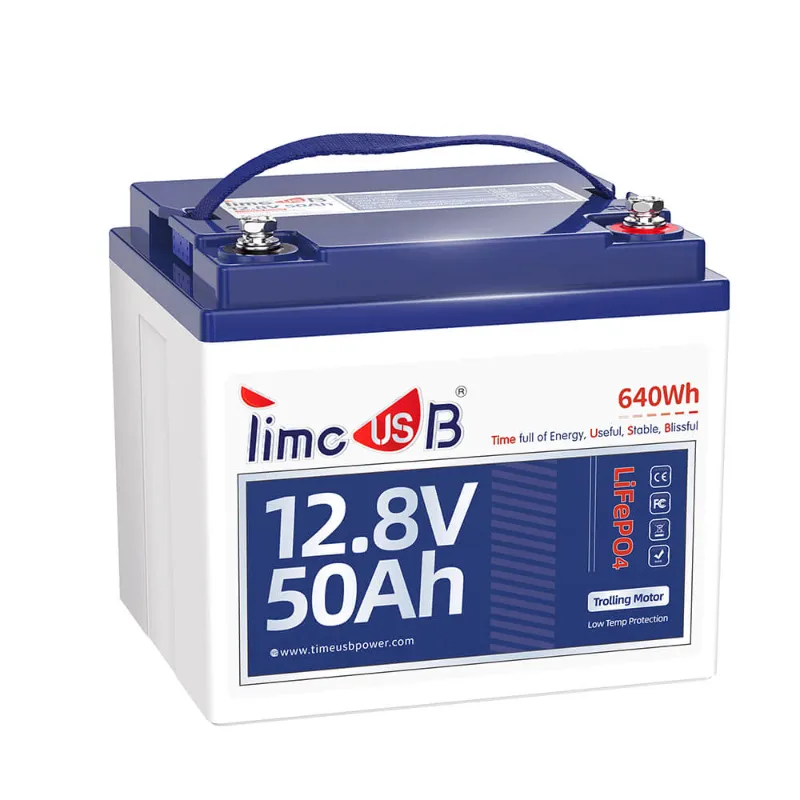
A best 12v lifepo4 battery charger typically handles 12V 50ah lithium battery packs with 20A to 100A charging. Larger systems like 48v golf cart batteries or rv lithium battery setups need chargers rated for 48V and higher amperage to charge in reasonable time.
How LiFePO4 Charging Profiles Differ From Lead-Acid
Lead-acid chargers use a simple three-stage profile: bulk (constant current), absorption (constant voltage), and float (lower voltage to maintain charge). LiFePO4 chargers are often more sophisticated:
- Constant current phase: The charger delivers maximum current until it reaches the target voltage for your battery’s chemistry. This is identical to lead-acid, but the target voltage is precise, not approximate.
- Constant voltage phase: Once target voltage is reached, current tapers gradually to avoid cell stress. This phase is longer and more carefully controlled in LiFePO4 chargers.
- Temperature management: The charger adjusts charging rate based on battery temperature. Charging a cold LiFePO4 battery too fast damages it; a good charger slows down or pauses when temps drop.
- BMS communication: Many modern chargers support CAN bus or proprietary protocols to talk directly to your battery’s BMS, which decides when charging should stop or pause.
Standard chargers lack these safeguards. Using one on a lifepo4 battery charger-compatible battery risks overcharging, overheating, and premature failure.
Sizing Your LiFePO4 Battery Charger by Amperage and Chemistry
Charger amperage matters for charging time but also for battery safety. A charger rated too high can push current faster than your battery’s BMS wants. A charger rated too low takes forever to recharge.
A 12v 50ah lithium ion battery can safely charge at 10A to 50A depending on the battery design. Look for chargers marked 20A, 40A, or 50A for this size. A 50ah lithium battery at 48V typically needs a 30A to 60A charger. RV lithium battery systems often call for 40A, 100A chargers because they’re larger and need to recharge faster when parked.
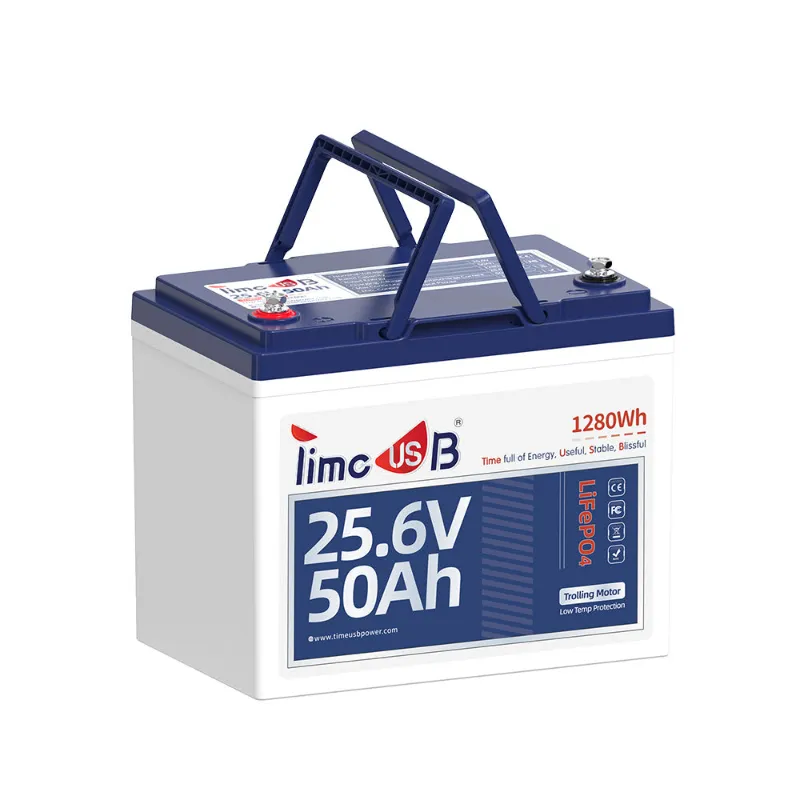
Always check your battery’s manual for the recommended charge rate. It is usually listed as a C-rate (e.g., “0.5C charge rate” means the charger current in amps should be half the battery capacity). A group 24 deep cycle battery rated for LiFePO4 chemistry will specify its safe charge rate. Match your charger to that spec, not the other way around.
LiFePO4 Battery Charger Features Worth Checking
When comparing options, look for these features:
- Voltage settings: Charger should let you select 12V, 24V, 36V, or 48V to match your battery.
- Temperature sensor: A thermistor input ensures the charger adapts to ambient temperature.
- Lithium-specific algorithm: The charger should have a LiFePO4 mode, not just a generic lithium mode. LiFePO4 has different voltage targets than NCA or LiPo batteries.
- Multi-stage charging: Constant current, constant voltage, and float stages tailored to LiFePO4.
- Certification: Look for UL, CE, or equivalent marks. A lifepo4 battery charger 12v 20a from a reputable brand will be certified safe.
- Solar input option: Some lifepo4 battery charger solar models accept solar panels or DC input for charging off-grid systems.
Troubleshooting Common LiFePO4 Charging Issues
If your lifepo4 battery charger 48v or lifepo4 battery charger 24v is not charging properly, check these:
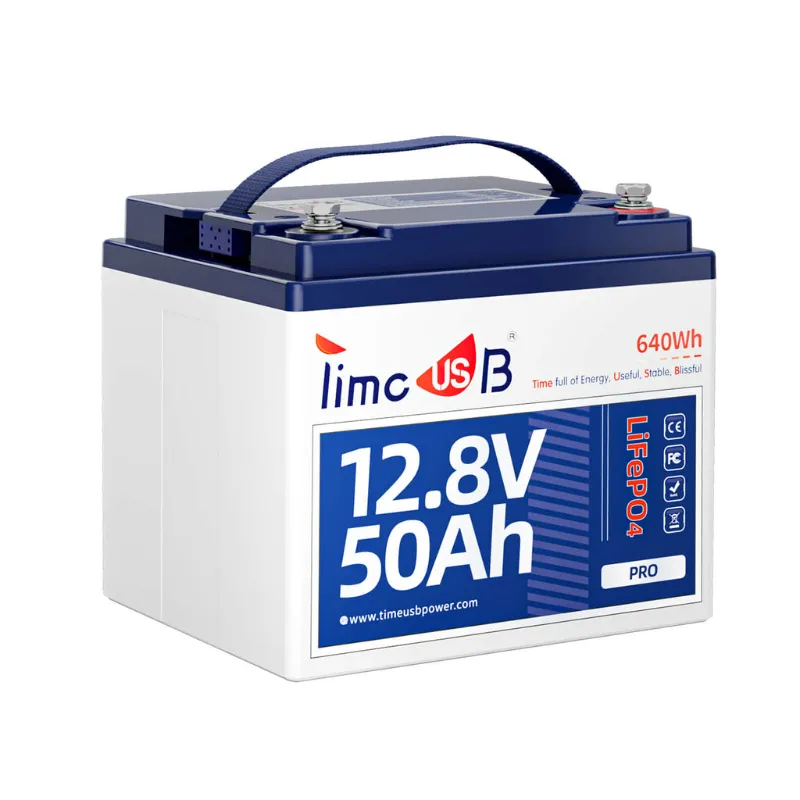
- Charger not recognizing battery: The BMS may be in a protection state due to low voltage or high temperature. Disconnect the charger, wait 15 minutes, and try again.
- Slow or incomplete charging: Verify the charger is set to the correct voltage and that the battery is not cold. Some chargers will not charge below 32°F.
- Charger shutting off early: This usually means the battery’s BMS is signaling full charge or a fault condition. Check the battery’s status lights or manual.
- Battery not holding charge: If a new 12v 50ah battery discharges quickly after a full charge with a LiFePO4 charger, the issue is usually the battery or BMS, not the charger.
For detailed troubleshooting, consult Finding a LiFePO4 Power Charger That Will Actually Work? on DIY Solar Forum, where users share real-world fixes.
When to Upgrade to a Dedicated LiFePO4 Battery Charger
If you are running a lithium trolling motor battery, rv lithium battery, or any stationary LiFePO4 system, a dedicated charger is not optional, it is essential. Do not attempt to charge LiFePO4 batteries with old lead-acid chargers or multi-chemistry chargers set to generic lithium mode.
The investment in a proper lifepo4 battery charger pays back through longer battery life, faster charging, and safety. You can grab the code and compare current pricing on Timeusb’s discount page for 5% off sitewide.
Choose the right charger for your chemistry, voltage, and capacity. Your battery will last years longer, and you will avoid the headache and expense of a premature failure.
Questions
Can I charge a lifepo4 battery charger with a regular lead-acid charger?
No. Lead-acid chargers lack the precise voltage control and BMS communication that LiFePO4 requires. Using one risks overcharging, cell damage, and warranty voiding. Always use a charger specifically rated for LiFePO4.
What voltage should my lifepo4 battery charger be set to?
Match the charger voltage to your battery pack: 12V for single-cell or parallel 12V systems, 24V for two cells in series, 36V for three cells, and 48V for four cells. Check your battery manual to confirm.
How long does it take to charge a 50ah lithium battery with a lifepo4 battery charger?
A 50ah battery charged at 50A will take roughly one hour from empty to full. Charging time = capacity (Ah) divided by charger current (A). Lower amperage chargers will take proportionally longer.
Is a lifepo4 battery charger solar compatible?
Many are. Look for chargers with a solar input option or DC input rated for 12V, 24V, or 48V. These can accept power from solar panels or a DC source, though they typically still need a grid charger for faster bulk charging.
Why does my 48v golf cart batteries not charge fully with my new charger?
Check that your charger is set to 48V LiFePO4 mode and that the battery's BMS is not in protection mode due to low voltage or temperature. If the battery was deeply discharged or very cold, some chargers will pause or abort charging as a safety feature.
What amperage should I use for my 12v 50ah lithium ion battery?
A 12V 50ah battery typically charges safely at 20A to 50A. Check your battery manual for the recommended C-rate; most allow 0.5C to 1C charging, which equals 25A to 50A. Stick to that range for best battery life.
Products in this guide
 Shopping at Timeusb? See the discount code
5% OFF Sitewide
Shopping at Timeusb? See the discount code
5% OFF Sitewide
More in this series
Deep Cycle Battery Sulfation Problems: Prevention and Troubleshooting for Extended Use28 Aug 20264 minRV Lithium Battery Maintenance: Extend Battery Life With These Essential Care Tips28 Aug 20265 minDo LiFePO4 Batteries Really Last Longer Than Lead Acid?28 Aug 20264 minGolf Cart Battery Replacement Guide: When to Upgrade From Lead Acid to LiFePO428 Aug 20265 minHow to Choose the Right Trolling Motor Battery: 36V vs 12V Performance Compared28 Aug 20266 min