 A Kasumi Knives guide
Which Kasumi Knife Steel Holds an Edge Longer? VG10, M390, D2 and DC53 Compared
Kasumi's steels compared by listed HRC hardness and the brand's own edge-retention claims, with how to choose by what the knife is for.
Kasumi Knives does not sell the Takumitak TKF318 or publish any comparison with it, so the useful question for a Kasumi shopper is which of Kasumi’s own steels holds an edge longest. On Kasumi’s product pages, hardness ratings for its main steels sit in the same narrow band, roughly 58 to 62 HRC, so the listed hardness alone does not crown a winner; the brand’s strongest edge-retention claims are for M390, DC53 and its VG10 Damascus. Pick by what the knife is for, then by steel. We keep the current code for Kasumi Knives on its store page.
What the hardness number tells you
Kasumi’s product pages list a hardness in HRC, the Rockwell C scale used for knife steel. A harder blade resists wearing down at the edge, which is why brands quote it next to edge-retention claims. But hardness is one number among several: the steel itself, the edge angle and the blade’s thickness all change how a knife cuts and how long it stays sharp. Two knives at 61 HRC in different steels, or with different edge angles, will not behave the same.
That is worth keeping in mind when you read the table below, because Kasumi’s figures overlap across steels.
Kasumi’s main steels, as its pages list them
These hardness ranges are taken from the specification lines across each steel’s product pages. Some pages give a single figure, some a range, and a few give none.
| Steel | Listed hardness | What Kasumi says about it |
|---|---|---|
| VG10 Damascus | 59 to 62 HRC | Used on more Kasumi knives than any other steel, kitchen and outdoor; 37 or 67 layers depending on the knife |
| M390 | 60 to 62 HRC | Called premium powder steel with exceptional hardness and edge retention, and highly corrosion resistant |
| DC53 | 60 to 62 HRC | Tool steel; one page says its 60 HRC hardness holds an edge longer than knives in its class, with toughness for heavy use |
| D2 | 58 to 62 HRC | Used for outdoor knives and folders; the D2 and VG10 ALLAN lists superior edge retention |
| AUS-10 | 60 to 61 HRC | Stainless outdoor knives |
| 14C28N | 59 to 61 HRC | Sandvik steel, outdoor and folding knives |
| 4CR13 and 8CR13 | 60 HRC | Outdoor fixed blades such as the GERALD and WENDELL |
Read the “what Kasumi says” column as the brand’s own description. We have no independent edge-retention measurements for these steels, so we do not rank them beyond what the pages state.
Choose by use first, then steel
Because the hardness figures cluster together, the job the knife will do is a better starting point:
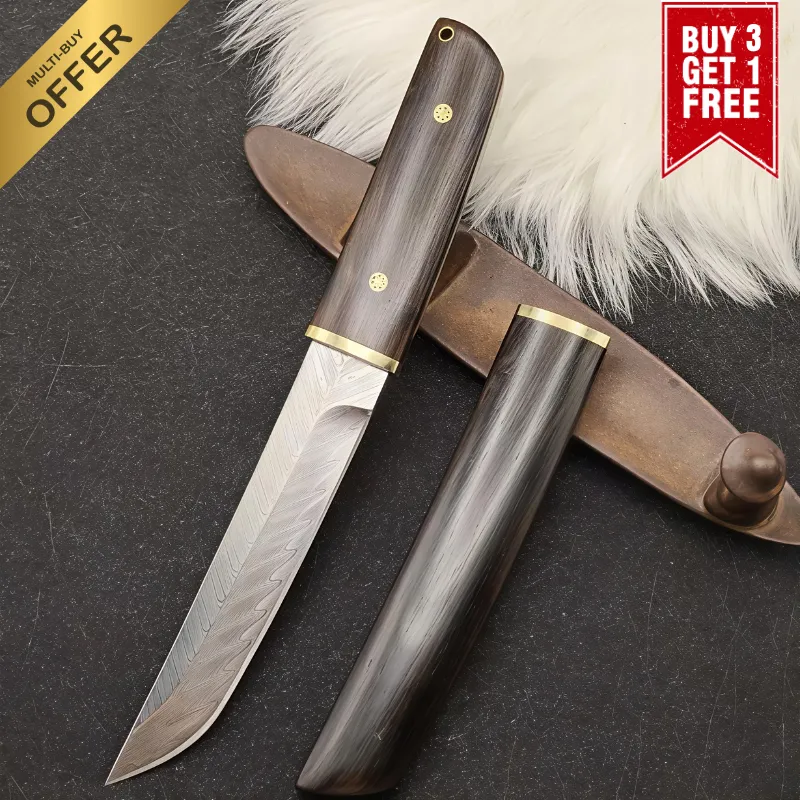
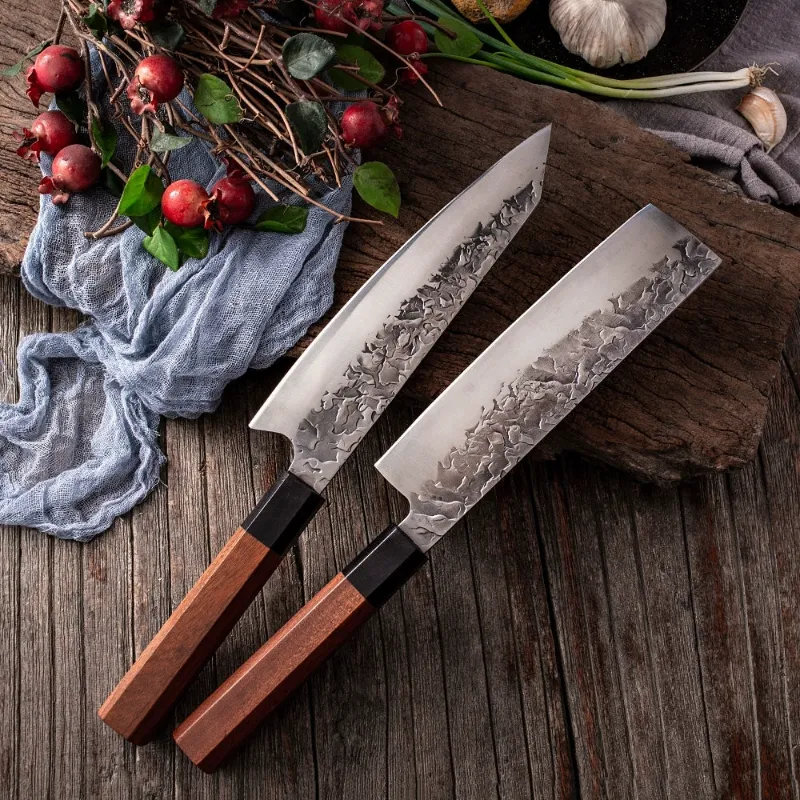
- Kitchen prep: Kasumi’s kitchen knives are mostly VG10 Damascus. The GENE VG10, for example, lists 61 HRC, a 60 degree angle, a 3 mm blade and 67 layers. For vegetables, the Bunka and Nakiri knives are a different case: their page lists 5Cr15 stainless steel, a hard steel core with softer steel on the sides.
- Heavy outdoor work: DC53 and M390 are where Kasumi makes its strongest durability and edge claims, on knives such as the RUDOLF DC53 and the MARLON M390.
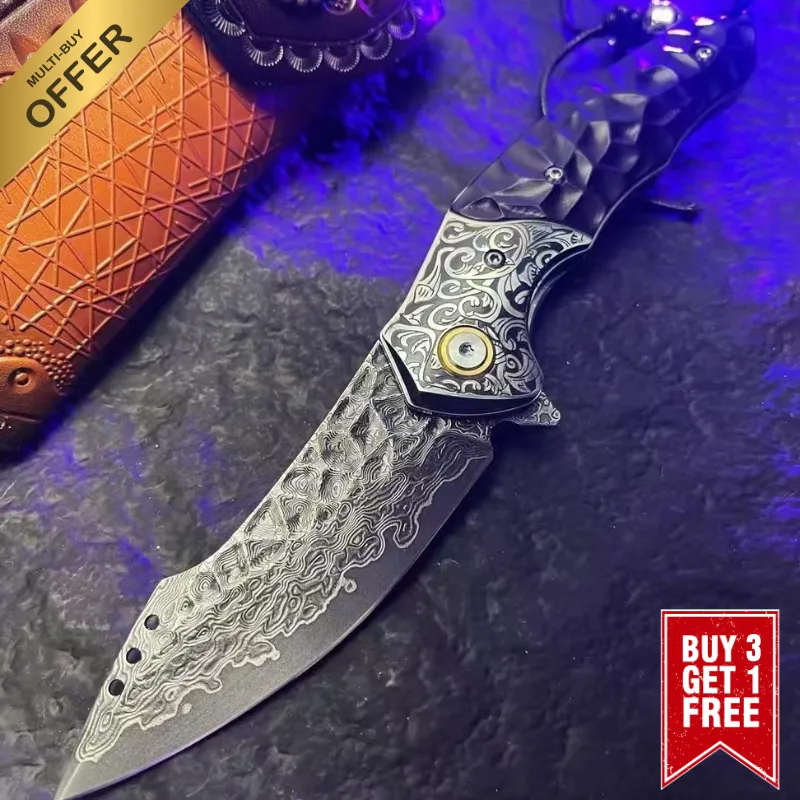
- Everyday carry: Kasumi’s folders come in VG10 Damascus, D2, 14C28N and Sandvik steels. The ELVIS VG10 folding knife lists 61 HRC, a 37-layer Damascus blade and a bearing spring opening.
- Undecided between two steels: some knives come in a choice of steel on the same design, such as the HILARY in VG10 Damascus or M390, so you can choose the steel without changing the knife.
Keeping the edge, whatever the steel
Any steel dulls with use, so plan on maintenance. Kasumi sells a 3000/8000 grit whetstone combo, a rosewood diamond honing rod and a 3-stage knife sharpener for that. The store does not publish a sharpening schedule, so sharpen when the knife stops cutting cleanly rather than by the calendar, and follow the instructions that come with the sharpener. Our separate guide covers care for Kasumi’s VG10 kitchen knives in more detail.
Kasumi’s pages state that its knives are not for sale to or use by anyone under 16, and outdoor fixed blades may be subject to local carry laws, so check those before carrying one away from home.
Questions
Does Kasumi Knives sell the Takumitak TKF318?
No. Kasumi Knives sells its own range and does not publish a comparison with Takumitak, so we compare Kasumi's own steels instead.
Which Kasumi steel holds an edge longest?
Kasumi's listed hardness for its main steels overlaps, roughly 58 to 62 HRC, so hardness alone does not decide it. The brand's strongest edge-retention claims are for M390, DC53 and VG10 Damascus.
What hardness are Kasumi VG10 knives?
Kasumi's VG10 Damascus knives list between 59 and 62 HRC, depending on the model. The GENE VG10, for example, lists 61 HRC.
What steel are Kasumi's Bunka and Nakiri knives?
Their page lists 5Cr15 stainless steel, with a hard steel core and softer steel on the sides.
How often should I sharpen a Kasumi knife?
Kasumi does not publish a schedule. Sharpen when the knife stops cutting cleanly, using a whetstone, honing rod or sharpener, and follow the tool's instructions.
Products in this guide
 Shopping at Kasumi Knives? See the discount code
10% OFF Sitewide
More in this series
Do Kasumi Kitchen Knives Need Special Care? How to Wash, Store and Sharpen Them28 Aug 20264 minJapanese Knife Blade Types Explained: Santoku, Nakiri, Gyuto, and More28 Aug 20264 minIs the Elvis VG10 Folding Knife a Fishing Knife? What to Know28 Aug 20263 minHow to Choose the Right Japanese Knife Shape for Every Kitchen Task28 Aug 20265 minVG10 Steel Kitchen Knives: Why Japanese Chefs Choose This Blade Material28 Aug 20263 min