 A Go Kalimba guide
Kalimba Sizes and Key Configurations Explained: From 8 to 42 Keys
What each kalimba key count and layout gives you, from 8 key minis to 42 key chromatic models, using Go Kalimba's own product specs.
Kalimba sizes and key configurations come down to two choices: how many keys (tines) you want, and whether they sit in one row tuned to a single key or in two layers that add the sharps and flats. Go Kalimba sells everything from 7 and 8 key minis through 17, 21 and 24 key models to chromatic kalimbas with 34, 38, 41 and 42 keys. Below we explain what each configuration gives you, using the specs on Go Kalimba’s own product pages, and how to match one to the music you want to play. We keep the current code for Go Kalimba on its store page.
Key counts in the Go Kalimba range
| Keys | Examples at Go Kalimba | What the product pages say |
|---|---|---|
| 7 and 8 | Mini Hluru 7 Keys, Hluru 8 Keys Mini, Gecko 8 Key Mini | Portable and compact; the Hluru 8 key page says it suits beginners and plays simple tracks |
| 17 | Kalimba Thumb Piano 17 Key, Gecko, Hluru, Kimi and LingTing models | Single row in a set key, such as C; sold with a music book, tuning hammer and note stickers |
| 21 | Hluru 21 Keys Board, Seeds 21 Key, LingTing 21 Keys | Hluru says its 21 key adds 3 more treble notes than a 17 key |
| 24 | Gecko 24 Key, Seeds Double-layer 24 Key | Wider range; the Gecko is camphor wood with ore metal tines |
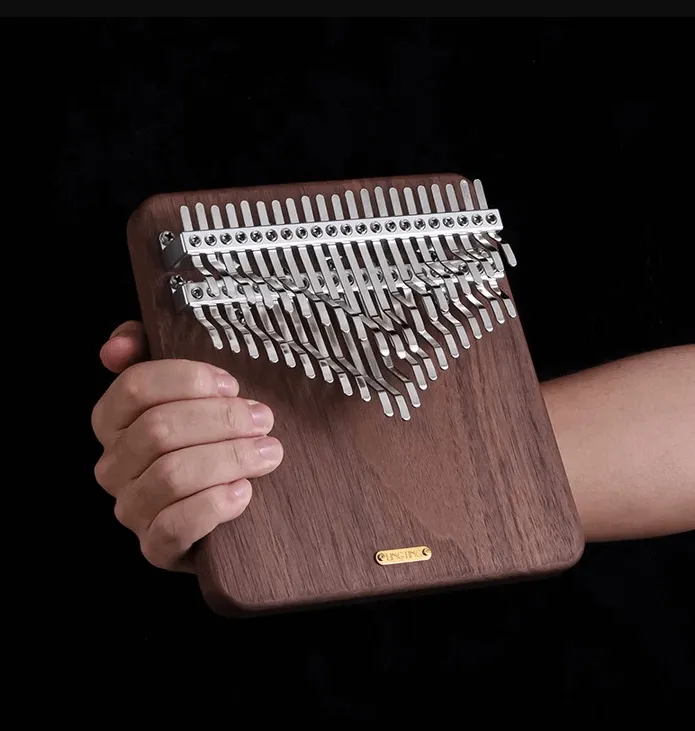
| 34 and 38 | LingTing 34 Key Chromatic, Hluru 34 and 38 Key, Cega 34 Key | Two layers: LingTing lists C major on the lower layer and C sharp major above |
| 41 | Seeds 41 Keys Chromatic | 3 octaves, F3 to F6, with all sharps and flats |
| 42 | LingTing 42 Key Chromatic | Solid walnut, two split key stands, C major below and C sharp major above |
Single key vs chromatic
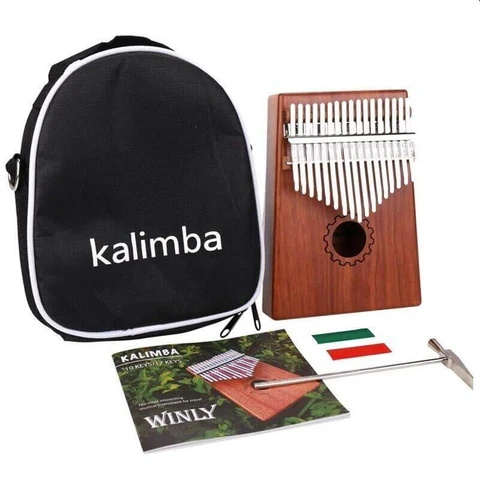
A standard kalimba has one row of tines tuned to one major scale. The 17 key kalimba thumb piano is listed in international C tune, which its page compares to a piano’s tone. Go Kalimba also sells single-row models in other keys, such as the LingTing in B and the LingTing electric in A major. A single-row kalimba plays the notes of its scale; songs that need notes outside that scale need retuning or a different instrument.
A chromatic kalimba solves that with a second layer. On the LingTing 34 key, the lower layer is C major and the upper layer is C sharp major, which together give you the sharps and flats. LingTing’s page explains that the two layers also tune differently: you raise either layer by tapping the tine up with the hammer, lower the upper layer by tapping down, and lower the lower layer by gently pulling the tine with pliers. That is more to learn and maintain than a single row.
The LingTing 42 key chromatic kalimba takes the same two-layer idea further, with a double split key stand. The Seeds 41 key covers 3 full octaves from F3 to F6 and, according to its page, can play tabs written for 17, 21 and 34 key kalimbas while staying the same size as a 17 key model, at about 450 grams.
Flat board or resonance box
Size is not just key count. Go Kalimba’s FAQ explains the two body types. A resonance box has a sound hole, which lets you make a “wah-wah” effect by covering and uncovering it. A flat board has no sound hole. Some models come in both, such as the Cega 34 key, sold as a flatboard or a box type. If you want that wah effect, choose a box; if you want a slimmer instrument, a board.
How to choose your configuration
- For a pocket instrument or a gift: a 7 or 8 key mini. It plays simple tunes and travels anywhere, but has a short range.
- For learning songs from books and tabs: a 17 key in C. Go Kalimba’s songbooks, such as its Christmas Songbook, are written for 17 key kalimbas, and the 17 key models come with a music book and note stickers.
- For more treble range in the same layout: a 21 key, which adds 3 higher notes to the 17 key layout on the Hluru model.
- For full chromatic music: a 34, 38, 41 or 42 key two-layer kalimba, accepting the extra tuning work described above.
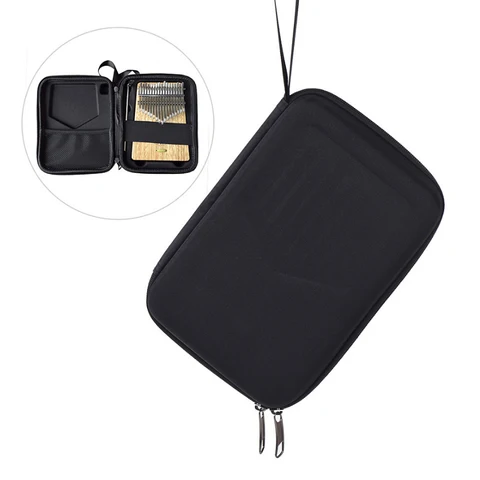
Spare parts follow the common sizes: Go Kalimba sells tine sets for 17, 21 and 34 key kalimbas, and carry cases for 17 and 21 key models.
Shipping and returns
Go Kalimba ships worldwide and offers free shipping to the contiguous US on orders over $99; its free shipping page says that offer may not be combined with other offers or discounts. You can request a return within 30 days of receiving your order. Its refund policy notes that the end keys on both sides may sound less perfect than the others, and that this, like natural color variation in the wood, is not treated as a defect, so you pay return shipping in that case.
Questions
How many keys should a first kalimba have?
Go Kalimba's 17 key models come in C with a music book, tuning hammer and note stickers, and its songbooks are written for 17 keys. The 8 key minis are smaller and play simple tunes.
What is the difference between a 17 key and a 21 key kalimba?
Hluru's 21 key page says it adds 3 more treble notes than the 17 key layout.
What is a chromatic kalimba?
A kalimba with two layers of tines that adds sharps and flats. The LingTing 34 key, for example, has C major below and C sharp major above.
Can a 41 key kalimba play 17 key tabs?
The Seeds 41 key page says it can play tabs for 17, 21 and 34 key kalimbas, and covers F3 to F6 with all sharps and flats.
What is the difference between a flat board and a box kalimba?
Go Kalimba's FAQ says a resonance box has a sound hole for a wah-wah effect, while a flat board has none.
Products in this guide
 Shopping at Go Kalimba? See the discount code
5% OFF All Orders
More in this series
 How to Keep Your Kalimba in Tune: When to Use a Kalimba Tuner11 Sep 20263 minIs the Kalimba a Good First Instrument for Adults? What You Need to Start11 Sep 20263 min
 Caring for Your Kalimba: Cleaning, Storage, and Tine Maintenance11 Sep 20264 minKalimba vs. Tongue Drum: Which Instrument Is Right for You?11 Sep 20263 minHow to Tune a Kalimba: Step-by-Step for Beginners11 Sep 20263 min