 A Benny Bradley's guide
Invisible vs Lazy Susan Cabinet Locks: Which Is Right for Your Home?
A lazy susan cabinet lock secures rotating corner shelves, while invisible locks work on standard doors—here's how to choose the right style for your cabinets.
Lazy Susan vs Invisible Cabinet Locks: The Quick Answer
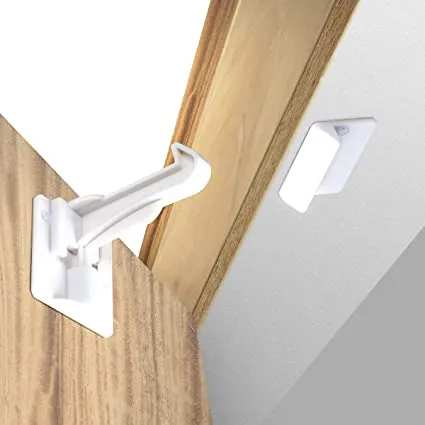
A lazy susan cabinet lock is specifically designed for rotating corner cabinets with curved or circular doors, while an invisible cabinet lock mounts inside standard cabinet doors and stays hidden from view. Both keep curious toddlers out, but your cabinet style determines which one actually works. If you have a corner lazy susan, a standard invisible lock won’t grip the spinning shelves, you need a lock built for rotation.
Why Lazy Susan Cabinets Need Specialized Locks
Corner cabinets with rotating shelves present a unique challenge. The shelves spin independently of the door, so a lock that only secures the door frame won’t stop a determined child from reaching inside. A proper lazy susan cabinet lock grips both the door and the rotating mechanism to prevent access.
Standard magnetic cabinet locks assume a flat, hinged door. When you install them on a lazy susan, the magnet often can’t maintain contact through the curve, and the spinning shelf bypasses the latch entirely. Parents quickly discover this gap when toddlers learn to push the door just enough to rotate the contents within reach.
The Safety 1st lazy susan cabinet lock remains one of the most recommended solutions because it uses a strap system that wraps around the cabinet frame and secures both door panels together. This design accounts for the dual-door setup most corner cabinets use. You can read more about specific models in this product overview.
How Invisible Cabinet Locks Work on Standard Doors
Invisible locks mount on the inside of a cabinet door and use a magnetic key to disengage the latch. From the outside, your cabinets look untouched, no straps, no visible hardware, no adhesive marks. We suggest them for kitchens where you want clean lines and modern aesthetics.
The trade-off is installation complexity. You’ll drill a small hole or recess the magnet into the cabinet frame, which requires precision. Once installed, though, they’re incredibly convenient: hold the magnetic key to the door, and it opens. No fumbling with latches while holding a hot pan.
Magnetic cabinet locks work best on:
- Flat cabinet doors with a standard hinge
- Drawers where you want no external hardware
- Cabinets you access frequently throughout the day
- Homes where you plan to remove the locks later without visible damage
They do *not* work on corner lazy susan cabinets, bi-fold doors, or any setup where the door doesn’t sit flush against a frame.
Installation: Lazy Susan Lock vs Invisible Lock
| Lock Type | Install Time | Tools Needed | Removability |
|---|---|---|---|
| Lazy Susan Strap | 5-10 min | None (adhesive) | High, minimal residue |
| Invisible Magnetic | 15-25 min | Drill, measuring tape | Medium, small holes remain |
Lazy susan cabinet lock installation is straightforward. Most strap models use 3M adhesive: clean the cabinet surface, press the mounts into place, thread the strap, and adjust the tension. No drilling, no permanent changes. When you remove them, a bit of adhesive remover takes care of any residue.
Invisible locks require more precision. You’ll mark the latch position on the inside of the door, drill a pilot hole if needed, and mount the catch on the cabinet frame so it aligns perfectly. Misalignment by even a few millimeters means the lock won’t engage. The magnetic key also needs a precise spot on the door exterior, though some models include a template.
For renters or anyone hesitant about permanent modifications, the lazy susan strap style wins. For homeowners who want a seamless look and don’t mind a small install project, invisible locks deliver.
Which Lock Handles Daily Use Better?
Invisible locks tend to be more convenient for frequent access, in kitchens where parents open the same cabinet many times a day, since it takes a single motion: hold the magnetic key, open, done. No straps to squeeze or release mechanisms to pinch.
Lazy susan locks, especially strap versions, can take some practice to use with one hand. Pressing the release button and pulling the strap simultaneously feels awkward at first, especially when you’re holding a toddler or ingredients, though it gets easier with repetition and is still not as fast as a magnetic key.
However, lazy susan locks win on security for determined toddlers. The physical strap is harder to defeat than a magnetic latch, which some older children figure out by sliding a strong magnet along the door. In high-humidity environments like under-sink cabinets, check that adhesive mounts stay secure over time, since moisture can weaken adhesive bonds.
If you’re childproofing multiple cabinet types, you might use both. Secure your corner cabinet lock with a strap system for the lazy susan, and install invisible locks on your upper cabinets for daily dish access. Check the latest pricing and grab our code to save on either style.
DIY Lazy Susan Lock Alternatives
Not every household needs a commercial lock. Some parents use a diy lazy susan lock approach with a simple carabiner clip threaded through both door handles, or a tension rod wedged between the cabinet and the wall.
A carabiner works if your lazy susan has two knobs close enough together. Clip it on when you leave the kitchen, unclip when you need access. The downside is visibility (it’s not subtle) and older toddlers learn to twist the carabiner gate open.
Another how to baby proof a lazy susan cabinet trick: remove tempting items entirely and leave only safe goods like plastic containers or dish towels. This approach pairs well with a simple strap lock for peace of mind, even if the contents aren’t dangerous.
For cabinets that store cleaning supplies or anything hazardous, skip the DIY route. A proper lock is worth the investment. Browse tested options and find babyproofing picks recommended by experts.
Choosing the Right Lock for Your Kitchen Layout
Walk through your kitchen and categorize your cabinets:
- Corner lazy susans: Need a strap-style lazy susan cabinet lock or a model designed for rotating shelves
- Standard hinged doors: Invisible magnetic locks work beautifully and stay hidden
- Drawers: Invisible locks or low-profile latches, depending on drawer depth
- Bi-fold or sliding doors: Look for specialized clamps; neither lazy susan nor standard invisible locks fit
Most kitchens have a mix. We recommend starting with your highest-risk cabinet (the one under the sink or wherever you store chemicals) and testing a lock style there. If it works smoothly for a week, expand to the rest.
Parents often overlook the lazy susan child lock magnetic hybrid models that combine a magnetic release with a strap designed for corner cabinets. These offer the convenience of a magnetic key with the security of a physical barrier. They cost slightly more but eliminate the two-hand squeeze problem.

If you’re childproofing beyond the kitchen, you might also be interested in tools like the potty watch for toilet training coordination, keeping kids safe in every room takes a layered approach.
Our Recommendation: Match Lock to Cabinet
For corner lazy susan cabinets, choose a strap-style lazy susan cabinet lock with adhesive mounts. It installs fast, removes cleanly, and actually secures the rotating mechanism. For all other cabinets, an invisible cabinet lock keeps your kitchen looking polished while adding serious security.
Buy both types if your kitchen has a mix of cabinet styles. The cost difference is minimal, and using the wrong lock on the wrong cabinet means it either won’t work or will frustrate you every time you cook. Many parents also find that toddlers who figure out one lock type still struggle with the other, giving you an extra layer of protection on critical cabinets.
Community insight matters too, parents share real experiences with corner cabinet childproofing that highlight what works in daily life versus what sounds good on paper.
Ready to secure your cabinets? Head to Benny Bradley’s for our discount code and pick the locks that match your layout. Your toddler’s curiosity is relentless, but the right lock keeps them safe without turning your kitchen into an obstacle course.
Questions
Do lazy susan cabinet locks work on all corner cabinets?
Most strap-style lazy susan locks fit standard corner cabinets with dual doors, but measure your door spacing first. Cabinets with a single curved door or unusual hinge placement may need a custom solution or magnetic hybrid model.
Can I install an invisible cabinet lock without drilling?
Some invisible locks use strong adhesive instead of screws, but they sacrifice holding power. For cabinets storing hazardous items, we recommend the drilled version for maximum security.
How do I remove adhesive residue from a lazy susan lock?
Use a plastic scraper to lift the adhesive pad, then apply rubbing alcohol or adhesive remover to a cloth and gently rub the residue. Most 3M adhesive mounts leave minimal marks if removed slowly.
Are magnetic cabinet locks safe if my child swallows the key magnet?
Keep the magnetic key on a high hook or lanyard out of reach. If swallowed, small magnets pose serious risks and require immediate medical attention. Strap locks eliminate this concern entirely.
Which lock is faster for daily access?
Invisible magnetic locks are faster once installed, just hold the key and open. Lazy susan strap locks require a two-hand squeeze but become automatic with practice after a week or two.
Can I use the same lock on drawers and cabinet doors?
Invisible magnetic locks work on both if you have the clearance inside the drawer. Lazy susan strap locks are cabinet-specific and won't adapt to drawer hardware.
Products in this guide
Shopping at Benny Bradley's? See the discount code
10% OFF Sitewide