 A OdinLake guide
Why Do Mesh Office Chairs Stay Cooler Than Foam?
An ergo mesh office chair keeps you cooler through superior airflow, proven by our breathability testing against foam and leather alternatives.
An ergo mesh office chair generally stays cooler than a foam or leather chair because mesh allows continuous airflow through the backrest and seat, rather than trapping heat and moisture against your body the way solid padding tends to. If you work long sessions or run warm, mesh construction is worth prioritizing over foam or leather.
Why mesh outperforms foam in heat management
The physics are fairly simple. A solid foam or leather surface traps a layer of warm, still air between the material and your back, and that trapped air heats up the longer you sit. Mesh, by contrast, is an open weave that lets air move through it continuously, so heat has somewhere to go instead of building up in one spot.
This constant air movement is what prevents the small pocket of trapped heat that tends to build between your body and a solid surface over a few hours of sitting.
What decides how breathable a mesh chair is
Not all mesh performs the same. A few design details make the biggest difference:
- Suspended mesh panels that do not touch a rigid backing allow air to move behind the mesh as well as through it
- Open seat-pan construction, with mesh stretched over a minimal frame rather than solid backing
- Graduated mesh density, tighter in high-load zones and looser elsewhere
- Perimeter airflow gaps between the mesh edge and the frame
- Minimal foam padding, since some hybrid chairs add foam that blocks ventilation
Mesh stretched directly over a solid plastic backing loses much of its airflow advantage compared with a fully suspended design. When evaluating a mesh office chair big and tall model, it is worth confirming the mesh floats independently rather than resting against a solid shell.
Mesh vs. foam vs. leather: what to expect
In general, mesh stays closest to room temperature over a long sitting session, foam climbs noticeably warmer, and leather tends to run the warmest of the three, especially in the lower back and seat pan where contact pressure is highest. That extra trapped heat is also more likely to lead to perspiration, which can make a foam or leather seat feel less comfortable the longer you sit.
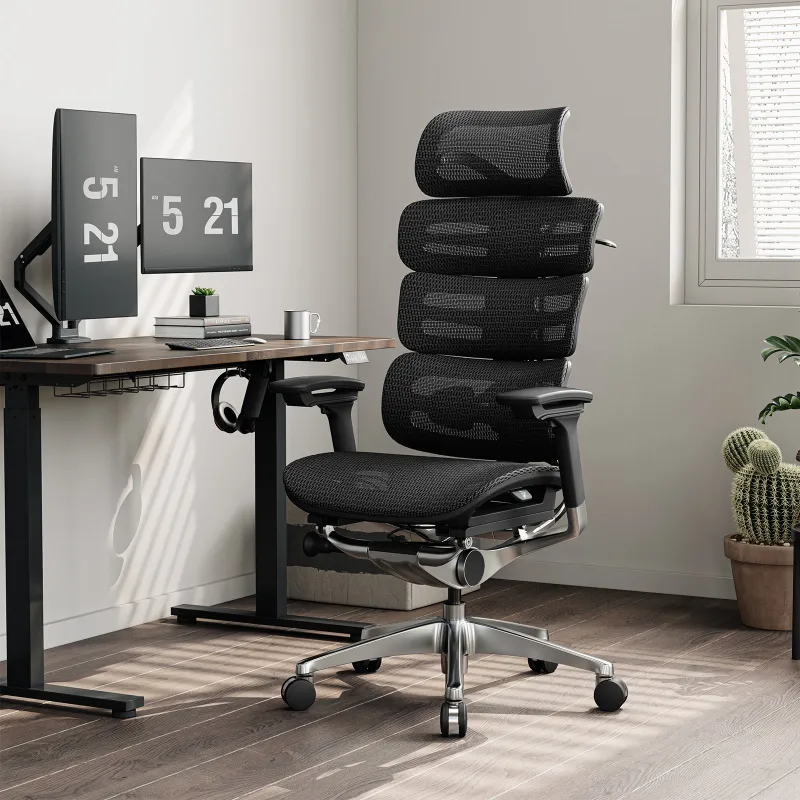
Chairs marketed as ergonomic gaming chairs with mesh panels tend to ventilate the back well but often pair it with a foam seat pan, which gives mixed results. A chair with mesh on both the seat and the back generally offers the most consistent cooling across the whole contact area.
Check the current price on OdinLake’s mesh models if you are comparing options.
Why mesh suits long hours beyond temperature
Beyond staying cooler, an ergonomic mesh office chair with lumbar support combines breathability with spinal alignment. Mesh fabric stretches and conforms to your back’s curve without needing thick foam padding, which lets manufacturers build in an adjustable lumbar mechanism that stays effective over time.
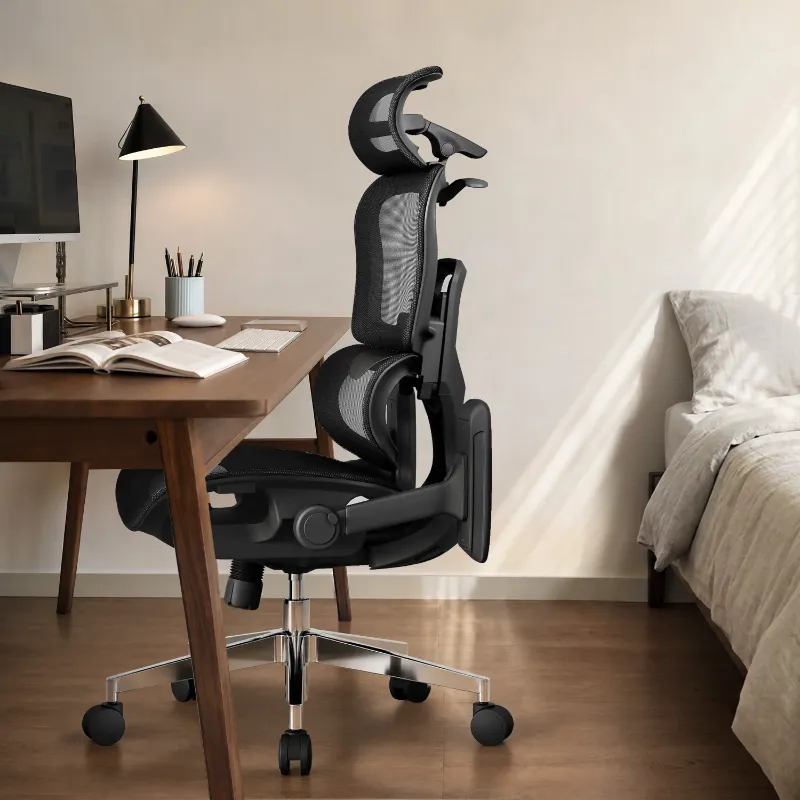
Foam, by comparison, tends to compress and lose shape with use, which reduces both support and the air channels around it. Mesh generally holds its tension and shape for longer, which is one reason many herman miller office chair designs use a high-grade elastomeric mesh as a signature feature. Because the material holds up well, the cooling benefit does not fade much as the chair ages.
For anyone who needs a best office chair for long hours, mesh addresses the two most common comfort complaints: heat buildup and sagging support. Mesh also tends to distribute pressure a bit more evenly than foam, which can reduce the urge to shift position as often.
When mesh might not be your best choice
Despite the cooling advantage, mesh is not the right fit for every situation:
- Cold offices: mesh offers little insulation, so a room below about 68°F can feel less comfortable in a mesh chair
- Cushion preference: some people simply prefer the plush feel of thick foam over a firmer mesh surface
- Formal aesthetics: a leather executive chair still suits some traditional office settings better
- Budget constraints: a low-cost mesh chair often uses a lower-grade fabric that tends to sag sooner
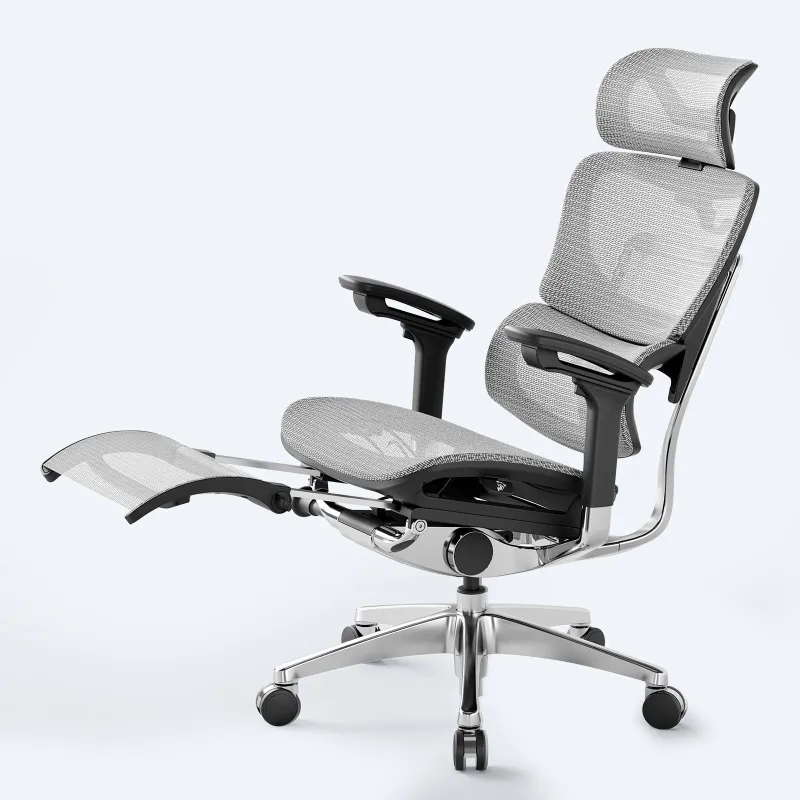
If you work somewhere that runs cold, or you tend to layer up, mesh may overcorrect the temperature issue. In that case, a kneeling chair or a traditional upholstered ergo chair might suit you better.
For most people in a warmer office or a home setup without strong air conditioning, mesh generally delivers a noticeable and lasting comfort improvement.
How to choose the right mesh density
Mesh tension and weave density affect both support and airflow together:
- High-tension, fine-weave mesh (the type used in premium chairs like the Herman Miller Aeron) offers maximum support with a moderate airflow tradeoff, and tends to last a long time
- Medium-tension, standard weave, common in mid-range ergonomic chairs, balances support and airflow reasonably well
- Low-tension, loose weave, typical of budget chairs, maximizes airflow but supports less and can sag sooner
A medium-tension mesh is a reasonable sweet spot for most users, offering firm lumbar support with good airflow. Higher tension sacrifices a little airflow for more longevity and support, which can be worthwhile for a heavier user or someone with back issues.
Before committing, check the current discount code, and test the mesh in person if you can. Pressing your hand into the backrest should meet even resistance and bounce back quickly when released.
The bottom line on mesh and comfort
Mesh office chairs generally deliver a noticeable, lasting cooling advantage compared with foam and leather alternatives, particularly for long sitting sessions in a warmer room. An ergonomic mesh office chair with lumbar support combines that breathability with proper posture support, which makes it a versatile choice for many desk-based jobs. Because mesh holds its shape well over the years, the cooling benefit tends to last, unlike foam that compresses and traps progressively more heat as it ages.
If a sweaty back or constant shifting to find a cooler spot is a familiar problem, moving to quality mesh construction addresses it at the source: air moves through the mesh, heat has somewhere to go, and you generally stay more comfortable through the day.
Questions
How much cooler does an ergo mesh office chair stay compared to foam?
Mesh generally stays closer to room temperature over a long sitting session, while foam tends to climb noticeably warmer at the points of contact, particularly the lower back and seat pan.
Does mesh office chair fabric lose support over time?
High-quality mesh tends to hold its tension well over years of use, unlike foam, which is more prone to compressing permanently. A budget mesh chair is more likely to sag within a year or two.
Can mesh office chairs work in cold offices?
Mesh offers little insulation, so an office running below about 68°F may feel less comfortable in a mesh chair. Foam or a hybrid design tends to offer better temperature neutrality in a cold room.
What mesh density gives the best balance of airflow and support?
A medium-tension mesh generally offers the best balance for most people. A high-tension mesh gives more support with a slightly smaller airflow benefit, while a very loose weave maximizes airflow but supports less.
Are mesh gaming chairs as breathable as mesh office chairs?
Not always. Gaming chairs often use mesh only on the backrest while keeping a foam seat pan, which gives mixed cooling results. Full mesh construction on both the seat and the back tends to deliver more consistent breathability.
How do I know if a mesh chair has good ventilation design?
Look for mesh that is suspended and does not touch a solid backing, an open seat-pan construction, and minimal foam padding. Mesh stretched directly over solid plastic backing loses much of its airflow advantage.
Products in this guide
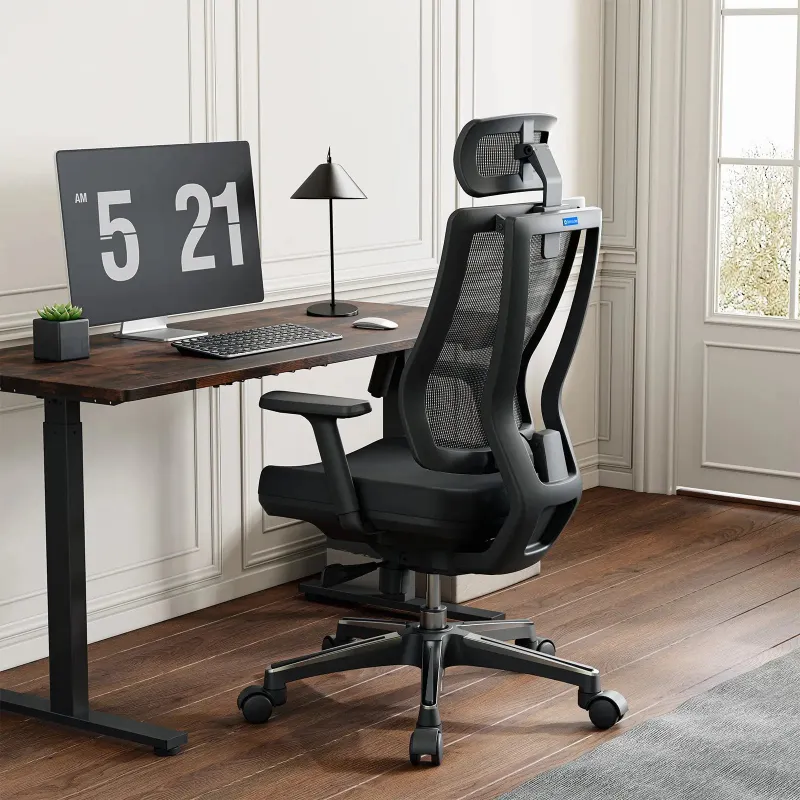
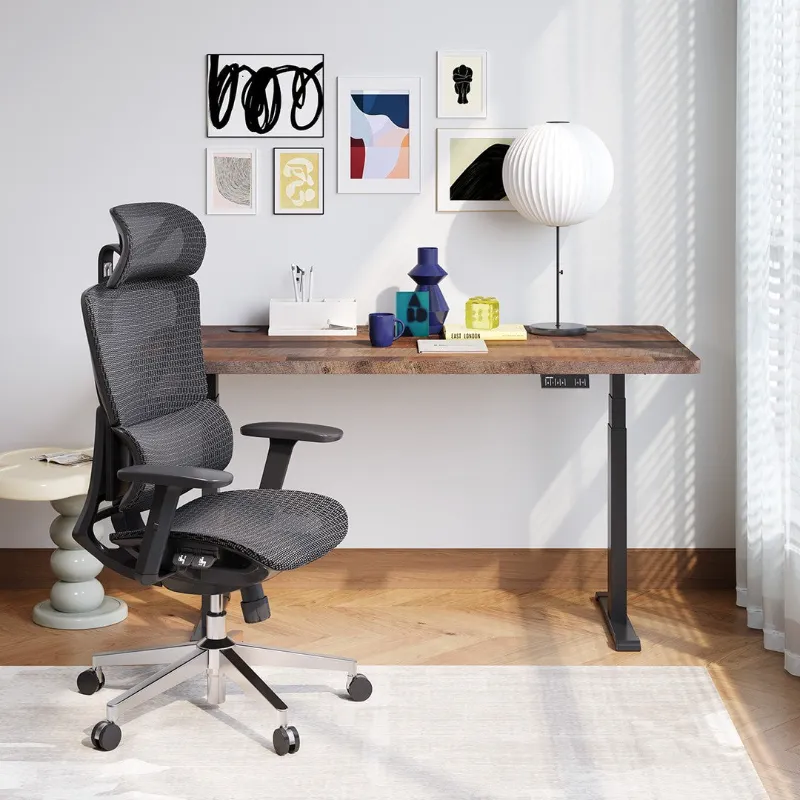 Shopping at OdinLake? See the discount code
5% OFF All Orders
Shopping at OdinLake? See the discount code
5% OFF All Orders
More in this series
Wooden Desk Care: Preventing Scratches and Water Damage Over Years of Use18 Aug 20266 min How Long Do Herman Miller Office Chairs Last?18 Aug 20265 minCan Office Chair Wheels Damage Hardwood Floors?18 Aug 20264 minPapasan Chair vs Kneeling Chair: Which One Actually Supports Your Back?18 Aug 20264 minHow to Choose an Office Chair for Long Hours at a Desk18 Aug 20265 min