 A Jump USA guide
The Complete Guide to Medicine Ball Exercises for Basketball Players
A weighted basketball trains your shooting form, ball handling, and court vision while building the muscle memory that transfers to game speed.
A weighted basketball trains your shooting form, ball handling, and court vision while building the muscle memory that transfers to game speed. Whether you’re working on your jump shot or developing explosive footwork, weighted basketballs are one of the most effective tools in a basketball player’s training arsenal.
What Is a Weighted Basketball and Why Use One
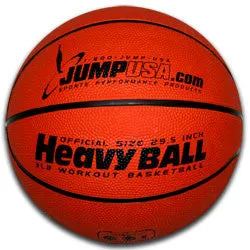
A weighted basketball is a regulation-size ball that weighs significantly more than a standard ball, typically ranging from 2 to 5 pounds depending on the model. What is a weighted basketball and how does it improve your game? The added resistance forces your muscles to work harder during every drill, which builds strength and proprioception without requiring separate equipment.
The benefits of weighted basketball training extend beyond simple conditioning. When you practice with extra load, your body adapts to handle heavier resistance. When you return to a regulation ball, your movements feel faster, sharper, and more controlled. This overload principle is why professional players and trainers across all levels use weighted basketballs as part of their strength and skill development program.
Jump USA offers weighted basketball training options so you can start building strength today. Check the latest price and grab our 10% discount code to get started.
Weighted Basketball Benefits for Shooting and Ball Handling
The benefits of practicing with a weighted basketball include improved shot consistency and wrist strength. When you shoot with a heavier ball, your stabilizer muscles fire more intensely to maintain proper form. This builds the muscular endurance needed to keep your shot smooth during the fourth quarter or a tournament run.
Ball handling improves in similar ways. Dribbling with a weighted basketball forces you to engage your forearms, wrists, and fingers more deliberately. You develop better court awareness because the slower dribble speed requires tighter control and more precise footwork.
- Shooting: stronger release, more consistent arc, better range
- Passing: improved accuracy and touch, sharper delivery
- Dribbling: tighter handles, faster reaction time when you switch back to regulation weight
- Footwork: more explosive first step, better body control
For younger players, a weighted basketball for youth is especially valuable because it builds foundational strength before they hit growth spurts. Many coaches recommend starting with lighter weighted basketballs and progressing to heavier ones as strength improves.
Weighted Basketball Size and Weight Options
Weighted basketballs come in several sizes and weights. The most common options break down like this:
| Size | Weight Range | Best For |
|---|---|---|
| Size 6 | 2-3 lbs | Youth, skill development, warmups |
| Size 7 | 3-5 lbs | High school and college players, strength building |
| Oversized (33″) | 3-5 lbs | Advanced shooting and strength work |
A weighted basketball 3lbs is a popular middle ground that builds real strength without compromising technique. A weighted basketball size 6 works well for younger athletes still developing their frame and skill set.
Choose your weighted basketball based on your current strength level and training goals. If you can’t maintain proper form with your chosen weight, drop down to a lighter option. Technique always comes first.
Weighted Basketball Exercises for Strength and Skill
The most effective weighted basketball training combines ballistic movements with skill drills. Here are the core exercises:
Weighted Shooting Drills
- Catch and shoot from the wing, baseline, and top of the key
- One-dribble pull-ups from various distances
- Shooting off the dribble with footwork emphasis
- Free throw line shooting (high volume)
Ball Handling and Court Vision
- Figure-8 dribbles through the legs
- Speed dribbling full court with directional changes
- Two-ball handling drills with one weighted, one regulation
- Chest passes and outlet passes against a wall
Footwork and Explosiveness
- Three-step shooting from the top of the key
- Crossover dribbles with quick stops
- Catch-and-go lay-ups
- High-low post moves
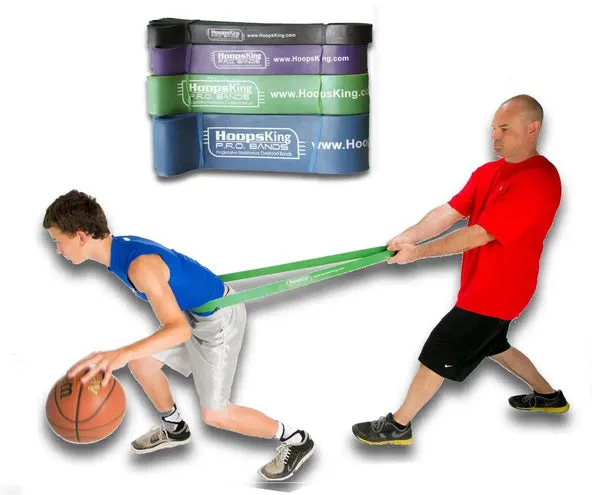
Pair your weighted basketball training with complementary tools. The champion sports stretch training band adds upper body resistance to your warm-up routine. For leg strength, plyometric jump higher shoes and strength shoes build the explosiveness that complements upper body power development.
Track your progress with a vertical jump tester so you can measure real improvements in explosiveness and court presence over weeks and months.
Weighted Basketball Training Program Structure
Start with one or two sessions per week using your weighted basketball. Each session should last 20 to 30 minutes focused on skill work, not conditioning. Quality matters more than volume.
Week 1-2: Technique Phase
- Focus on proper form with lighter weight (2-3 lbs)
- Execute 10-15 reps of each drill
- Rest fully between sets to maintain technique
Week 3-6: Strength Building Phase
- Progress to heavier weight (3-5 lbs) if form is solid
- Increase reps to 15-20 per set
- Add more complex footwork patterns
Week 7+: Sport-Specific Integration
- Mix weighted and regulation basketballs in the same session
- Use weighted ball for the first 5-10 minutes, then shift to regulation
- Your movements will feel explosive and your shot will feel lighter
Never use a weighted basketball for full-court sprints or competitive drills. The added mass changes mechanics in ways that can compromise your footwork or shooting form under game pressure. Reserve weighted basketballs for skill-focused, controlled practice work.
Complementary Tools for Complete Basketball Training
A weighted basketball is most effective as part of a broader training approach. Combine it with other specialized equipment for faster gains.
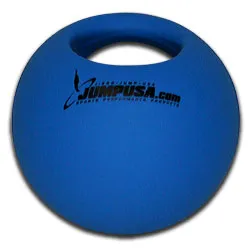
- Med ball training builds core and explosive power for finishing at the rim
- Overload bands add upper body resistance for strength and stability
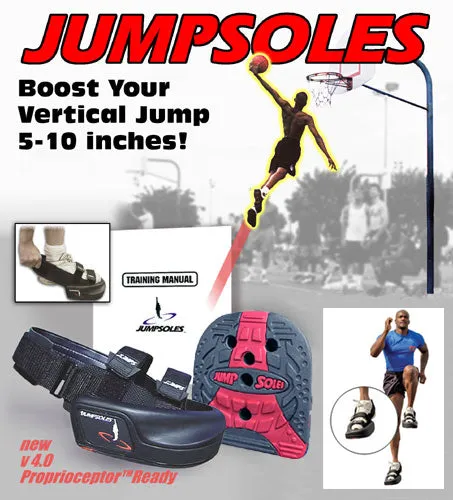
- Plyometric jump higher shoes develop fast-twitch muscle fibers for jumping and lateral explosiveness
- Jump shoes and shoes for jump build lower body power and explosiveness
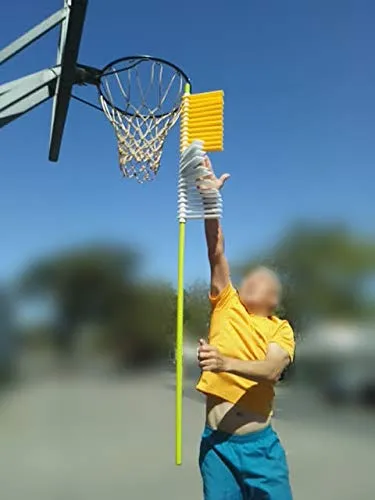
- Training basketball with hands painted training aid improves shot mechanics with visual feedback on release point and finger placement
Progress through these tools in phases. Start with your weighted basketball and add one complementary tool every 2-3 weeks. This approach prevents overtraining and lets your body adapt progressively.
Weighted Basketball Training for Different Skill Levels
New players should start light and focus on shooting form before worrying about strength. Spend the first 1-2 weeks with a weighted basketball that feels manageable, even if it’s just 1-2 pounds heavier than regulation.
Intermediate players can progress to 3-5 pound basketballs and add more aggressive footwork patterns. This is the phase where you’ll notice the biggest transfer to your game because you’re building real strength while maintaining speed and technique.
Advanced players and serious athletes benefit from alternating between weighted and regulation basketballs in the same session, or rotating through different weights across the week. Grab the code at Jump USA to stock up on multiple weighted basketballs for advanced periodized training.
Getting Started: Your First Weighted Basketball
Choose a weighted basketball that matches your current strength and skill level. If you’re new to weighted training, err on the lighter side. You can always increase the load next week. A light weighted basketball will still deliver results while keeping your technique clean.
Use your weighted basketball 2-3 times per week for 20-30 minute sessions. Mix skill drills with footwork and shooting work. Track how your shot feels on regulation balls after using the weighted version. Most players notice improvement within 3-4 weeks.
Jump USA carries a full range of weighted basketball options and complementary training tools. Check the latest price and apply our 10% discount to your order today.
Questions
What size weighted basketball should I start with?
Start with a size 6 weighted basketball in the 2-3 pound range if you're youth or new to weighted training. If you're a high school or college player, a size 7 in the 3-5 pound range is a better match for your strength level.
How often should I use a weighted basketball in my training?
Use a weighted basketball 2-3 times per week for 20-30 minute sessions focused on skill and technique. Don't use it for conditioning or full-court sprints, as the added weight can compromise footwork under pressure.
Will a weighted basketball improve my shooting accuracy?
Yes. A weighted basketball forces your stabilizer muscles to work harder, which builds the strength and control needed for consistent shot release. Your shot will feel smoother and your range will improve as your muscles adapt to the heavier load.
Can I use a weighted basketball for games or competitive drills?
No. Use weighted basketballs only for controlled skill work and practice. The added weight changes your mechanics in ways that can interfere with game speed and decision-making under pressure.
What's the best weighted basketball weight for ball handling drills?
A 3-5 pound weighted basketball works well for ball handling because the extra resistance builds forearm and wrist strength without slowing your dribble so much that technique breaks down. Start lighter if you're new to weighted training.
How long does it take to see results from weighted basketball training?
Most players notice improvements in shot consistency and control within 3-4 weeks of regular weighted basketball training. Strength gains and explosive power take 6-8 weeks of consistent work to fully transfer to game play.
Products in this guide
 Shopping at Jump USA? See the coupon code
10% OFF All Orders
Shopping at Jump USA? See the coupon code
10% OFF All Orders
More in this series
How Long Do Jump Shoes Last? Durability and Performance Over Time1 Sep 20264 minWhy Weighted Basketballs Are Better Than You Think for Jump Training1 Sep 20265 minDo Plyometric Jump Higher Shoes Increase Your Vertical?1 Sep 20264 minChampion Sports Stretch Training Band vs. Overload Bands: Which Builds Explosive Power?1 Sep 20264 minHow to Improve Your Vertical Jump: Tools for Training and Tracking1 Sep 20264 min