 A Best Friend Mobility guide
How to Choose the Right Dog Wheelchair for Your Pet’s Mobility Needs
The sitgo rear support dog wheelchair is designed for dogs with hind leg weakness, offering adjustable support that keeps your pet mobile and active.
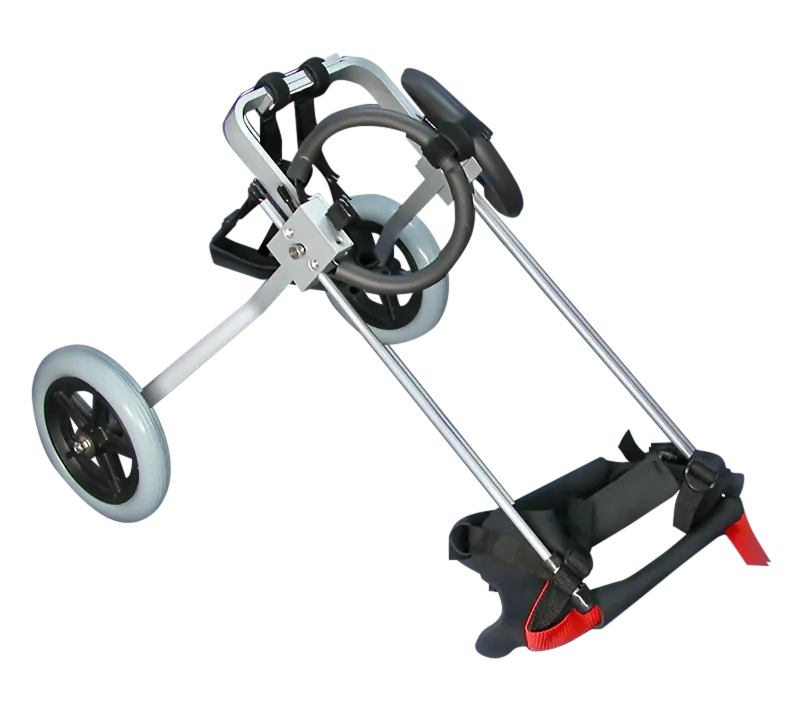
The sitgo rear support dog wheelchair is designed for dogs with hind leg weakness, offering adjustable support that keeps your pet mobile and active. Choosing the right mobility aid depends on your dog’s specific condition, activity level, and the degree of support they need.
Understanding Your Dog’s Mobility Needs
Before you invest in any mobility aid, identify what type of support your dog requires. Dogs with complete hind leg paralysis typically need a full dog wheel chair that bears the weight of their rear legs. Pets with partial weakness or those recovering from surgery may do better with a sling or harness that provides lift while allowing them to use their legs.
Watch how your dog moves throughout the day. If they can stand but tire quickly, a lifting harness offers intermittent support. If they drag their back legs or cannot stand at all, a wheelchair becomes essential. Your veterinarian can assess whether your dog has sensation in their hind legs and whether muscle strength might return with therapy.
Wheelchairs vs. Harnesses: What Works Best
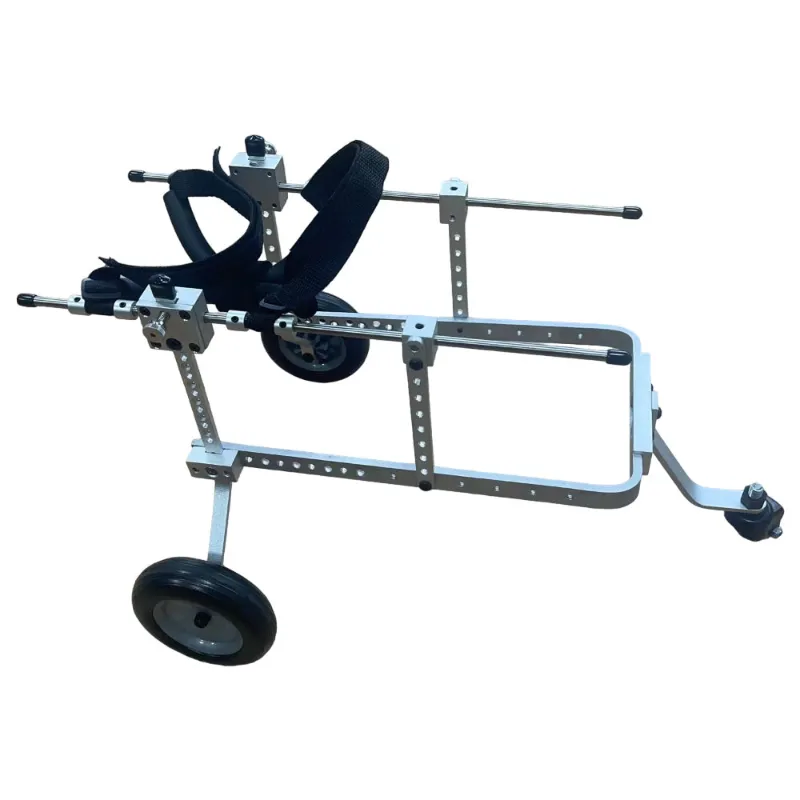
The main difference between a doggy wheelchair and a support harness is how much weight-bearing help your dog needs. Wheelchairs completely replace hind leg function, letting dogs run, play, and exercise without using their back legs. Harnesses provide lift assistance while your dog continues to use whatever leg strength they have.
| Mobility Aid | Best For | Key Benefit |
|---|---|---|
| Dog wheelchair | Complete hind leg paralysis, degenerative myelopathy | Full weight support, maximum mobility |
| Rear helping harness | Partial weakness, post-surgery recovery | Encourages natural movement, adjustable lift |
| Full body harness | Weak front and rear legs, senior dogs | Distributed support, easier on caregiver’s back |
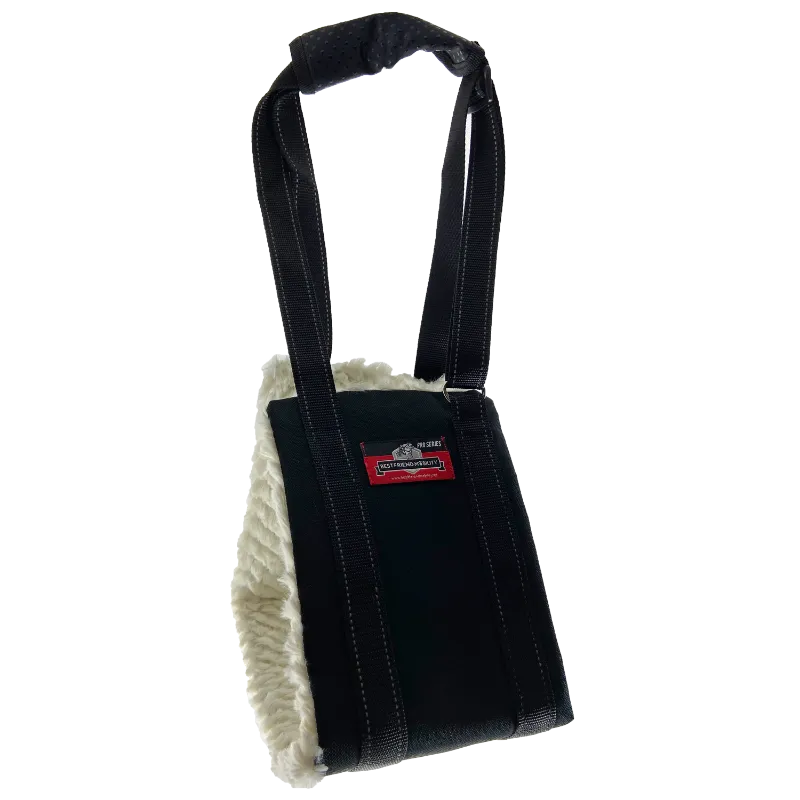
The handles let you control how much weight you lift, so your dog can gradually rebuild strength. For dogs who need more comprehensive rear support during walks, the dog sling for back legs wraps securely under the hindquarters and gives you better leverage.
When paralysis is permanent or progressive, wheelchairs like those from Dog Wheelchairs for Rear Legs manufacturers restore your dog’s independence. Your pet can move freely without relying on you to hold them up, which improves their mental health and muscle tone in the front legs.
How to Measure Your Dog for the Right Fit
Accurate measurements are critical for wheelchair comfort and function. For rear-support wheelchairs, measure your dog’s rear leg length from the ground to the top of their hip when standing. Measure the width across their hips and the length from the base of their tail to just behind their front legs. Most manufacturers provide sizing charts, but check the latest sizing guidelines on the store page before ordering.
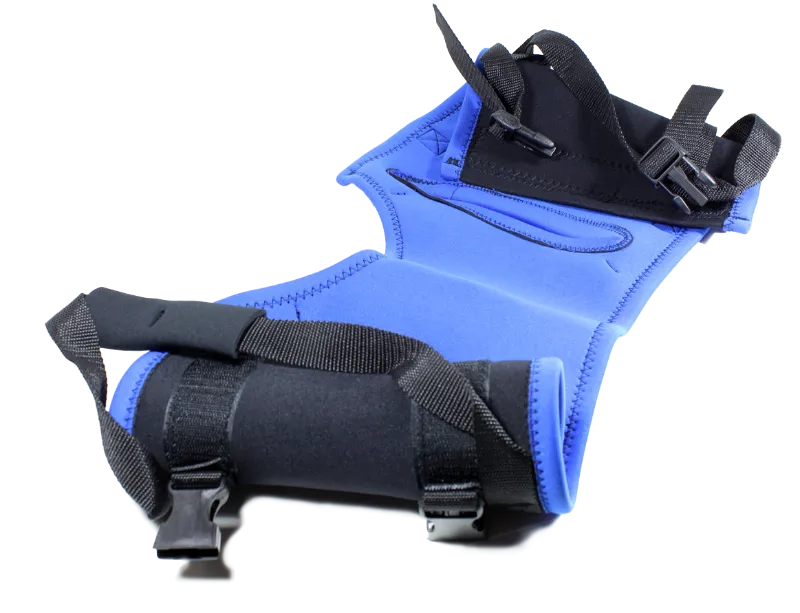
For harnesses and slings, measure around your dog’s chest and waist. The best friend mobility updog hind leg support sling lifting harness uses girth measurements to ensure the sling sits in the right position without restricting bathroom functions or rubbing against the skin. A properly fitted harness should allow you to slip two fingers between the fabric and your dog’s body.
Weight matters as much as dimensions. Small breeds under 20 pounds often need lightweight frames with smaller wheel diameters. Larger dogs require reinforced materials and wider wheelbases for stability. If your dog is between sizes, contact the manufacturer, many offer custom adjustments.
Key Features to Look For
Adjustability is the most important feature in any mobility aid. Your dog’s condition may change, and a wheelchair or harness that grows with them saves money and ensures ongoing comfort. Look for:
- Height-adjustable legs or straps that let you fine-tune ground clearance and lift
- Padded contact points on chest plates, belly bands, and leg rings to prevent chafing
- Quick-release buckles for easy on-and-off, especially important for bathroom breaks
- Lightweight aluminum or composite frames that don’t tire your dog out
- All-terrain wheels if you walk on grass, gravel, or uneven ground
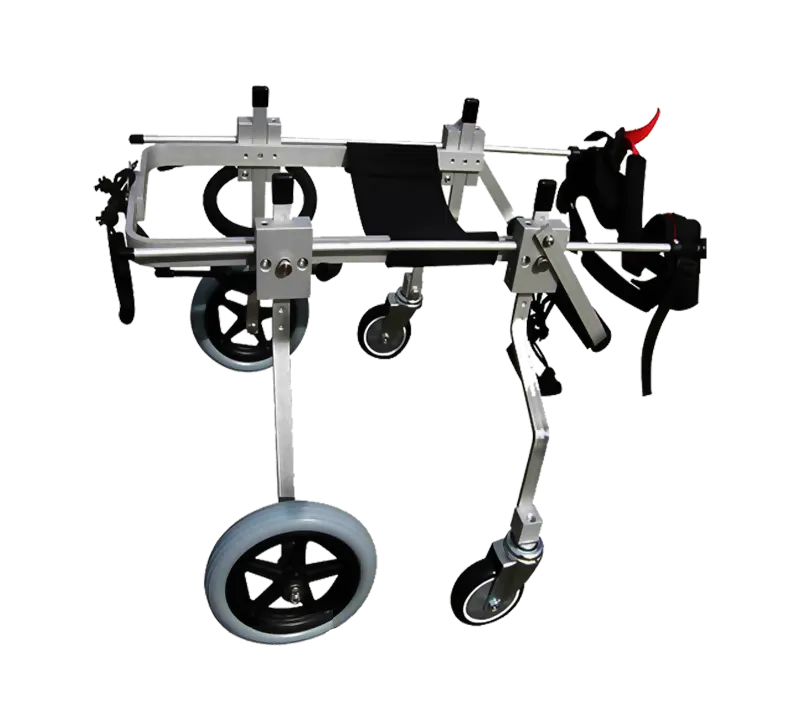
The SitGo Dog Wheelchair Small and similar models feature tool-free adjustments, so you can modify the fit in seconds. This is invaluable during the first week of acclimation, when you may need to tweak the setup multiple times as your dog learns to use the device.
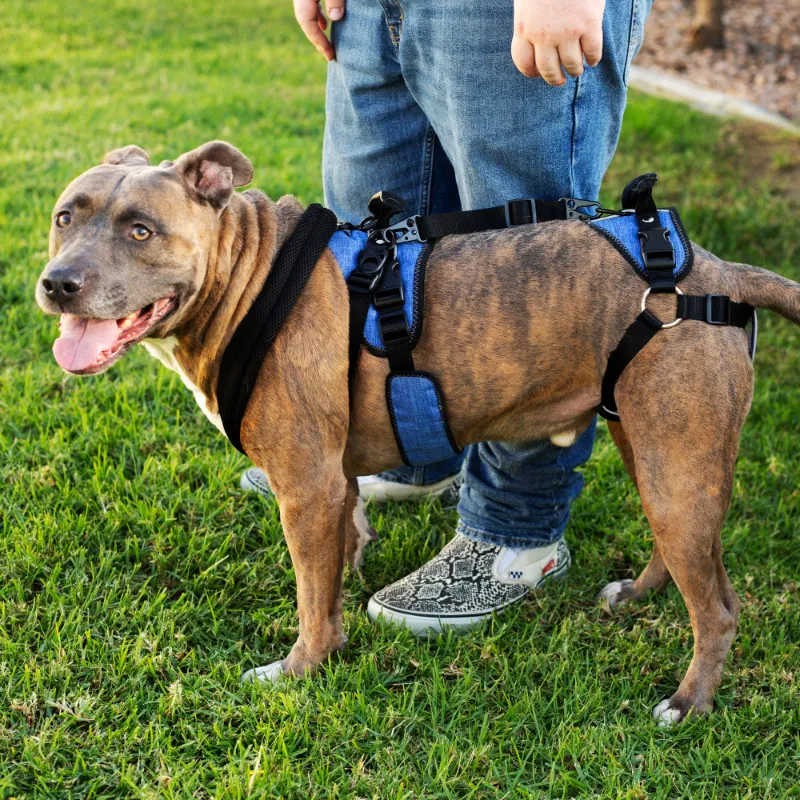
For dogs with front leg weakness in addition to rear issues, a full body dog harness distributes support across the entire torso. These work well for senior dogs with arthritis in multiple joints or breeds prone to forelimb problems.
Training Your Dog to Use a Wheelchair or Harness
Most dogs adapt to mobility aids within a few days, but the introduction process matters. Start with short five-minute sessions indoors on a non-slip surface. Let your dog sniff and investigate the wheelchair or harness before you put it on. Use high-value treats to create positive associations.
For wheelchairs, support your dog’s chest with your hands during the first few attempts. Many dogs instinctively try to sit, which tips the chair backward. Encourage forward movement with treats placed just out of reach. Once your dog takes a few steps and realizes they can move again, excitement usually takes over.
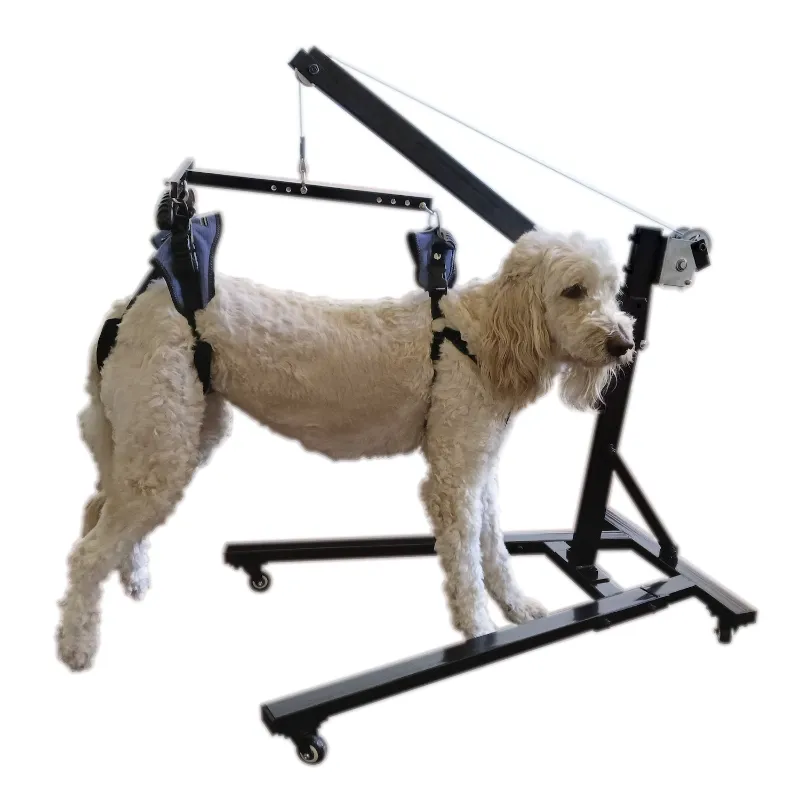
Harnesses are typically easier to introduce because your dog still feels the ground under their back legs. Hold the handles of a dog lift or rear harness and walk alongside your pet, gradually reducing how much weight you support. This builds their confidence and strengthens remaining muscle.
Never leave your dog unattended in a wheelchair, especially during the first month. They can tip over furniture or get stuck in tight spaces. Remove the wheelchair for rest periods to prevent pressure sores.
Where to Buy and Save on Mobility Aids
Best Friend Mobility offers a range of wheelchairs, harnesses, and slings designed for different mobility challenges.
Grab the current code for 10% off sitewide, which applies to wheelchairs, harnesses, and accessories. The discount makes it more affordable to try a harness first if you’re unsure whether your dog needs a full wheelchair, or to purchase backup straps and padding.
Compare your dog’s measurements against the sizing charts and read customer reviews for the specific model you’re considering. Reviews that include photos or updates on how a dog adapted can help you set realistic expectations. If you’re torn between two options, the dog sling for back legs is a lower-cost starting point that helps you assess how much support your dog truly needs before investing in a wheelchair.
Maintaining Your Dog’s Mobility Equipment
Clean fabric harnesses and slings weekly with mild detergent and air-dry them to prevent odor and bacterial growth. Inspect stitching and buckles for wear, especially if your dog is active or heavy. Wheelchair frames need less frequent cleaning, but check wheels for debris and ensure axle bolts stay tight.
Replace padded sections when they become compressed or develop rough edges. Most manufacturers sell replacement parts individually, so you don’t need to buy an entirely new harness if one strap frays. Store wheelchairs indoors to protect aluminum and plastic components from UV damage and rust.
Regularly reassess your dog’s fit, especially in the first three months. Weight loss or muscle atrophy can change how a harness sits, and a wheelchair that once fit perfectly may need adjustment. Taking five minutes each week to check the fit prevents sores and maximizes your dog’s comfort and confidence.
Questions
How do I know if my dog needs a wheelchair or just a support harness?
If your dog can still stand and bear some weight on their hind legs, a support harness provides lift while encouraging natural movement. Dogs with complete hind leg paralysis or those who drag their back legs continuously need a wheelchair for full weight support and mobility.
Can my dog use a rear support wheelchair indoors?
Yes, but supervise closely and ensure your home has enough space for turning. Remove the wheelchair when your dog rests to prevent pressure sores. Many owners use a wheelchair outdoors for exercise and a lifting harness indoors for shorter distances.
How long does it take a dog to learn to use a wheelchair?
Most dogs adapt within three to seven days. Start with short five-minute sessions using treats to encourage forward movement. Some dogs take to it immediately, while anxious pets may need two weeks of gradual acclimation.
What measurements do I need for a sitgo rear support dog wheelchair?
Measure your dog's rear leg length from ground to hip, hip width, and body length from tail base to behind the front legs. Also record your dog's weight. Compare these to the manufacturer's sizing chart before ordering.
Are dog wheelchairs adjustable as my pet's condition changes?
Quality wheelchairs feature height and length adjustments to accommodate weight loss, muscle atrophy, or changes in mobility. Look for tool-free adjustment systems that let you modify the fit quickly without disassembling the frame.
Can I use a dog sling for back legs during bathroom breaks?
Yes, rear slings are designed with open access for bathroom functions. Hold the handles to support your dog's hindquarters while they eliminate, which is easier than maneuvering a wheelchair on and off multiple times per day.
Products in this guide
 Shopping at Best Friend Mobility? See the coupon code
10% OFF Sitewide
Shopping at Best Friend Mobility? See the coupon code
10% OFF Sitewide
More in this series
When to Transition From a Support Harness to a Full Dog Wheelchair21 Aug 20266 minBest Friend Mobility Wheelchair and Harness: What to Know Before You Buy21 Aug 20265 minHow Long Can a Dog Use a Rear Leg Support Sling Each Day?21 Aug 20265 minDo Dog Lift Harnesses Actually Help Senior Dogs With Mobility Issues?21 Aug 20267 minDog Wheelchair vs Rear Support Harness: Which Is Better for Hind Leg Weakness?21 Aug 20264 min