 A The Original Moon Lamp guide
Why Won’t My Levitating Lamp Float? Common Magnetic Alignment Issues and Fixes
A levitating moon lamp that won't float usually has a magnetic alignment problem, incorrect power supply, or needs distance recalibration.
A levitating moon lamp that refuses to float is almost always struggling with magnetic alignment, an underpowered base, or incorrect hand placement during setup.
Most magnetic levitating moon lamp models share the same electromagnetic principle: the base generates a magnetic field that repels a magnet embedded in the moon, creating stable levitation. When that balance breaks, the moon drops or spins out wildly. The good news is that nearly every issue has a straightforward fix once you know where to look.
Why Your Levitating Moon Lamp Won’t Stay Afloat
The most common culprit is incorrect initial placement. Electromagnetic bases have a narrow sweet spot, usually within 1 to 2 centimeters directly above the center. If you release the moon too far off-center or too high, the magnetic field can’t catch it. Start by holding the moon with both hands, fingertips only, directly above the base’s center mark. Lower it slowly until you feel gentle resistance, then ease your fingers away horizontally without pushing down.
Power supply mismatches rank second. Many levitating lamp bases require 12V DC at 1A or higher. A phone charger or underpowered USB adapter won’t generate enough magnetic force. Check the base label and match the voltage exactly. If you’ve lost the original adapter, grab the code and confirm the correct specs with the retailer before ordering a replacement.
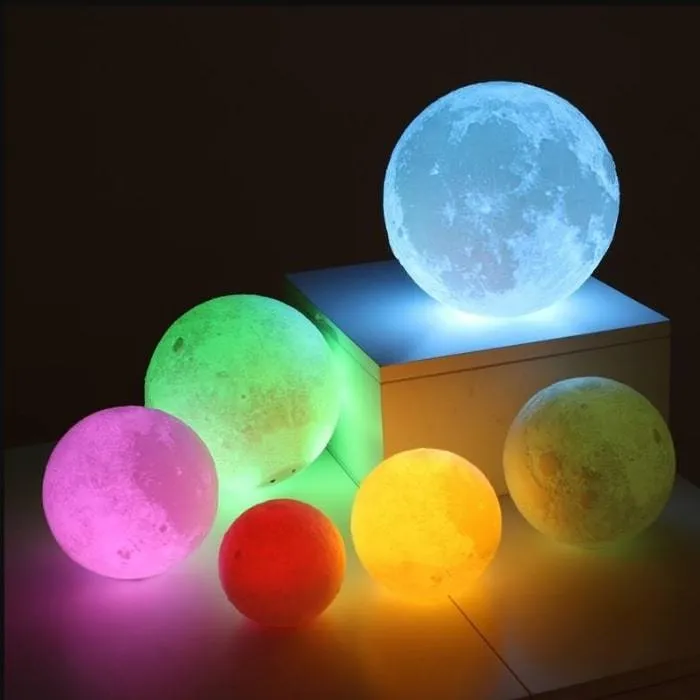
Environmental interference matters more than most guides admit. Metal furniture, laptop power bricks, and wireless chargers all generate magnetic fields that destabilize levitation. Move your base at least 30 cm away from other electronics and test again. We’ve seen perfectly aligned lunar lamps topple simply because someone set a smartphone down next to the base.
Finally, damaged magnets or worn bearings inside the moon itself can throw off balance. If your moon wobbles excessively or tilts to one side even when floating, the internal magnet may have shifted during a drop. This usually requires a replacement moon, though some DIY enthusiasts reposition the magnet manually using the teardown guides at DZone.
Step-by-Step Magnetic Alignment Fixes
Power cycle the base first. Unplug it for 30 seconds, then reconnect. Electromagnetic coils occasionally lock into the wrong polarity, and a reset clears it. You’ll know the base is active when you feel a slight pull or push if you wave your hand 2 to 3 cm above the center.
Mark the sweet spot with a pencil. Hold the moon about 5 cm above the base and slowly lower it while rotating it slightly. When you feel the strongest magnetic resistance, that’s your target height. Release gently and note whether the moon drifts left, right, forward, or back. Adjust your starting position in the opposite direction by 5 mm and try again.
Use the two-finger technique. Place one fingertip on each side of the moon’s equator, not the poles. Lower until the base pulls the moon slightly downward, then slide your fingers out sideways in one smooth motion. Jerky or downward movements disrupt the field and cause drops.
If the moon spins uncontrollably, reduce rotation speed by lightly touching the edge as it floats, or check that the base is perfectly level. Even a 2-degree tilt skews the magnetic axis. Use a bubble level app or a small carpenter’s level to confirm.
For detailed mechanical walkthroughs of how levitation works, including coil winding and magnet polarity, HCNT’s build guide offers excellent diagrams.
Troubleshooting Power and Base Issues
| Problem | Check | Fix |
|---|---|---|
| Base LED off, no hum | Power adapter, outlet | Replace adapter or test different outlet |
| Base LED on, moon drops instantly | Voltage too low | Use correct 12V 1A+ adapter |
| Moon floats but drifts sideways | Uneven surface, interference | Level the base, move away from metal |
| Intermittent floating | Loose cable connection | Reseat DC plug into base firmly |
Adapter voltage is non-negotiable. A 9V adapter on a 12V base will light the LEDs but won’t generate levitation force. Conversely, a 15V supply can overheat the coils. Stick to the rated voltage within 0.5V.
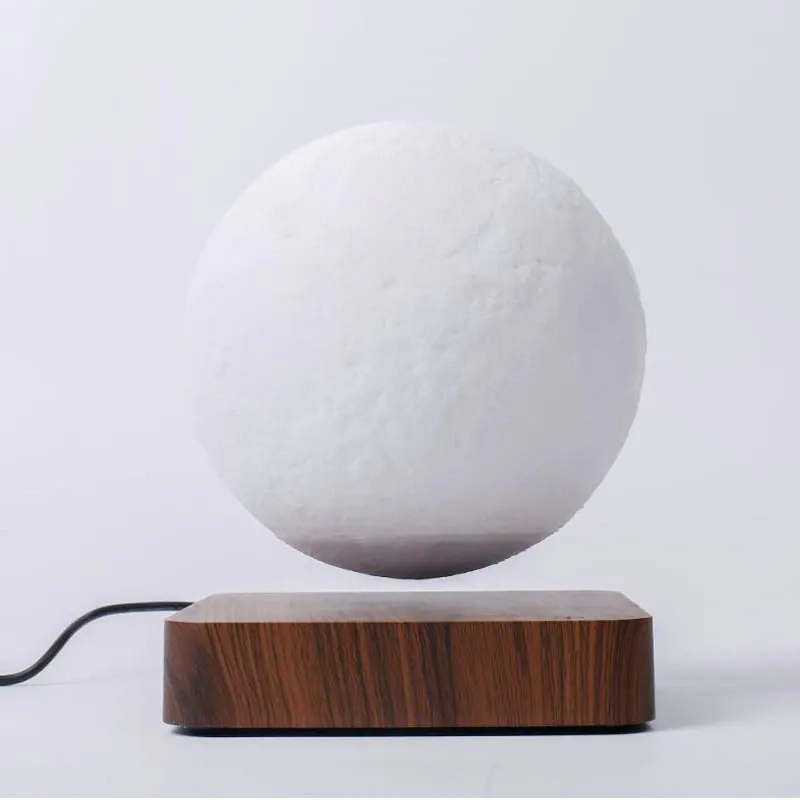
Hum or buzz without levitation means the electromagnet is energized but the moon’s magnet polarity is reversed. Flip the moon 180 degrees so the opposite pole faces the base. Some levitating moon lamp models label the correct orientation with a small arrow or dot on the bottom.
If your base has worked before and suddenly stopped, check for firmware or controller failures in smart models. A tiny control board inside the base manages the electromagnetic pulses. Power surges or static discharge can corrupt it. Contact the manufacturer for a replacement base if resetting and swapping adapters changes nothing.
Comparing Levitating Lamp Designs and Compatibility
Not all levitating moon lamps use the same magnet strength or base diameter.
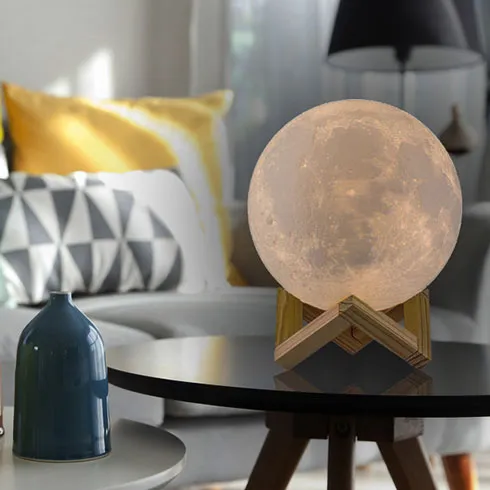
Smaller moons (10 to 12 cm) are easier to balance but offer less dramatic visual impact. They also weigh less, so lower-power bases work fine. If you’re new to magnetic levitation or plan to move the lamp frequently, a compact lunar moon light lamp is the most forgiving.
Larger moons (15 cm and up) require stronger bases and precise centering. The magnetic sweet spot shrinks as weight increases, so expect a steeper learning curve. However, the glow and detail on a 15 cm lunar surface make the effort worthwhile for display setups.
Rotation speed varies by base design. Some spin the moon actively using a second set of coils, while others rely on ambient air currents. Active rotation looks smoother but draws more power and adds mechanical complexity. Passive models are quieter and more reliable long-term.
For current pricing on different sizes and styles, check the latest deals before ordering. The 10% discount applies across all moon lamp categories, including levitating models.
When to Replace vs. Repair Your Levitating Moon Lamp
Replace the moon if it has visible cracks, the internal magnet rattles, or it tilts more than 15 degrees when floating. A shifted magnet center-of-mass makes stable levitation impossible. Replacement moons typically cost 30 to 50 percent of a full kit.
Replace the base if resetting, adapter swaps, and repositioning all fail, or if the coil emits a burning smell. Overheated coils lose magnetic strength permanently. Bases are harder to source individually, so factor that into your repair-versus-replace decision.
Repair makes sense for loose cables, dirty contact points, or cosmetic base damage. Wipe the top surface of the base with isopropyl alcohol to remove dust that interferes with the magnetic field. Resolder any visibly loose DC jack connections if you have soldering experience.
If you’re curious about modifying or building your own magnetic levitating moon lamp, the DZone project covers wireless power transfer and custom coil winding. DIY builds give you full control over base strength and moon weight but require intermediate electronics skills.
Optimizing Levitation for Long-Term Stability
Once your levitating lamp floats consistently, a few tweaks improve reliability. Run the base continuously rather than switching it on and off daily. Electromagnetic coils stabilize after 10 to 15 minutes of warmup, and frequent power cycling stresses the controller.
Avoid high-humidity rooms. Moisture degrades the PCB inside the base and can corrode the magnet coating inside the moon. Bathrooms and basements are poor placement choices. Bedrooms and living rooms with normal humidity work best.
Dust the base weekly. A thin layer of dust creates friction that dampens magnetic response. A microfiber cloth takes five seconds and prevents gradual performance loss.
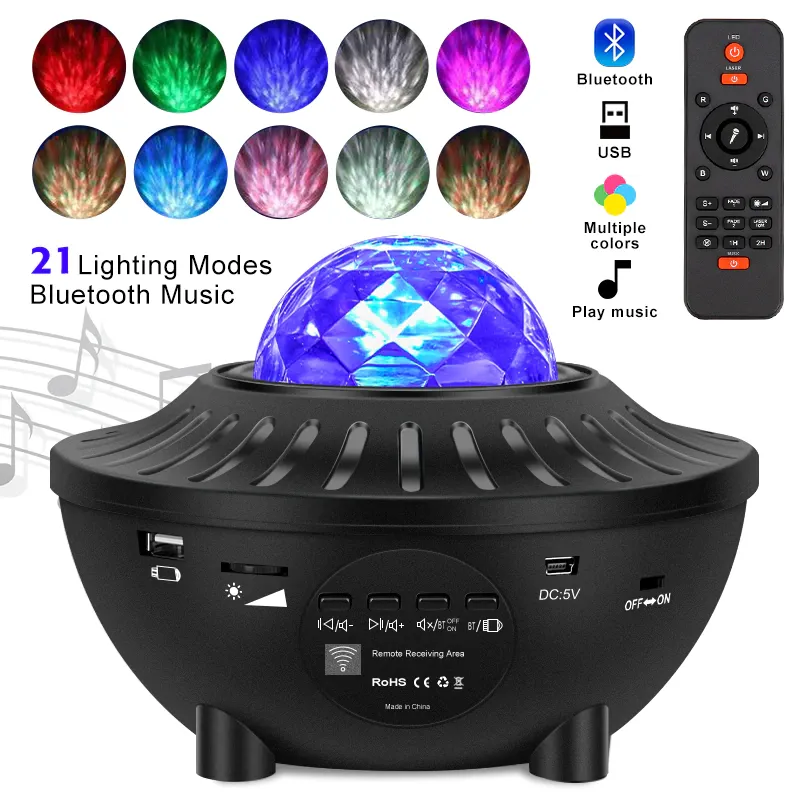
If you also own other decorative lighting like a galaxy projector light or moon projector, keep them at least 50 cm away from the levitating base. Overlapping light beams are fine, but the electronics inside projectors can emit low-frequency interference.
For anyone still shopping or comparing levitating moon lamp reviews, we recommend starting with a mid-size model from a retailer that offers clear return policies. The learning curve is real, but once you nail the alignment, the floating effect is worth every minute of calibration.
Questions
Why does my levitating moon lamp keep falling off the base?
Your moon is likely starting too far from the magnetic sweet spot or the base isn't receiving enough power. Hold the moon directly above the center, lower it slowly until you feel resistance, then release horizontally. Confirm your adapter matches the base's voltage requirements, usually 12V at 1A or higher.
How do I know if my levitating lamp base is working?
A functioning base will have an LED indicator lit and emit a faint hum when powered. You should also feel magnetic push or pull when you hold the moon 2 to 3 cm above the center. If the LED is on but you feel no magnetic force, check that you're using the correct voltage adapter.
Can I use a levitating moon lamp near my phone or laptop?
Keep your levitating lamp at least 30 cm away from phones, laptops, and wireless chargers. These devices generate magnetic fields that destabilize levitation and can cause the moon to drift or fall.
What should I do if my moon wobbles or tilts while floating?
Wobbling usually means the internal magnet has shifted or the base isn't level. First, check that the base sits on a perfectly flat surface using a level tool. If the problem persists, the magnet inside the moon may be damaged and require a replacement moon.
How long does it take to learn to balance a magnetic levitating moon lamp?
Most people achieve stable levitation within 5 to 10 attempts once they locate the magnetic sweet spot. The key is slow, controlled lowering and horizontal finger removal. Larger, heavier moons require more precision than smaller 10 to 12 cm models.
Do levitating lamps work better in certain rooms?
Levitating lamps perform best in low-humidity rooms away from metal furniture and electronics. Bedrooms and living rooms are ideal, while bathrooms and basements can cause moisture damage to the base's electronics over time.
Products in this guide

 Shopping at The Original Moon Lamp? See the discount code
10% OFF All Orders
Shopping at The Original Moon Lamp? See the discount code
10% OFF All Orders
More in this series
How Long Do LED Moon Lamps Actually Last Before They Need Replacing?25 Aug 20265 minDo Galaxy Projector Lights Really Help You Sleep Better?25 Aug 20266 minLevitating Moon Lamp vs Floating Moon Lamp: Which Magnetic Design Works Best?25 Aug 20264 minHow to Clean and Maintain Your Moon Lamp Without Damaging the Surface25 Aug 20265 min