 A Best Friend Mobility guide
When Does a Dog Need a Wheelchair? Moving On From a Support Harness
Signs that a support harness is no longer enough, how Best Friend Mobility harnesses, slings and wheelchairs differ, and how to start with a cart.
When a Harness Is No Longer Enough
A dog may need a wheelchair when a support harness is no longer enough: when you find yourself carrying most of your dog’s rear weight on every walk, rather than just steadying them. Your vet is the right person to confirm that and to check your dog has the front leg strength a rear cart needs, because Best Friend Mobility says a dog should have normal front leg strength to use its rear support carts. You can find the current code on our Best Friend Mobility coupon code page.
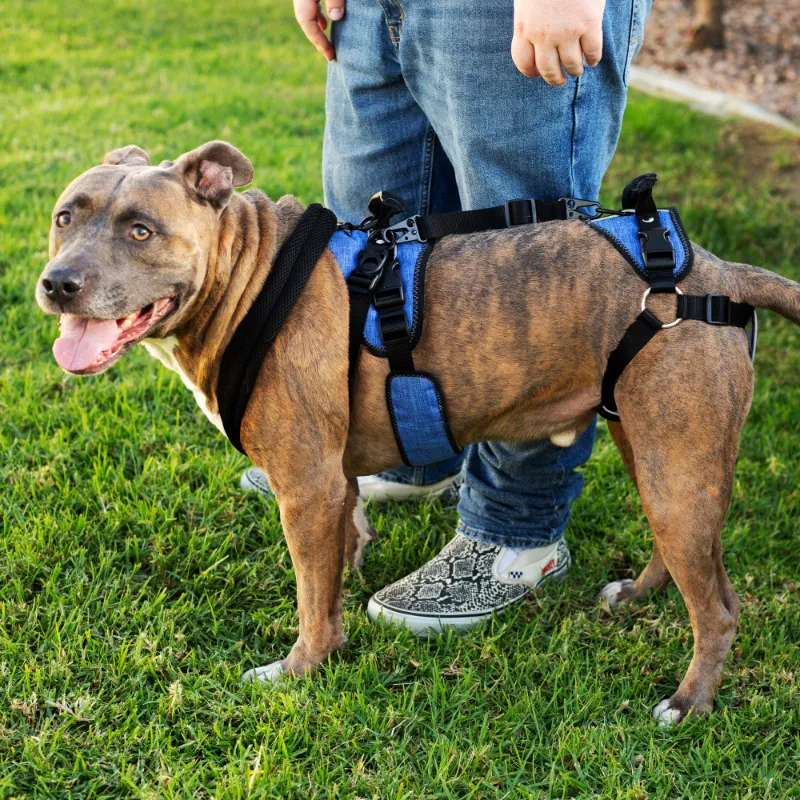
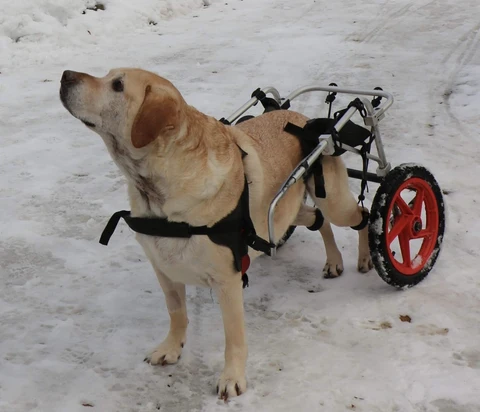
Best Friend Mobility sells both kinds of help: harnesses and slings for dogs who still use their back legs, and rear support wheelchairs that the store says can be used for assisted walking or for full rear leg support with no rear leg weight bearing.
Signs to Discuss With Your Vet
These are changes worth writing down and taking to your vet. They do not diagnose anything, but they help your vet see how your dog is managing day to day:
- You are lifting, not steadying. With the harness on, you carry most of the rear weight instead of giving a light lift.
- Paws drag or knuckle. The back paws scrape the ground or fold under while walking.
- The back legs give way. Your dog sits down suddenly or collapses during walks.
- Walks get shorter. Your dog tires much sooner than before, or does not want to go out.
- Signs of discomfort. Whining, reluctance to move, or unhappiness when you put the harness on.
A short weekly note of how far your dog walked and how much help it needed makes it easier to spot a real change rather than a single bad day. If your dog is in pain or gets worse quickly, call your vet straight away.
Harness, Sling or Wheelchair: How Best Friend Mobility’s Aids Differ
Here is how the store describes each option:
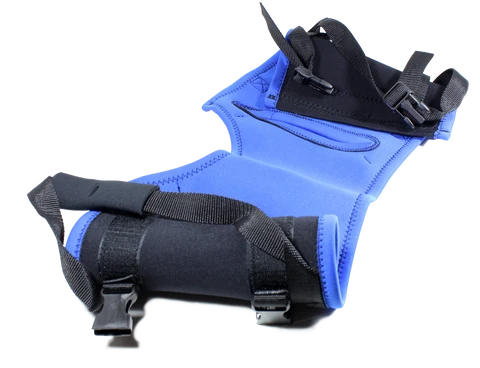
- The Rear Helping Harness is a soft neoprene harness with leg holes and a wrap-around band that fastens with Velcro and side-release buckles, for supporting a dog with rear limb weakness. The store lists S/M (15 to 45 pounds) and L (45 to 100 pounds) sizes.
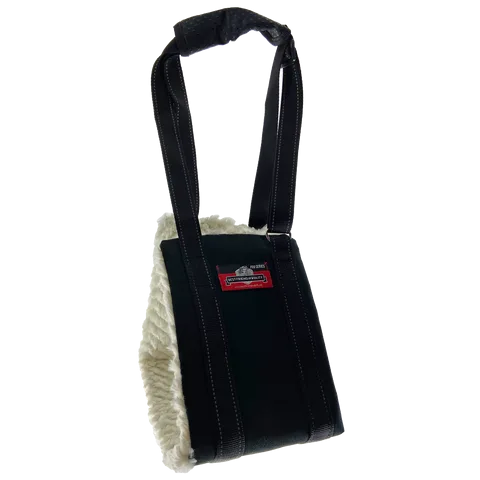
- The UpDog hind leg support sling is a small, lightweight lifter sling for helping a dog get up, walk, use stairs and get in and out of a car. The store says it was first designed to help larger dogs into its wheelchairs, has an adjustable handle to spare your back, and is machine washable.
- The Pro Full-Body Dog Lifting Harness has adjustable straps and a handle, for dogs recovering from surgery or injury or with age related mobility decline.
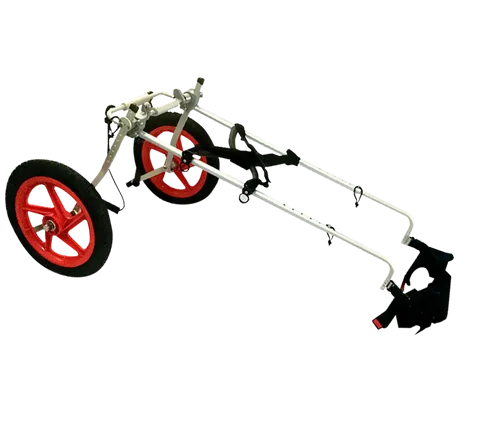
- The Standard Rear Support dog wheelchair has an aircraft-grade 6061 aluminum frame that adjusts for height, width and length, all-terrain wheels, and folds flat. The store lists sizes from 2XS to XL.
- The SitGo Rear Support dog wheelchair lets a dog sit and lie down in the cart. The store says the rear can be lowered so you do not have to lift your dog in, the spring tension adjusts for different weights, and the wheelbars come off without tools so it folds flat. Sizes run from XS to L/XL.
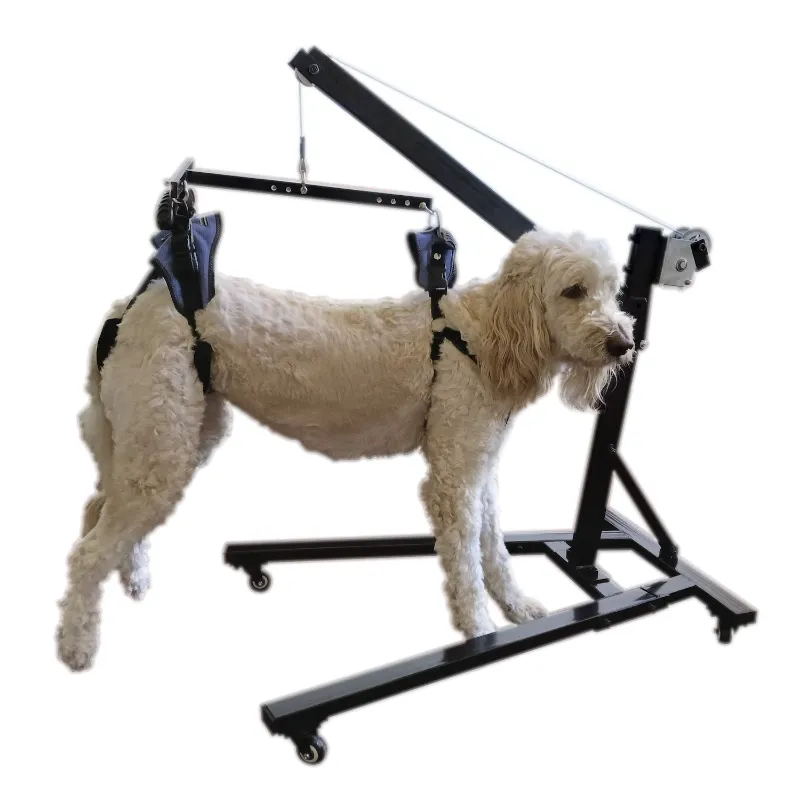
- The Ultimate Dog Lift bathing hoist is a wheeled steel frame for bathing, grooming and moving large dogs, rated by the store for up to 250 pounds.
A harness or sling needs you there, lifting. A rear wheelchair carries the back end while your dog walks with its front legs, so it suits dogs whose front legs are strong. If your dog’s front legs are weak as well, ask your vet about full-body or front and rear support instead; Best Friend Mobility also sells front support and quad support wheelchairs.
Measuring and the First Days in the Cart
Fit matters more than anything else with a cart. Best Friend Mobility links a Measurement Guide from its wheelchair pages, and the SitGo page links a manual. Use them, measure carefully with your dog standing, and ask the store before you order if you are between sizes. A vet or a canine rehabilitation therapist can help you measure and check the fit once the cart arrives.
When the cart is set up, go gently:
- Let your dog sniff and see the cart before you put them in it.
- Start indoors or in a quiet, familiar place with a smooth floor.
- Keep the first sessions short and reward any forward movement with treats and praise.
- Walk beside your dog and stay close in case they lose balance.
- Check for rubbing or red skin where the harness sits after each session, and adjust the fit if you see any.
Every dog adjusts at its own pace. If your dog seems distressed, will not move, or seems sore, stop and ask your vet and the store to check the fit.
Using Both, and Caring for the Gear
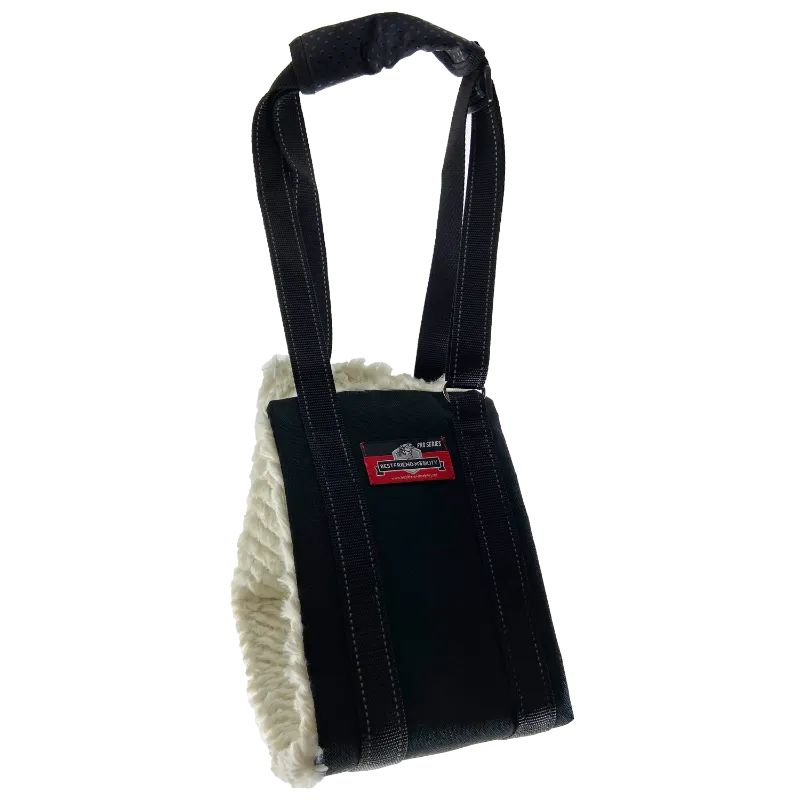
You can keep a sling as well as a cart. The UpDog sling can help with short trips, stairs, the car and getting your dog into the wheelchair, while the cart is for longer walks. A full-body lifting harness can help on days when your dog needs support at both ends.
Best Friend Mobility says all parts of its SitGo and Standard Rear Support carts are washable and easy to clean. Wipe the frame and wheels after muddy or wet walks, wash the harness parts as the manual directs, and check straps, buckles and wheels regularly so a worn part is replaced before it fails. Store the cart somewhere dry, folded flat if space is tight.
Finally, keep your vet involved as things change. A dog’s needs can shift over time, and the right mix of harness, sling and cart can change with them.
Questions
When does a dog need a wheelchair instead of a harness?
When you are carrying most of your dog's rear weight on walks rather than steadying them, it is time to ask your vet about a wheelchair. Your vet can also check your dog has the front leg strength a rear cart needs.
Can my dog sit down in a Best Friend Mobility wheelchair?
In the SitGo, yes. Best Friend Mobility says the SitGo lets a dog sit and lie down in the cart, and its rear can be lowered to help you get your dog in.
What if my dog's front legs are weak too?
Best Friend Mobility says a dog should have normal front leg strength to use its rear carts. Ask your vet about full-body support; the store also sells front support and quad support wheelchairs.
Will my dog still need a sling after getting a wheelchair?
A sling can still be useful alongside the cart. A sling such as the UpDog helps with stairs, the car and getting into the cart, while the wheelchair is for longer walks.
How do I choose the right wheelchair size?
Use Best Friend Mobility's Measurement Guide, measure with your dog standing, and contact the store if you are between sizes. Your vet or a rehabilitation therapist can help check the fit.
Products in this guide
 Shopping at Best Friend Mobility? See the coupon code
10% OFF Sitewide
More in this series
 Best Friend Mobility Wheelchair and Harness: What to Know Before You Buy21 Aug 20263 minDo Dog Lift Harnesses Actually Help Senior Dogs With Mobility Issues?21 Aug 20263 min
 Dog Wheelchair vs Rear Support Harness: Which Suits Hind Leg Weakness?21 Aug 20264 minHow to Choose the Right Dog Wheelchair for Your Pet’s Mobility Needs21 Aug 20265 min