 A Orion Motor Tech guide
What Size Lug Nuts Do I Need for My Vehicle? (M14x1.5 Thread Guide)
M14x1.5 lug nuts are the correct size when your vehicle uses a 14mm diameter stud with 1.5mm thread spacing, a spec common on many Honda, Acura, Toyota, and Mazda models.
M14x1.5 lug nuts are the correct size when your vehicle uses a 14mm diameter stud with 1.5mm thread spacing, a spec common on many Honda, Acura, Toyota, and Mazda models. Choosing the wrong thread pitch or seat style can strip your studs or cause wheels to loosen, so confirming your exact specifications before you order saves both money and safety headaches.
Whether you are replacing a missing nut or upgrading to aftermarket wheels, we will walk you through thread size, seat type, hex size, and material so you buy once and install with confidence.
How to Identify M14x1.5 Thread Size
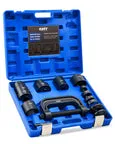
The “M14” means the stud diameter is 14 millimeters, and “1.5” is the distance in millimeters between each thread. You can verify this two ways: check your owner’s manual under wheel specifications, or use a thread pitch gauge on an existing stud. If you are already working on suspension components like a ball joint replacement, now is the perfect time to inspect your studs for wear or damage.
Visual inspection alone is not reliable because M14x1.5 and M14x2.0 look nearly identical. A 1.5mm pitch gauge will drop cleanly into the threads without rocking, while a 2.0mm gauge will feel loose. Many auto parts stores lend thread gauges for free, or you can pick up a set for under ten dollars.
If your vehicle originally came with steel wheels and you are upgrading to alloy rims, double-check the seat type as well. Thread pitch stays the same, but the nut taper may change.
Common Vehicles That Use M14x1.5 Lug Nuts
This thread spec appears across a wide range of Japanese and some European makes:
- Honda: Civic, Accord, CR-V, Fit, Pilot (most 1990, present models)
- Acura: Integra, TL, TSX, MDX, RDX
- Toyota: Corolla, Camry, RAV4, Highlander (select years, verify your VIN)
- Mazda: Mazda3, Mazda6, CX-5, Miata
- Subaru: Some Impreza and Forester trims (early 2000s)
Luxury brands like Lexus and Infiniti may share the same thread on certain platforms. Always confirm with your VIN or owner’s manual, because even within a single model generation Toyota and Honda occasionally switched between M12x1.5 and M14x1.5 depending on trim and wheel package.
Check the latest pricing and grab our discount code to save on quality replacements that meet OEM torque specs.
Lug Nut Seat Types and Why They Matter
Thread size is only half the equation. The seat is the tapered or flat surface that contacts your wheel, and mismatching it can crack aluminum rims or let the nut spin loose.
| Seat Type | Description | Common Use |
|---|---|---|
| Conical (60°) | Cone-shaped taper, most universal | Aftermarket alloy wheels, many OEM Honda/Toyota |
| Ball/Radius | Rounded seat, requires specific washers | Factory Honda steel wheels, some Acura |
| Flat (washer) | Flat face with separate or built-in washer | Older trucks, some European models |
Conical 60-degree seats are the most common on m14x1.5 lug nuts for aftermarket wheels. If you are unsure, remove one nut and look at the contact patch on both the nut and the wheel. A shiny ring in a cone shape means conical; a spherical indent means ball seat.
Using the wrong seat type is like tightening a bolt without a washer where it is needed. The nut may feel snug at first, but vibration and load cycles will let it work loose or gouge the wheel.
Hex Size, Length, and Material Considerations
Most m14x1.5 lug nuts use a 19mm, 21mm, or 22mm hex (the wrench size). Factory Honda and Acura typically use 19mm, while Toyota leans toward 21mm. If you are upgrading to spline-drive or locking nuts, you will need the matching key or adapter.
Length matters when you add wheel spacers or switch to aftermarket wheels with different offsets. Measure exposed stud length after the wheel is mounted. You want at least six full threads engaged, typically 25 to 30mm of nut length. Too-short nuts risk stripping under torque; too-long nuts can bottom out on the hub before clamping the wheel.
Material breaks down into three camps:
- Carbon steel with zinc or chrome plating: affordable, strong enough for daily driving, may corrode in salt states
- Stainless steel: corrosion-resistant, slightly softer, less common in OEM spec
- Forged steel or alloy: lightweight, high strength, popular for track use
We recommend sticking with OEM-equivalent carbon steel for street cars. If you live in the rust belt, apply anti-seize to the stud threads (not the nut face) during installation and inspect annually when you rotate tires.
Installation Torque and Safety Checks
M14x1.5 lug nuts typically require 80 to 100 ft-lbs of torque, but always follow your vehicle manufacturer’s specification. Under-torquing lets wheels wobble and crack studs; over-torquing stretches threads and makes future removal a nightmare.
Use a calibrated torque wrench and tighten in a star pattern: snug all nuts by hand, then torque in two stages at half and full spec. After the first 50 to 100 miles, re-torque to account for initial settling. We do this routinely in our bay after any wheel service, and we have caught loose nuts more than once.
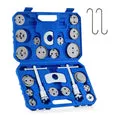
While you are under the car checking lug nuts, inspect related components. A worn ball joint or loose brake caliper can create vibration that mimics a lug-nut problem. If you are tackling a full suspension refresh, a ball joint press makes the job cleaner and safer than hammering.
Where to Buy Quality M14x1.5 Lug Nuts
Auto parts chains stock basic replacements, but thread quality and finish vary. We have seen cheap zinc-plated nuts shed their coating in one winter, leading to rust that fuses the nut to the stud. Spending a few extra dollars per nut pays off when you need to remove a wheel roadside or during a brake caliper upgrade.
When you order, verify the listing specifies both thread (M14x1.5) and seat type (usually 60° conical). Avoid “universal fit” kits that bundle multiple thread sizes unless the seller breaks out each spec. Visit our Orion Motor Tech discount page for current pricing on fasteners and shop tools that meet OEM standards.
If you are upgrading wheels or swapping between winter and summer sets, buy one or two spare lug nuts. A stripped or cross-threaded nut is easier to replace on your bench than in a parking lot at night.
Pro Tips From Our Shop
- Keep a thin-wall impact socket in your trunk. Standard six-point sockets can round aftermarket spline or tuner-style nuts.
- Never use anti-seize on the nut seat, only on the stud threads. Anti-seize on the taper changes the friction coefficient and throws off your torque reading.
- Inspect studs during brake jobs. When you pull the rotor to service a brake caliper, check each stud for rust pitting or thread damage. Replacing a stud is cheap insurance.
- Match your spare tire lug nuts. Many vehicles ship with a steel spare that uses a different seat type than the alloy wheels. Confirm your jack kit includes the right nut or adapter.
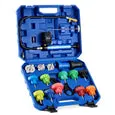
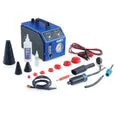
We also keep a coolant pressure tester kit and automotive smoke machine in the bay for diagnostics, because a vibration you think is a loose wheel sometimes traces back to a vacuum leak or cooling-system air pocket. Methodical checks save hours of parts-swapping guesswork.
Thread pitch is not something you want to learn by trial and error. Measure once, order the correct m14x1.5 spec with the right seat and hex, torque to spec, and your wheels will stay planted through every corner and panic stop.
Questions
How do I know if my car uses m14x1.5 lug nuts?
Check your owner's manual under wheel specifications, or use a thread pitch gauge on an existing wheel stud. Many Honda, Acura, Toyota, and Mazda models from the 1990s onward use m14x1.5 threading.
Can I use M14x2.0 lug nuts on M14x1.5 studs?
No. The thread pitch is different, and forcing the wrong pitch will cross-thread and damage your studs. Always match both diameter and pitch exactly.
What is the difference between conical and ball seat lug nuts?
Conical seats have a 60-degree taper that contacts the wheel directly, while ball seats have a rounded surface and often require a washer. Using the wrong seat can crack your wheel or let the nut loosen.
How much torque should I apply to m14x1.5 lug nuts?
Most vehicles specify 80 to 100 ft-lbs, but always follow your manufacturer's exact torque spec. Use a calibrated torque wrench and re-check after 50 to 100 miles.
Do aftermarket wheels need different lug nuts than factory wheels?
Often yes. Aftermarket alloy wheels typically use a conical seat, while some factory steel wheels use a ball or flat seat. Verify the seat type before ordering new lug nuts.
Where can I find a discount on quality lug nuts and tools?
Visit our Orion Motor Tech discount page for current codes on fasteners, torque wrenches, and shop tools that meet OEM standards. We update pricing and offers regularly.
Products in this guide
 Shopping at Orion Motor Tech? See the discount code
8% OFF
Shopping at Orion Motor Tech? See the discount code
8% OFF
More in this series
How Long Do Aftermarket Brake Calipers Last Compared to OEM?20 Aug 20264 minDiagnosing Vacuum Leaks: Smoke Machine or Boost Leak Tester?20 Aug 20265 minDo You Really Need a Coolant Pressure Tester Kit for Home Repairs?20 Aug 20265 minOrion Motor Tech vs Harbor Freight Automotive Tools: What to Compare20 Aug 20263 minHow to Use a Ball Joint Press Without Damaging Your Suspension20 Aug 20265 min