 A Orion Motor Tech guide
Diagnosing Vacuum Leaks: Smoke Machine or Boost Leak Tester?
A boost leak tester is the go-to tool for pressurized intake diagnostics on turbocharged engines, while smoke machines excel at tracing vacuum leaks in naturally aspirated systems.
What Each Tool Actually Does
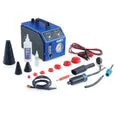
A boost leak tester pressurizes your intake system to reveal leaks in turbo plumbing, intercoolers, and manifold gaskets, while an automotive smoke machine pumps visible vapor into vacuum lines to trace cracks and disconnected hoses. Both diagnose leaks, but they target opposite pressure systems. The boost leak tester forces air into the pressurized side of your intake where boost lives, making it essential for turbocharged and supercharged engines. Smoke machines work on the vacuum side, where your engine creates suction, helping you spot brake booster leaks, PCV valve failures, and EVAP system cracks that trigger check-engine lights.
If you run a turbo setup and see boost pressure dropping or hear whistling under load, the boost leak tester pinpoints the exact clamp, coupler, or gasket that’s failing. For rough idle, high fuel trim, or P0171 lean codes on naturally aspirated engines, smoke does the job. Many professional shops keep both tools on hand because modern engines mix pressurized and vacuum circuits.
When a Boost Leak Tester Is the Right Choice
Turbocharged and supercharged engines generate positive pressure in the intake tract, and even a small leak costs you horsepower and invites compressor surge. We recommend a boost leak tester whenever you’re chasing boost-related symptoms: slower spool, inconsistent peak boost readings, or a persistent hissing noise under throttle. The tester connects to your turbo inlet or throttle body, then pressurizes the entire intake path to 15-20 psi so you can spray soapy water on every joint and watch for bubbles.
This method is faster and safer than revving the engine on a dyno to build boost. You’ll catch failing silicone couplers, loose clamps, cracked intercooler end tanks, and blown manifold gaskets before they grenade your turbo. It’s also invaluable after any intake modification: if you’ve swapped a front-mount intercooler or upgraded charge pipes, pressure-test the system before your first pull.
Boost leak testing won’t help you diagnose vacuum-side problems like brake booster leaks or PCV valve issues, because those circuits operate under suction, not pressure. For those faults, smoke is the answer.
When an Automotive Smoke Machine Wins
Vacuum leaks are silent killers of fuel economy and drivability. They let unmetered air into the intake manifold, skewing your MAF or MAP sensor readings and forcing the ECU to dump extra fuel. An automotive smoke machine makes invisible leaks visible by filling the intake, brake booster, and EVAP system with dense, non-toxic vapor that seeps out wherever rubber has cracked or a hose has slipped off.
We reach for smoke when diagnosing rough idle, high idle speed, P0171/P0174 lean codes, or failed EVAP monitor readiness. You pressurize the intake to just 0.5-1.0 psi and look for wisps of smoke around the intake manifold gasket, throttle body base, vacuum hoses to the brake booster, and PCV connections. Smoke also reveals EVAP leaks at the purge valve, charcoal canister, and fuel cap that are nearly impossible to find by ear.
Smoke machines are less useful on pressurized intake systems because the vapor doesn’t behave the same way under higher PSI, and you risk pushing smoke past seals that would hold under boost. If your engine is naturally aspirated, smoke handles 95 percent of your leak diagnostics. If you have a turbo, you’ll still need smoke for vacuum circuits but a boost leak tester for the hot side.
Comparing the Two Tools Side by Side
| Feature | Boost Leak Tester | Automotive Smoke Machine |
|---|---|---|
| Pressure Range | 15-25 psi (positive) | 0.5-1.0 psi (positive/neutral) |
| Target System | Turbo/supercharger intake path | Vacuum lines, intake manifold, EVAP |
| Best For | Turbocharged engines, intercooler leaks | Naturally aspirated engines, idle issues, emissions codes |
| Leak Detection | Soapy water spray (bubbles) | Visible smoke vapor |
Both tools complement each other in a complete diagnostic setup. If you work on mixed fleets or own a turbo car and a daily naturally aspirated vehicle, budget for both. Check the latest pricing to see current bundles and our exclusive discount code.
How to Use a Boost Leak Tester Effectively
Start by blocking off the turbo inlet or compressor housing with the tester’s bung or plate adapter, then seal the throttle body or intake manifold outlet so the system is closed. Connect your shop air line through a pressure regulator and slowly bring the intake up to 15 psi. Walk the entire charge pipe route with soapy water in a spray bottle, coating every clamp, coupler, weld, and gasket.

Bubbles mean leaks. Pay special attention to silicone couplers under T-bolt clamps, intercooler end tank welds, bypass valve diaphragms, and intake manifold gaskets. A vacuum pump won’t help here because it pulls suction rather than pushes pressure, and a leak down tester is designed for cylinder compression checks, not intake systems.
Once you’ve marked every leak with tape or chalk, drop the pressure, tighten or replace the failing parts, then retest. If you’re also checking your cooling system for head gasket leaks, a coolant pressure tester kit uses a similar concept but targets the radiator cap and coolant passages instead of the intake tract.
Choosing the Right Tool for Your Garage

If you own or maintain turbocharged vehicles, a boost leak tester pays for itself the first time it saves you from chasing a phantom boost issue for hours. Pair it with basic hand tools like hose clamp pliers to remove and reinstall clamps without damage. For naturally aspirated engines or vehicles throwing vacuum-related codes, the automotive smoke machine is non-negotiable.
Professional techs often run both in sequence: smoke-test the vacuum side first to rule out unmetered air, then pressure-test the boost side if the engine is forced-induction. Home mechanics can start with whichever tool matches their primary vehicle’s induction type and add the second tool as their work expands. Both are straightforward to use, require minimal consumables, and deliver results you can see in real time.
Grab the discount code before starting your next diagnostic session to save on either tool. Whether you’re diagnosing a high-idle condition or tracking down lost boost, the right leak detection method turns guesswork into a five-minute visual inspection.
Questions
Can I use a boost leak tester on a naturally aspirated engine?
You can, but it's not ideal. Naturally aspirated engines operate under vacuum, so a smoke machine is more effective at revealing intake manifold gasket leaks and vacuum line cracks. Boost leak testers are designed for pressurized intake systems.
What pressure should I use when testing for boost leaks?
We recommend 15 to 20 psi for most street turbo setups. This matches typical peak boost levels and stresses the system enough to reveal leaks without risking damage to intercooler end tanks or couplers.
Will a smoke machine damage my engine sensors?
No. Automotive smoke machines use mineral oil vapor at very low pressure (under 1 psi), which is safe for MAF sensors, throttle bodies, and O2 sensors. Always follow the manufacturer's instructions and avoid over-pressurizing.
Can I diagnose EVAP leaks with a boost leak tester?
Not effectively. EVAP systems are designed to hold very slight vacuum or near-zero pressure, and a boost leak tester's 15+ psi will bypass seals that function correctly under normal conditions. Use a smoke machine for EVAP diagnostics.
Do I need both tools if I only work on turbo cars?
Yes, because turbocharged engines still have vacuum circuits for the brake booster, PCV system, and EVAP. A boost leak tester handles the pressurized intake side, while a smoke machine traces vacuum-side leaks that cause rough idle and lean codes.
How long does a typical smoke test take?
Most smoke tests take five to ten minutes once the machine is warmed up. You pressurize the intake or EVAP system, then visually inspect hoses and gaskets for vapor. Complex EVAP systems with multiple valves may take longer to trace.
Products in this guide
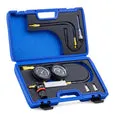
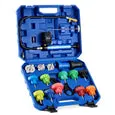 Shopping at Orion Motor Tech? See the discount code
8% OFF
Shopping at Orion Motor Tech? See the discount code
8% OFF
More in this series
 How Long Do Aftermarket Brake Calipers Last Compared to OEM?20 Aug 20264 min
 What Size Lug Nuts Do I Need for My Vehicle? (M14x1.5 Thread Guide)20 Aug 20266 minDo You Really Need a Coolant Pressure Tester Kit for Home Repairs?20 Aug 20265 minOrion Motor Tech vs Harbor Freight Automotive Tools: What to Compare20 Aug 20263 minHow to Use a Ball Joint Press Without Damaging Your Suspension20 Aug 20265 min