 A Orion Motor Tech guide
Do You Really Need a Coolant Pressure Tester Kit for Home Repairs?
A coolant pressure tester kit is essential for home mechanics who want to diagnose cooling system leaks quickly without guesswork or expensive shop visits.
A coolant pressure tester kit is one of the most reliable ways to diagnose cooling system leaks at home, especially if you’re tired of topping off coolant every week or dealing with mystery overheating. It pressurizes your cooling system so you can spot leaks visually before they turn into roadside breakdowns. For DIY mechanics who already handle basic maintenance, this tool pays for itself after one or two uses.
When a Coolant Pressure Tester Kit Makes Sense
You don’t need a pressure tester for every oil change, but it becomes invaluable when you’re chasing an elusive coolant leak. If you notice your overflow tank dropping, see white smoke from the exhaust, or smell sweet coolant after a drive, a tester isolates the problem in minutes. It works by simulating operating pressure while the engine is cold and safe to inspect, so you can check hoses, the radiator, the water pump gasket, and even head gasket seals without burning yourself or waiting for symptoms to worsen.
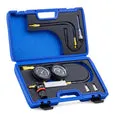
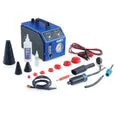
Home mechanics who work on multiple vehicles or older cars with higher mileage get the most value. If you’re already investing in diagnostic tools like a leak down tester or an automotive smoke machine, a coolant pressure tester fills a specific gap that neither of those tools can cover.
How It Compares to Other Diagnostic Tools
A coolant pressure tester is purpose-built for one job, and it does that job better than improvisation. Some DIYers try to diagnose leaks by running the engine hot and looking for drips, but that approach is dangerous and often inconclusive because leaks can be intermittent or hidden under shields. Others use dye kits, which work but require a UV light and still don’t tell you whether a suspect component can hold pressure.
Here’s how the main cooling and engine diagnostic tools stack up:
| Tool | Best For | Limitations |
|---|---|---|
| Coolant pressure tester | Finding leaks in hoses, radiator, water pump | Won’t diagnose combustion leaks alone |
| Leak down tester | Measuring cylinder seal integrity, valve leaks | Requires engine disassembly for access |
| Automotive smoke machine | EVAP leaks, vacuum leaks, intake manifold | Not designed for pressurized coolant systems |
If you suspect a head gasket failure, you’ll want to pair the pressure tester with a combustion leak test kit or the leak down tester to confirm gases are entering the coolant. But for external leaks, hose failures, and radiator cap testing, the coolant tester is faster and more definitive. You can grab the code to save on either tool if you’re building out your diagnostic arsenal.
What to Look for in a Quality Tester
The best kits include a hand pump, a pressure gauge that reads up to at least 30 PSI, and a full set of radiator cap adapters. Cheaper testers often ship with only two or three adapters, which forces you to hunt down aftermarket caps or return the kit entirely. We prioritize kits that cover the common thread sizes: the large screw-on caps for older domestic vehicles, the lever-style caps for most Japanese and Korean models, and the bayonet-style caps used by many European manufacturers.
Gauge accuracy matters more than you’d expect. A gauge that’s off by even 3 PSI can lead you to replace a perfectly good radiator cap or miss a slow leak in a heater hose. Look for kits with a liquid-filled gauge, which dampens needle flutter and holds up better in a garage environment. The pump itself should hold pressure without creeping down, so check reviews or product specs for any mention of valve quality.
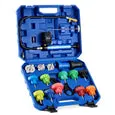
Build quality separates a one-use kit from a ten-year tool. Brass fittings and reinforced hoses outlast plastic quick-connects, especially when you’re threading adapters onto hot radiator necks or working in tight engine bays. The coolant pressure tester kit we recommend uses metal components for the pump and adapters, and the gauge is protected by a rubber boot.
Step-by-Step: Using the Tester at Home
Start with a completely cold engine. Remove the radiator cap and inspect the rubber seal; if it’s cracked or compressed, test it separately or replace it before you proceed. Thread the correct adapter onto the radiator neck or overflow tank, then attach the tester’s hose and pump it up to the pressure stamped on your radiator cap (usually 13 to 16 PSI for most passenger vehicles).
Watch the gauge for two minutes. A healthy system holds pressure with no drop. If the needle falls, start your visual inspection: check every hose clamp, trace the heater hoses into the firewall, inspect the water pump weep hole, and look under the engine for drips. Sometimes the leak is obvious, a split upper radiator hose or a weeping freeze plug. Other times you’ll need to wipe down suspect areas with a rag and pump the system again to see where coolant reappears.
If the system won’t hold pressure but you see no external leaks, you may have an internal leak past the head gasket or a crack in the block. At that point, pair your findings with a combustion gas test or call in a shop for a second opinion. For everything else, the tester gives you the confidence to replace only the failed part instead of guessing your way through a parts-cannon repair.
Who Should Skip This Tool
If you only change your own oil and rotate tires, a coolant pressure tester will sit unused on your shelf. It’s a problem-solving tool, not a maintenance item, and it only makes sense when you’re actively diagnosing a cooling issue or you work on cars often enough to justify the investment. Casual drivers who take their car to a shop for anything beyond wiper blades won’t see the value.
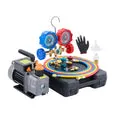
Budget-conscious DIYers can rent a tester from most auto parts stores for free with a deposit, which is a smart move if you’re tackling a one-off repair. But if you’re the go-to mechanic for family and friends, own multiple vehicles, or you’re already stocking tools like a vacuum pump or hose clamp pliers, buying your own kit makes more sense. You’ll check the latest price and find that even mid-tier kits cost less than one shop diagnostic fee.
Final Take: Worth It for Serious DIYers
A coolant pressure tester kit earns its spot in any home garage where real troubleshooting happens. It removes the guesswork from cooling system leaks, protects you from misdiagnosis, and pairs well with other diagnostic tools like the automotive smoke machine for vacuum-side leaks or the leak down tester for cylinder seal checks. If you’ve ever spent an afternoon replacing parts that didn’t fix the problem, you’ll appreciate the clarity this tool provides.
For home mechanics who prefer facts over hunches, this is one of the few tools that shows you exactly what’s failing while the engine is safe to touch. It won’t replace every diagnostic step, but it handles the cooling system better than any alternative. Stock the correct adapters, maintain the pump seals, and you’ll have a reliable tester for years of leak-free repairs.
Questions
Can a coolant pressure tester detect head gasket leaks?
A coolant pressure tester can reveal external symptoms of a head gasket leak, like coolant seeping from the head-to-block mating surface. However, it won't directly detect combustion gases entering the coolant; you'll need a combustion gas test kit or a leak down tester for that confirmation.
How much pressure should I use when testing my cooling system?
Pressurize the system to the rating stamped on your radiator cap, typically 13 to 16 PSI for most vehicles. Over-pressurizing can damage aging hoses or gaskets, so always match the cap's specified pressure.
Do I need different adapters for different car brands?
Yes, radiator cap designs vary by manufacturer. Domestic vehicles often use large screw-on caps, Japanese and Korean models use lever-style caps, and many European cars use bayonet-style caps. A complete coolant pressure tester kit includes multiple adapters to fit all three types.
Can I use a coolant pressure tester on a hot engine?
Never use a coolant pressure tester on a hot engine. The system must be completely cold to avoid burns from pressurized steam and to prevent false readings caused by thermal expansion.
Is it better to rent or buy a coolant pressure tester kit?
Renting makes sense for a single repair, but if you work on multiple vehicles or help friends and family with car trouble, buying your own kit saves repeated trips to the parts store and pays for itself quickly.
Will a smoke machine work for coolant leaks?
No, an automotive smoke machine is designed for vacuum and EVAP leaks, not pressurized liquid systems. A dedicated coolant pressure tester is the correct tool for finding leaks in radiators, hoses, and water pumps.
Products in this guide
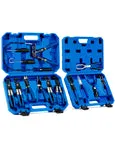 Shopping at Orion Motor Tech? See the discount code
8% OFF
Shopping at Orion Motor Tech? See the discount code
8% OFF
More in this series
 How Long Do Aftermarket Brake Calipers Last Compared to OEM?20 Aug 20264 min
 What Size Lug Nuts Do I Need for My Vehicle? (M14x1.5 Thread Guide)20 Aug 20266 minDiagnosing Vacuum Leaks: Smoke Machine or Boost Leak Tester?20 Aug 20265 minOrion Motor Tech vs Harbor Freight Automotive Tools: What to Compare20 Aug 20263 minHow to Use a Ball Joint Press Without Damaging Your Suspension20 Aug 20265 min