 A Signstek guide
Signstek Heat Powered Fan for Wood Burning Stoves: What to Know Before You Buy
A wood burning stove fan circulates warm air around your room without electricity, so there is nothing to wire or plug in.
A heat powered wood burning stove fan, like the one Signstek sells, sits on your stove top and uses the stove’s own heat to spin its blades, pushing warm air out into the room without batteries or a plug. For a freestanding stove that leaves heat pooled close by, it is a simple add-on, with nothing to wire or plug in. Below we cover how it works, how to place it, how to look after it, and when it is not worth buying. We keep the current code for Signstek on its store page.
How a wood burning stove fan works
Inside the base is a thermoelectric module. When one side is hot (touching the stove) and the other side is cooler (the fins above it), the module produces a small electric current, which drives a small motor and the blades. That is why the fins matter: the bigger the temperature difference, the faster the fan turns.
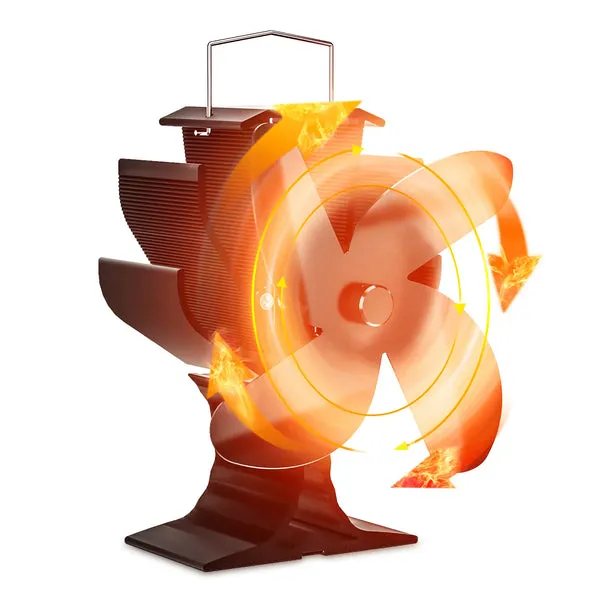
In practice, the Signstek wood stove fan starts on its own as the stove heats up, speeds up as the stove gets hotter, and slows or stops as the fire dies down. For more background on the principle, see Wood Stove Fans – Heat Powered Fan. The benefit is moving heat off the stove surface and across the room, so less of it collects near the stove and the ceiling above it.
What Signstek offers
Signstek’s stove fan is a freestanding, multi-blade wood burning stove fan designed for wood stoves and log burners. You may see it described as a log burner fan, a stove fan or a heat powered fan; these are all common names for this kind of fan. Before you order, check the product page for the blade count, the dimensions and the maximum operating temperature, and compare them with your stove.
Choosing a heat powered wood stove fan
Whichever brand you consider, these are the points we would check first:
| What to check | Why it matters |
|---|---|
| Stove top space | The fan needs a flat, clear spot with room around it. Measure before you buy. |
| Maximum operating temperature | Running a fan hotter than its rating can damage the module. A stove thermometer helps. |
| Blade count and size | Compare the listed blade count, blade size and room coverage. |
| Height | A taller fan clears a stove’s top lip and pushes air further across the room. |
| Stove type | These fans suit freestanding stoves with a hot, flat top. They do little on an open fireplace or a stove with a cool top. |
Signstek lists room coverage of up to 173 ft² for its small 4-blade fan and up to 430 ft² for its larger models, so compare that with your room. For a bigger open-plan space, placement and room layout matter more than the fan itself.
Materials, durability and maintenance
Signstek lists aluminium for its stove fans; aluminium sheds heat well and keeps the top of the fan cooler than the base. The thermoelectric module itself has no moving parts, but the motor and blades do, so the fan still needs a little care.
- Wipe dust and ash off the blades and fins regularly during the heating season.
- Take the fan off the stove before you use a very hot fire to burn off creosote or start a large load.
- If it becomes noisier, check for dust or a bent blade before assuming the motor has failed.
- Read the warranty terms on the product page before you buy, and keep your order confirmation.
Installation and placement
There is nothing to install. Place the fan on a flat part of the stove top, towards the back or to one side, where it sits level with the whole base in contact. Keep it away from the flue pipe and from the back wall so it can draw in cooler air from behind.
Point the airflow towards the part of the room where people sit. Keep it clear of fireguards or anything that blocks the air stream, and if your stove has a glass door, make sure the fan does not get in the way when you open it. Open internal doors help warm air reach other rooms.
Where to read more
Stove fans come up on the Hearth.com Forums Home, where wood burners compare models and swap placement tips. For a wider look at how fans fit into getting more heat from a wood stove, Bob Vila’s article This Simple Add-On Can Increase Your Wood Stove’s Efficiency is a useful read.
When to skip a wood burning stove fan
A heat powered fan makes sense if you run your stove regularly through winter and the heat stays in one spot. It will not help much if the stove is mostly decorative or lit only now and then. If the stove sits in a basement or a room far from where you live, a small fan will not carry heat upstairs.
It also depends on the stove. If you have an inset stove or an open fireplace, check that it has a flat hot top before you order.
Getting started
Measure the free space on your stove top, check the fan’s size and maximum temperature on the listing, and decide whether you care most about quiet running or moving the most air.
Questions
How does a heat powered fan for a wood stove work without electricity?
It makes its own. A thermoelectric module in the base turns the temperature difference between the hot stove top and the cooler fins into a small current, which powers the motor and spins the blades. No batteries, outlet or wiring are needed.
What size wood burning stove fan do I need?
Measure the flat, clear space on your stove top and compare it with the fan's dimensions on the product page. Leave room around the fan so it is not touching the flue pipe or the wall behind the stove.
Will a wood stove fan reduce my heating costs?
It can help you feel the stove's heat further across the room, so you may not need to burn as hard to stay comfortable. How much difference it makes depends on your room size, layout, insulation and how often you run the stove.
Can I use a heat powered fan on a pellet stove?
Only if the pellet stove has a flat top that gets hot enough to run the fan. A pellet stove with a cooler top and its own blower will not run it well, so check your stove's design first.
How do I look after a wood stove fan?
Wipe the blades and fins clean regularly during the heating season, keep the fan within its temperature rating, and take it off the stove before a very hot burn. Check the warranty terms on the product page.
Products in this guide
Shopping at Signstek? See the discount code
5% OFF All Orders
More in this series
 Troubleshooting a Signstek Keypad Lock: Common Problems and Fixes26 Aug 20263 minSignstek Keypad Door Lock vs Traditional Keys: Which Suits Your Door?26 Aug 20263 min
 How to Install Signstek Barn Door Hardware: Step by Step26 Aug 20263 minDoes a Signstek Wood Stove Fan Really Work Without Electricity?26 Aug 20263 min