 A EART GUITAR guide
How to Set Up and Intonate a Headless 7 String Guitar
Setting up a headless 7 string guitar requires precise bridge adjustment and intonation techniques that differ from traditional designs.
A headless 7 string guitar delivers compact portability and balanced weight distribution, but setup demands attention to the unique bridge system and per-string tensioning. We walk you through truss rod adjustment, action setting, and precise intonation so your extended-range instrument plays in tune across all seven strings and every fret.
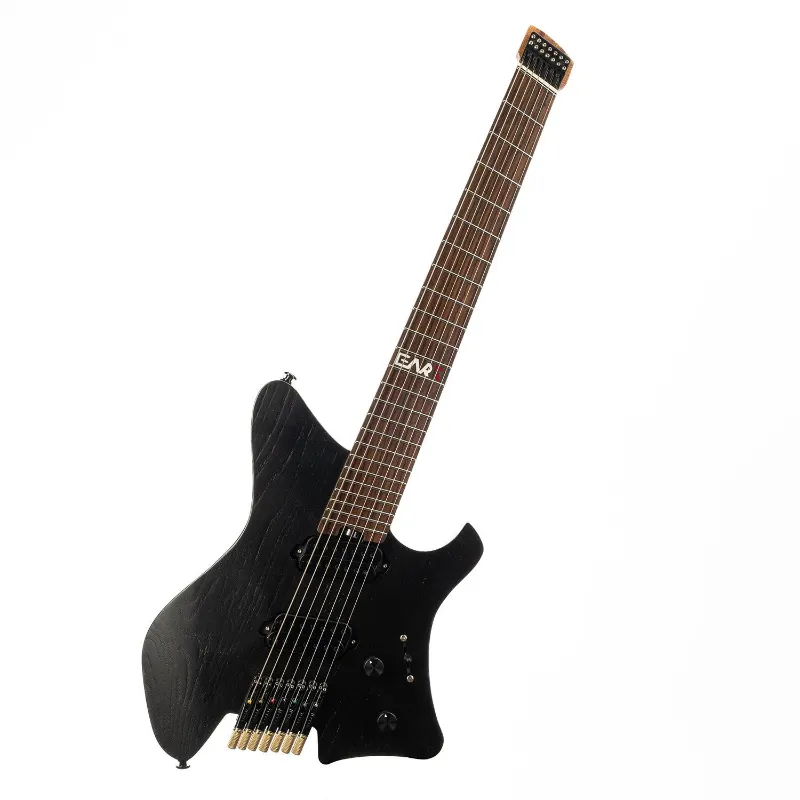
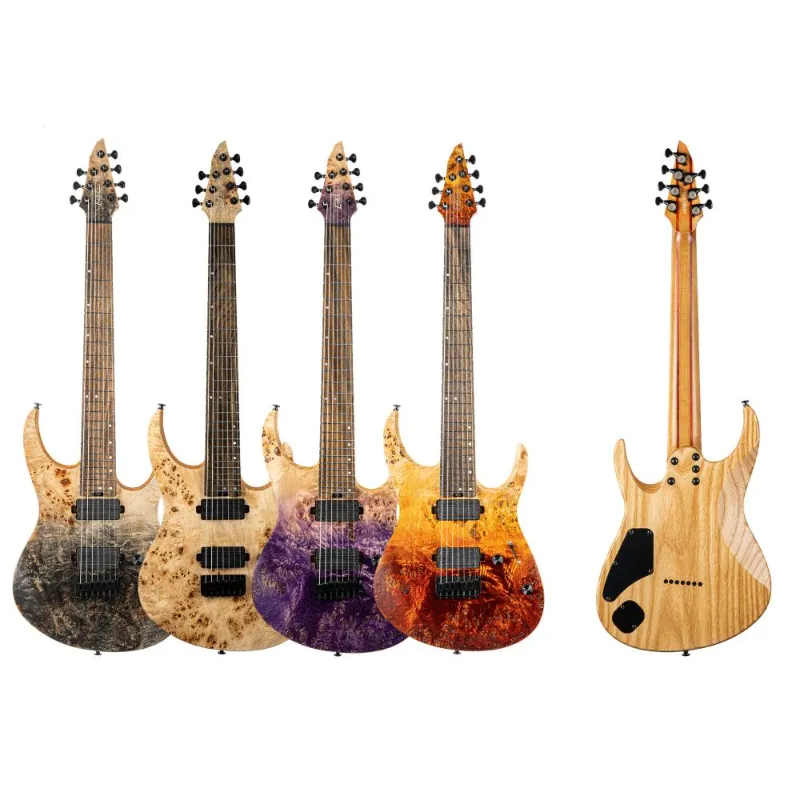
Whether you own a headless 7 string guitar or you’re considering one alongside other EART models like the seven string explorer, this guide covers the fundamentals that apply to most headless designs. Many players compare options from brands featured on 7-string Headless Guitars and community threads like Headless options these days, so understanding setup mechanics helps you dial in any headless platform.
Tools and Materials You Need
Gather these before you begin:
- Hex key set in metric sizes (usually 1.5 mm, 2 mm, 2.5 mm, 3 mm)
- Small Phillips or flathead screwdriver for bridge saddle height screws
- Digital tuner or clip-on tuner with high accuracy
- Capo (optional but helpful for truss rod checks)
- String action gauge or ruler marked in 64ths of an inch or 0.5 mm increments
- Fresh strings in your preferred gauge (we recommend keeping the same gauge during setup)
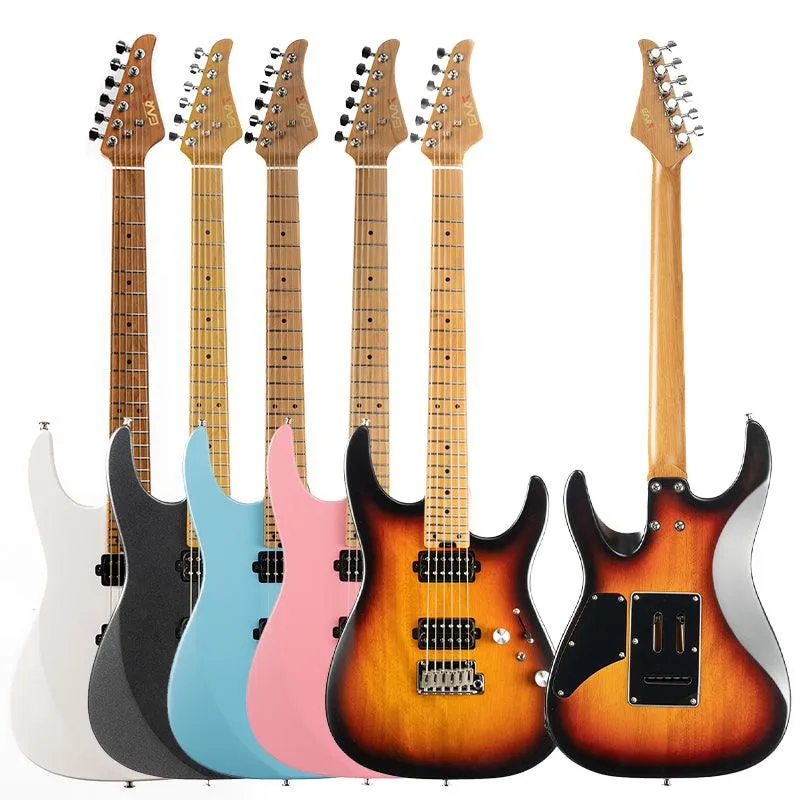
Most headless bridge systems use hex bolts for saddle intonation and tuning posts, so metric hex keys are essential. Check your eart guitar manual or the bridge manufacturer’s specs to confirm sizes before you start.
Adjusting Neck Relief and Action
Start with the truss rod to set proper neck relief, which is the subtle bow that prevents fret buzz on the low B string.
- Tune the guitar to pitch with all seven strings at concert tension.
- Capo the first fret and press down the low B string at the highest fret where the neck meets the body (usually fret 21 or 22).
- Check the gap at the eighth fret. You want approximately 0.010 to 0.015 inches (about the thickness of a business card).
- Turn the truss rod a quarter turn clockwise to reduce relief if the gap is too large, or counterclockwise to add relief if the string is touching the frets.
- Wait 10 minutes for the neck to settle, then recheck and repeat if needed.
Once neck relief is correct, set your string action at the 12th fret. Measure from the top of the fret to the bottom of each string:
| String | Low Action | Medium Action |
|---|---|---|
| Low B (7th) | 2.0 mm | 2.4 mm |
| High E (1st) | 1.5 mm | 1.8 mm |
Adjust each saddle height screw independently. Headless bridges like those on the headless 7 string guitar typically have two small screws per saddle. Turn both screws equally to keep the saddle level.
Setting Intonation on a Headless 7 String Guitar
Intonation ensures each string plays in tune when fretted. Headless designs place the tuning mechanism at the bridge, so saddle travel is critical.
- Tune the open string to pitch with your tuner.
- Fret the string at the 12th fret and check the tuner again.
- Compare: if the fretted note is sharp, move the saddle away from the neck (toward the strap button). If flat, move it closer to the neck.
- Adjust the saddle by loosening the hex bolt slightly, sliding the saddle, then retightening. On most headless bridges, the intonation screw is on the back or side of each saddle.
- Retune the open string and check the 12th fret again. Repeat until the open and fretted notes match.
Work from the low B to the high E. The thicker seventh string often needs more saddle travel, so confirm your bridge has enough adjustment range. If you run out of travel, you may need a longer saddle or a different string gauge.
For current pricing on a headless 7 string guitar or to grab the code for discounts on EART models, visit our coupon page before you order replacement parts or a second instrument.
Fine-Tuning the Nut and Bridge
Headless guitars eliminate the traditional nut, using a zero-fret or locking clamp at the headstock end. Check these areas:
- String clamp tension: ensure each string is locked firmly without overtightening, which can cause tuning drift or breakage.
- Zero-fret height: if your model uses a zero fret, it should sit slightly higher than the first fret. If the open strings buzz, the zero fret may need shimming or replacement.
- Bridge saddle radius: match the saddle heights to your fretboard radius (usually 12 inches or 350 mm on modern seven-strings). Use a radius gauge if available, or visually align the saddles in a smooth arc.
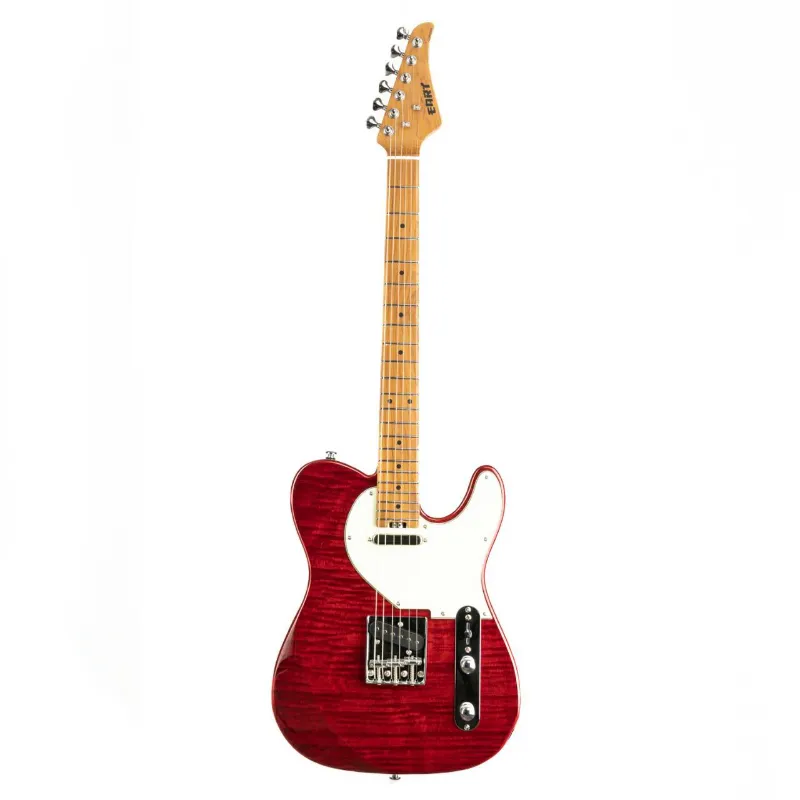
String spacing at the bridge also matters for palm muting and picking accuracy. Most headless bridges allow lateral saddle adjustment. Center each string over its corresponding pole piece if you play a single coil electric guitar or humbucker-equipped model.
Common Setup Challenges and Solutions
Low B string feels floppy: increase string gauge on the seventh string (try.064 or.068 if you currently use.062) or tune up a half step to test tension. Headless designs can feel different due to shorter overall length behind the bridge.
Tuning drifts after bends: check that the bridge tuner posts are tight and that strings are wound neatly with no overlapping coils. Headless tuners require only two or three wraps.
Saddle runs out of intonation travel: confirm you are using the correct scale length for your string gauge. A 26.5-inch or 27-inch scale is common on extended-range models. If the saddle bottoms out, switch to a lighter gauge or consult the manufacturer about replacement saddles.
High action on upper frets: level and crown the frets if the action rises past the 12th fret even after truss rod adjustment. Uneven frets are more noticeable on seven-string necks due to the wider fingerboard.
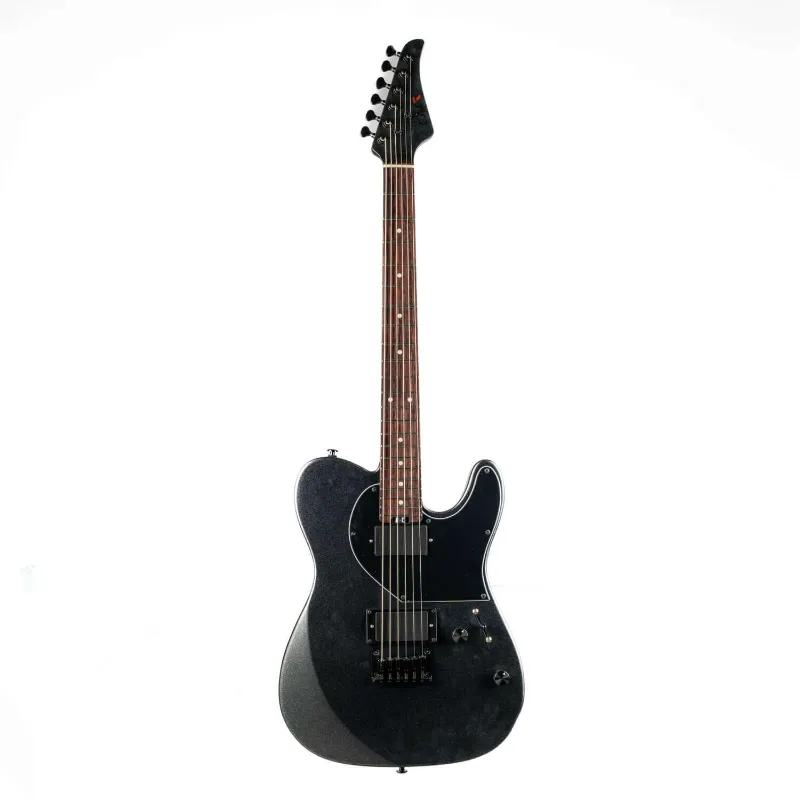
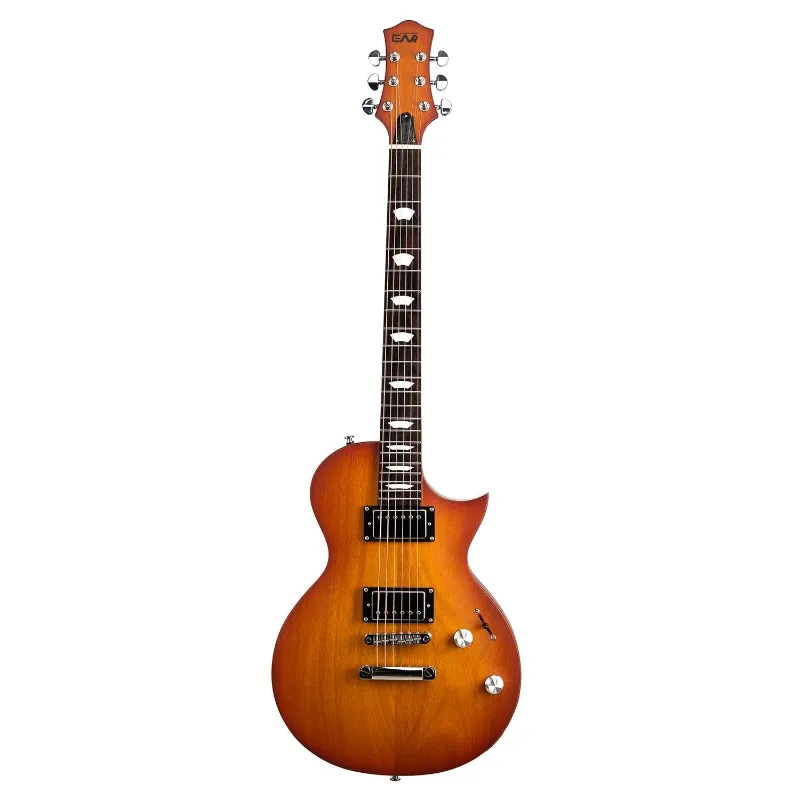
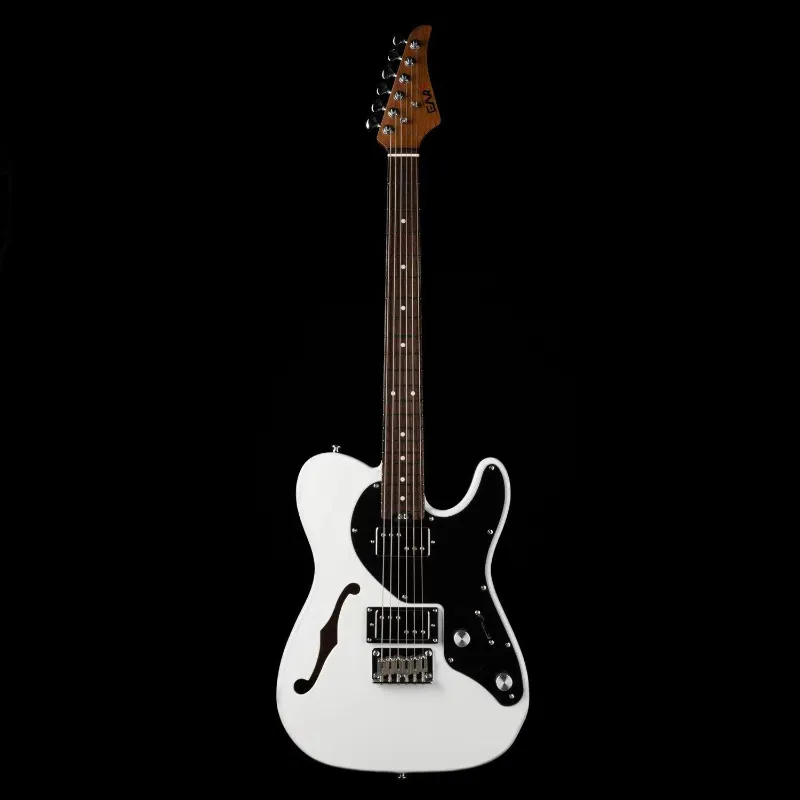
We also carry a range of other EART electrics, including the metal telecaster and thin body electric guitar, which use traditional headstock designs if you want to compare setup processes. Check the latest price and specifications on our store page.
Maintaining Intonation Over Time
Recheck intonation whenever you change string gauge, tuning, or climate conditions. Temperature and humidity shifts move the neck, so a setup that works in summer may need tweaking in winter.
- Tune before every session and spot-check the 12th fret on the low B and high E. If both drift the same direction, adjust the truss rod. If only one string is off, adjust that saddle.
- Clean the fretboard and strings after each session to prevent grime buildup that affects sustain and tuning stability.
- Loosen strings slightly if you store the guitar for more than a month. Headless bridges maintain constant tension, so long-term storage at full pitch can stress the neck joint.
A well-maintained headless 7 string guitar stays in tune across drop tunings and alternate voicings, making it a reliable choice for metal, prog, and jazz players who need extended low-end range without the neck dive of traditional seven-strings.
Questions
How often should I intonate my headless 7 string guitar?
Intonate whenever you change string gauge, tuning, or notice the 12th fret playing sharp or flat.
Can I use standard guitar strings on a headless seven-string?
Yes, but you need ball-end strings at both ends or a conversion kit that adds a ball to the plain end. Some headless bridges accept double-ball strings only, so check your bridge specs before ordering.
Why does my low B string sound out of tune even after intonation?
Heavy fret pressure bends the thick seventh string sharp, especially if your action is too low or the string gauge is too light. Try a heavier gauge (.064 or above) and raise the saddle height slightly to reduce fretting effort.
What tools do I need to adjust a headless guitar bridge?
You need a set of metric hex keys (typically 1.5 mm to 3 mm), a small screwdriver for saddle height screws, and a digital tuner. Most headless bridges use hex bolts for intonation and tuning posts, so a quality hex key set is essential.
Do headless guitars stay in tune better than traditional designs?
Headless designs eliminate the nut and reduce string length behind the bridge, which can improve tuning stability by minimizing friction points. However, proper setup and quality tuners matter more than headstock style for long-term tuning accuracy.
How do I adjust neck relief on a headless guitar?
Tune to pitch, capo the first fret, press the low B at the last fret, and check the gap at the eighth fret. Turn the truss rod clockwise to reduce relief or counterclockwise to add relief, then wait ten minutes for the neck to settle before rechecking.
Products in this guide
 Shopping at EART GUITAR? See the discount code
$5 OFF All Orders
Shopping at EART GUITAR? See the discount code
$5 OFF All Orders
More in this series
 Maintaining Your Semi-Hollow Electric Guitar: Humidity, Storage, and Neck Care13 Aug 20264 minWhat to Know Before You Buy an EART Guitar13 Aug 20263 minDo Single Coil Pickups Work for Metal? What You Need to Know13 Aug 20265 minSemi-Hollow vs Solid Body Electric Guitars: Which One Fits Your Playing Style?13 Aug 20265 min
 Are EART Guitars Good? A Build Quality Guide13 Aug 20265 min