 A Power Queen guide
Power Queen 12V LiFePO4 Battery Care: Extending Lifespan and Avoiding Common Mistakes
A 12v lifepo4 battery can deliver thousands of cycles when maintained correctly, but common mistakes cut that lifespan dramatically.
A 12v lifepo4 battery can deliver thousands of cycles when maintained correctly, but common mistakes cut that lifespan dramatically. Here’s how to get a decade or more from your investment.
Why Proper 12V LiFePO4 Battery Maintenance Matters
LiFePO4 chemistry tolerates abuse better than lead-acid, but it’s not indestructible. A well-maintained 12 volt lithium battery 100ah can reach 4,000 to 6,000 cycles at 80% depth of discharge. Poor charging habits, temperature extremes, and incorrect storage can cut that to 1,500 cycles or less. The difference translates to years of service life and hundreds of dollars in replacement costs.
Power Queen batteries ship with built-in battery management systems that prevent the most catastrophic failures, but the BMS can’t compensate for chronic misuse.
Charging Best Practices for Maximum Cycle Life
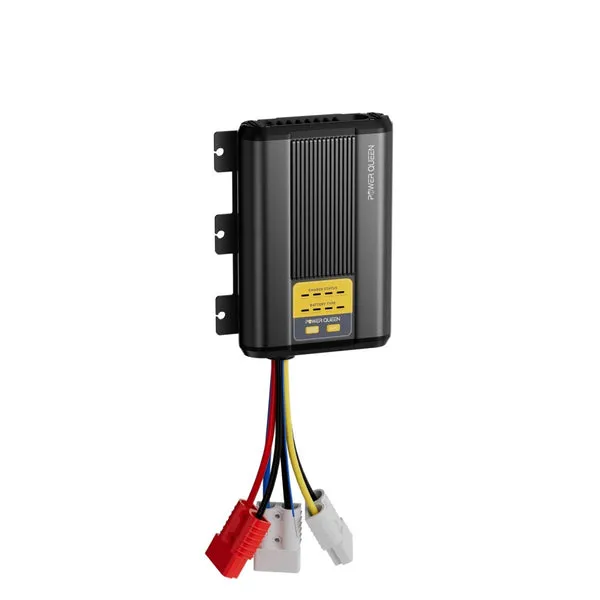
Charging mistakes account for most premature battery failures. Use a LiFePO4-specific charger rated for your battery capacity. A dc charger designed for lithium chemistry applies the correct voltage profile and avoids the equalization stages that damage LiFePO4 cells.
Key charging rules:
- Charge at 0.2C to 0.5C for longevity (10A to 25A for a 50Ah battery)
- Never exceed 14.6V bulk charge voltage for 12V systems
- Keep float voltage at 13.6V or lower
- Avoid trickle charging for extended periods
- Charge in temperatures between 32°F and 113°F (0°C to 45°C)
If you’re upgrading from lead-acid, replace your old charger. Check the latest pricing on Power Queen’s lithium-compatible chargers to ensure proper charging.
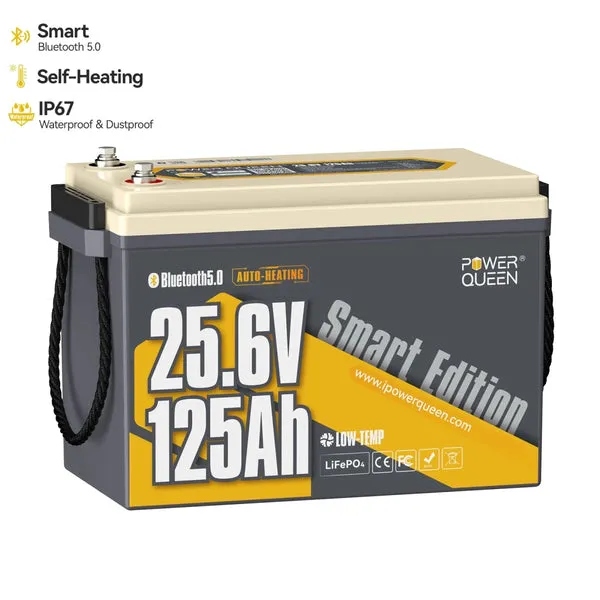
Partial charging is fine with LiFePO4. You don’t need to reach 100% every cycle. In fact, staying between 20% and 80% state of charge extends cycle life for stationary applications like solar storage. For mobile use with a trolling motor or RV, full charges make sense to maximize runtime.
Temperature Management and Storage Guidelines
Temperature extremes are the second-biggest lifespan killer. Power Queen’s 12v lifepo4 battery units include low-temperature charge protection that disables charging below 32°F, but discharge in cold conditions still stresses cells.
Temperature guidelines:
- Optimal operating range: 50°F to 95°F (10°C to 35°C)
- Discharge cutoff: Safe to -4°F (-20°C), but capacity drops 30% or more
- Charge cutoff: Never charge below 32°F (0°C) without a heating pad
- Storage temperature: 50°F to 77°F (10°C to 25°C) at 50% to 60% state of charge
If your battery lives in an engine compartment or outdoor solar cabinet, insulation and ventilation become critical.
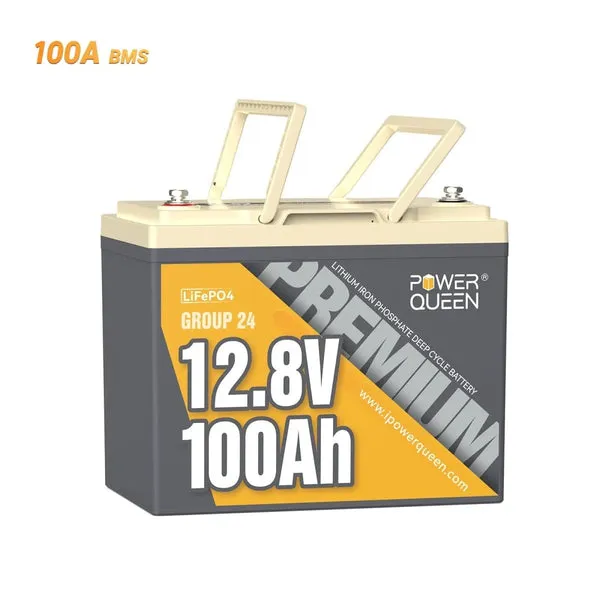
For winter storage, charge to 60%, disconnect all loads, and store indoors if possible. Check voltage every three months and top up if it drops below 13.0V. A 12 volt lithium battery in storage self-discharges at roughly 2% to 3% per month.
Common Mistakes That Shorten Battery Life
These errors appear most often:
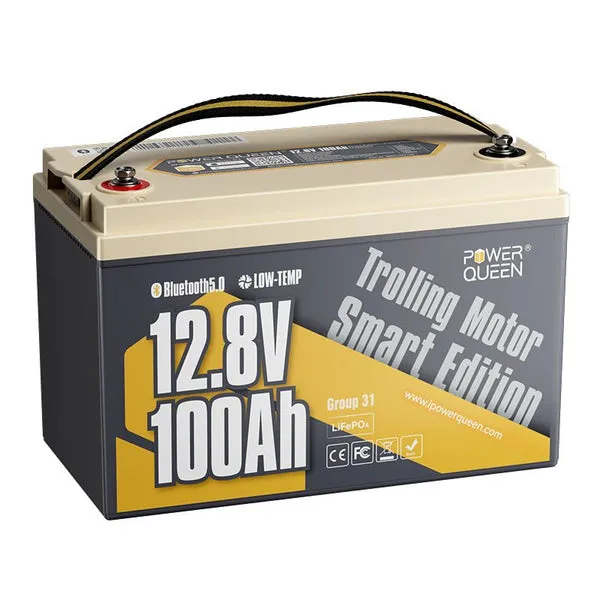
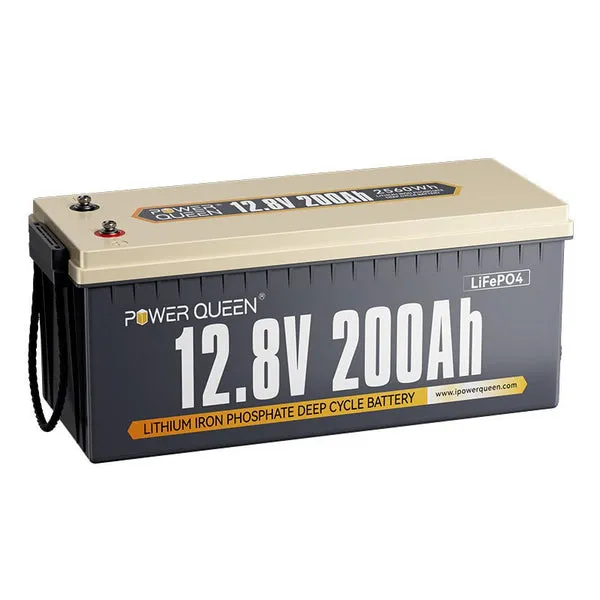
Overloading the discharge rate. A 100Ah battery rated for 100A continuous can technically deliver that current, but regular operation at max draw generates heat and stress. Keep sustained loads below 50A for a 100Ah unit. If you need more power for an electric lawn mower or high-thrust trolling motor, parallel two batteries or upgrade to a larger single unit like a lifepo4 battery 12v 200ah.
Using lead-acid chargers. Lead-acid chargers apply 14.8V to 15.0V or higher during equalization. LiFePO4 cells vent at 15.0V and suffer permanent damage. Always verify your charger is lithium-compatible or purchase a 12v lifepo4 battery with charger bundle.
Ignoring BMS warnings. Power Queen batteries cut power when voltage, current, or temperature exceed safe limits. If your battery shuts off, diagnose the cause instead of repeatedly restarting it.
Deep storage at 100% charge. Storing at full charge accelerates calendar aging. If you won’t use the battery for a month or more, discharge to 60% first.
Mixing old and new batteries. Paralleling batteries with different cycle counts or capacities forces the stronger battery to overwork. Match age, capacity, and model when building a bank.
Building a Long-Term Maintenance Routine
Set a quarterly maintenance schedule to catch issues early:
- Voltage check: Measure resting voltage (disconnected for 2+ hours). A healthy 12V LiFePO4 reads 13.2V to 13.4V at 50% to 60% state of charge.
- Terminal inspection: Clean corrosion with a wire brush and apply dielectric grease. Torque bolts to manufacturer spec (typically 90 to 100 in-lbs).
- Capacity test: Run a controlled discharge at 0.2C to measure actual amp-hours delivered. Expect 95%+ capacity in the first 500 cycles.
- Temperature log: Record operating temps during peak load. Sustained temps above 113°F indicate inadequate ventilation or overloading.
For seasonal applications, perform a full charge-discharge cycle before and after storage to recalibrate the BMS state-of-charge estimate. Grab the code for 6% off Power Queen batteries and accessories to stock up on replacement terminals and monitoring gear.
Matching Battery Size to Your Application
Undersized batteries work harder and age faster. Calculate your actual load and runtime needs before buying:
- Trolling motor (55 lbs thrust): 40A to 50A draw requires a 12v lifepo4 battery 100ah minimum for 2+ hours runtime
- RV house loads (300W average): 25A continuous draw suits a lifepo4 battery 12v 200ah for 6+ hours off-grid
- Solar storage (500Wh daily): A 100Ah battery stores 1,280Wh, giving 2+ days autonomy
If you frequently discharge below 20%, you need more capacity. A lifepo4 battery 12v 50ah works for light kayak trolling or emergency backup, but daily deep cycling in that application shortens lifespan to under 2,000 cycles.
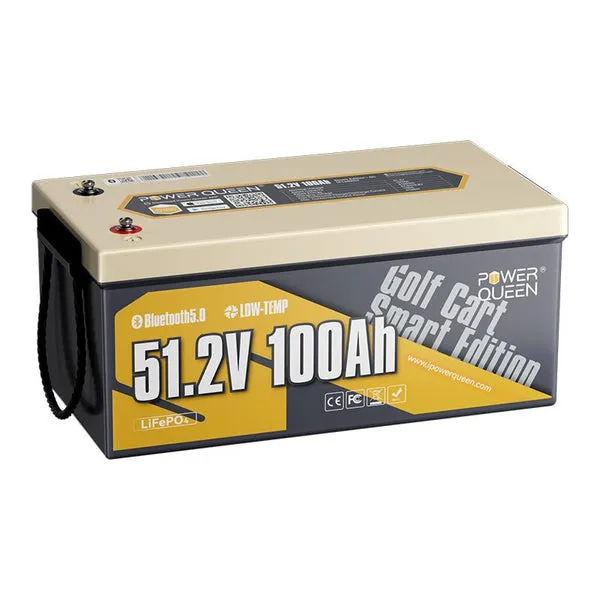
For high-voltage systems, a 48v battery or series-wired 12V bank reduces current and wiring losses.
Power Queen’s best 12v lifepo4 battery options include Bluetooth monitoring, heating pads for cold climates, and IP65 weatherproofing. Match features to your environment rather than buying the cheapest unit and retrofitting protection later.
Questions
How often should I charge my Power Queen 12V LiFePO4 battery?
Charge whenever state of charge drops below 20% for daily use, or maintain 50% to 60% charge for storage. LiFePO4 chemistry has no memory effect, so partial charging doesn't harm the battery.
Can I leave my 12v lifepo4 battery on a charger all winter?
Avoid continuous float charging for months. Instead, charge to 60%, disconnect the charger, and top up every 8 to 12 weeks if voltage drops below 13.0V. This prevents calendar aging from prolonged high voltage.
What temperature is too cold to charge a lithium battery?
Never charge below 32°F (0°C) without a battery heating system. Charging cold cells causes lithium plating that permanently reduces capacity. Power Queen batteries include low-temperature charge cutoff protection.
How do I know when my LiFePO4 battery needs replacement?
Replace when capacity drops below 80% of rated amp-hours or the BMS triggers frequent shutdowns. A well-maintained battery typically reaches this point after 3,000 to 5,000 cycles, which translates to 8 to 12 years for most users.
Can I use a 12 volt lithium battery with my existing lead-acid setup?
You must replace the charger with a LiFePO4-compatible model and verify your loads tolerate the higher voltage (13.2V to 14.6V vs. 12.2V to 12.8V for lead-acid). Wiring, fuses, and inverters usually work fine without modification.
Is it better to buy one large battery or parallel smaller ones?
A single large battery simplifies wiring and eliminates balance concerns, but paralleling identical units provides redundancy and easier transport. For systems above 200Ah, parallel matched batteries offer better flexibility and replacement options.
Products in this guide
 Shopping at Power Queen? See the discount code
6% OFF All Orders
Shopping at Power Queen? See the discount code
6% OFF All Orders
More in this series
Can You Use a DC Charger with Power Queen 48V Batteries? Compatibility Guide16 Aug 20266 minHow Long Do Power Queen LiFePO4 Batteries Last in Electric Lawn Mowers?16 Aug 20264 min Power Queen 12V vs 24V Lithium Battery: Which Voltage Do You Actually Need?16 Aug 20264 minHow to Choose the Right LiFePO4 Battery Size for Your Trolling Motor16 Aug 20265 min