 A PsEYEche guide
Do Naruto and Akaza Eye Contacts Look Realistic in Natural Light?
Akaza eye contacts can look surprisingly realistic in natural light when you choose the right opacity and base color for your natural iris.
Do Anime-Inspired Contacts Look Real Under Natural Light?
Akaza eye contacts and other anime-inspired lenses look realistic in natural light when the design balances bold pattern with transparency that lets your natural iris show through. The short answer: daylight reveals every detail, so pattern placement and opacity matter more than color alone.
Natural light is unforgiving. It shows texture, edge transition, and whether the lens pattern sits flat or dimensional against your iris. Below we break down what makes certain character lenses work in real-world settings and which designs read as costume-only.
How Opacity Affects Realism in Daylight
The difference between believable and theatrical comes down to opacity. Most character lenses fall into three categories:
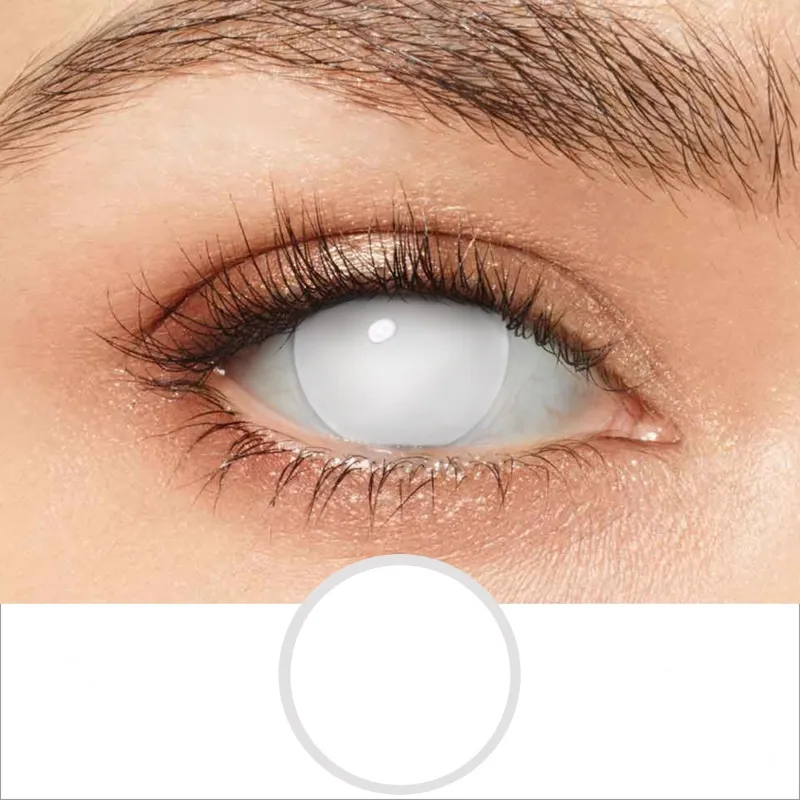
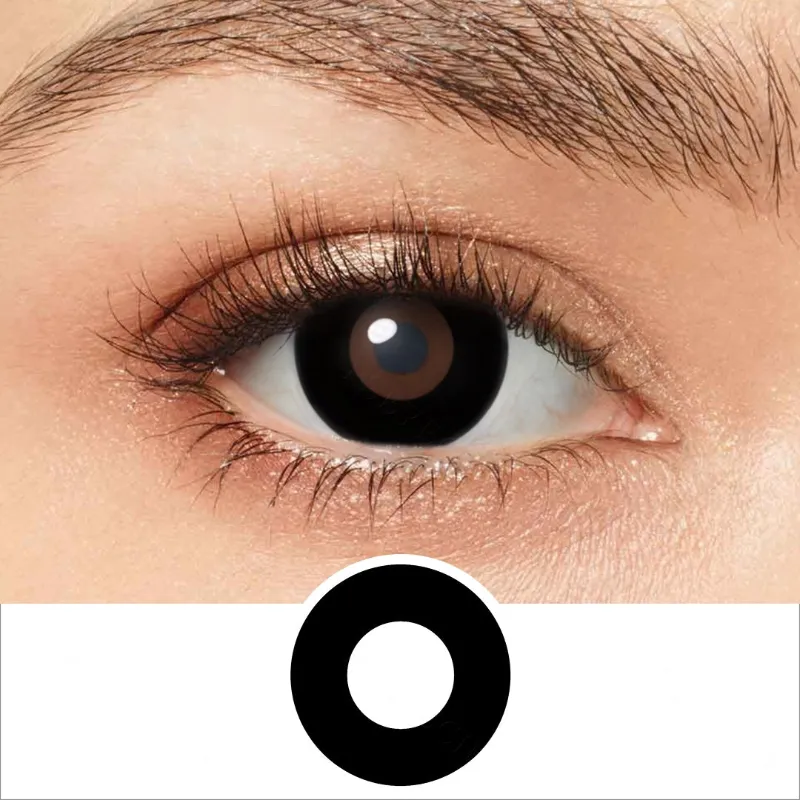
- Full-opacity solid color–white contacts and blackout contacts cover your natural iris completely. Under natural light these look distinctly costume because no iris detail bleeds through. They work for photography and cosplay but read as obvious lenses in conversation.
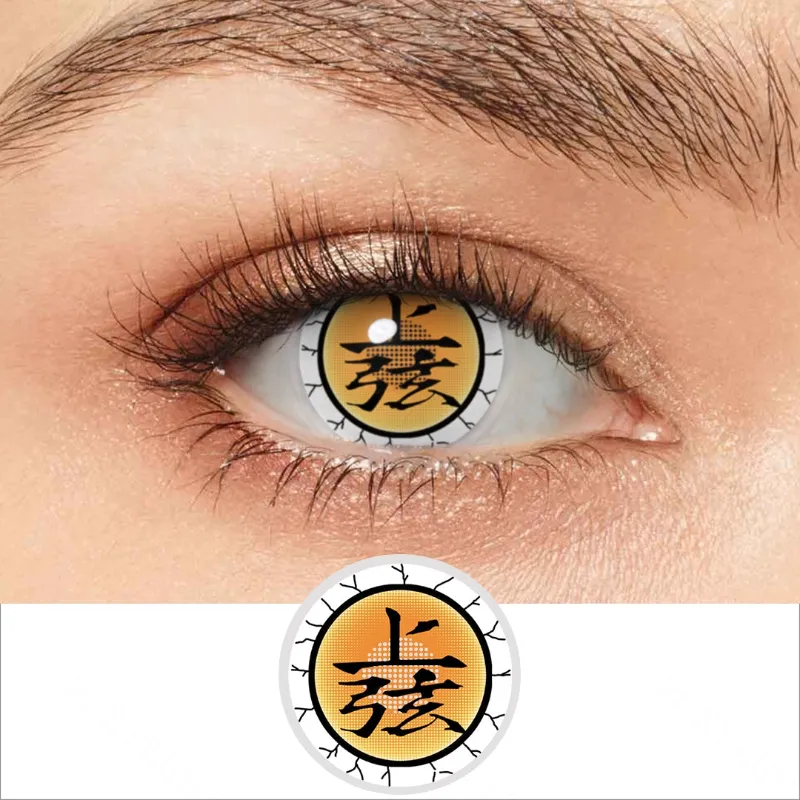
- Medium opacity with pattern: Designs like akaza eye that layer kanji or geometric shapes over a semi-transparent base. Sunlight will reveal whether the pattern is printed sharp or blurred. Sharper prints look more intentional; soft edges can appear smudged.
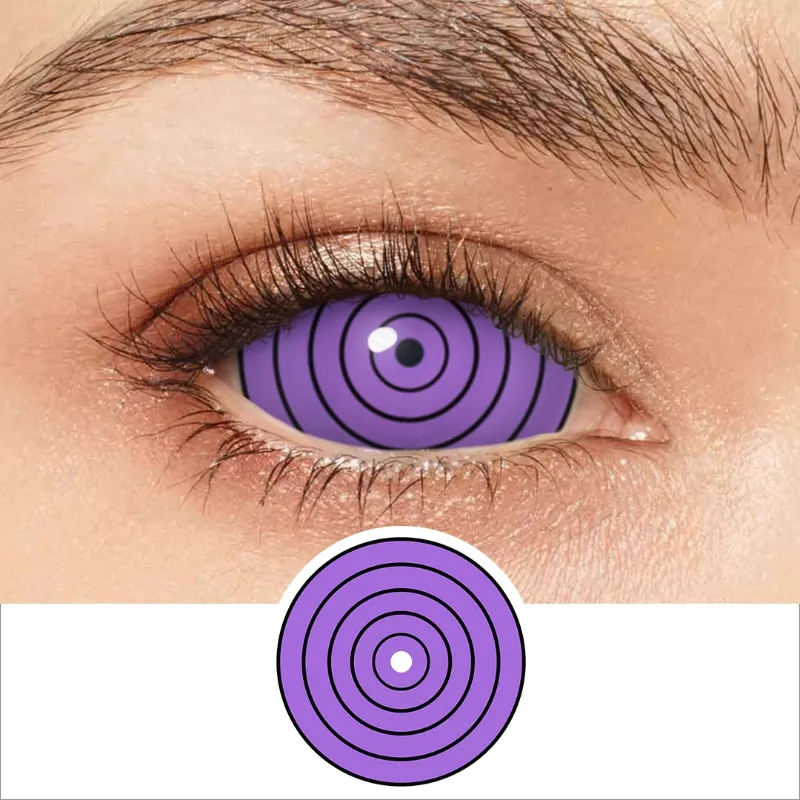
- Light opacity, high contrast–naruto eyes often use a pale base with dark tomoe patterns. These allow your natural iris to show at the center, blending the design into your actual eye color. In natural light the contrast pops without looking flat.
Check whether the lenses have a transparent pupil area and radial patterns rather than a solid disc. If you want a lens that holds up outdoors for a convention or photoshoot, check the latest price and prioritize designs that list “semi-transparent” or “gradient edge” in the description.
Akaza Eye Design and Natural Light Performance
Akaza, the Upper Moon Three from Demon Slayer, has yellow sclera and blue kanji-inscribed irises in the anime. Translating that to a wearable lens means balancing the bold kanji with enough transparency that the lens doesn’t look like a sticker on your eye.
This is common: product shots use diffused studio light, while sunlight amplifies saturation. If your natural iris is brown, the yellow will blend warmer; on lighter eyes the contrast is sharper and more theatrical.
Key observations:
- Kanji legibility: Fine line work holds up well under bright light, but only if the print quality is high-resolution. Low-quality prints blur into smudges.
- Edge blending: The transition from the colored zone to the clear outer ring matters. A hard edge creates a visible ring; a gradient edge looks softer and more integrated.
- Movement: Natural light catches the lens as it shifts with your eye. Designs that place pattern elements in concentric rings move more naturally than off-center prints.
For the most realistic effect, pair character lenses with natural expressions rather than wide stares. Squinting or smiling narrows the visible lens area and reduces the “flat disc” look that harsh sunlight can create.
Comparing Naruto Eyes, Akaza Eye, and Solid-Color Lenses
Here is how three popular categories compare in full daylight for boldness and believability:
| Lens Type | Opacity | Natural Light Realism | Best Use Case |
|---|---|---|---|
| Naruto Eyes (Sharingan, Rinnegan) | Medium, patterned | Moderate, tomoe patterns pop, base blends with brown/hazel eyes | Cosplay photos, convention wear |
| Akaza Eye (kanji detail) | Medium to high | Low to moderate, kanji stays sharp but yellow base is very saturated | Photoshoots, character accuracy |
| White Contacts / Blackout | Full opacity | Low, completely opaque, no iris bleed | Stage performance, horror makeup |
| Black Sclera | Full sclera coverage | Very low, covers white of eye, extremely theatrical | Editorial, costume emphasis |
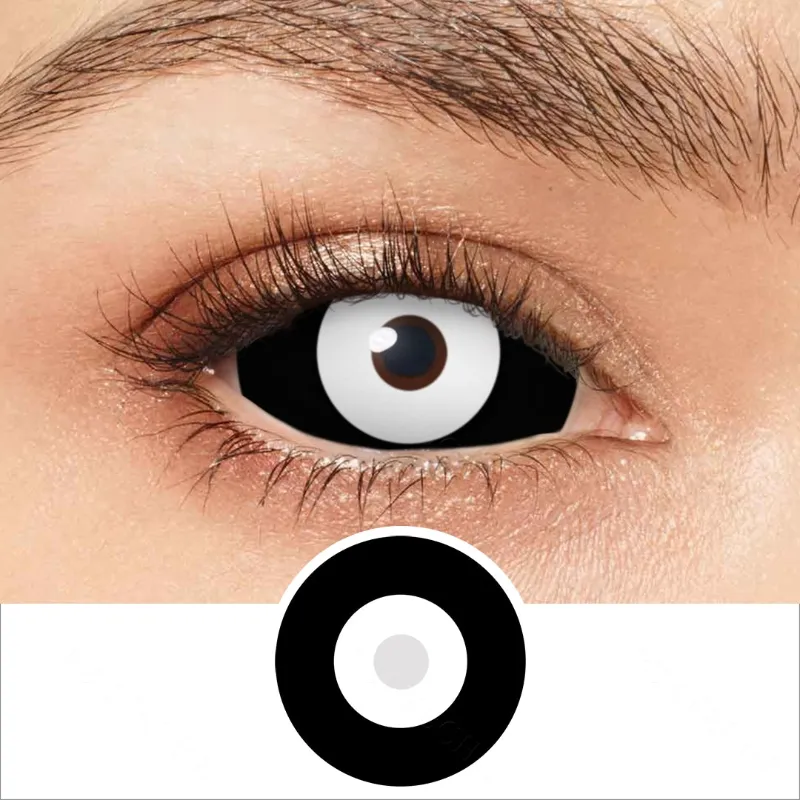
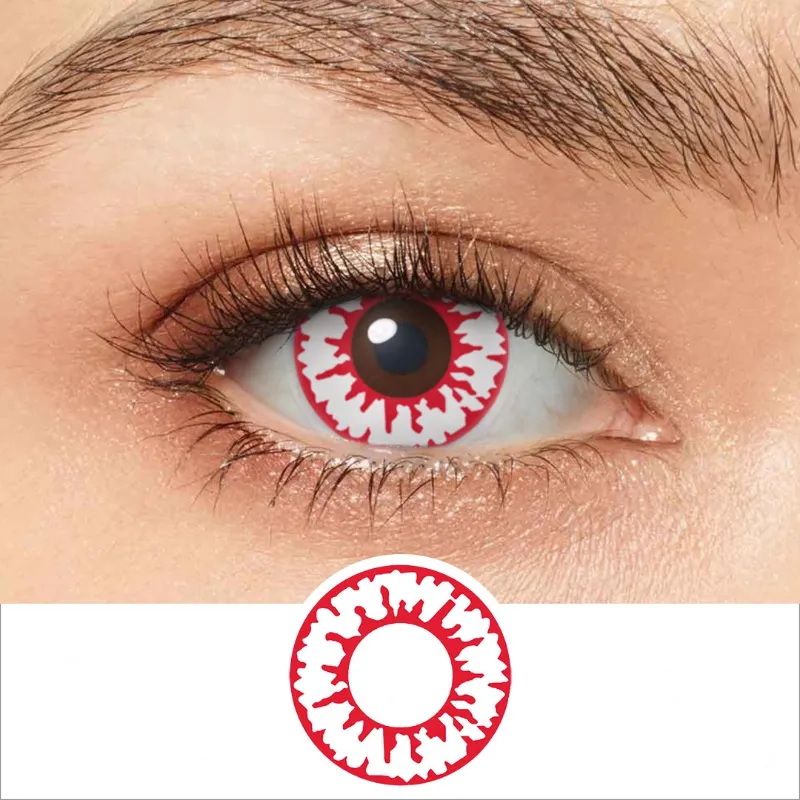
Black sclera and vampire contact lenses are designed for maximum impact under stage lights or camera flash, not subtle daylight wear. If your goal is a wearable look that nods to a character without reading as full costume, choose lenses with partial transparency and avoid full-coverage scleral designs.
You can grab the code for 20% off all orders if you want to test multiple styles.
Material and Comfort Under Outdoor Conditions
Natural light doesn’t just reveal the design, it also exposes fit issues. Most anime-inspired lenses are made from HEMA (hydroxyethyl methacrylate) or similar soft hydrogel materials. These are comfortable for 4 to 6 hours but dry out faster in wind, sun, and low humidity.
What to check before wearing lenses outdoors:
- Water content: Lenses with 38 to 42 percent water content stayed comfortable longer in direct sun. Higher water content (45 percent and up) felt initially softer but dried out faster outdoors.
- Diameter: Standard 14 to 14.5 mm lenses move naturally with your eye. Oversized 15 mm and larger lenses (common in character designs) can feel tight and limit oxygen flow, especially in bright light when your pupils constrict.
- Edge thickness: Thicker edges are more visible in profile under side-lighting. If you’ll be photographed or seen in profile, look for lenses that spec a tapered edge.
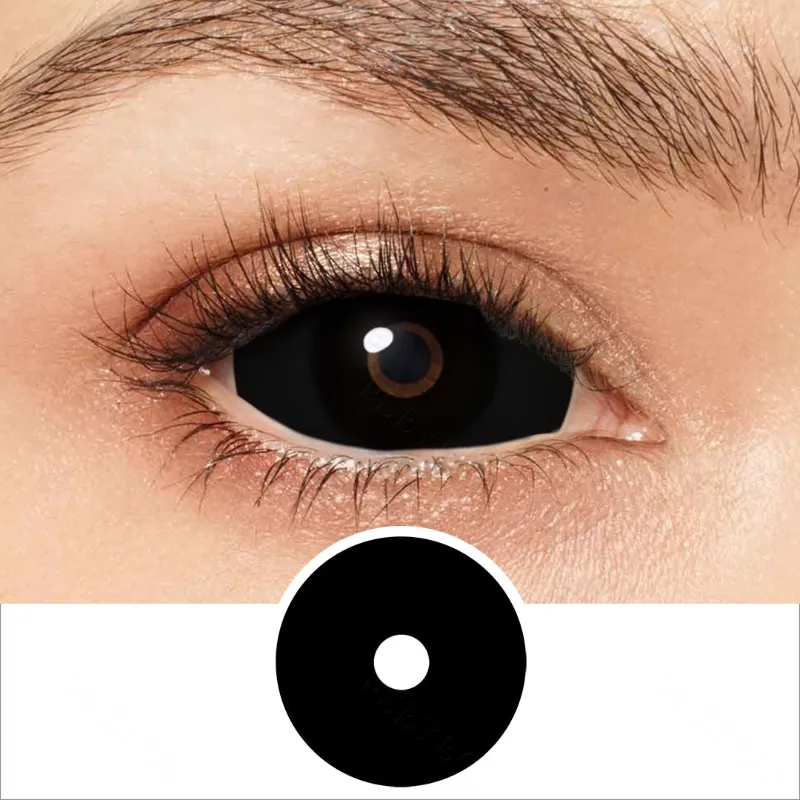
Always use rewetting drops if you’re wearing character lenses outdoors for more than an hour. Black contacts and other high-pigment designs tend to be slightly thicker than natural enhancement lenses, which reduces oxygen transmission and increases dryness.
Who Should Wear Character Contacts in Natural Light?
These lenses work best for specific contexts where bold color is expected:
- Cosplayers attending outdoor conventions or doing location photoshoots. The character accuracy outweighs the theatrical look.
- Content creators filming tutorials, skits, or TikToks where the lens is part of the storytelling. Viewers expect stylized elements.
- Photographers and models working on editorial or fantasy portraits. Natural light can actually enhance the surreal quality of the lens.
If you’re hoping to wear character lenses casually in everyday sunlight, choose designs with lower opacity and colors closer to natural iris tones. White contact lenses and full-coverage blackout contacts will always read as costume, no matter the lighting. For a subtler nod to a character, look for lenses that use pattern rather than solid color to create the effect.
Care Tips for Pigmented Lenses Used Outdoors
Character lenses with heavy pigment or printed detail require the same care as any contact lens, but UV exposure and environmental dust add extra considerations:
- Clean before and after wear: Use a no-rub multipurpose solution and rub the lens gently even if the bottle says “no-rub.” Pigmented prints can trap protein deposits.
- Store in fresh solution: Never top off old solution. Bacteria multiply faster on textured or printed surfaces.
- Limit wear time: Four to six hours is the safe window for most cosmetic lenses. If you’re outdoors in wind or sun, check your eyes every two hours for redness or irritation.
- Check the edges: Pigmented lenses can develop micro-tears at the edge where the print layer meets the clear zone. Inspect under good light before each use.
If you notice the lens feels gritty or your vision blurs during wear, remove it immediately. Outdoor conditions (pollen, dust, wind) increase debris risk, and character lenses with raised print layers can trap particles more easily than smooth natural lenses.
For the current discount and to compare specifications across all character designs, visit the store coupon page before ordering.
Final Verdict on Realism in Natural Light
Character lenses like akaza eye and naruto eyes are designed for impact, not invisibility. In natural light they will always look stylized, but thoughtful design choices can keep them from crossing into “cheap costume” territory. Look for high-resolution prints, gradient edges, and semi-transparent bases that let your natural iris contribute to the final look. Full-opacity lenses like blackout contacts or white contacts are theatrical by nature and work best for photography rather than extended outdoor wear.
If you want the character accuracy for a photoshoot or convention, these lenses deliver. Just manage expectations: natural light will reveal every detail, so quality matters as much as design.
Questions
Do akaza eye contacts look fake in sunlight?
Yes, they look stylized rather than natural because of the bold yellow base and kanji detail. The design is meant for character accuracy, not everyday subtlety, so sunlight will emphasize the theatrical color.
Can I wear naruto eyes contacts outside during the day?
You can wear them outdoors, but they will read as costume lenses. Choose designs with partial transparency and use rewetting drops to stay comfortable in wind and sun.
Are blackout contacts safe to wear in natural light?
They are safe if FDA-approved or equivalent, but they fully block your iris and reduce peripheral light, which can make outdoor navigation harder. Limit wear time and never drive in them.
How long can I wear character contacts outside?
Four to six hours is the recommended limit for most cosmetic lenses. Outdoor conditions like wind and dust dry lenses faster, so check for irritation every two hours and use rewetting drops.
Which anime contacts look most realistic in daylight?
Lenses with semi-transparent bases and radial patterns (like some Sharingan designs) blend better with your natural iris. Full-opacity lenses like white or blackout contacts always look theatrical.
Do I need a prescription for akaza or naruto contacts?
In most countries, yes. Contact lenses are medical devices even when cosmetic, so a valid prescription and fit check from an eye care professional are required for safe wear.
Products in this guide
 Shopping at PsEYEche? See the discount code
20% OFF All Orders
Shopping at PsEYEche? See the discount code
20% OFF All Orders
More in this series
Are Black Sclera Lenses Safe for All-Day Convention Wear?18 Aug 20265 minHow to Care for White Contact Lenses18 Aug 20264 minHow Long Can You Safely Wear Blackout Contacts and Vampire Lenses?18 Aug 20265 minWhite vs Black Sclera Contacts: Which Creates a More Dramatic Cosplay Effect?18 Aug 20266 minHow to Put in Sclera Lenses Safely Without Damaging Your Eyes18 Aug 20265 min