 A SwitchBot guide
Why Is My SwitchBot CO2 Monitor Showing High Readings and What to Do About It
A co2 monitor showing elevated readings usually signals poor ventilation, overcrowding, or calibration drift, all of which you can address with targeted troubleshooting.
A co2 monitor showing elevated readings usually signals poor ventilation, overcrowding, or calibration drift, all of which you can address with targeted troubleshooting.
Why Your CO2 Monitor for Home May Show High Readings
Indoor CO2 builds up when fresh air can’t dilute the carbon dioxide we exhale. Here are the most frequent culprits:
- Poor ventilation: Sealed rooms, closed windows, and inactive HVAC systems trap stale air and let CO2 accumulate quickly.
- Overcrowding: Every person exhales around 200 ml of CO2 per minute, so gatherings or shared workspaces spike readings fast.
- Calibration drift: Sensors lose accuracy over time, especially if the device hasn’t been recalibrated or if it sat in high-CO2 storage before first use.
- Placement errors: Monitors tucked near windows, vents, or behind furniture may read inaccurately because they’re sampling unrepresentative air.
- Combustion sources: Gas stoves, space heaters, and fireplaces release CO2 directly into your home if flues or exhaust aren’t working properly.
Understanding how carbon dioxide monitoring works helps you interpret readings correctly and avoid false alarms.
What CO2 Levels Are Actually Dangerous
Outdoor air typically sits around 400 to 450 ppm (parts per million). Indoor spaces climb naturally, but thresholds matter:
| CO2 Level (ppm) | Impact | Action Needed |
|---|---|---|
| 400 to 1000 | Normal, comfortable air quality | None |
| 1000 to 1500 | Mild drowsiness, reduced focus | Open windows or boost ventilation |
| 1500 to 2500 | Fatigue, headaches, poor sleep | Ventilate immediately and investigate causes |
| 2500+ | Significant cognitive impairment | Evacuate, ventilate, check for gas leaks |
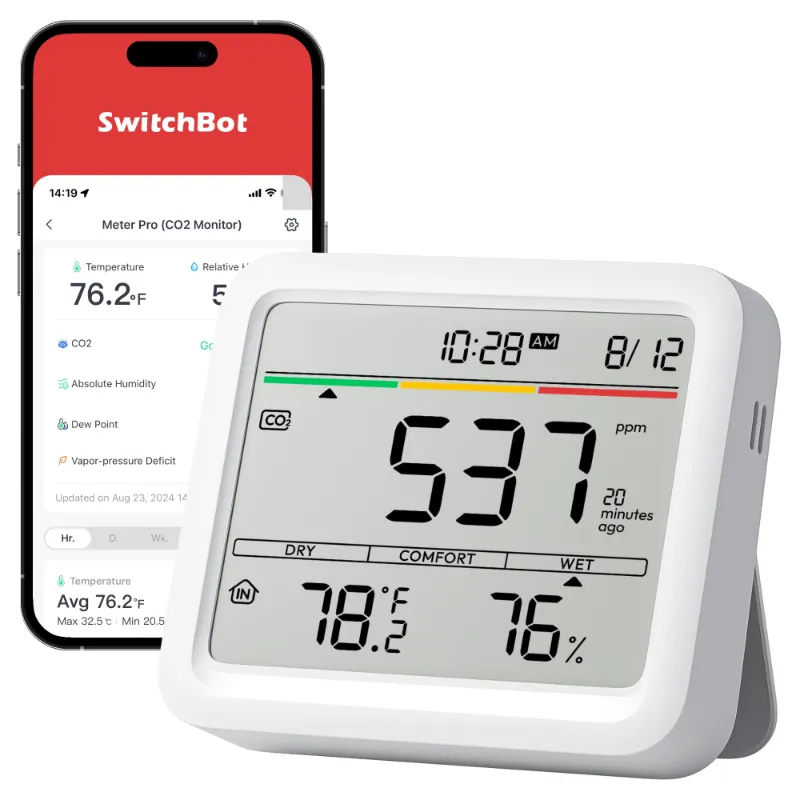
If your co2 monitor for home consistently reads above 1000 ppm, act quickly. Prolonged exposure above 1500 ppm degrades sleep quality and concentration.
How to Fix High CO2 Readings Step by Step
Ventilate the Space First
Open windows and doors on opposite sides of the room to create cross-flow ventilation. Even 10 minutes of fresh air can cut CO2 by 50 percent or more. If outdoor weather permits, leave windows cracked during occupancy.
Check and Recalibrate Your Monitor
Most house co2 detectors require periodic recalibration. Take your SwitchBot CO2 monitor outdoors or near an open window for 20 minutes, then follow the manual’s calibration procedure to reset the baseline to ambient outdoor levels (around 420 ppm).
Relocate the Sensor
Place the monitor at breathing height, away from direct sunlight, drafts, and heat sources. Avoid corners, behind curtains, or near air returns where airflow is unrepresentative. We suggest desk-top or bedside placement for tracking the air you actually breathe.
Reduce Occupancy or Add Mechanical Ventilation
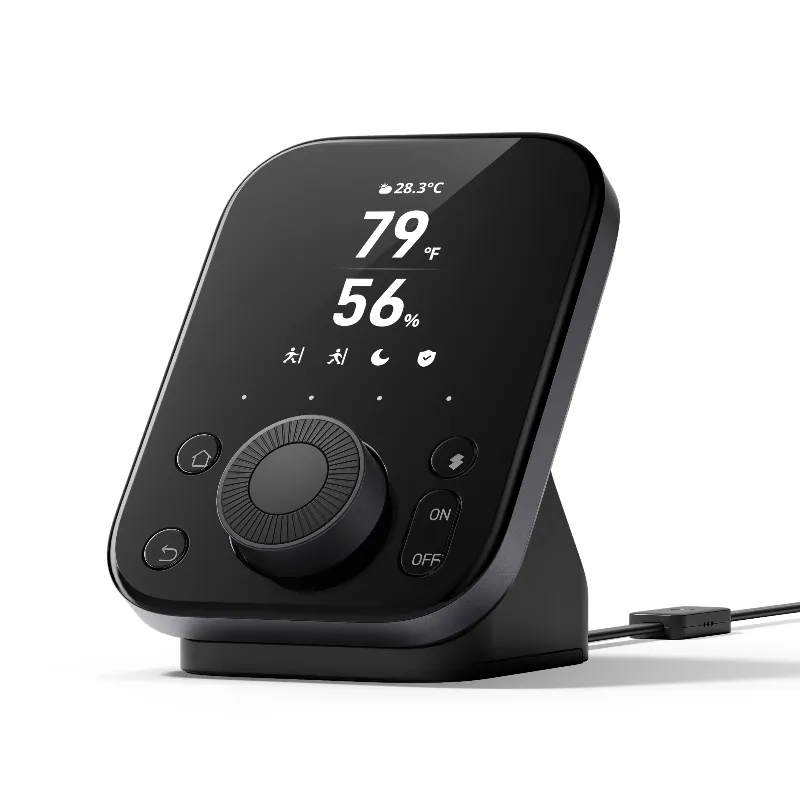
If the room regularly hits high CO2 with normal ventilation, either limit the number of people or install a bathroom exhaust fan, range hood, or standalone air purifier with an outdoor-air intake. Smart home integration can help: pair your monitor with a SwitchBot Hub 3 to trigger automated window openers or ventilation fans when CO2 climbs.
Inspect Combustion Appliances
Gas ranges, water heaters, and fireplaces should vent outdoors. If your monitor spikes only when these run, have a technician inspect flues and seals. Carbon monoxide detectors are non-negotiable in homes with gas appliances, but a CO2 monitor catches ventilation problems early.
For current deals on the SwitchBot CO2 monitor and other smart home sensors, grab the code before you check out.
When to Ignore a High Reading and When to Worry
Not every spike demands immediate action. Transient jumps during cooking, crowded dinners, or overnight in a closed bedroom are normal.
Worry if:
- Readings stay above 1500 ppm despite open windows and low occupancy.
- You experience persistent headaches, nausea, or unusual fatigue that improves when you leave the space.
- The monitor shows a sudden, unexplained jump of 1000+ ppm in an empty room (possible sensor fault or gas leak).
Compare your device against a known-good reference. The best home air quality monitors offer cross-validation if you suspect your sensor is malfunctioning.
How to Use CO2 Data to Improve Indoor Air Quality
CO2 works as a proxy for overall ventilation effectiveness. When a co2 monitor trends upward, other indoor pollutants and humidity may also be building up because fresh-air exchange has stalled.
Practical habits that keep readings low:
- Crack a window during sleep: Even a small gap helps air exchange in a sealed bedroom.
- Run kitchen and bathroom fans: Exhaust fans remove moisture and CO2 simultaneously.
- Schedule HVAC fresh-air cycles: Modern thermostats can pull outdoor air on a timer; set them to run during peak occupancy.
- Monitor trends over days: A gradual upward drift signals your ventilation system may need filter replacement or duct cleaning.
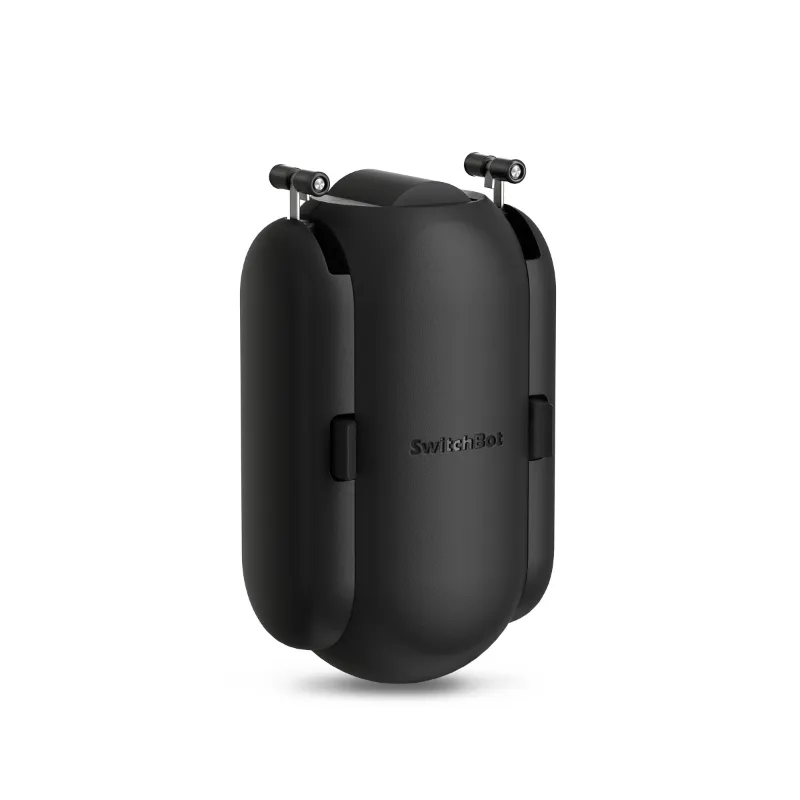
For broader smart home automation, the SwitchBot ecosystem pairs CO2 monitoring with climate control. You can set routines that open motorized curtains at sunrise to encourage natural ventilation or trigger alerts when air quality declines. Check the latest pricing to bundle sensors with hub and automation devices.
Portable vs. Fixed Monitors and Which You Need
Portable CO2 monitors let you survey multiple rooms to identify problem zones. Use them to audit basements, attics, and rarely used guest rooms where ventilation often lags. Fixed monitors suit high-occupancy spaces like home offices, nurseries, and bedrooms where you want continuous tracking and historical data.
The SwitchBot co2 monitor for home offers app connectivity, trending graphs, and smart home integration, making it ideal for whole-home air quality management. Portable options shine for fieldwork or if you’re troubleshooting intermittent issues across multiple properties.
Whichever form factor you choose, pair it with actionable ventilation habits. A monitor without a response plan is just an alarm you learn to ignore.
Questions
What should I do if my SwitchBot CO2 monitor reads above 1500 ppm?
Open all windows and doors immediately to create cross-ventilation, reduce occupancy, and check that combustion appliances are venting properly. If the reading persists after 20 minutes of fresh air, recalibrate the sensor outdoors or contact SwitchBot support to rule out a hardware fault.
How often should I recalibrate my CO2 monitor for home?
Recalibrate every three to six months or whenever you notice readings that don't match your ventilation conditions. Take the monitor outdoors to fresh air for 20 minutes, then follow the manufacturer's calibration procedure to reset the baseline to ambient outdoor CO2 levels.
Can high CO2 readings at night harm my sleep?
Yes. Levels above 1000 ppm can reduce sleep quality, cause morning headaches, and leave you feeling groggy. Crack a window or run a low-speed fan overnight to keep bedroom CO2 below 1000 ppm for the best rest.
Where is the best place to put a CO2 monitor in my home?
Place it at breathing height on a desk, nightstand, or shelf, away from direct sunlight, drafts, air vents, and heat sources. Avoid corners and spots behind furniture where air circulation is poor and readings may not reflect the air you're actually breathing.
Is a CO2 monitor the same as a carbon monoxide detector?
No. CO2 monitors measure carbon dioxide, a natural byproduct of breathing that signals ventilation quality. Carbon monoxide detectors measure toxic CO gas from incomplete combustion. You need both for complete home safety.
Why does my CO2 monitor spike when I cook with gas?
Gas stoves release CO2 directly into your kitchen. If your range hood isn't venting outdoors or you're not running it, CO2 accumulates quickly. Always use the exhaust fan when cooking with gas, and open a window if readings climb above 1200 ppm.
Products in this guide
Shopping at SwitchBot? See the discount code
10% OFF Sitewide
More in this series
 SwitchBot Water Sensor Battery Life: How Long Before You Need to Replace It?31 Jul 20265 minDo SwitchBot Motorized Curtains Work With Blackout Drapes and Heavy Fabrics?31 Jul 20265 min
 How to Install a SwitchBot Garage Door Opener Without Replacing Your Existing Opener31 Jul 20265 minSwitchBot Hub Mini vs Hub 3: Which Smart Hub Do You Actually Need?31 Jul 20265 min