 A EIOTMART guide
How Long Does an EIOTMART Solar Cellular Camera Battery Last in Winter?
Learn how long an EIOTMART solar cellular security camera battery lasts in winter, what drains it, and how to extend runtime in cold weather.
An EIOTMART solar cellular camera battery typically lasts 7 to 30 days in winter, depending on sunlight exposure, temperature, and usage habits. The key difference comes down to how lithium-ion batteries behave in cold weather and how much solar recharge your specific location gets.
How Cold Weather Affects a Cellular Security Camera Battery
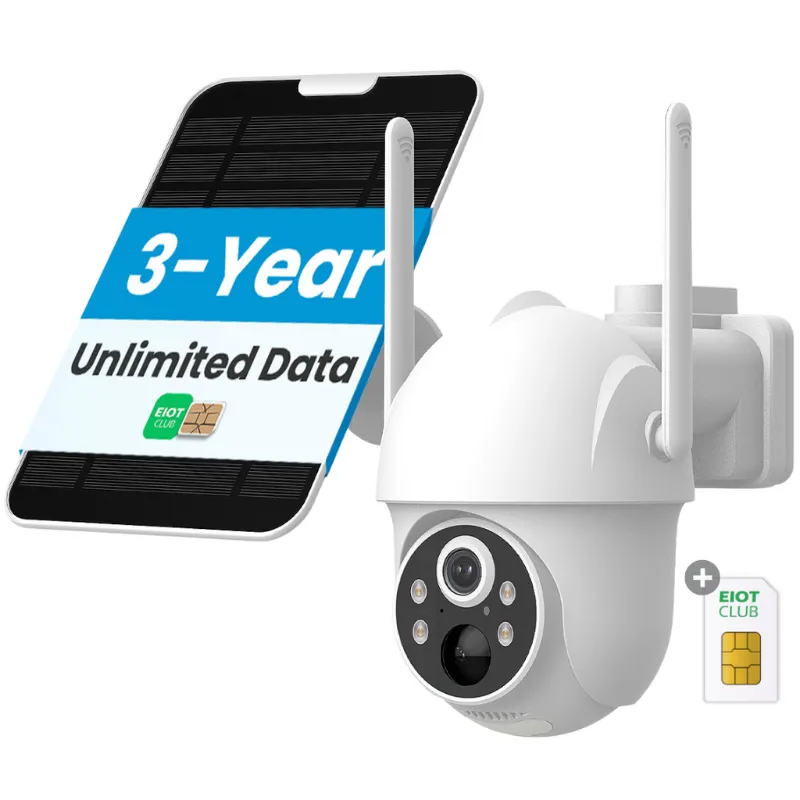
Lithium batteries used in a cellular security camera lose capacity temporarily when temperatures drop below freezing. This is a chemical property of lithium-ion cells, not a defect. At 32°F (0°C), you can expect roughly 20 to 30 percent less usable capacity than at 70°F. At 14°F (-10°C), that loss can reach 50 percent.
The solar cellular panel also produces less power in winter. Shorter days, lower sun angles, and snow cover can reduce solar input by 60 to 80 percent compared to summer. The camera itself draws about the same power for recording and transmitting over 4G LTE, so the net result is a faster discharge and slower recharge.
This is why we always tell buyers to plan for the worst winter month, not the yearly average. If your camera runs fine in October, it may struggle in January.
Typical Winter Battery Ranges by Usage Scenario
We group winter battery life into three common patterns based on how people use their 4g lte security camera.
| Usage Pattern | Daily Sun Hours (Winter) | Typical Battery Life | Notes |
|---|---|---|---|
| Heavy recording, cloudy region | 0 – 1 hour | 7 – 10 days | Camera records 10+ events daily |
| Moderate recording, partly sunny | 1 – 3 hours | 14 – 21 days | Records 3 – 5 events daily |
| Light recording, sunny region | 3 – 5 hours | 25 – 30+ days | Motion zones set tightly |
These ranges assume a fully charged battery entering winter and the camera using its default power-saving settings. If you enable continuous live view or 24/7 recording, expect battery life to drop to 3 to 7 days regardless of solar input.
What Drains a Cellular Surveillance Camera the Fastest in Winter
Knowing which factors drain power fastest helps you extend battery life without buying extra gear.

- Live view streaming is the biggest killer. Every minute of live view on a cellular surveillance camera consumes about the same power as 30 motion clips. Use live view sparingly in winter.
- Poor cellular signal forces the camera to boost its 4G LTE transmitter power. If your signal strength is below two bars, the camera works harder to stay connected. A iot sim card on a strong network matters here.
- Frequent false triggers from snow, swaying branches, or blowing debris waste power. Adjust your motion detection zone and sensitivity before winter hits.
- Full cloud uploads of every clip add up. If your camera uploads 15-second video for every alert, that data transmission is a hidden drain.
How to Extend Battery Life on an EIOTMART Solar Camera in Winter
You can take several practical steps before and during winter to maximize runtime.
Before Winter Starts
- Fully charge the camera indoors. Plug it in for 24 hours so the battery tops out before you mount it.
- Clean the solar panel with a soft cloth. Dust and grime cut winter charging even further.
- Position the panel facing south (in the northern hemisphere) at a steeper tilt, around 45 to 60 degrees. This catches low-angle winter sun better than a flat mount.
- Set motion zones to exclude roads, sidewalks, or trees that trigger false alerts.
During Winter Operation
- Wipe snow off the solar panel after storms. Even a thin layer blocks most charging.
- Reduce live view usage. Check the eiot club app for saved clips instead of streaming live.
- If you have the option, lower the video resolution to 1080p instead of 4K. This cuts transmission time.
- Mount the camera in a spot that gets at least 2 to 3 hours of direct winter sun.
When to Use a Backup Plan
If your location sees a week of overcast skies, consider bringing the camera inside overnight to charge via USB. Some EIOTMART models support this. You can also carry a spare external battery. For the best setup, check the latest pricing and grab the code for a discount on additional panels or batteries.
Solar Cellular vs Battery-Only Cameras in Cold Climates
A solar cellular camera has a clear advantage over a battery-only unit in winter, but only if the panel receives any daylight. A battery-only camera will drain over 7 to 14 days in winter and then you must physically retrieve it to recharge. A solar model can trickle charge even on cloudy days, adding a few percent each day that extends the total runtime by weeks.
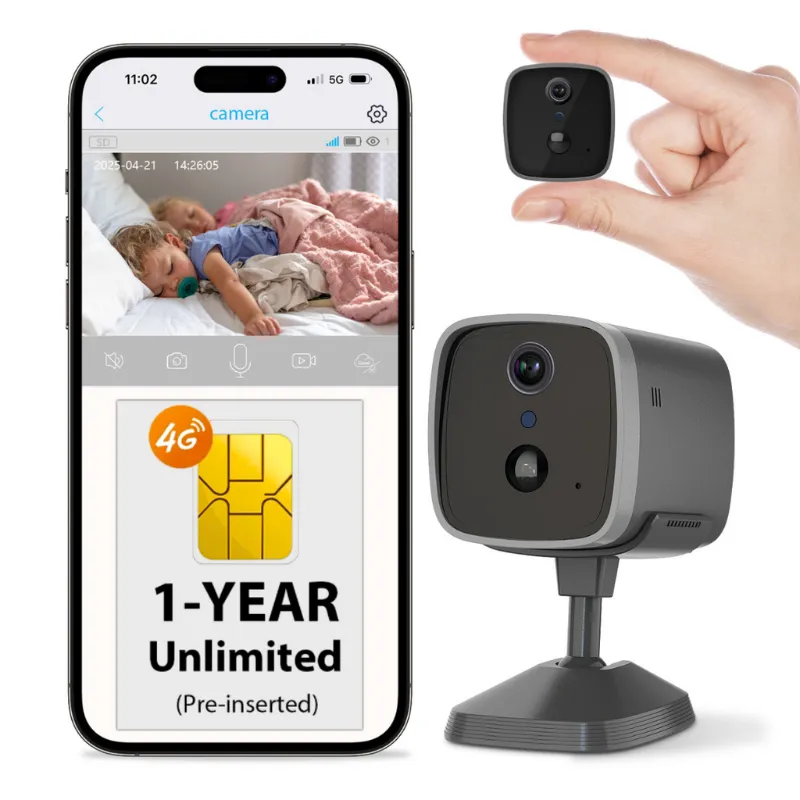
For comparison, a sim card camera without solar (like a basic 4G trail camera) typically needs fresh batteries every 3 to 6 weeks in winter. The solar version of the same camera can double or triple that interval. If you live in a region with long winters, we recommend paying up for the solar model rather than buying external battery packs repeatedly.
Who This Camera Works Best For in Winter
This setup suits three types of users well.
- Remote cabin or off-grid property owners who cannot run AC power and need eyes on the property year-round.
- Construction site managers working through winter who need a 4g security camera that operates independently of site power.
- Rural homeowners with outbuildings, gates, or driveways where running cable is impractical.
It is less ideal for locations north of 55 degrees latitude with only 4 to 5 hours of twilight per day. In those extreme conditions, you may need a larger panel or a wired backup.
For those who want a reliable cellular security camera outdoor option, the EIOTMART lineup includes models with adjustable solar mounts and cold-weather-rated batteries. We recommend pairing your camera with the EIOTMART eiotclub service for consistent data coverage across major carriers.
Final Take on Winter Battery Life
Plan for 7 to 14 days of autonomy if you live in a cloudy winter region, and up to 30 days if your site gets reliable sun. The solar panel helps, but it cannot fully offset winter conditions in heavy overcast. Our advice is to overestimate your power needs and add a small backup battery or a second panel if your camera is in a critical security zone. You can check the current discount before ordering to save on additional gear.
For a broader look at how cellular security cameras compare against other brands, check out resources like Best Cellular Security Camera | 4G LTE CCTV Solutions and Best Cellular Security Cameras to see how the technology stacks up across the market.
Questions
Can a cellular security camera battery freeze and stop working?
Lithium-ion batteries do not freeze solid like water, but their chemical reactions slow dramatically below 14°F (-10°C). The camera may shut down temporarily if the battery voltage drops too low. Once the battery warms up, it resumes normal operation.
Should I bring my EIOTMART solar camera inside to charge in winter?
Yes, if you face multiple consecutive overcast days. Bring the camera indoors, let it warm to room temperature, and charge it via the USB port for 6 to 12 hours. This restores full capacity faster than relying on weak winter sun.
Does the eiot club app show battery level in real time?
Yes, the eiot club app displays the current battery percentage and estimated remaining days based on recent usage. Check it weekly during winter so you can recharge before the camera shuts down.
Will a 4g lte security camera work without any cellular signal?
No, a 4G LTE security camera needs an active cellular signal to transmit video and alerts. If you are in a dead zone, the camera will record to a local SD card but will not send notifications until it reconnects.
Can I use an external battery pack with the cellular security camera?
Many EIOTMART models support external power through a USB or DC input. A portable power station or a larger external lithium battery can extend winter runtime to 30 days or more if the solar panel cannot keep up.
Does snow on the solar panel stop charging completely?
A thin dusting of snow can reduce charging by 80 to 90 percent, and a thick layer blocks it entirely. Wipe the panel clean after each snowfall to maintain whatever winter charging is available.
Products in this guide
Shopping at EIOTMART? See the discount code
5% OFF All Orders
More in this series
What Is the Eiotclub IoT SIM Card and Do You Need It for Your EIOTMART Camera?9 Sep 20265 minEIOTMART 4G LTE Security Camera vs Solar Cellular Camera: Which One Do You Need?9 Sep 20264 minWhy Does My EIOTMART SIM Card Camera Keep Disconnecting? (5 Fixes)9 Sep 20265 minHow to Set Up an EIOTMART Cellular Security Camera Without Home Wi-Fi9 Sep 20265 min