 A Open Sheet Music guide
Why Hallelujah Piano Arrangements Vary: Finding the Right Version for Your Skill Level
Hallelujah piano sheet music varies because arrangers adapt Leonard Cohen's song for different skill levels, interpretations, and teaching methods.
Why Hallelujah Piano Arrangements Differ So Much
Hallelujah piano sheet music exists in dozens of versions because arrangers tailor Cohen’s iconic melody to different skill levels, performance contexts, and stylistic interpretations. The original song features simple chord changes and a repetitive structure, but piano arrangements range from beginner two-hand versions with just melody and basic chords to advanced interpretations inspired by Jeff Buckley’s vocal dynamics or the orchestral treatment in Shrek. Each version reflects choices about voicing, rhythm, ornamentation, and whether to follow Cohen’s sparse original or Buckley’s emotionally expansive cover.
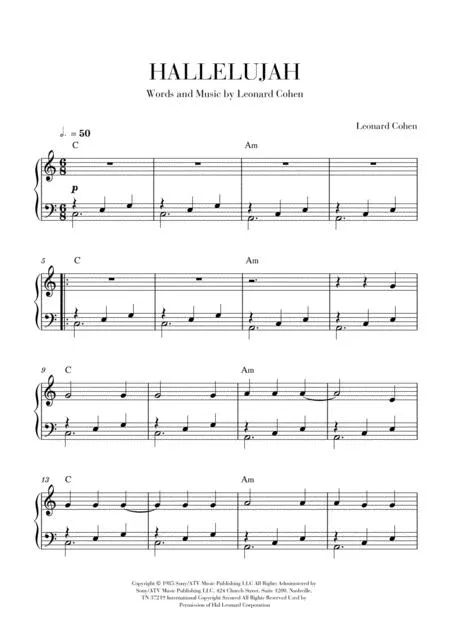
Understanding what distinguishes each level helps you pick hallelujah piano sheet music that matches your current technique without frustration or boredom.
Beginner Versions: Simplified Melody and Block Chords
Beginner hallelujah piano sheet music easy arrangements strip the song to its essentials. You’ll typically find:
- Right hand melody only with letter names printed above the staff or inside the note heads
- Left hand block chords that change every one or two measures, often just root-position triads (C, F, G)
- No pedal markings or minimal sustain instructions
- Single-staff or grand-staff notation with very few ledger lines
These versions work well if you’re still learning to read both clefs simultaneously or if you want to sing along while playing a simple accompaniment. The hallelujah piano chords in beginner editions usually stay in C major or G major to minimize accidentals. Beginner piano arrangements often include finger numbers for every note, which helps reinforce proper hand position but can clutter the page once you no longer need them.
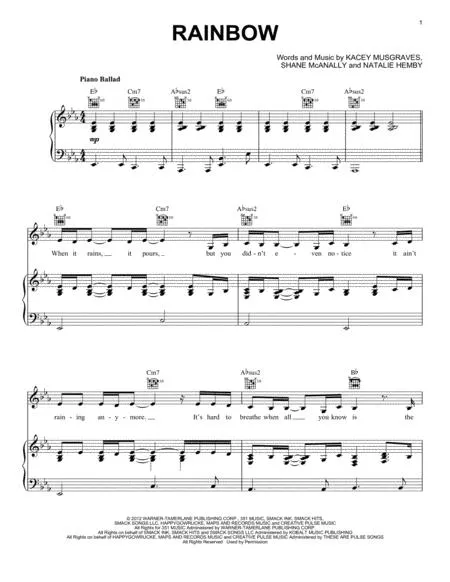
If you’re also exploring other accessible repertoire, check out praise music sheet music or rainbow sheet music for similarly approachable arrangements in the same genre.
Intermediate Editions: Arpeggios and Expressive Dynamics
Intermediate hallelujah piano sheet music introduces the flowing arpeggiated patterns that define most piano covers. Key differences include:
- Broken chord patterns in the left hand (often 1-5-3-5 or 1-3-5-3 fingerings) that create a harp-like texture
- Right hand embellishments such as grace notes, turns, or octave doublings in the chorus
- Dynamic contrast marked as piano, mezzo-forte, and crescendo to shape phrases
- Pedal notation showing where to sustain harmonies across measure lines
Intermediate versions often borrow phrasing from Jeff Buckley’s recording, adding syncopation and rubato cues that aren’t in Cohen’s original. Hallelujah piano sheet music intermediate arrangements typically span two to three pages and assume you can shift hand positions smoothly and read both clefs without hesitation.
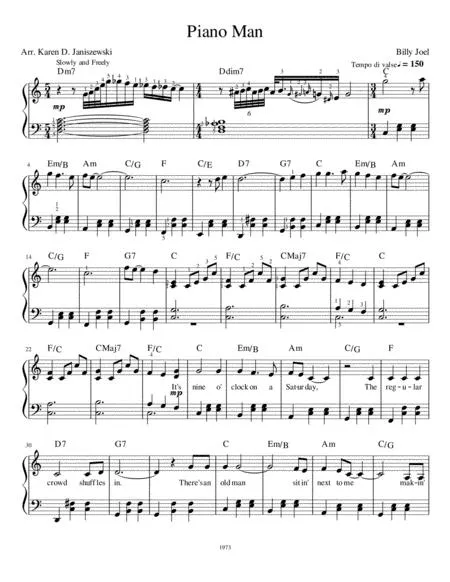
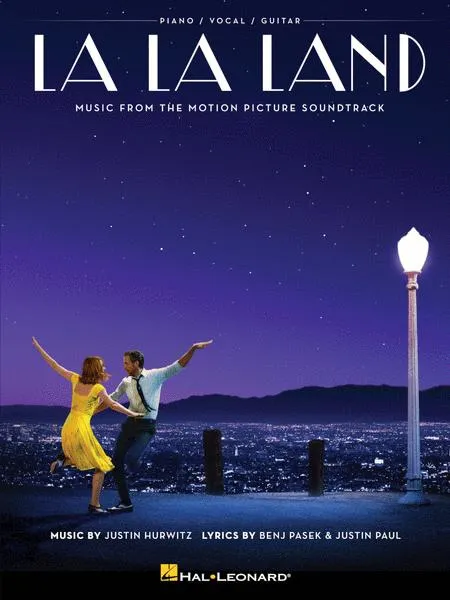
For a current discount on quality intermediate scores, grab the code before checkout. You’ll also find comparable difficulty in arrangements like piano man sheet music or la la land sheet music.
Advanced Arrangements: Reharmonization and Counterpoint
Advanced hallelujah piano sheet music treats the song as a canvas for virtuosic interpretation. These editions feature:
- Extended harmonies (ninths, elevenths, suspensions) that move beyond basic triads
- Countermelodies and inner voices that create polyphonic texture
- Wide hand stretches (tenths or beyond) and rapid scalar runs
- Tempo flexibility with fermatas, accelerando, and extensive rubato markings
Publishers label these as “concert” or “solo piano” versions. They’re designed for recital performance rather than casual practice, much like the technical demands of etude op 10 no 12 chopin or orchestral reductions such as dvorak symphony 8. If you’re comfortable with advanced repertoire, you’ll appreciate the expressive freedom these scores allow.
Some advanced editions also incorporate elements from the Shrek soundtrack orchestration, layering in string-like sustained notes or choir voicings. Check the latest versions at Open Sheet Music to compare arrangement styles.
Comparing Free vs. Paid Editions
| Feature | Free Versions | Paid Editions |
|---|---|---|
| Accuracy | Often user-transcribed; may have errors in rhythm or harmony | Professionally engraved and reviewed by editors |
| Difficulty labels | Inconsistent or missing | Clearly graded (beginner, intermediate, advanced) |
| Print quality | Variable resolution, sometimes scanned from handwritten copies | High-resolution, clean notation with proper spacing |
| Licensing | Ambiguous; may violate copyright depending on source | Fully licensed; supports composers and arrangers |
We recommend starting with a free resource like Scribd to preview the melody and chord structure, then investing in a paid arrangement that matches your skill level. Paid scores also include fingerings, articulation marks, and performance notes that accelerate learning. Visit the discount code page to save 15% on all orders at Open Sheet Music.
Matching Arrangement Style to Your Performance Goal
The right version depends on where you’ll play it:
- Casual home practice: Choose hallelujah piano sheet music easy editions with lyrics included so you can sing along
- Church or worship setting: Look for arrangements labeled “sacred” or compare praise music sheet music for similar devotional repertoire
- Recital or audition: Pick an intermediate to advanced version that showcases your dynamic control and pedaling technique
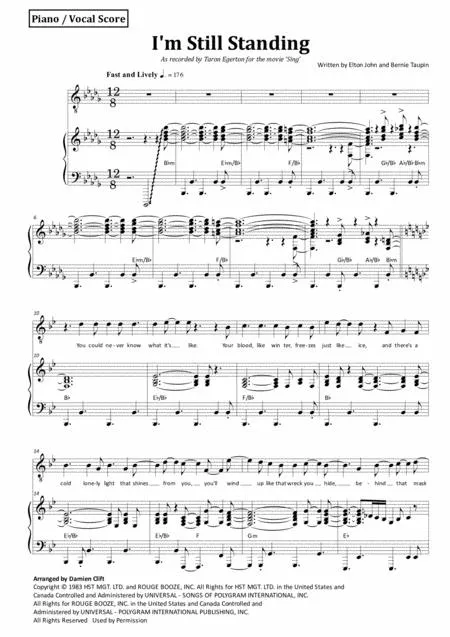
- Accompaniment for a singer: Select a vocal-piano score that prints both the vocal line and piano reduction on the same page; im still standing sing offers a similar format for pop vocal repertoire
If you’re working on multiple pieces, bundle your purchase with complementary scores like beethoven symphony 1 or mozart serenade k 525 to round out your classical library.
How to Preview Before You Buy
Before committing to any arrangement, check these details in the sample pages most retailers provide:
- Key signature: Easier versions use C, G, or F major; harder editions may modulate or use remote keys
- Tempo marking: “Slowly” or “Andante” suits beginners; “Freely” or “Rubato” implies interpretive freedom for advanced players
- Page count: One to two pages signals simplification; four or more pages usually means advanced content
- Chord symbols: Printed above the staff (C, Am, F, G) help if you want to improvise or adapt the voicing
Most digital sheet music platforms let you view the first page or hear a MIDI playback. Compare a few editions side by side to see which layout feels clearest to you. For instant access and a 15% discount, check current pricing at Open Sheet Music.
Our Recommendation
Start with an intermediate arrangement if you’ve been playing for two or more years. These versions capture the song’s emotional arc without overwhelming your technique, and you can always simplify the left hand or add your own embellishments. If you’re brand new to piano, a beginner edition with letter-name cues will build your confidence, but plan to graduate within a few months to avoid losing interest. Advanced players should seek out concert arrangements that challenge your interpretive skills and give you room to make the piece your own.
Whatever your level, matching the arrangement to your ability ensures you’ll enjoy learning one of the most beloved songs in modern piano repertoire.
Questions
Why does hallelujah piano sheet music come in so many versions?
Arrangers create different versions to suit beginner, intermediate, and advanced players, and to reflect interpretations by Leonard Cohen, Jeff Buckley, or the Shrek soundtrack. Each version adapts the melody, harmony, and texture to match specific skill levels and performance contexts.
What makes an arrangement beginner versus intermediate?
Beginner editions use block chords in the left hand, simple melody in the right, and minimal pedal or dynamic markings. Intermediate versions add arpeggiated patterns, embellishments, expressive dynamics, and assume fluent two-hand reading.
Are free Hallelujah piano scores accurate?
Free versions vary widely in accuracy because many are user-transcribed. Paid editions from established publishers are professionally engraved, clearly graded by difficulty, and fully licensed, which supports the composer and ensures correct notation.
Which key is easiest for learning Hallelujah on piano?
C major and G major are the most common keys for beginner arrangements because they minimize sharps and flats. More advanced editions may modulate or use alternate keys to suit vocal range or interpretive goals.
Can I use a vocal-piano score if I am playing solo?
Yes, vocal-piano scores work for solo playing. The piano part functions as a complete accompaniment, and you can ignore the vocal line or use it as a guide for phrasing and dynamics.
How do I know if an advanced arrangement is too hard for me?
Preview the sample pages and look for wide hand stretches (tenths or larger), rapid runs, complex pedal patterns, or dense chords with five or more notes. If you struggle to sight-read the first system at a slow tempo, the arrangement is likely above your current level.
Products in this guide
 Shopping at Open Sheet Music? See the discount code
15% OFF All Orders
Shopping at Open Sheet Music? See the discount code
15% OFF All Orders
More in this series
How Long Does It Take to Master Beethoven’s Waldstein Sonata Op. 53?3 Sep 20265 min The Best Sheet Music Editions of Mozart’s Piano Sonata No. 11 (K. 331)3 Sep 20265 min
 What Makes Paganini Caprice No. 24 So Difficult for Violinists?3 Sep 20265 minDvorak Symphony No. 8 vs. Beethoven Symphony No. 1: Which Orchestral Score Should You Conduct First?3 Sep 20265 minHow to Learn Chopin Etude Op. 10 No. 12: Practice Tips for the Revolutionary Etude3 Sep 20265 min