 A Flash Fish Tech guide
FlashFish 100W Solar Panel Charging Time: How Long Each Power Station Takes
How long a FlashFish 100W solar panel takes to charge a power station depends on the station's input limit: about 4 hours for the E200, 2 for the E103 in ideal sun.
FlashFish 100W solar panel charging time depends less on the panel than on the power station: each station takes solar power only up to its own input limit. With perfect sun, the E200 (151Wh, 40W solar limit) needs a little under 4 hours from empty and the E103 (179.2Wh, 90W limit) about 2 hours, and real days take longer. You can find the current code on our Flash Fish Tech discount code page.
The Rule: The Station’s Input Limit Decides
A solar panel’s rating is the most it can produce in ideal light. The power station then accepts only as much as its charge input allows. The charging power you actually get is the lower of the two, and weather pulls it down further.
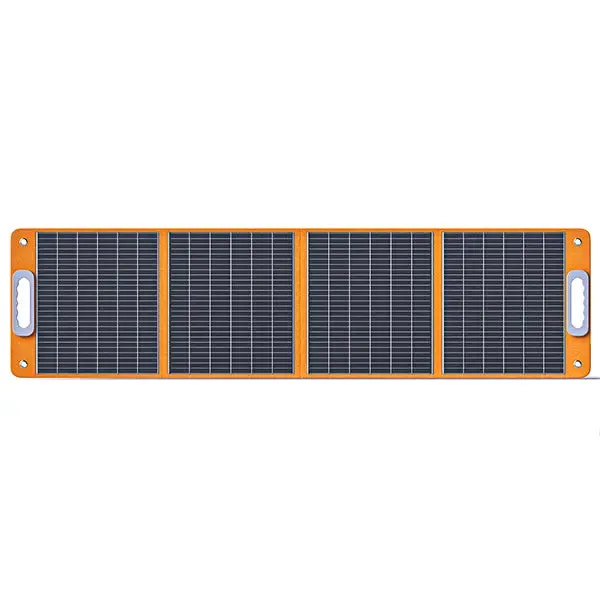
The FlashFish TSP100 solar panel is a foldable 100W monocrystalline panel with an 18V DC output and 5.6A current, according to FlashFish. That 18V output sits inside the solar input range of the FlashFish stations below. But pairing a 100W panel with a station that accepts 40W still gives you, at most, 40W.
So the ideal charging time from empty is simple arithmetic: the station’s watt-hours divided by whichever is lower, the panel’s watts or the station’s input limit. Treat the result as a best case.
Charging Time by FlashFish Model
| Station | Capacity | Solar input listed | Ideal time with a 100W panel |
|---|---|---|---|
| FlashFish E200 | 151Wh | 11 to 24V, max 40W | a little under 4 hours (151 / 40) |
| FlashFish E103 | 179.2Wh | 90W DC or solar | about 2 hours (179.2 / 90) |
| FlashFish A201 | 172.8Wh | 18 to 24V (max watts not listed) | not listed by FlashFish |
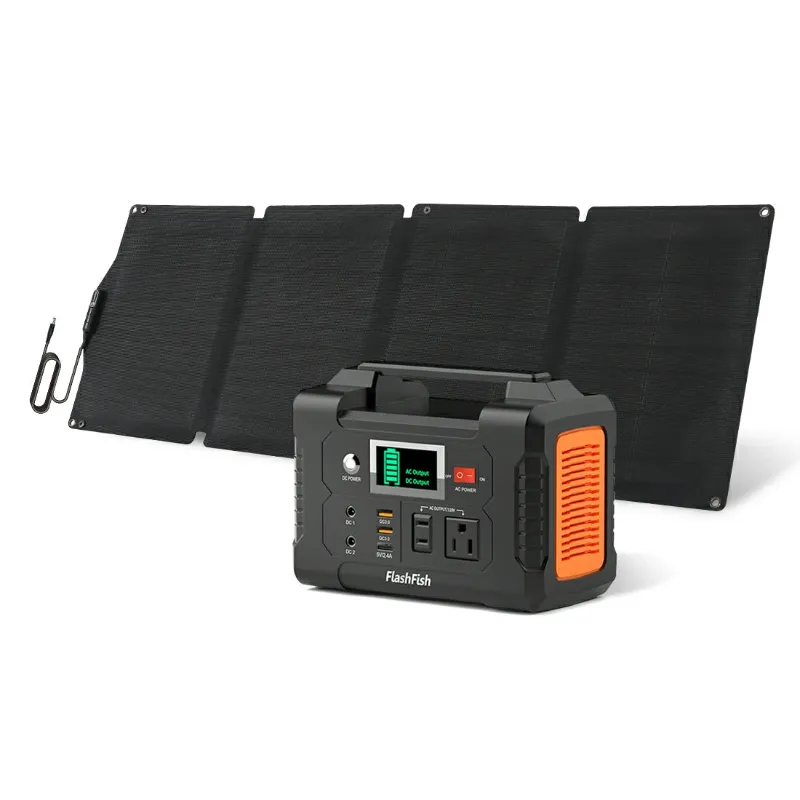
The capacity and input figures come from the FlashFish product pages. The last column is arithmetic, not a measured result. The E200 is the clearest case: its solar input tops out at 40W, so a 100W panel and the 60W panel in the E200 and SP60 kit both charge it at no more than 40W. FlashFish says so directly on the kit page.
The E103 can use more of the panel’s output, which is why it refills faster from the same panel even though its battery is larger. FlashFish also lists up to 190W of combined AC and DC input for the E103, with about 70 minutes for that combined setup.
What Slows Solar Charging Down
FlashFish notes that solar charging depends on sunlight angle, temperature, weather, panel placement and the connected station’s input limit. In practice that means:
- Sun angle: a panel facing the sun square-on collects more than one lying flat, especially in the morning and late afternoon.
- Shade: even a branch or tent edge across part of the panel cuts its output sharply.
- Cloud: overcast skies reduce output a great deal, so a sunny-day estimate can stretch across a whole day.
- Heat: panels produce less when very hot, and the power station should stay in the shade while it charges.
- Folding: FlashFish’s panel guidance is to fully unfold the panel and face it toward direct sunlight.
Getting the Most From the TSP100
- Fully unfold the panel (FlashFish lists it at 1562.1 x 402 mm unfolded) and prop it so it faces the sun.
- Move it every couple of hours to follow the sun.
- Keep the panel clean and dry, and use the supplied cable or one with the right connector and polarity.
- Put the station in the shade next to the panel, not in direct sun.
- Remember that the panel stores nothing itself; FlashFish points out that it only produces power while light falls on it.
The TSP100 also has a 65W USB-C PD output and an 18W USB-A output, so on a trip you can charge a phone straight from the panel while the station charges from another source. FlashFish advises not to bend, immerse or pierce the panel, and not to connect it directly to a car battery.
Solar vs Wall vs Car Charging
- Wall: the E200 uses a 15V/2.4A wall adapter. FlashFish lists 6 hours for the A201 with its 15V/2A adapter. For a trip, start with a full charge from the wall.
- Car: the E200 and A201 can both be charged from a car, which is useful between campsites.
- Solar: the only option off the grid, and free once you own the panel, but it needs time and sun.
For multi-day camping, the practical plan is to leave home full, top up with solar during the day, and match the station to your needs: an E200 suits light loads with steady daily top-ups, while the E103 makes better use of a 100W panel.
Questions
How long does a 100W panel take to charge the FlashFish E200?
In ideal sun, a little under 4 hours from empty, because the E200 accepts no more than 40W of solar input (151Wh divided by 40W). Real days take longer.
Why doesn't a bigger panel charge my E200 faster?
FlashFish lists the E200's solar and DC input as limited to 40W. A larger panel can produce more, but the E200 will only take up to 40W.
Which FlashFish station charges quickest from solar?
Of the models with a listed limit, the E103, which accepts up to 90W of DC or solar input. In ideal sun that is about 2 hours from empty for its 179.2Wh battery.
Can the FlashFish TSP100 charge my phone directly?
Yes. FlashFish lists a 65W USB-C PD output and an 18W USB-A QC 3.0 output on the panel, alongside its 18V DC output.
Should the power station sit in the sun while it charges?
No. Put the panel in direct sun and keep the power station in the shade nearby, since heat is hard on batteries.
Products in this guide
Shopping at Flash Fish Tech? See the discount code
10% OFF All Orders
More in this series
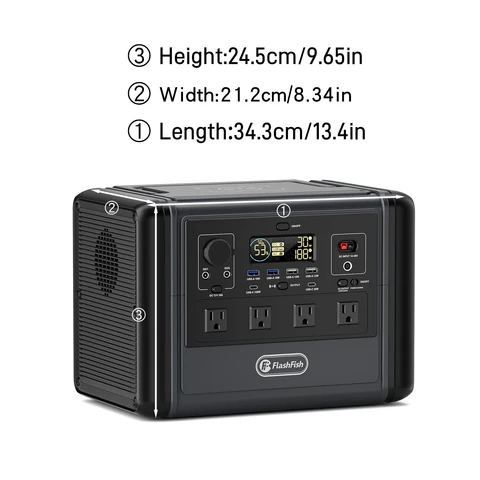 What Can the FlashFish T1200S 1200W Power Station Run?18 Aug 20263 min
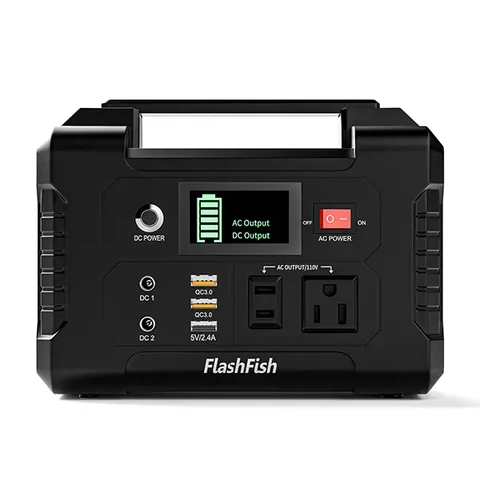 FlashFish E200 CPAP Use: Can It Run a CPAP Machine Overnight?18 Aug 20263 min
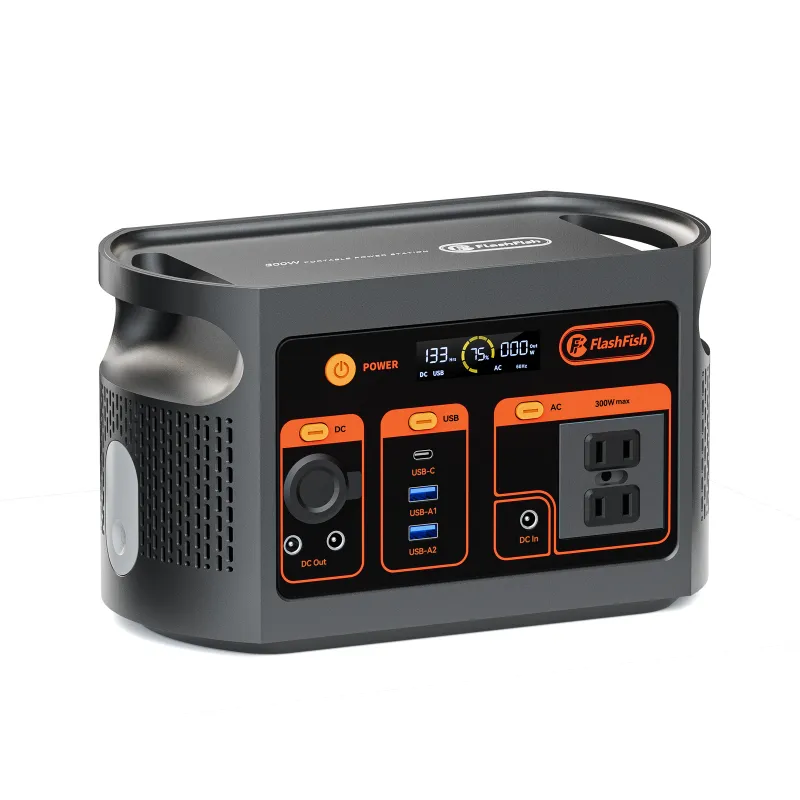 FlashFish E200 vs E103: Which Power Station Has Better Battery Life?18 Aug 20263 min
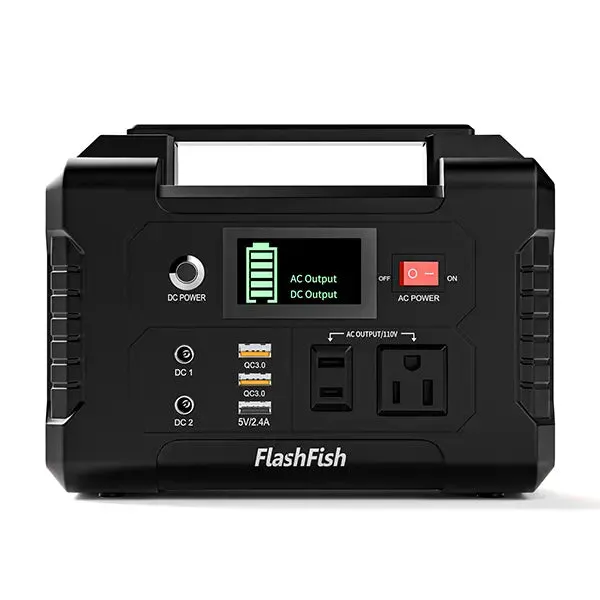 How to Choose the Right FlashFish Power Station for Camping18 Aug 20263 minFlashFish E200 vs A201: Which 200W Power Station Is Right for You?18 Aug 20263 min