 A VIFLY Drone guide
How Beepers and Lights Help You Find a Lost Drone
Drone lights and audible buzzers are the two most reliable ways to locate a lost quad, but each works best in different crash scenarios.
Drone lights and audible buzzers solve different recovery problems. Lights help you track a quad during flight and spot it at dusk, while beepers guide you to a crash site hidden in tall grass, behind brush or under a canopy where visual scanning fails. Most recovery kits combine both, since a single tool rarely covers every crash scenario.
Why you generally need both visual and audible tools
Drones are typically lost in three situations: landing in tall vegetation where the frame disappears below the grass line, crashing behind obstacles that block line of sight, and flying at dusk when a dark frame blends into shadows. Visual markers work until the sun sets or the quad drops below cover. Audio beepers work as long as you stay within hearing range and the battery holds power.
Beepers and buzzers for hidden crashes
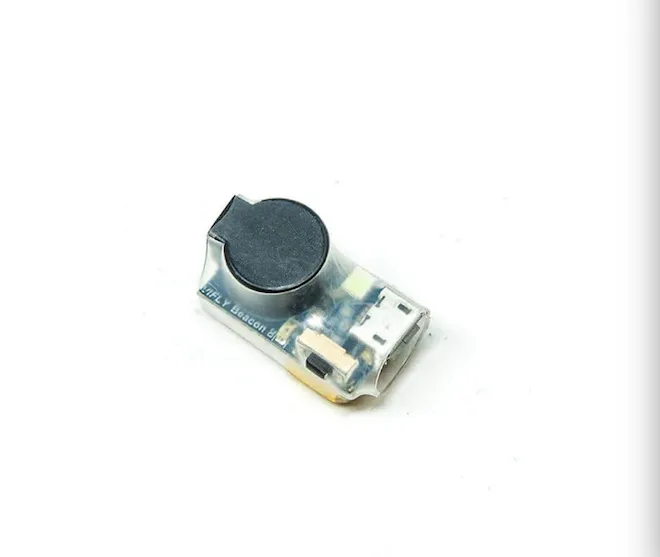
A lost-model alarm activates when your radio signal drops or you flip a switch. The drone lost buzzer battery powers a piezo sounder built to carry over a reasonable distance in open fields, though dense brush will muffle it more than open ground.
The VIFLY vynel combines a beeper with a secondary low-battery alarm, so if the main pack dies before you reach the crash site, a dedicated buzzer cell keeps sounding on its own reserve.
Key beeper features to prioritize:
- Volume rating: a louder rated unit generally cuts through wind and distance better
- Standalone battery: a separate cell keeps sounding even after a dead-battery crash
- Mounting flexibility: adhesive backing or zip-tie holes let you fit the unit into tight frames
- Activation modes: look for both signal-loss auto-trigger and a manual switch override
Beepers add a small amount of weight to any build, which most pilots accept given how much cheaper a buzzer is than replacing a lost quad.
Visual markers for twilight and open-field recovery
Drone lighting helps in two scenarios: tracking a quad against a dark sky during late evening sessions, and scanning open fields where tall grass hides the frame but a flashing strobe rises above the vegetation. Anti-collision strobes serve double duty as recovery beacons and, for pilots who need it, legal night-flying markers; FAA rules generally require a strobe visible from at least three statute miles for lawful night operations, so check the specific rating before relying on one for that purpose.
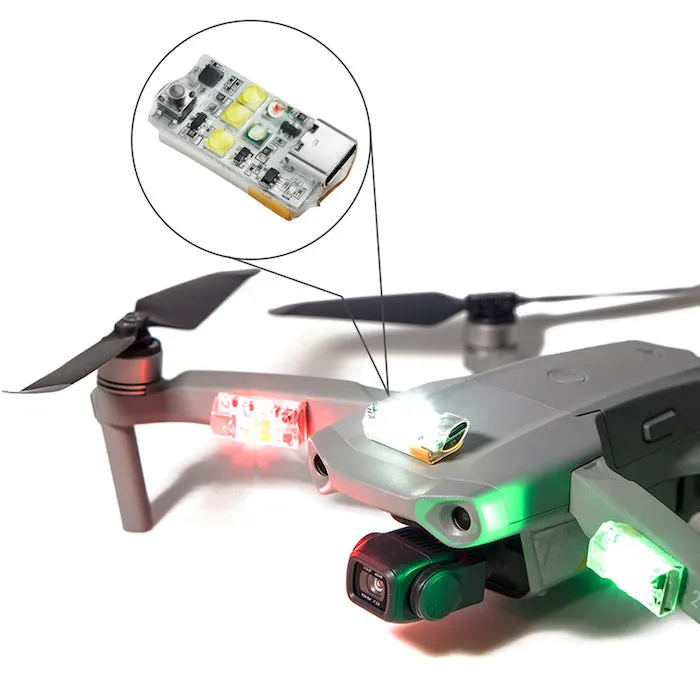
The aries drone strobe light and similar drone strobe light units mount to arms or the rear plate and flash white or multi-color. White generally offers the best visibility at distance, while colored modes can help with orientation during flight but wash out in daylight.
| Feature | Strobe Light | Continuous LED Strip |
|---|---|---|
| Typical power draw | Very low | Higher |
| Flight time impact | Minimal | Noticeable |
| Best recovery use | Dusk visibility at distance | Full darkness, close range |
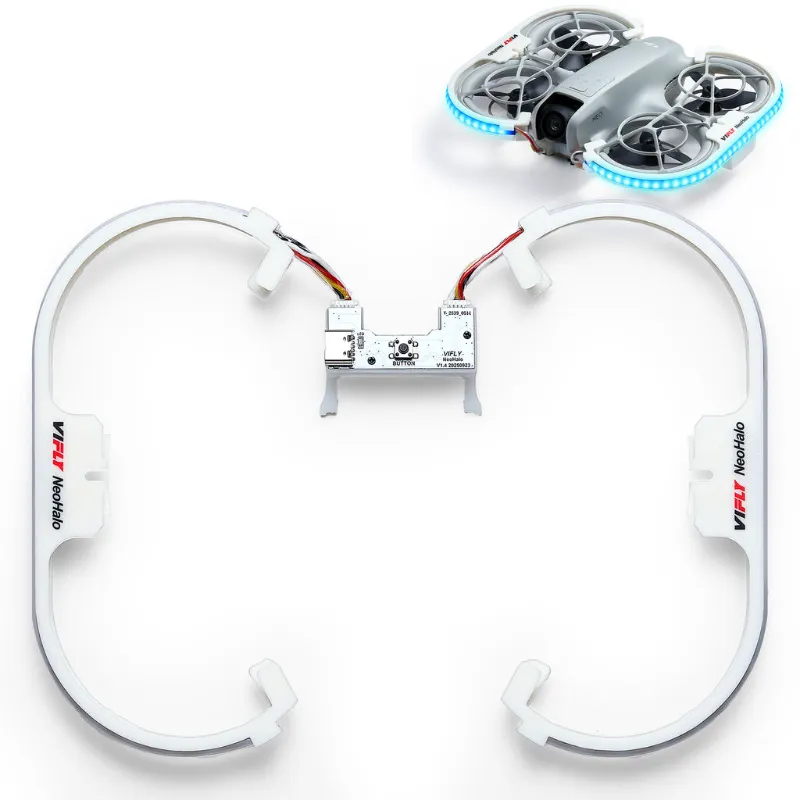
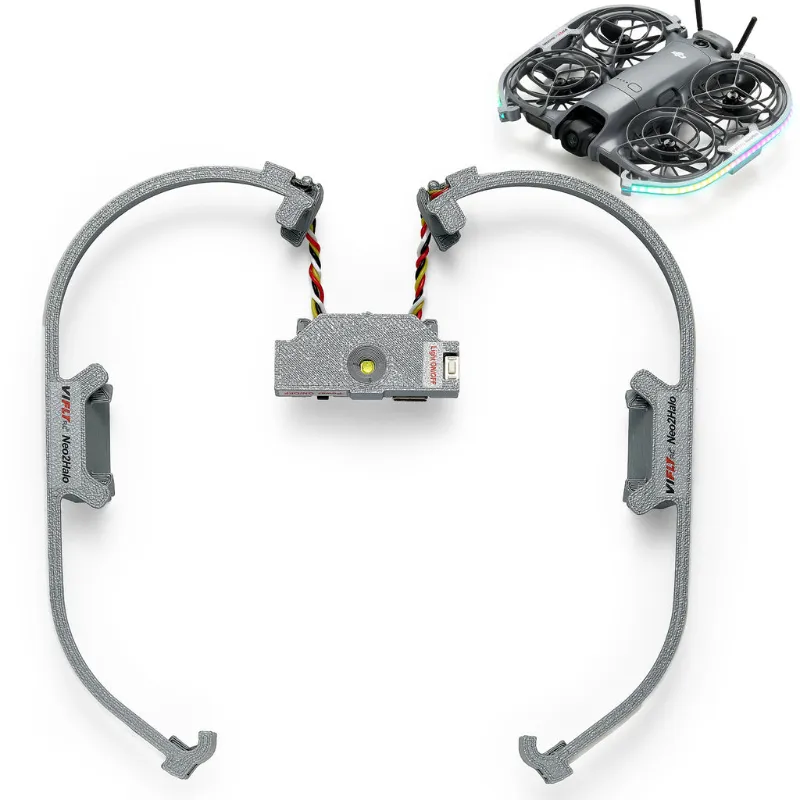
Drone LED lights draw more current but illuminate the frame for FPV orientation and make night flying easier. The neo light uses addressable RGB strips for custom patterns, which suits cinematic night rigs better than racing builds where every gram and milliamp-hour counts.
For pilots who need FAA Part 107 compliance or fly recreationally after sunset, UAV anti collision lights are built around that three-statute-mile visibility requirement, but confirm the specific product’s rating before relying on it.
Choosing the right system for your flying style
Match your recovery tools to your typical crash environment:
- Freestyle or proximity flying: prioritize a loud beeper with a backup battery, since crashes often happen behind obstacles; add a small drone strobe for late sessions
- Long-range or exploration: mount a strobe on the tail and carry a loud beeper, since distance reduces both audio range and visibility
- Night flying or cinematography: install continuous drone lighting for visibility, with a beeper as backup
- Racing: minimize weight with a compact beeper only, since race events rarely run past dusk
Installation tips that keep recovery gear working
Mount beepers where they will survive impact. The nose and bottom plate absorb the most crash energy, so the rear top plate or a spot behind the battery is generally safer. Adhesive foam tape works for light buzzers; anything heavier generally needs a zip tie through frame standoffs.
Check your buzzer battery periodically and replace it once a season, or sooner if a crash triggers the alarm for an extended stretch. Strobes mount to arms, rear rails or the top plate; angle the unit upward so the flash is visible from above while you are walking a search pattern.
Wire LED strips to a free voltage pad matching the product spec, and use heat-shrink tubing over solder joints to help prevent shorts during a crash. Route wires along arms or under the top plate, away from propeller paths.
When to rely on each recovery method
Start every search with a visual scan of the area around your last known position, watching for a strobe or reflective frame edge. If you do not spot the quad quickly, switch to audio: cup your ears to cut wind noise and rotate slowly to triangulate the beeper’s direction.
Lights generally work best at dusk and in open areas; beepers work day or night but only within hearing range of the crash. If you fly sunset sessions often, check the latest price on a combo setup that includes both a strobe and a buzzer with a backup battery.
Building your own recovery kit
A reasonable starting point is a drone lost buzzer battery on every build, adding an aries drone strobe light to any quad you fly regularly after dark. Start with a standalone buzzer for the audio safety net, then add lights for night flying or long-range visibility. Check the current code and build redundancy into your recovery toolkit before your next crash turns into a permanent loss.
Questions
Do drone lights help you find a lost quad during the day?
Strobes and LED lights offer limited help in bright daylight unless the quad is in an open field where the flashing stands out. Beepers are generally more reliable for daytime recovery because sound cuts through vegetation and obstacles that block your line of sight.
How long does a drone lost buzzer battery last after a crash?
Runtime depends on the specific unit's cell capacity; check the product page for the rated hours. If your main flight pack dies in the crash, a separate buzzer cell is built to keep sounding long enough for you to walk a search grid.
Can I use a strobe light to meet FAA night flying requirements?
Possibly, if the strobe is visible for at least three statute miles and flashes at a rate sufficient to avoid collision, which is the general FAA standard. Verify the specific product's visibility rating before relying on it for Part 107 or recreational night operations.
Where should I mount a beeper so it survives a crash?
Mount it on the rear top plate or behind the battery strap, away from the nose and bottom plate that absorb the most impact. Use a zip tie through frame standoffs for heavier units, and adhesive foam for lighter buzzers.
Do LED light strips reduce flight time more than strobes?
Generally yes. Continuous LED strips draw noticeably more power than low-draw strobes, so a strobe gives you visibility with less impact on flight time, which matters for racing or long-range flying.
What is the best combination of recovery tools for freestyle flying?
Freestyle pilots generally benefit most from a loud beeper with a backup battery, since crashes often happen behind obstacles or in tight gaps where visual scanning fails. Add a compact strobe if you fly late sessions.
Products in this guide
 Shopping at VIFLY Drone? See the discount code
5% OFF Sitewide
Shopping at VIFLY Drone? See the discount code
5% OFF Sitewide
More in this series
How Long Do VIFLY Drone Strobes Last on a Single Charge?15 Aug 20264 minThe Complete Guide to FAA-Compliant Anti Collision Lights for Drones15 Aug 20266 minDo Drone Strobe Lights Really Improve Night Flight Visibility?15 Aug 20263 min VIFLY Smoke Stopper vs Traditional Fuses: Which Protects Your Drone Better?15 Aug 20265 minHow to Safely Discharge and Store Your 1S LiPo Batteries15 Aug 20264 min