 A VIFLY Drone guide
The Complete Guide to FAA-Compliant Anti Collision Lights for Drones
UAV anti collision lights are required by the FAA for all drone flights between civil twilight and sunrise, ensuring your aircraft remains visible to manned aviation and other pilots.
UAV anti collision lights are required by the FAA for all drone flights between civil twilight and sunrise, ensuring your aircraft remains visible to manned aviation and other pilots. Whether you’re flying commercially under Part 107 or recreationally, understanding anti collision lights requirements and choosing the right system keeps you compliant and safe.
Understanding FAA Anti Collision Light Requirements
The FAA mandates that all drones flown at night must have anti collision lighting visible for at least three statute miles. This applies to both recreational and commercial operations. The lights must have a flash rate sufficient to avoid collision, though the FAA does not specify an exact flash frequency.
Key requirements include:
- Visible from at least 3 statute miles away
- Must be present on the drone itself, not the pilot
- Required for any flight during civil twilight or darker conditions
- Must remain functional throughout the entire flight
According to official FAA guidance, white strobes are most common, but other colors are permitted as long as they meet visibility standards. Most pilots choose white or green strobes because they’re easily visible and don’t interfere with obstacle avoidance sensors on modern drones.
Best Drone Anti Collision Lights for Night Flying
Choosing the right drone lights for night flying depends on your aircraft size, flight duration, and mounting options. We’ve found these solutions offer the best balance of visibility, weight, and reliability.
| Light Model | Weight | Mounting | Visibility Range |
|---|---|---|---|
| Aries Drone Strobe | Ultra-light | Adhesive/Velcro | 3+ miles |
| Neo Light | Lightweight | Clip/adhesive | 3+ miles |
| Standard Drone LED | Minimal | Adhesive | 2-3 miles |
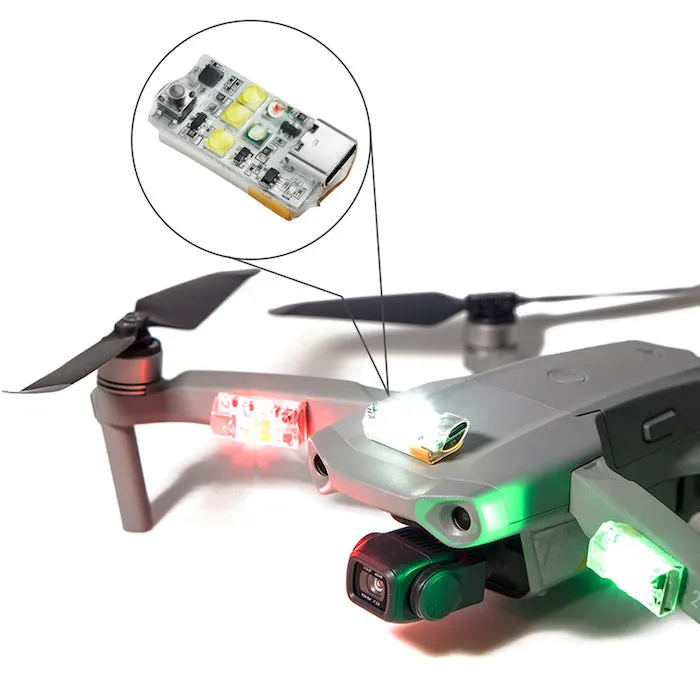
The aries drone strobe light stands out for its combination of brightness and minimal weight impact, making it ideal for smaller racing and freestyle drones. For larger platforms like Mavic or Phantom series, the neo light provides excellent 360-degree visibility with multiple mounting options.
Weight matters significantly. A strobe that adds 15 grams to a 250-gram racing quad affects flight characteristics noticeably, while the same weight is negligible on a 900-gram camera drone. Always check your drone’s payload capacity before adding accessories.
Battery life varies widely across models. Most quality drone led lights run for 3-8 hours on a charge, which covers multiple flight sessions. Some integrate with your drone’s main battery, while others use independent coin cells or small lithium batteries. For extended operations, grab a drone lost buzzer battery as a backup power source that serves double duty.
Check current pricing and grab our discount code to save on any VIFLY lighting solution.
How to Install Anti Collision Lights on Your Drone
Most drone lighting systems install in minutes without tools or modifications. The goal is secure attachment that doesn’t obstruct sensors, props, or vents while maintaining visibility from all angles.
Standard installation steps:
- Clean the mounting surface with isopropyl alcohol to remove oils and dust
- Position the light where it’s visible from below and sides (top of fuselage or arm)
- Avoid placement near GPS modules, which can experience interference
- Secure with the included adhesive, Velcro strap, or zip tie
- Test the light before flight and verify it doesn’t trigger obstacle avoidance warnings
For carbon fiber frames, adhesive sometimes struggles with the weave texture. In these cases, a small piece of fiberglass tape as a base layer improves adhesion. Some pilots use heat-shrink tubing over strobe lights mounted to arms, which protects the unit and creates a cleaner look.
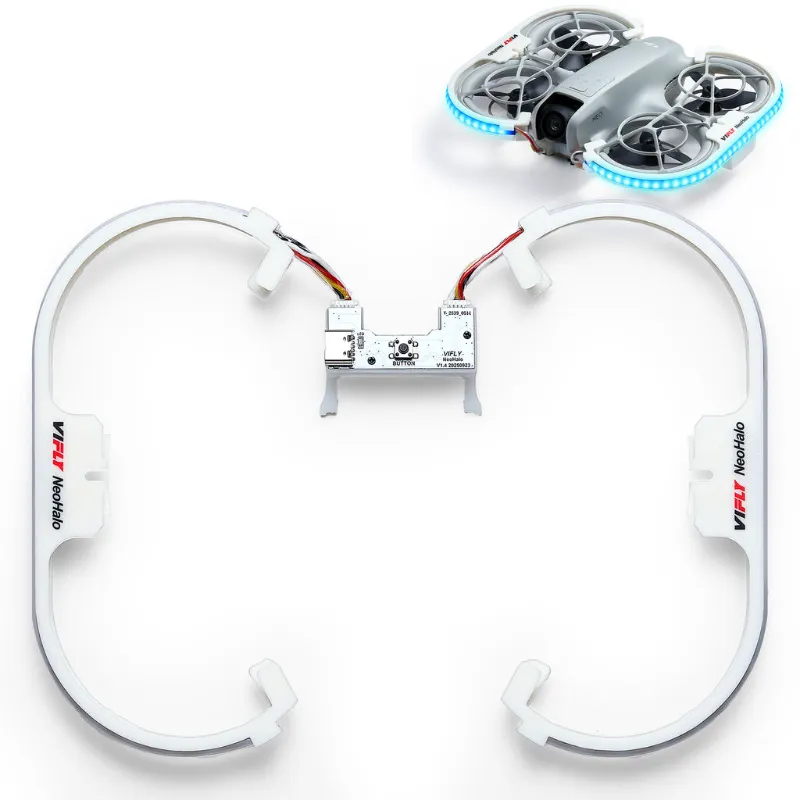
The VIFLY vynel system offers a versatile mounting approach that works across multiple frame types and allows quick repositioning when you upgrade your drone. We’ve found top-rear mounting on the main body provides the best omnidirectional visibility without interfering with downward sensors.
Anti Collision Lights vs Other Drone Safety Accessories
While anti collision lights aircraft standards focus on visibility to prevent mid-air collisions, pilots often pair lighting with other safety gear for comprehensive protection.
A complete safety kit typically includes:
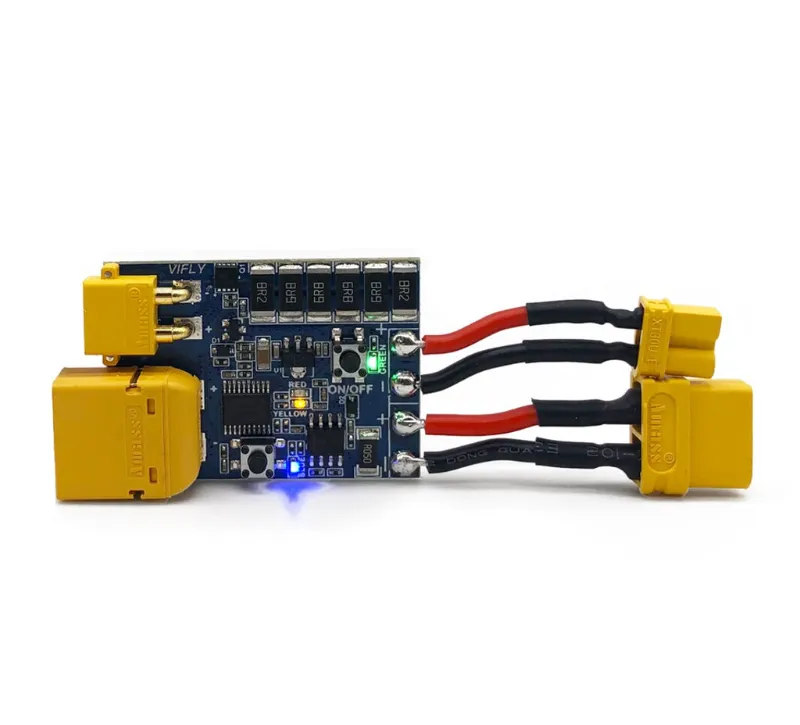
- Anti collision strobe – FAA compliance and visibility
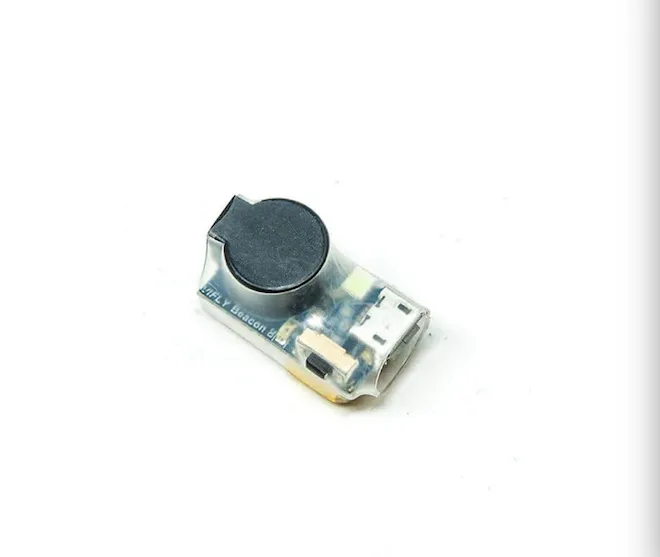
- Drone lost buzzer battery – Audible location after crashes in tall grass or trees
- Smoke stopper – Prevents catastrophic damage from wiring shorts
- 1s discharger – Safe storage of LiPo batteries between flights
These accessories complement your uav anti collision lights by addressing different failure modes. A strobe keeps you legal and visible, while a lost buzzer helps recovery when things go wrong. The smoke stopper protects your electronics investment, especially when testing new builds or after crashes.
Many pilots skip the lost buzzer, assuming GPS will locate their drone. In practice, GPS accuracy drops to 3-5 meters in challenging conditions, and a drone strobe alone won’t help you spot a quad buried in underbrush. The buzzer’s piercing tone cuts through ambient noise and pinpoints your aircraft within seconds.
Maintaining Compliance During Different Flight Conditions
Weather and environment affect how your anti collision lighting performs. Rain, fog, and snow scatter light differently than clear air, sometimes reducing your effective visibility range below the 3-mile requirement.
Visibility tips by condition:
- Fog or haze – Brighter isn’t always better; extremely intense strobes create glare that reduces effective range. A moderate-intensity strobe with a fast flash rate penetrates better.
- Rain – Water on the strobe lens dims output significantly. Choose sealed, waterproof drone lights rated IP65 or higher.
- Snow – White strobes blend with snow-covered ground when viewed from above. Consider a colored strobe for winter operations.
- Urban night flying – Competing light sources (streetlights, buildings, traffic) make your drone harder to spot. Use the brightest compliant strobe available and consider dual strobes for redundancy.
Pre-flight checks should include verifying your strobe is clean, charged, and functioning at full brightness. According to testing by experienced pilots, even a thin film of dust or fingerprint oil can reduce output by 20-30%.
Battery performance drops in cold weather. If you fly in temperatures below 40°F (4°C), your strobe’s runtime may decrease by half. Carry spares or choose models with replaceable batteries that you can swap mid-session.
Choosing the Right System for Your Operation
Commercial operators flying multiple drones need a different approach than recreational pilots with a single aircraft. Your operation type determines which features matter most.
For Part 107 commercial work:
- Prioritize reliability over weight savings
- Choose strobes with replaceable batteries for back-to-back flights
- Consider redundant lighting (two smaller strobes instead of one bright unit)
- Keep documentation showing your lights meet the 3-mile visibility standard
For recreational and racing:
- Weight is critical; every gram affects performance
- Integrated systems that draw from your main battery reduce complexity
- Quick-release mounts let you remove lights for daytime flying
- Bright, short-duration flashes minimize distraction in FPV goggles
The drone anti collision light requirements apply equally to all operations, but enforcement and documentation standards differ. Commercial operators should photograph their lighting setup and maintain records of light model, specifications, and replacement dates.
Visit our coupon page to see current deals on all VIFLY safety and lighting accessories, including bundle discounts when you combine strobes with other essential gear.
Integration with Modern Drone Systems
Newer drones with obstacle avoidance and automatic landing systems sometimes react to bright strobes as obstacles or navigation hazards. We’ve encountered this primarily with strobes mounted on forward-facing arms or too close to sensors.
If your drone suddenly refuses to land or shows obstacle warnings when none exist, the strobe position is likely the culprit. Moving the light to the top-rear of the fuselage, away from downward and forward sensors, typically resolves the issue.
Some pilots wire their drone led lights to activate automatically when the drone arms, then deactivate on disarm. This requires basic soldering skills and integration with your flight controller’s LED pad or a switched voltage source. The approach ensures you never forget to activate your lights while keeping them off during bench work and testing.
For pilots less comfortable with electronics, manual-activation strobes with a physical switch remain the simplest reliable option. Set a pre-flight checklist that includes “strobe on” as the final item before takeoff, just like manned aviation pilots verify their position lights before taxi.
Questions
Are UAV anti collision lights legally required for all night drone flights?
Yes, the FAA requires anti collision lighting visible for at least three statute miles on all drones operated between civil twilight and sunrise, whether flying commercially or recreationally. The lights must be mounted on the aircraft itself, not carried by the pilot.
Can I use any color strobe light for FAA compliance?
The FAA does not mandate a specific color, but the light must be visible for three statute miles and have a sufficient flash rate to avoid collision. White and green strobes are most common because they provide maximum visibility and typically don't interfere with modern drone sensors.
How do I know if my drone strobe light meets the 3-mile visibility requirement?
Most quality aviation strobes designed for drones explicitly state their visibility range in the specifications. If unsure, test your strobe at dusk by having an observer move away while you note when it becomes difficult to see, or choose lights that advertise FAA compliance.
Will adding anti collision lights affect my drone's flight time?
Lightweight strobes typically add 8-20 grams and have minimal impact on flight time, usually reducing it by 30-60 seconds on a 20-minute flight. Independent battery strobes don't draw from your drone's main battery, so they affect flight time only through added weight.
Where should I mount the strobe light on my drone?
Mount your strobe on the top-rear of the fuselage or on an upper arm where it's visible from below and all sides. Avoid placement near GPS modules, downward sensors, or forward obstacle avoidance cameras, as bright strobes can interfere with these systems.
Do I need anti collision lights if I'm flying with a waiver?
Even with a Part 107 night waiver, anti collision lighting visible for three statute miles remains mandatory. The waiver allows night operations but does not exempt you from the lighting requirement, which is a separate safety regulation.
Products in this guide
 Shopping at VIFLY Drone? See the discount code
5% OFF Sitewide
Shopping at VIFLY Drone? See the discount code
5% OFF Sitewide
More in this series
How Long Do VIFLY Drone Strobes Last on a Single Charge?15 Aug 20264 minHow Beepers and Lights Help You Find a Lost Drone15 Aug 20264 minDo Drone Strobe Lights Really Improve Night Flight Visibility?15 Aug 20263 minVIFLY Smoke Stopper vs Traditional Fuses: Which Protects Your Drone Better?15 Aug 20265 minHow to Safely Discharge and Store Your 1S LiPo Batteries15 Aug 20264 min