 A VIFLY Drone guide
Anti Collision Lights for Drones: A Guide to the FAA Rules
Part 107 night and twilight flights need anti-collision lighting visible for 3 statute miles. Here is what the rule says and how the VIFLY Strobe fits it.
Anti collision lights for drones are required under the FAA’s Part 107 rules for any flight at night or during civil twilight: the drone must carry lit anti-collision lighting visible for at least 3 statute miles, with a flash rate sufficient to avoid a collision. VIFLY’s answer is the VIFLY Strobe, a 6 gram light that VIFLY says gives 3+ miles of visibility and meets the FAA rules for night flying. You can find the current code on our VIFLY Drone discount code page.
What the FAA Rule Requires
The lighting rule for commercial and other Part 107 flights is in 14 CFR 107.29. In plain terms:
- At night: you may fly only if the remote pilot has completed the updated initial knowledge exam or training under Part 107 (after April 6, 2021), and the drone has lit anti-collision lighting visible for at least 3 statute miles with a flash rate sufficient to avoid a collision.
- During civil twilight: the same lighting is required. Outside Alaska, civil twilight means the 30 minutes before official sunrise and the 30 minutes after official sunset.
- Dimming: the remote pilot may reduce the brightness of the lighting if that is safer in the conditions, but may not switch it off.
- Waivers: the rule says older night waivers stopped applying in 2021. Night flying under Part 107 now depends on the training and lighting requirements above.
The rule does not set a color or an exact flash rate. It sets a result: the light must be visible for 3 statute miles and flash often enough to help avoid a collision. If you fly purely for recreation, check the FAA’s current rules for recreational flyers, since they are set out separately from Part 107.
How the VIFLY Strobe Meets It
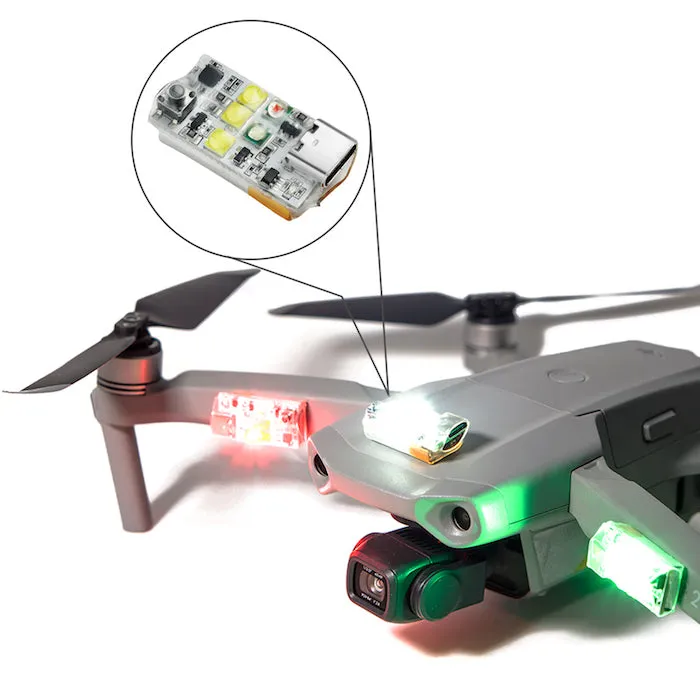
The VIFLY Strobe is built around that 3-mile figure. According to its product page:
| Spec | VIFLY Strobe (from the product page) |
|---|---|
| Visibility | 3+ miles, which VIFLY says meets the FAA rules for night flying |
| LEDs | 5 high-intensity 3W LEDs: 3 white, 1 red, 1 green |
| Weight | 5.9 g |
| Battery and run time | Built-in 160mAh battery, up to 4 hours in strobe mode |
| Charging | USB Type-C, about 1.5 hours |
| Size | 28 x 15 x 12 mm |
| Mounting | 3M Dual Lock included |
The strobe cycles through ten light modes: white, red and green each in strobe, flash and solid, plus all LEDs strobing. White strobe is the default. For night flying under Part 107, use a strobe mode, since the rule asks for a flash rate that helps avoid a collision.
VIFLY also sells the strobe with mounts for the DJI Mini 1 and 2 and for the DJI Mini 4, listed as options on the same page.
Mounting and Pre-Flight Checks
VIFLY says the strobe fits drones such as the DJI Mini 3 Pro, Mini 2, Air 2S and Mavic 3, and that you can mount it on the top or bottom with the included 3M Dual Lock or strap it to a landing leg. A few practical points help it do its job:
- Place it where it can be seen. The light only helps if other pilots can see it, so choose a spot that is not hidden by the body of the drone from the directions that matter most.
- Keep it clear of props, cameras and sensors. Make sure the strobe and its mount cannot touch a propeller, and that it does not sit in front of the camera or any obstacle sensors.
- Clean the surface before attaching. Dual Lock holds best on a clean, dry, oil-free surface.
- Charge it before you go. VIFLY lists up to 4 hours in strobe mode, and the product page says the indicator shows when to recharge.
- Switch it on before takeoff. Make “strobe on” part of your checklist and confirm it is flashing before the drone leaves the ground.
Adding weight changes how any small drone flies, so keep the whole setup light. At 5.9 g the strobe itself is small, but check your drone’s own guidance on accessories.
Other VIFLY Lights and Recovery Gear
VIFLY sells other gear that is useful at night but serves a different purpose, so it is worth knowing which is which:
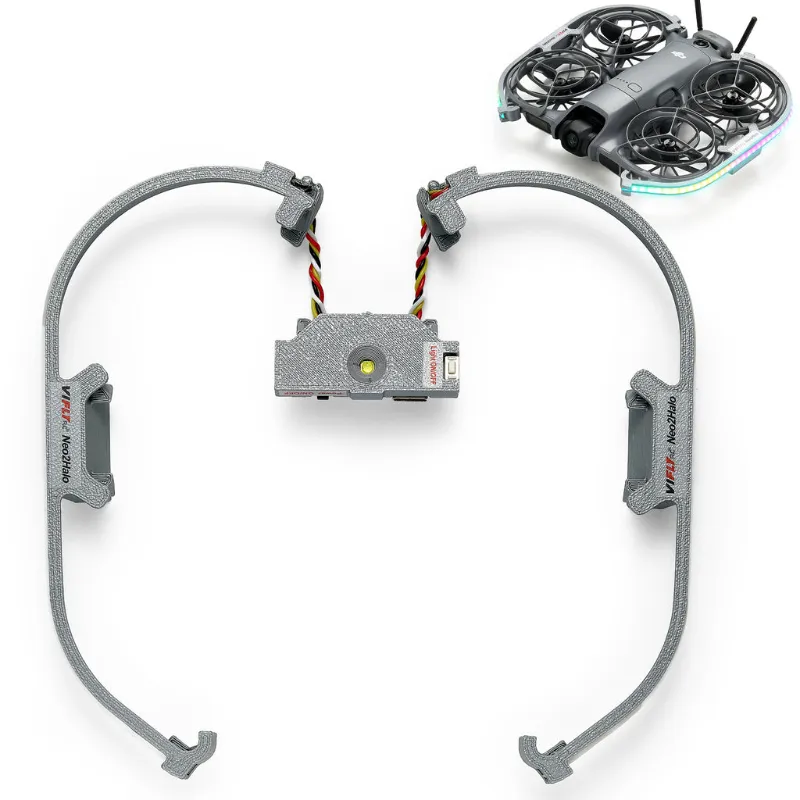
- Neo2Halo LED light strip: a snap-on ring of 80 LEDs for the DJI Neo 2 with 7 colors and 7 modes, plus a downward light. The product page lists about 60 minutes of run time in steady mode and a weight of 37 g. VIFLY sells it for light shows and position stability in the dark, and the page does not describe it as an FAA anti-collision light.
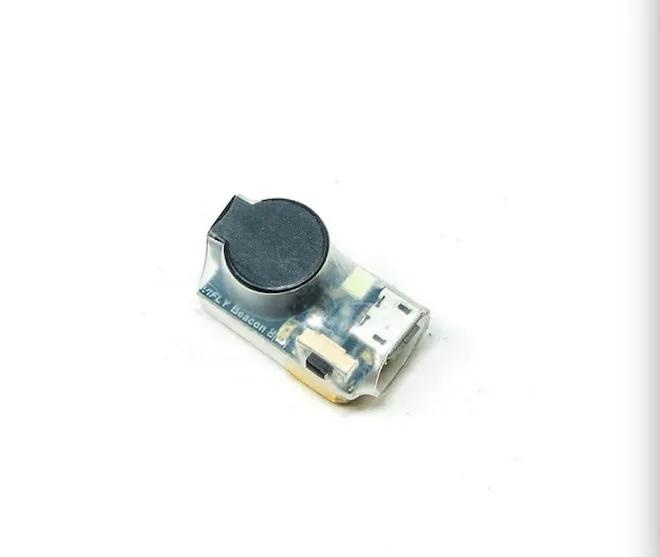
- VIFLY Beacon: a wireless buzzer that uses a motion sensor to sound an alarm after a crash, up to 105 dB, with an LED that flashes automatically in the dark. The page lists up to 30 hours of working time and a weight of 6 g. It helps you find a downed drone; it is not a substitute for anti-collision lighting.
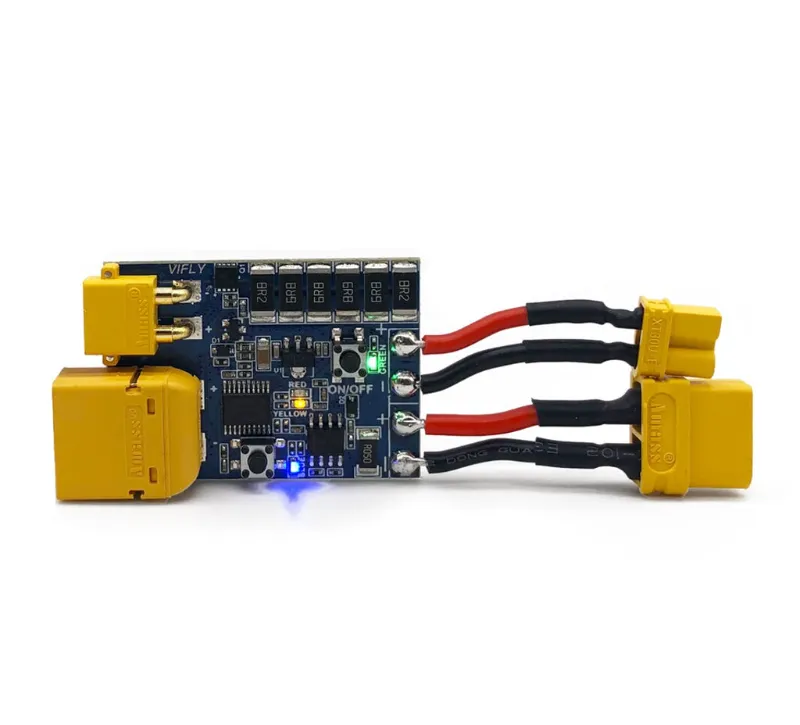
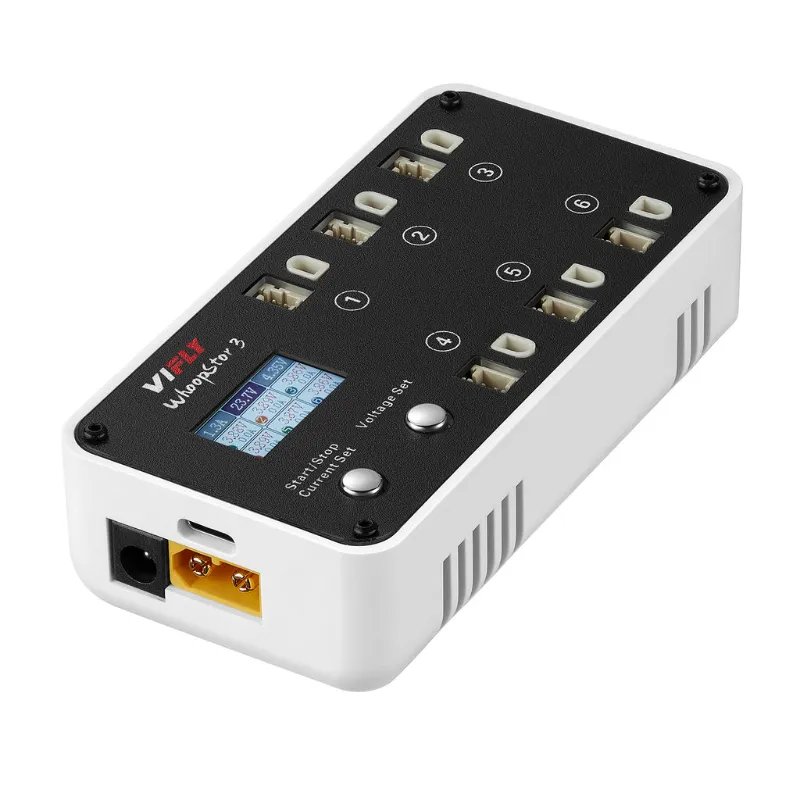
- ShortSaver V2 and WhoopStor 3: bench and battery tools. The ShortSaver cuts power to a build if it draws over a 1A or 2A threshold you select, and the WhoopStor 3 is a 6 port 1S charger that can also bring batteries to storage voltage.
For flights where the FAA lighting rule applies, the VIFLY Strobe is the product VIFLY positions for compliance. Pair it with a buzzer if you want help recovering a drone after a crash, and keep your own records of the lighting you fly with.
Questions
Are anti collision lights required for night drone flights?
Under Part 107 (14 CFR 107.29), yes. Flights at night or during civil twilight require lit anti-collision lighting visible for at least 3 statute miles with a flash rate sufficient to avoid a collision. Recreational flyers should check the FAA rules that apply to them.
Does the VIFLY Strobe meet the FAA 3-mile rule?
VIFLY says the strobe gives 3+ miles of visibility and meets the FAA rules for night flying, using five 3W LEDs (3 white, 1 red, 1 green).
What counts as civil twilight for drone flights?
Outside Alaska, the rule defines it as the 30 minutes before official sunrise and the 30 minutes after official sunset. Anti-collision lighting is required during those periods too.
Can I dim or turn off the strobe during a night flight?
The rule lets the remote pilot reduce the brightness if that is safer in the conditions, but not switch the lighting off.
How long does the VIFLY Strobe run on a charge?
The product page lists up to 4 hours in strobe mode from its 160mAh battery, with about 1.5 hours to recharge over USB Type-C.
Is the Neo2Halo an FAA anti-collision light?
The product page sells it as a light show ring with a downward light for the DJI Neo 2 and does not describe it as an FAA anti-collision light. Use the VIFLY Strobe where the lighting rule applies.
Products in this guide
 Shopping at VIFLY Drone? See the discount code
5% OFF Sitewide
More in this series
VIFLY Strobe Battery Life: How Long Does It Last on a Charge?15 Aug 20263 minHow to Find a Lost Drone: VIFLY Beepers and Lights Compared15 Aug 20264 minDo Drone Strobe Lights Really Improve Night Flight Visibility?15 Aug 20263 minVIFLY Smoke Stopper vs Traditional Fuses: Which Protects Your Drone Better?15 Aug 20264 minHow to Safely Discharge and Store Your 1S LiPo Batteries15 Aug 20264 min