 A Amolen guide
Conductive PLA Filament: Practical Uses and Print Settings
Conductive pla filament carries a current, but it is one niche spool, not every plastic you print; here is what actually works.
Conductive pla filament is real, and it will carry a current, but it is one specific product, not a coating on every spool you already own. Skip that distinction and you will print a nice decorative plant pot expecting it to power an LED. Before we get to real uses and settings, here is the short version: fill the toolpath with a conductive filler (usually carbon black), drop the layer height, slow the print down, and you get a part with measurable resistance. For ordinary hobby printing that resistance is the whole story.
What conductive filament actually is
PLA stands for polylactic acid, a biodegradable polyester made from fermented plant starch, usually corn or sugarcane. By itself it is a hard insulator, which is exactly what most printed parts want. A truly conductive spool swaps part of that base for something that carries electrons, so you get two worlds that do not meet in the middle.
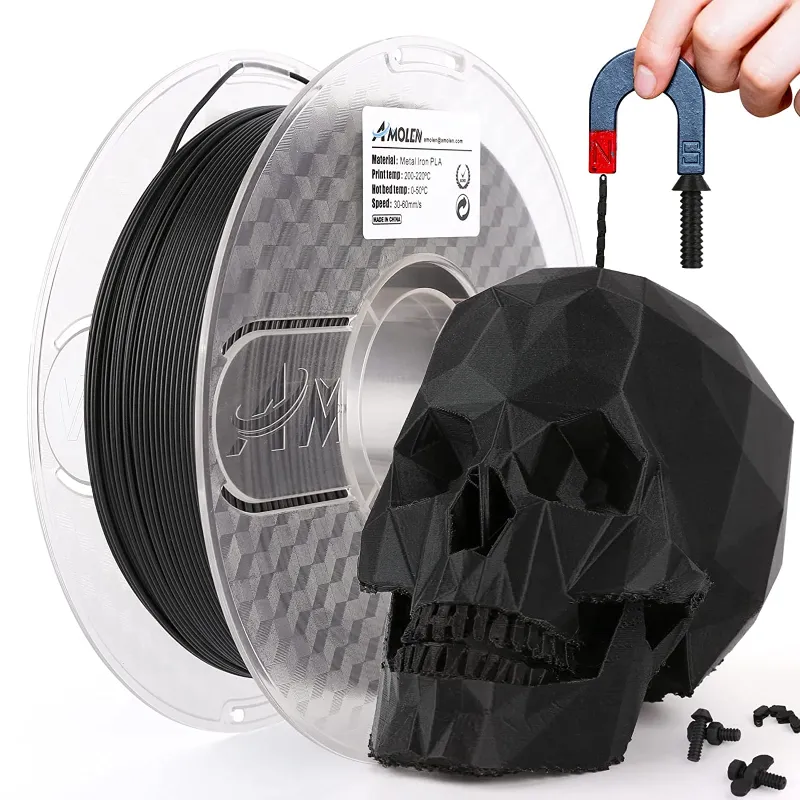
Do not confuse it with the metal-look finishes that dominate the hobby shelf. Stuff like aluminum pla or wood filament prints a part that looks metallic or grainy but conducts nothing, because the effect is pigment and fiber, not a connected electrical path. A real conductive blend is usually matte and slightly rough, and it reads as unglamorous next to galaxy filament on the same shelf. That look is the giveaway.
Real uses worth printing for
Conductive filament earns its place in a few specific jobs, and each one takes advantage of a different property.
- Printed touch buttons and pressure pads that replace a discrete switch
- EMI shielding boxes and snap-in clips that you would otherwise CNC
- Electrostatic discharge pads and grounding straps for bench work
- Capacitive touch surfaces in enclosures you are already printing
- Low-current prototyping leads where solder is overkill
The honest warning: measured resistance on a typical conductive spool sits in the kilohm range, not the milliohm range of copper. So it is perfect for sensor thresholds, capacitive sensing, and low-current signals, and useless for power wiring or anything you plan to hot-solder. Check the latest price on a spool before you commit, and run your own continuity test on a test cube before you design around it.
Recommended print settings
Tuning matters more here than with decorative stock. Conductive blends are stiffer and more brittle than plain filament, and they clog if you get greedy with speed.
| Setting | Recommendation |
|---|---|
| Nozzle | 0.4 mm or larger, hardened steel resists abrasive fillers |
| Nozzle temp | 210 to 225 C, start low and raise until layers fuse |
| Bed temp | 55 to 60 C on a textured surface |
| Print speed | 25 to 40 mm/s, fewer skips, cleaner extrusion |
| Layer height | 0.1 to 0.15 mm for a denser current path |
| Retraction | 0 to 1 mm, minimal, to stop clogging |
Dry your spool first. Conductive fillers love moisture, and wet material strings and blobs in ways that break your continuity. A filament dryer for a few hours before a print usually fixes more issues than any temperature change.
Where ordinary 1.75mm filament still wins
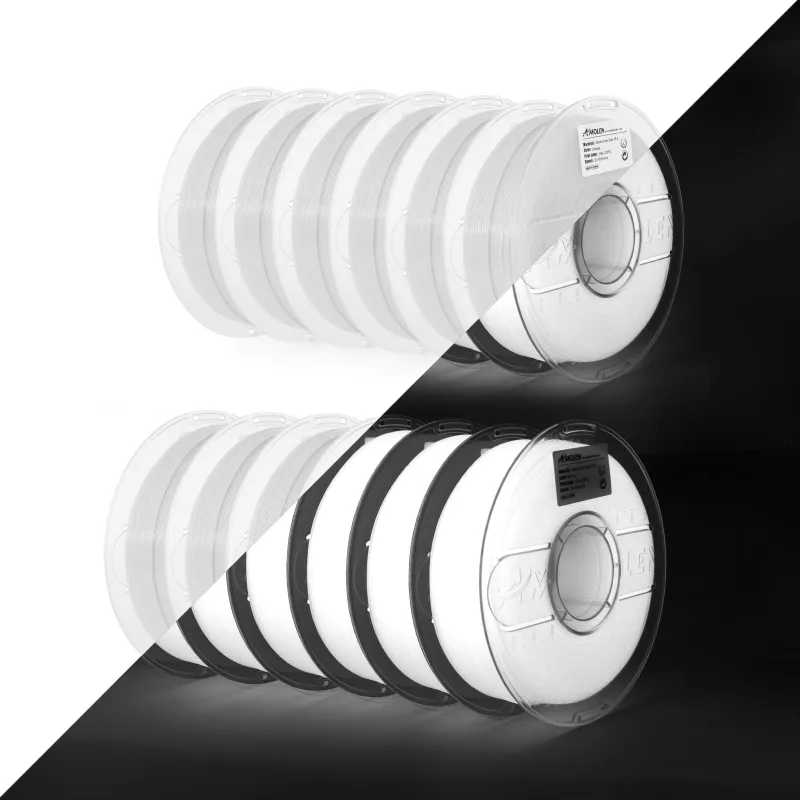
For 9 out of 10 parts on your desk, no current will ever flow through them, and a plain spool is the better buy. A solid 1.75mm filament in standard extruder-friendly stiffness beats a conductive blend on layer adhesion, surface sheen, and price per kilo. The build volume is where you want variety, not conductivity: a light purple matte pla for a case, clear pla for light pipes, and a few filament colors to tell your jigs apart.
The honest workflow is a hybrid. Print the structural shell in normal pla filament 3d, and print the two-cent pad that carries the signal in conductive. Same printer, same slicer, dramatically different results in the part that actually matters.
Is a specialty spool worth it for you?

Buy conductive stock if you are prototyping a sensor, building a basic switch circuit, or making grounded touch surfaces, and you want the part and the wiring as one printed object. Skip it if your project is decorative, structural, or high-current, and reach for the standard pla filament instead.
Every conductive part still needs a clean, dry environment, a patient slicer profile, and a continuity test before assembly. If that setup sounds like work you will actually do, a single spool earns its place. If it sounds like friction, save the money and grab a normal spool, because the conductivity is only useful when you design the whole circuit around it.
Bottom line
Conductive pla filament is a specialist tool: print the circuit path low and slow, test continuity before assembly, and prototype sensors and touch surfaces with it. For everything else on your desk, a standard spool still wins, and the price gap tells you why.
Questions
Does conductive pla filament actually conduct electricity?
Yes, a real conductive blend carries measurable current, though resistance typically sits in the kilohm range rather than the milliohm range of copper. Test continuity on a printed cube before designing a circuit around it.
Can I print conductive filament with a 0.4 mm nozzle?
Yes, and 0.4 mm or larger is the recommended starting point. The abrasive carbon filler wears softer brass nozzles, so a hardened steel nozzle lasts longer.
What temperature do I need for conductive pla filament?
Start around 210 C and raise to about 225 C until layers fuse cleanly, with a 55 to 60 C bed. Dry the spool first, since the filler absorbs moisture and causes stringing.
Is regular 1.75mm filament the right choice for this project?
For most structural or decorative parts, yes. A standard 1.75mm filament prints cleaner and costs less, and you only need conductivity for the small pad that carries the signal.
What is a good use for conductive pla filament?
Touch buttons, pressure pads, capacitive touch surfaces, EMI shielding, and low-current sensors all work well. Avoid it for power wiring, since the resistance is too high to carry meaningful current.
Products in this guide

 Shopping at Amolen? See the discount code
5% OFF Sitewide
Shopping at Amolen? See the discount code
5% OFF Sitewide