 A Amolen guide
Amolen PLA vs PETG Filament: Which Is Right for Your 3D Printer?
PLA and PETG handle a 3d printer pla filament workflow very differently, and the right pick comes down to what you are actually printing.
The short answer: choose 3d printer pla filament when you want easy, clean prints with vibrant colors, and choose petg 3d printer filament when the part will face heat, moisture, or mechanical stress. Almost every project slots into one of those two camps, and once you know what each material does best, the decision gets simple.
What PLA Is Good At (and Where It Falls Short)
PLA is the workhorse of desktop printing for a reason. It prints at lower temperatures, needs no heated chamber, and sticks to nearly any surface with minimal fuss. Beginners get consistent results almost immediately, which is why pla filament stays the top seller year after year.
Where it shines:
- Sharp detail and clean surfaces: great for miniatures, models, and display parts
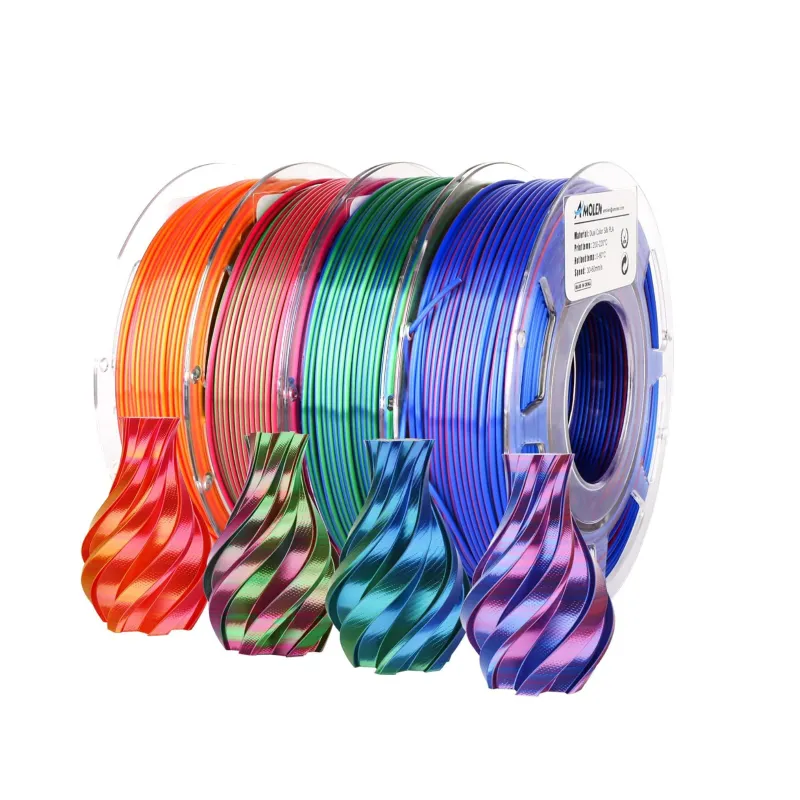
- Huge color variety: it takes filament colors better than almost any other material, including mattes, metallics, and special effect rolls
- Easy post-processing: sands, paints, and glues with little effort
Where it struggles:
- Low heat resistance, parts soften around 55 to 60 °C
- It snaps under repeated bending instead of flexing
- Left in a hot car or near a window, parts can warp
For decorative pieces, prototyping, and anything that stays indoors, PLA is the easiest path to a good result.
Where PETG Earns Its Place
PETG trades some of PLA’s ease for toughness. It resists heat better, holds up to moisture, and flexes instead of shattering, which makes it the go-to for functional parts, mounts, and anything that sees outdoor or warm conditions.
What it handles well:
- Higher heat tolerance than PLA
- Better impact and chemical resistance
- Holds threads and handles repeated assembly and disassembly
What to expect:
- It prints hotter, usually in the 230 to 250 °C range
- More prone to stringing and blobs if retraction settings are off
- It can be finicky on glass beds without a release agent
PETG is not a replacement for PLA, it is a separate tool. Side by side, PLA is easier and PETG is stronger. The real question is whether your part needs the extra toughness.
Key Differences at a Glance
| Property | PLA | PETG |
|---|---|---|
| Ease of printing | Very easy | Moderate |
| Heat resistance | Low | Good |
| Toughness | Brittle | Durable and flexible |
| Best for | Visual and prototype parts | Functional and outdoor parts |
| Common issue | Heat warping | Stringing |
Still unsure which 3d printer pla filament fits your project? Keep both on hand, most of us do. Start with PLA to nail your settings and your design, then reprint the parts that fail in PETG.
How the Printing Settings Change Between Them
Both materials load the same way, but your slicer profile needs to know which one is spooled up.
- Temperature: PLA wants 190 to 220 °C on the hotend and 50 to 60 °C on the bed. PETG wants 230 to 250 °C and a heated bed at 70 to 80 °C.
- Cooling: PLA loves part cooling fans at full blast. PETG prefers lower fan speeds, otherwise layer adhesion drops and parts split.
- Speed: PLA tolerates fast prints. PETG likes slower, steadier extrusion to keep stringing under control.
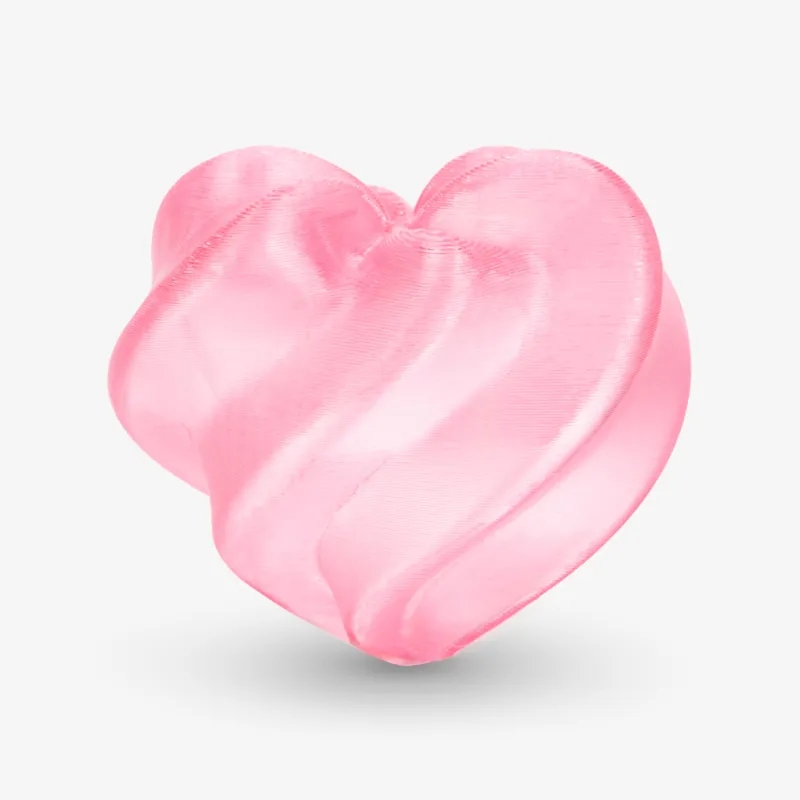
- Nozzle: standard brass nozzles handle both. If you want a translucent look, though, a translucent pla with a .2mm nozzle gives the finest, most see-through finish because the thin extrusion keeps bubbles and lines from distorting the light.
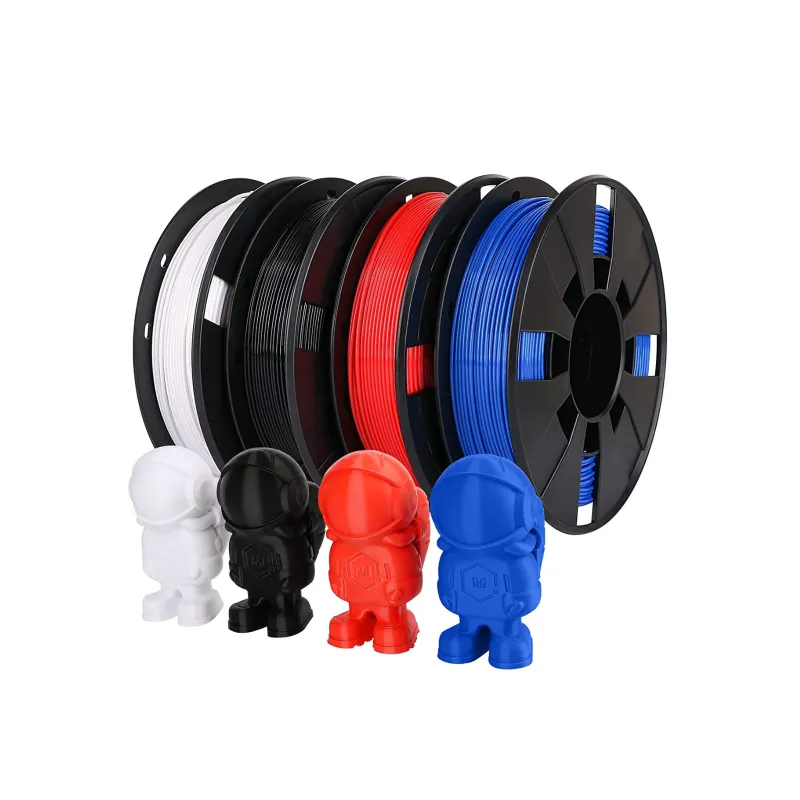
Whichever way you go, 1.75mm filament is the size almost every desktop printer takes, and one 1 kg spool of pla filament 1.75mm 1kg covers most small-to-medium projects.
Special Finishes Worth Trying on Your PLA
PLA is where the fun materials live. Because it prints so predictably, you can chase interesting finishes without fighting the printer:
- clear pla for lit signs, light boxes, and gemstone-like accents
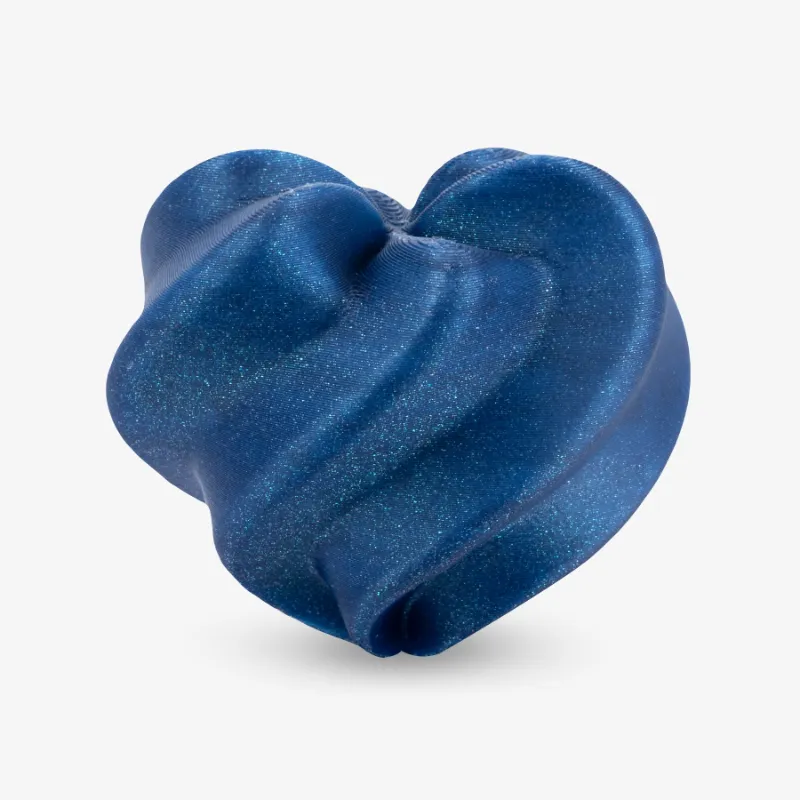
- galaxy filament for parts that flicker with metallic sparkle as light moves across them
- wood filament that sands and stains like real timber, great for planters and desk organizers
- aluminum pla for a brushed metal look on brackets and enclosures
- light purple matte pla for soft, non-reflective color on figurines and wearables
All of these behave like standard PLA, so if you can print regular PLA you can print the special lines too.
Which Should You Buy First?
For your first spool, buy pla filament 3d. It is forgiving, cheap enough to experiment with, and lets you build the muscle memory of good printing habits before you deal with a trickier material. When you move to functional parts that sit in the sun or take real load, add petg 3d printer filament to the shelf. That two-spool setup covers the vast majority of projects any hobbyist or small workshop will take on. Grab the discount code and stock both, since a lot of us end up keeping PLA and PETG in rotation for different jobs.
For a deeper breakdown of how these materials behave under real weekly use, the reviewers at CNET who push out over ten pounds of material a week have useful field notes on filament selection.
If you are still torn, think about what the part will do after it leaves the printer. Display it, and PLA wins. Depend on it, and PETG does. Both prices are fair, so it mostly comes down to the job, not the wallet. Check the latest price and pick the material that matches your next print.
Questions
Can I use the same printer for both 3d printer pla filament and PETG?
Yes. Both load as 1.75mm filament and run through a standard hotend and nozzle. You only need to change the slicer profile and the temperature settings for each material.
Why does my PETG string between parts?
PETG strings when retraction distance, speed, or the print temperature are off. Lower the hotend temperature a few degrees and increase retraction slightly, and keep the part cooling fan around 30 percent.
Which is stronger, PLA or PETG?
PETG is tougher. It resists bending and impact better, handles heat and moisture longer, and flexes instead of snapping. PLA is fine for display pieces but will crack under repeated stress.
Is clear pla actually see-through?
Clear PLA gives a frosted, translucent look rather than true glass clarity. Printing it at a small layer height, like a.2mm nozzle, and increasing wall count gives the most transparent result.
Do I need a special nozzle for galaxy filament or aluminum pla?
No. Both are standard PLA blends and run fine through a regular brass nozzle. The sparkle and metal effects come from additives inside the PLA, so no hardware change is needed.
Where can I get a good deal on 1.75mm filament?
The Amolen coupon page usually carries a sitewide discount on all 1kg spools. Check the current offer and grab the code before checkout to save a few dollars per roll.
Products in this guide
 Shopping at Amolen? See the discount code
5% OFF Sitewide
Shopping at Amolen? See the discount code
5% OFF Sitewide