 A Affordable Pet Labs guide
How to Collect a Dog Fecal Sample for an At-Home Test
Learn how to collect a dog fecal sample for an at-home dog fecal test, including storage tips, what the test checks for, and how to get accurate results.
To collect a dog fecal sample for an at-home test, pick up a small portion of fresh stool with a glove or bag, transfer it to the kit’s vial without overfilling, seal and label it, keep it cool (never frozen) and mail it as soon as you can, ideally the same day. Fresh, clean and correctly labeled samples give the lab the best chance of an accurate result, and a dog fecal test is a simple way to check for intestinal parasites between vet visits.
Below we walk through what the test looks for, what you need, each collection step and the mistakes that most often spoil a sample.
What a dog fecal test checks for
A fecal test (also called a stool test or fecal exam) looks at a small amount of stool for signs of intestinal parasites. Depending on the panel, that usually means some or all of these:
- Roundworms and hookworms
- Whipworms
- Tapeworms
- Giardia
- Coccidia
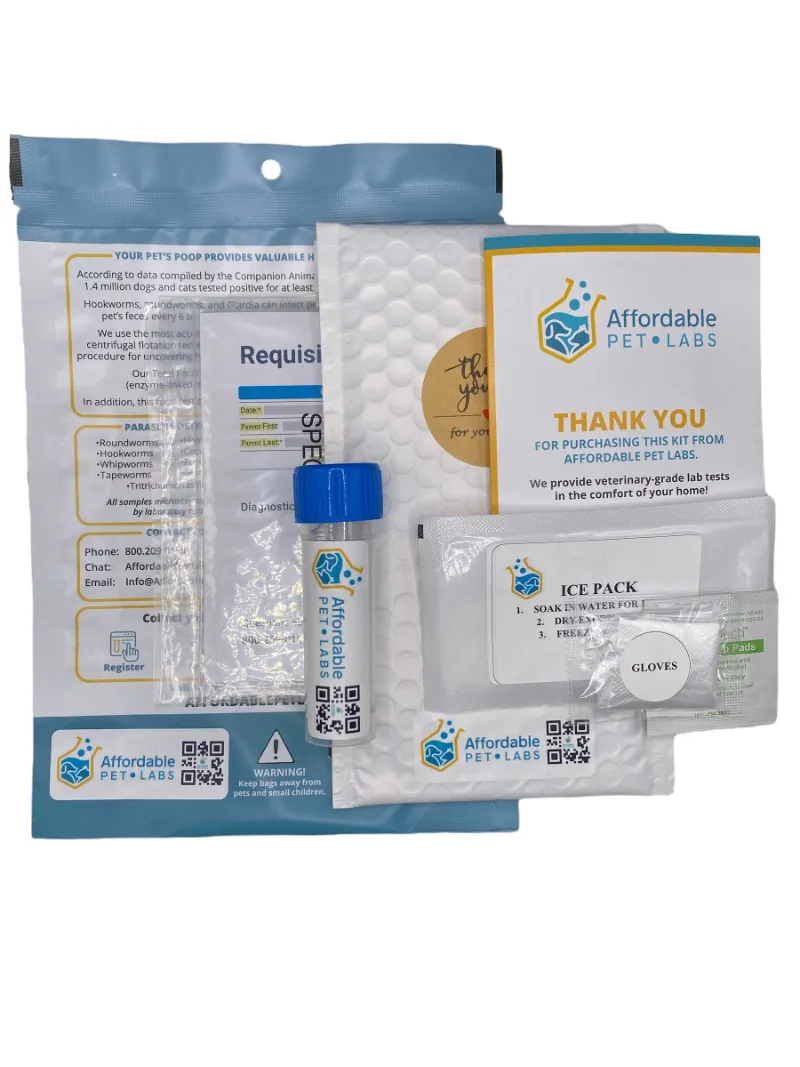
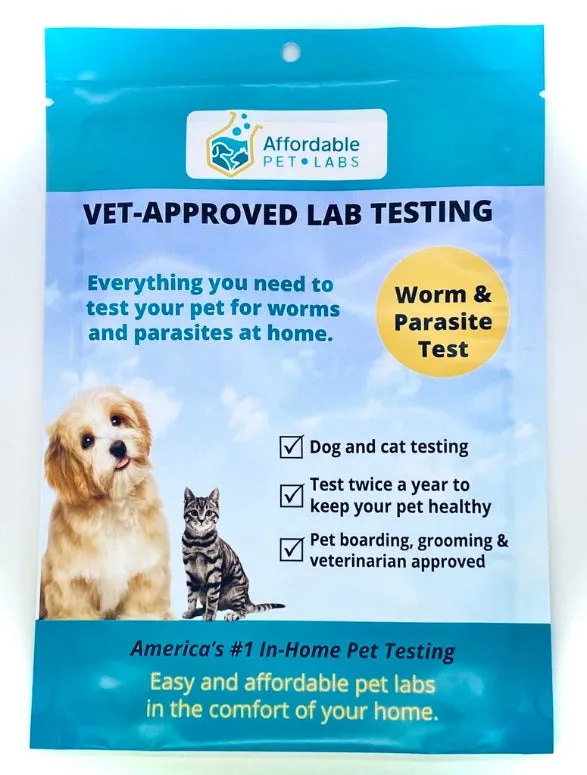
Panels differ, so check the Affordable Pet Labs dog fecal test listing for exactly what it covers before you order. Some of these parasites are zoonotic, meaning they can pass from animals to people, which is one reason routine screening matters even when a dog seems well. VCA Hospitals has a helpful FAQ on how often vets suggest fecal testing for adult dogs and puppies.
What you need to collect the sample
Before you start, gather:
- A disposable glove or a clean poop bag
- A small scoop or clean wooden stick, if the kit does not include one
- The collection vial or container from your test kit
- A pen for the label
- Space in the fridge, if you cannot post the sample straight away
Read the kit’s instructions first. At-home kits vary in what they include for collection and return postage, and the lab’s own directions always take priority over general advice like ours.
How to collect a dog fecal sample, step by step
1. Collect a fresh sample
Wait for your dog to go, then collect from the top of the stool so the sample has as little soil, grass or gravel in it as possible. Fresh is best, since parasite eggs and organisms break down as a sample ages. If you see a part that looks abnormal, such as loose stool, mucus or blood, include some of that.
2. Transfer it to the vial
Use the scoop to put the sample into the vial. Only a small amount is needed, so do not overfill it; follow the fill line or amount given in the kit instructions. An overfilled vial can leak and may be harder for the lab to process. Close the cap tightly.
3. Label and seal
Write your dog’s name and the collection date and time on the vial. Put the vial into the specimen bag, then into the return packaging, as the kit directs.
4. Mail it quickly
Post the sample as soon as you can, ideally the day you collect it. Avoid sending it just before a weekend or public holiday if that means it will sit in transit.
How to store and handle the sample
If you cannot mail the sample right away:
- Refrigerate, do not freeze. Freezing can damage parasite eggs and make the sample less useful. Keep it cool in the fridge and follow the time limit in the kit instructions.
- Keep it sealed. Double bag the vial if it is going in a shared fridge, and keep it away from food.
- Avoid urine and dirt. Both can spoil a sample. Collect from a clean patch of grass or a hard surface where you can.

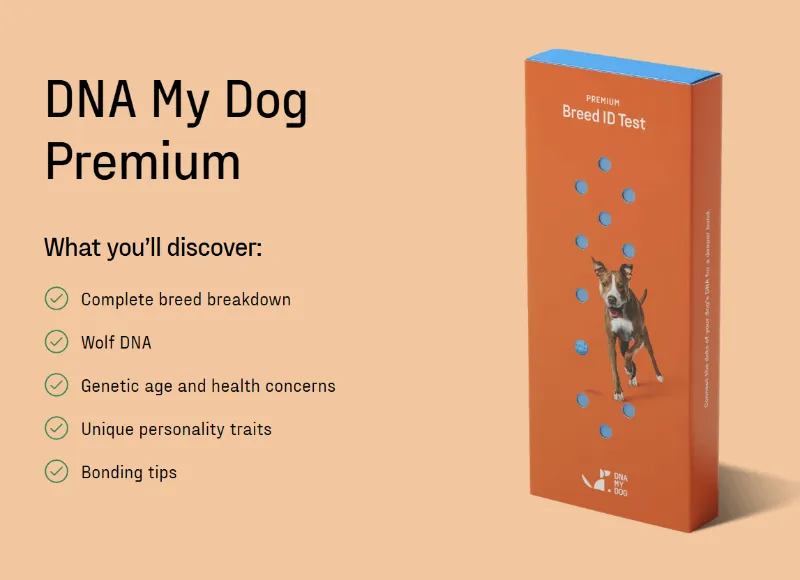
If you are also using other kits from the same brand, such as a dog food sensitivity test or a dog DNA test, remember that each test needs its own sample type. Read each kit’s instructions separately.
At-home dog stool test vs vet visit
Many owners search for a dog fecal test near me and assume they need an appointment. Both routes have a place:
| Factor | At-home dog fecal test | Fecal test at the vet |
|---|---|---|
| Cost | Kit price, no exam fee | Usually an exam fee plus a lab fee |
| Convenience | Collect at home and mail in | Bring the dog or the sample to the clinic |
| Turnaround | Depends on postage and the lab | Often faster, especially if the clinic runs it in house |
| Treatment | Needs a vet if the result is positive | Vet can treat on the spot |
An at-home kit suits routine checks on a healthy dog. If your dog is unwell, with ongoing diarrhea, vomiting, weight loss, blood in the stool or low energy, call your vet rather than waiting on a mail-in result.
Testing for Giardia
Giardia is a single-celled parasite that can cause soft stool, gas and diarrhea. It can be hard to detect because infected dogs do not shed it in every stool. For that reason, vets sometimes ask for samples collected over three consecutive days. If a Giardia result matters to you, ask the lab or your vet whether they want a pooled sample and how to collect it.
Common collection mistakes to avoid
- Sending an old sample. A stool that has sat in the yard or the fridge too long may no longer show parasites.
- Too much or too little. Follow the fill line; both extremes can cause problems at the lab.
- Soil, litter or grass in the vial. Scoop from the top of the stool, away from the ground.
- No label. A vial without a name and date may not be processed.
- Freezing the sample. Use the fridge, not the freezer.
Understanding results and other tests
Lab reports usually list whether each parasite was found and may note anything unusual about the sample. A negative result means nothing was detected in that sample, not that your dog can never have parasites. If a result is positive, share the report with your vet, who can confirm it and prescribe the right treatment.

A fecal test covers the gut only. Affordable Pet Labs also sells a dog allergy test that uses a hair sample, a canine health assessment listed as a heartworm test, a cat fecal test for multi-pet homes, and a dog DNA breed test. Talk to your vet about any result before you change your dog’s food or treatment. If you are ordering more than one kit, see the current Affordable Pet Labs discount code first.
For more background, PetMD explains what vets look for in a fecal exam, and IDEXX describes how reference labs run fecal testing.
Questions
How do I collect a dog fecal sample for an at-home test?
Use a glove or bag to pick up a small portion of fresh stool from the top of the pile, put it in the kit's vial without overfilling, seal and label it with your dog's name and the date, and mail it as soon as you can.
How much stool do I need for a dog fecal test?
Only a small amount. Follow the fill line or amount given in the kit instructions, since an overfilled vial can leak and make the sample harder for the lab to process.
Should I refrigerate my dog's stool sample before mailing it?
If you cannot mail it right away, keep the sealed sample in the fridge and follow the time limit in the kit instructions. Do not freeze it, because freezing can damage parasite eggs.
Can I collect a sample if my dog has diarrhea?
Usually yes, but if your dog has ongoing diarrhea, vomiting, blood in the stool or seems unwell, call your vet instead of waiting for a mail-in result.
Is an at-home dog fecal test as good as a vet's test?
It can be a convenient way to screen a healthy dog, and accuracy depends a lot on a fresh, clean, well-stored sample. Any positive result should go to your vet, who can confirm it and prescribe treatment.
Products in this guide

 Shopping at Affordable Pet Labs? See the discount code
15% OFF All Orders
Shopping at Affordable Pet Labs? See the discount code
15% OFF All Orders
More in this series
 What to Expect From a Dog Pregnancy Test: Timing, Methods and Next Steps5 Sep 20264 minHow Accurate Is an At-Home Dog Food Sensitivity Test?5 Sep 20264 minWhen Should You Test Your Dog for Heartworms? A Seasonal Guide5 Sep 20265 min
 At-Home Cat Allergy Tests: What They Can and Cannot Tell You5 Sep 20264 min