 A Booooom Jackson guide
Do Classroom Carpets Actually Hold Up to Heavy Foot Traffic?
We tested classroom rugs from Booooom Jackson to see which designs actually hold up under constant foot traffic in real school environments.
Not every classroom rug is built to the same standard, and durability from the pile, backing and fiber matters more than color when kids use a rug every day. Here is what separates a rug that lasts from one that mats down and stains within a term.
What to Look for in a Classroom Rug
Three things decide how well a classroom rug holds up: dense pile that resists matting, fibers that resist stains, and backing that grips the floor so the rug does not slide or bunch. Most durable classroom rugs use nylon or polypropylene blends. Nylon generally holds its color better under sunlight and repeated foot traffic; polypropylene is more budget-friendly and resists stains well but tends to mat faster under heavy use.
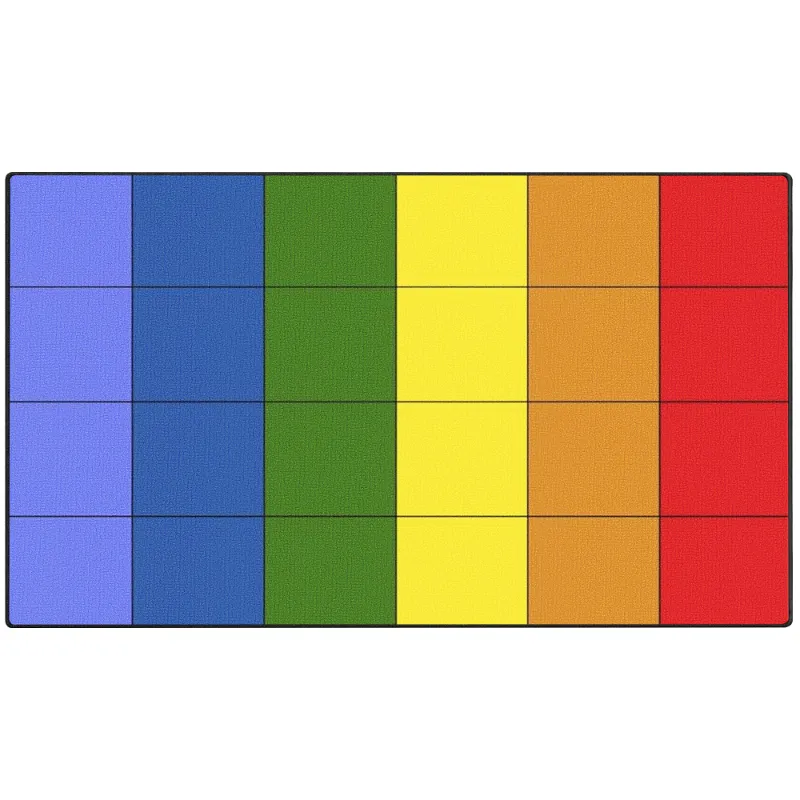
The Classroom Rug and heavier Classroom Carpet both use nylon-rich blends, which is the fiber to look for if a rug will see continuous daily use.
Sizing and Placement
Placement affects how long a rug lasts as much as the rug itself. A classroom rugs 8×10 or 9×12 works well as a defined learning zone rather than wall-to-wall coverage, because it concentrates wear in one predictable area and makes spot cleaning easier. Position it to anchor a single activity, such as circle time or a reading corner, rather than letting it double as a walkway between other parts of the room.
Smaller rugs in the 5×7 range cost less upfront, but if they are used as general flooring rather than a defined zone, they tend to need replacing sooner than a rug matched to its actual traffic.
Materials That Hold Up to Traffic
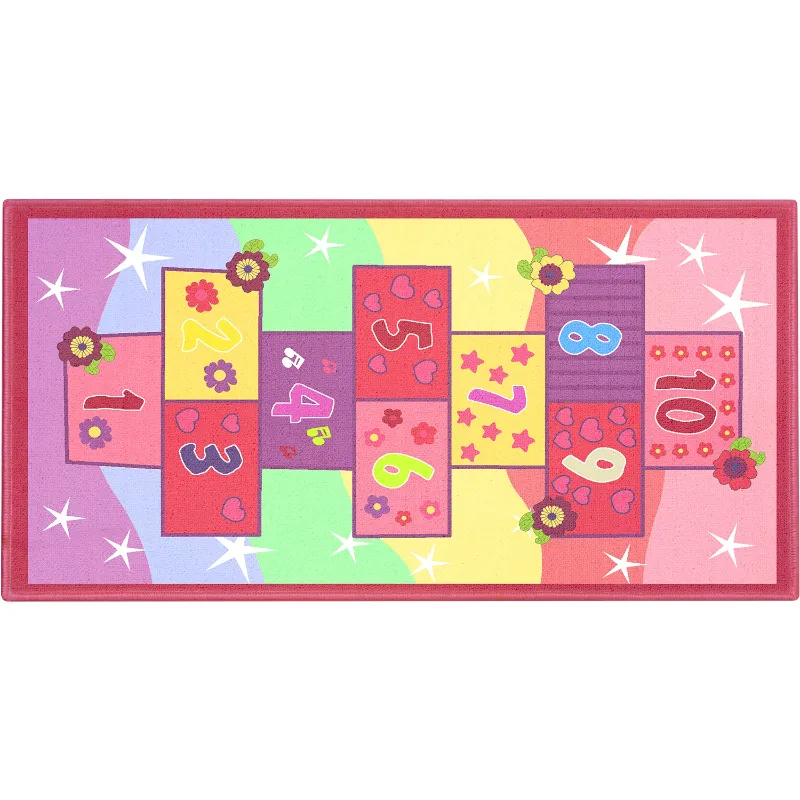
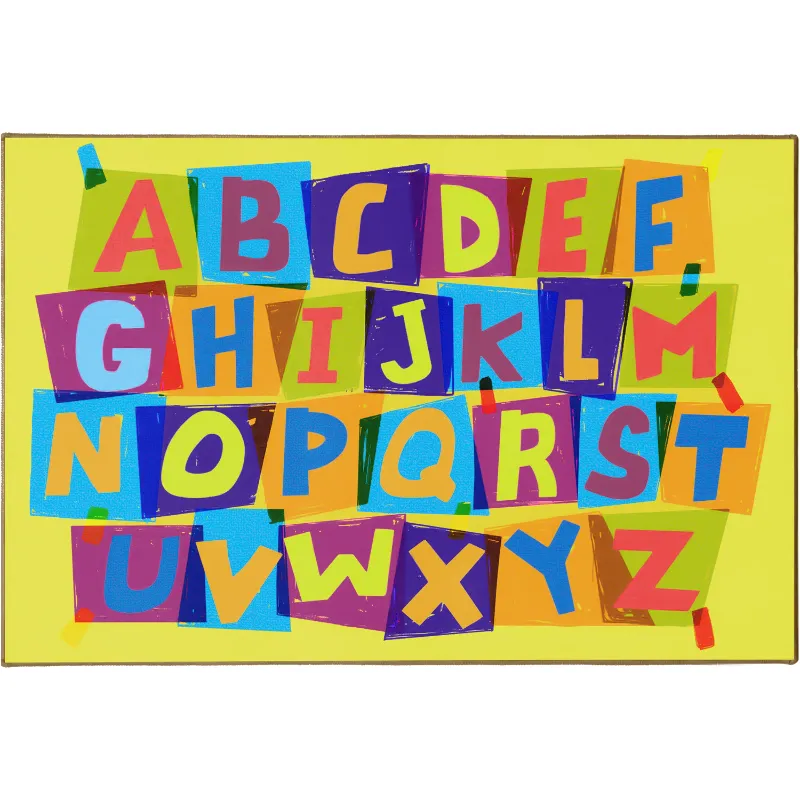
Backing matters as much as the pile on top. A rug with slip-resistant backing stays where you put it, which keeps wear even instead of concentrated wherever the rug has slid. Printed designs, like the Hopscotch Rug and ABC Rug, are worth checking for how the pattern is applied; subtler, lower-contrast prints generally show fading less than bold, high-contrast graphics in the same spot week after week.
For a rotating or flexible classroom layout, a lighter option like the Kids Rug or Play Rug is easier to move and store between uses.
Stain Removal and Cleaning
How fast you treat a stain matters more than what caused it. Marker and food stains generally come out with a pH-neutral carpet cleaner or a 1:1 vinegar-and-water solution if you treat them within a day. Left longer, most stains set and become far harder to remove. Avoid bleach on colored rugs, since it can fade the design as well as the stain.
Vacuum on a regular schedule and treat spills the same day they happen. A rug that is vacuumed weekly and cleaned promptly will hold its pile and color far longer than one left to accumulate dirt between cleanings.
Which Rug Suits Which Space
| Rug | Best For |
|---|---|
| Classroom Rug | Organized learning and group activities |
| Classroom Carpet | Permanent placement, denser traffic |
| ABC Rug | Early learning and alphabet practice |
| Hopscotch Rug | Interactive play and movement games |
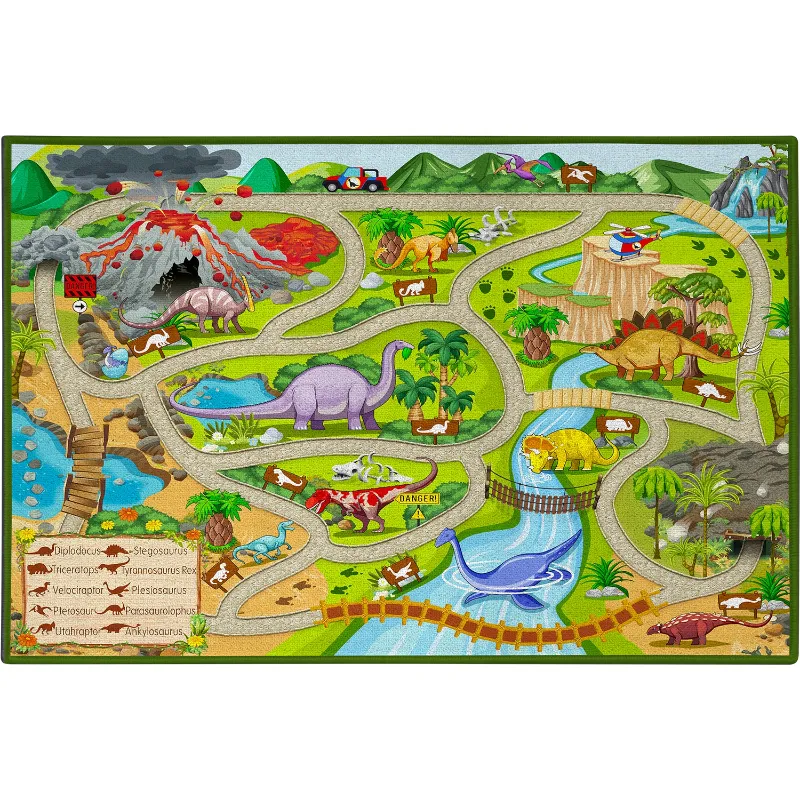
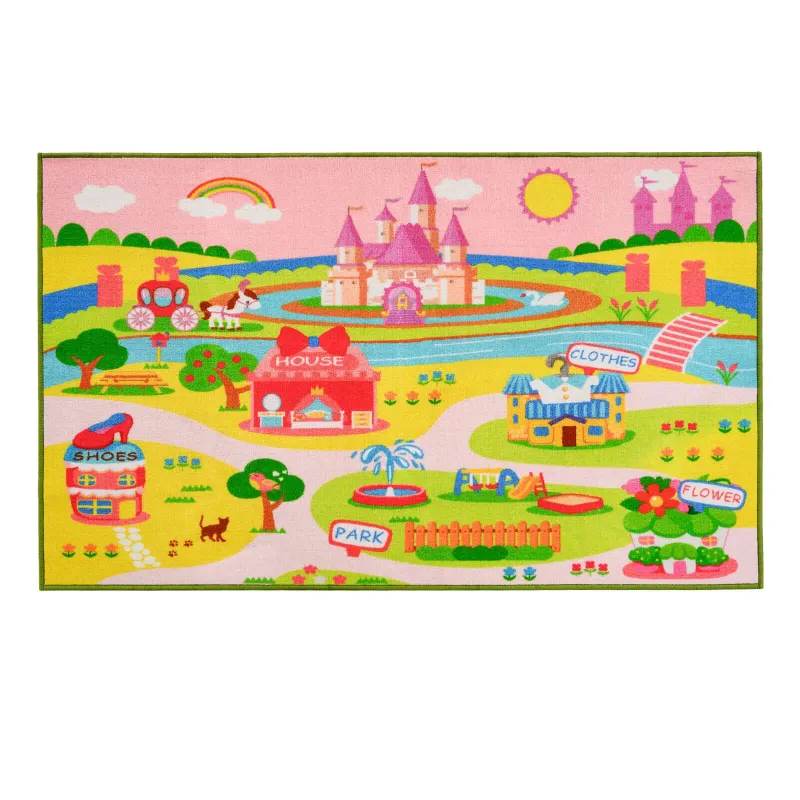
| City Playmat | Vehicle play and imaginative scenarios |
For elementary classrooms with heavier, more concentrated traffic, a denser option like the Classroom Carpet suits a permanent installation better than a lighter rug meant to be moved or rotated.
How Elementary and Preschool Traffic Differs
Younger and older students wear down a rug differently. Preschoolers tend to spread out fairly evenly across a rug during circle time and free play, so wear is more diffuse. Elementary students, especially in first through third grade, tend to create heavier, more concentrated traffic in specific spots: the edge where kids line up to stand, the corner nearest the teacher’s chair, and any path between the rug and the door. Chair dragging around a rug’s border also becomes more common once a room mixes rug time with desk work.
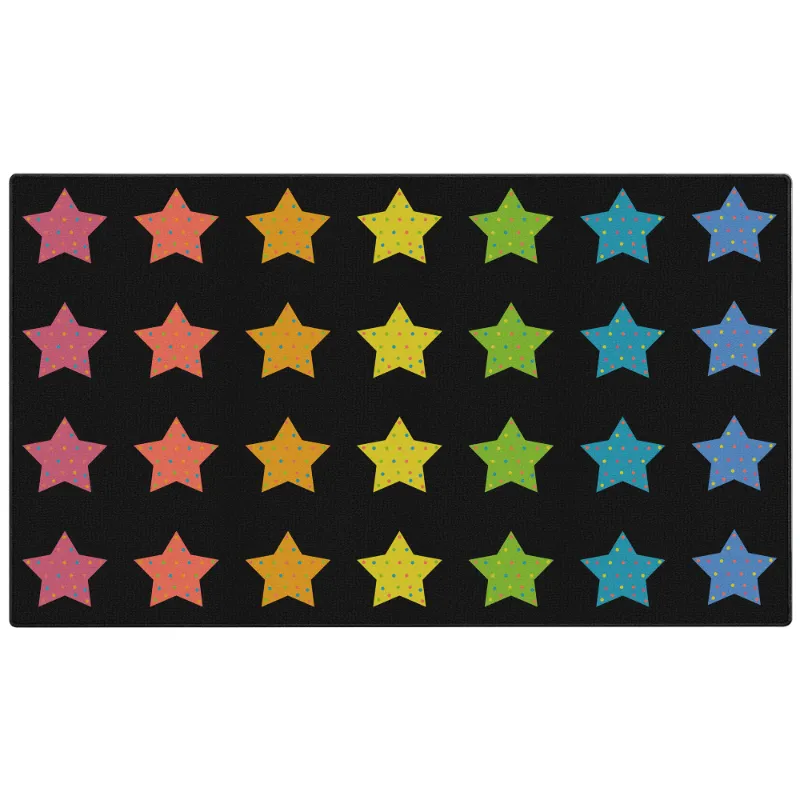
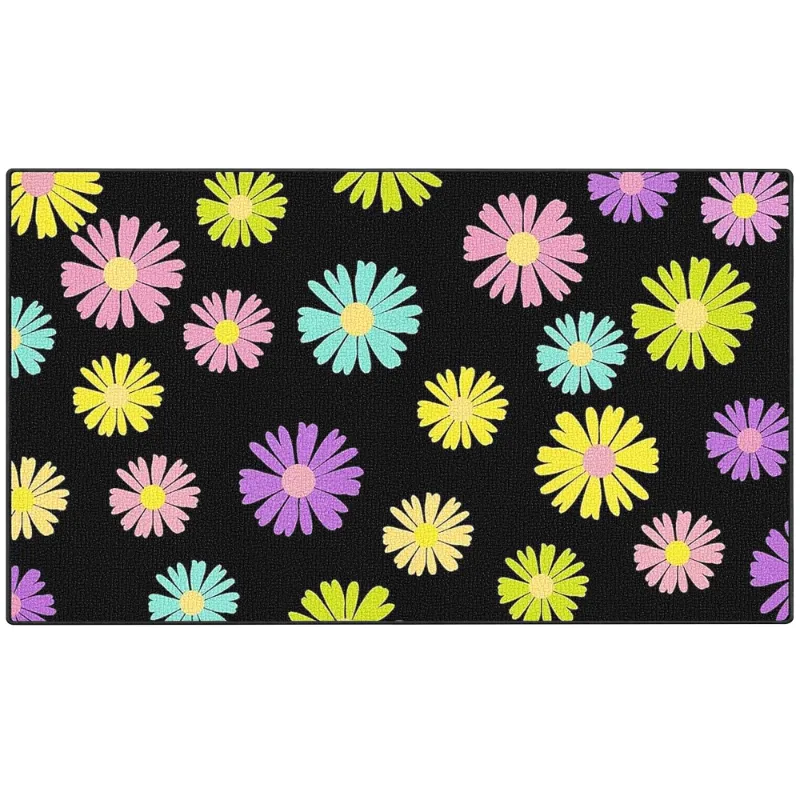
For a room with heavier, more concentrated wear, a denser option like the Classroom Carpet suits a permanent installation better than a lighter rug meant to rotate between spaces. For a preschool room with more diffuse wear, the lighter Classroom Rug or a themed option like the Star Rug or Daisy Rug is usually enough.
A Simple Care Routine
A few habits, kept up consistently, do more for a rug’s lifespan than the rug’s price tag does:
- Vacuum weekly, and more often in the highest-traffic zone
- Treat spills and marks the same day, before they set
- Rotate the rug a quarter turn every few months if it isn’t anchored to one fixed activity, so wear spreads more evenly across it
- Check the backing periodically for curling or lifting at the edges, which is often the first sign a rug needs replacing, before the pile itself looks worn
The Bottom Line
A classroom rug built to last needs dense pile, stain-resistant fiber and slip-resistant backing, plus placement that concentrates its wear in one predictable zone. Budget matters, but the cheapest option is rarely the one that survives a full school year without matting or staining. Vacuum weekly, treat spills the same day, and rotate rugs between spaces if you have more than one, to spread out the wear.
Check the current Booooom Jackson discount code to compare current pricing across the classroom rug range.
Questions
How long do classroom rugs typically last with heavy foot traffic?
There's no fixed number we can promise, since it depends on traffic, cleaning habits and fiber type. With regular vacuuming and quick spot cleaning, a dense, quality rug should get you through multiple school years before it needs replacing.
What's the best classroom rug size for an elementary classroom?
A classroom rugs 8x10 or 9x12 works well for defining a single learning zone. Wall-to-wall coverage concentrates wear unevenly and makes cleaning harder. Smaller rugs also cost less and are easier to rotate out for a deep clean.
Can you remove marker and food stains from classroom rugs?
Yes, if you treat them quickly. A pH-neutral carpet cleaner or a 1:1 vinegar-and-water solution works on most marker and food stains when applied within a day. Waiting longer makes a stain far more likely to set permanently.
Are classroom rugs with sit spots better for early learning than plain rugs?
Not necessarily more durable, but they serve a different purpose. Rugs like the Hopscotch Rug and ABC Rug add a visual learning element without giving up durability, as long as the rug still uses quality fiber and slip-resistant backing.
What's the difference between classroom rugs and classroom carpet?
Classroom rugs are typically lighter, easier to move, and come in standard sizes. Classroom carpet is heavier and denser, which suits a permanent placement better. Both resist staining reasonably well, but the denser carpet tends to recover from matting faster under heavy traffic.
Where can I find classroom rugs cheap without sacrificing quality?
Mid-range options usually offer the best value. Check the current Booooom Jackson discount code, which brings many of the durable rugs in this guide to a more affordable price while keeping the durability a real classroom needs.
Products in this guide
 Shopping at Booooom Jackson? See the discount code
5% OFF All Orders
Shopping at Booooom Jackson? See the discount code
5% OFF All Orders
More in this series
 Smiley Face Rugs, Hopscotch Rugs, and City Playmats: Adding Fun Designs to Learning Areas31 Aug 20263 minHow to Choose an ABC Rug or Educational Playmat that Grows with Your Child31 Aug 20264 min
 Round Rugs vs. Rectangular: Which Shape Works Best for Playrooms and Kids’ Spaces31 Aug 20264 minBest Rugs for Classrooms: Durability, Safety, and Design for Active Learning Spaces31 Aug 20263 min