 A Baker's Secret guide
Is a Titanium Cutting Board Right for Your Kitchen?
A titanium cutting board from Baker's Secret offers durability and sanitation advantages, but understanding its tradeoffs helps you decide if it fits your prep style.
A titanium cutting board offers durability and easy cleaning that few other materials match, but it comes with a real tradeoff: the hardness that makes it last also dulls a knife edge faster than wood. Whether that trade is worth it depends on how often you sharpen your knives and how much you value low-maintenance kitchen gear.
What titanium brings to your prep surface
Titanium stands out for its corrosion resistance and strength-to-weight ratio. Unlike bamboo or maple boards, which absorb moisture and need regular oiling, titanium stays inert. It will not splinter, crack or develop the deep knife scars that trap food particles in a plastic board. A textured finish on some titanium boards can help reduce slipping during chopping without creating pockets where debris collects.
The same hardness that makes titanium durable also means your knife edge meets a less forgiving surface than wood. If you sharpen your knives regularly, or use ceramic blades, this tradeoff matters less day to day. Titanium boards also tend to weigh less than stone or glass alternatives, so they stay manageable even in larger sizes, and the surface generally does not retain odors from garlic or onions the way some plastics can.
Cleaning and maintenance
One of the biggest selling points is how little upkeep titanium demands. It is generally dishwasher safe, without the edge lifting, warping or finish damage that can affect a wood board over repeated cycles. There is no mineral oil to apply and no need to stand it upright to dry the way a wood board asks for.
Hand-washing works just as well with hot soapy water and a scrub brush. Titanium’s non-porous surface does not readily absorb pigments from foods like beets or turmeric, so stains tend to wipe away rather than linger the way they can on a plastic board. Because titanium does not absorb moisture, it should not develop mold or mildew in a humid kitchen, and it can be stored flat or hung without concern about cracking.
How it compares to wood, plastic and composite boards
Different cutting board materials trade off durability, knife friendliness, sanitation and maintenance in different ways:
| Material | Durability | Knife-friendly | Maintenance |
|---|---|---|---|
| Titanium | Excellent | Moderate | Minimal |
| Wood | Good | Excellent | High |
| Plastic | Moderate | Good | Low |
| Composite | Good | Good | Moderate |
Wood remains the standard for preserving a blade’s edge, but it needs regular oiling and cannot go in the dishwasher. Plastic is affordable and light, but it scars quickly and often needs replacing every year or two. Composite boards, typically a wood fiber and resin blend, land in the middle but still absorb some moisture. Titanium wins on longevity and hygiene, while wood wins on knife care.
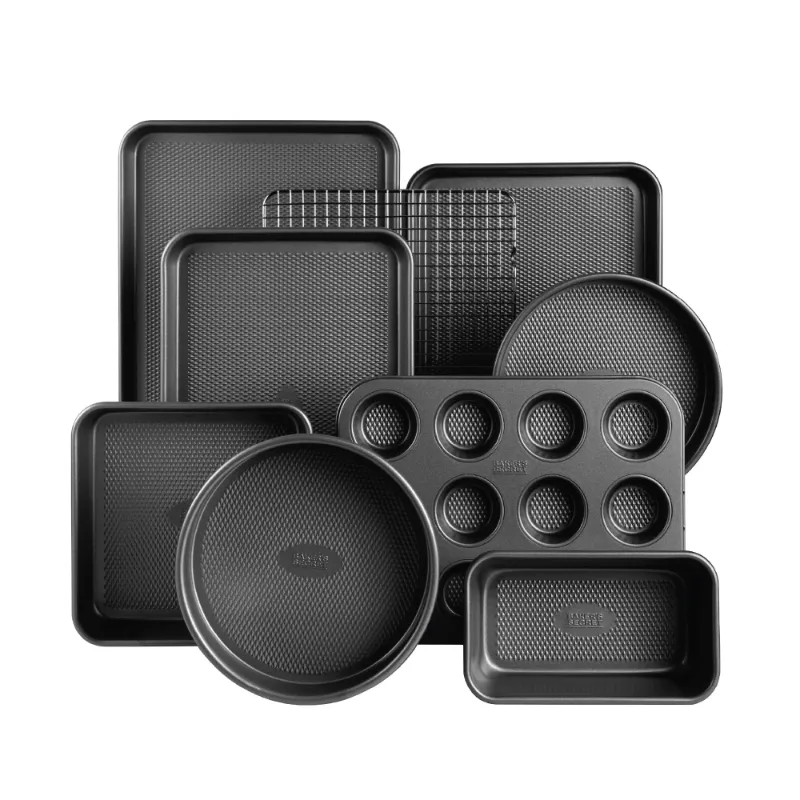
If you already invest in durable kitchen tools like stainless steel bakeware or an aluminum baking sheet that lasts for years, a titanium board follows the same buy-it-once approach.
Sizing and fit for your workflow
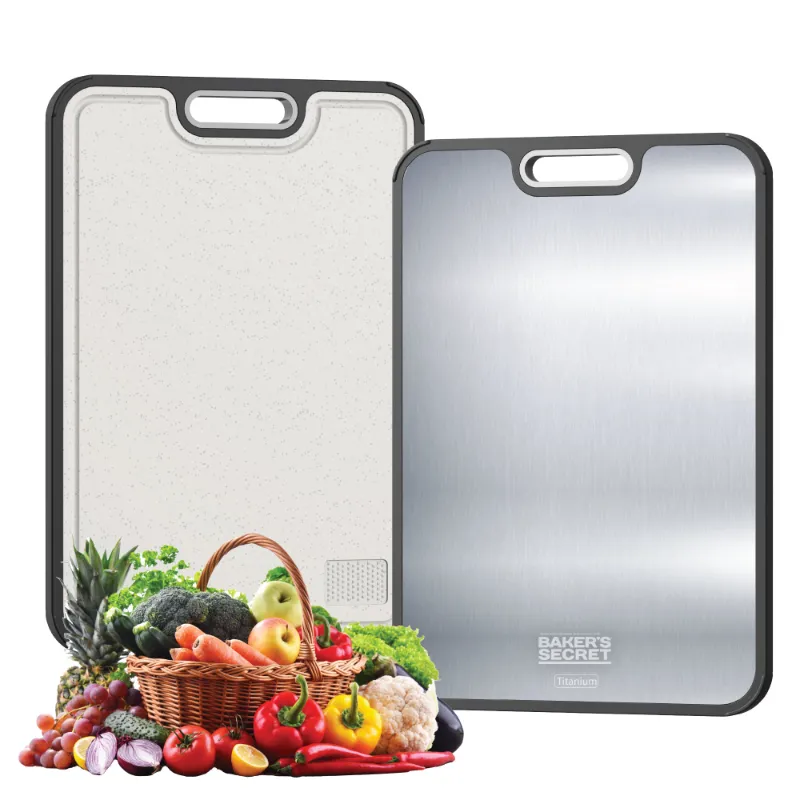
Baker’s Secret offers a titanium cutting board as a single piece and as part of a multi-piece set. Check the listed dimensions on the product page against your typical prep tasks: a larger board suits roasts, whole vegetables and batch meal prep, while a smaller board suits quick tasks like slicing cheese or portioning snacks.
A set is worth considering if you prep multiple ingredients in one session and want to avoid cross-contamination without constant washing between tasks. Use one board for raw proteins, another for produce, and a third for ready-to-eat items like bread or herbs. Titanium’s uniform finish does not lend itself to color-coding, so label the boards or pick different sizes to tell them apart. Check current pricing and see the current Baker’s Secret discount code before you order.
Who should choose titanium over traditional boards
This board suits cooks who value durability and ease over preserving a knife’s edge above all else. If you sharpen your knives regularly or use a honing steel often, the harder surface should not disrupt your routine much. It tends to suit:
- High-volume home cooks who prep multiple meals daily and want dishwasher-safe cleanup
- Small kitchens where a mold-prone wood board struggles with limited drying space
- Allergy-conscious households that want reliable sanitation between ingredients
- Outdoor or RV kitchens where moisture and temperature swings would damage wood over time
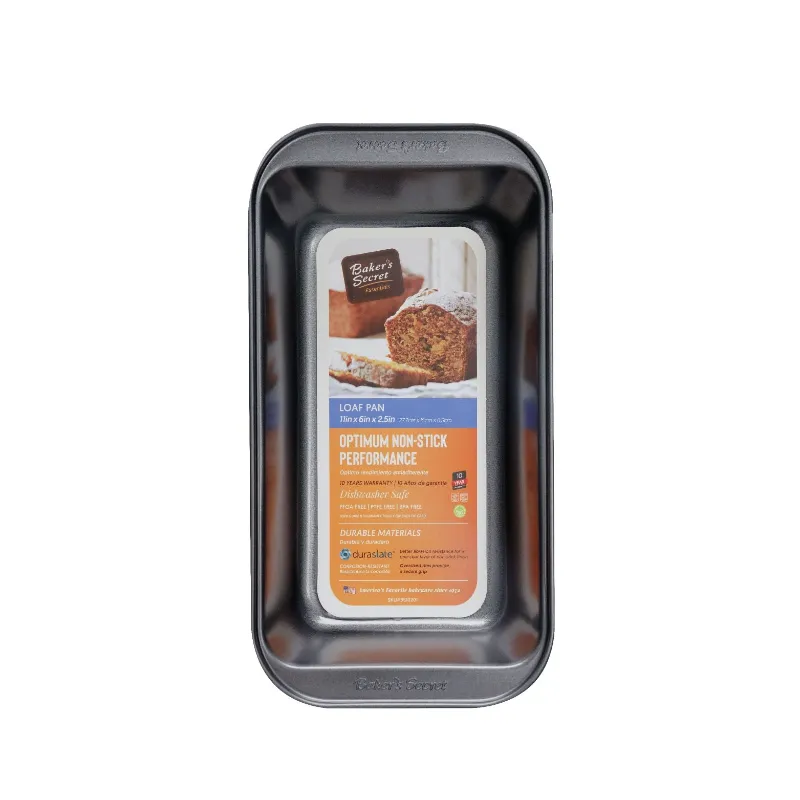
If you primarily use delicate, expensive knives with thin edges, an end-grain wood board is likely the better choice. If you rotate between a bread loaf pan, aluminum cookie sheets and other everyday bakeware without much fuss, titanium fits that same practical approach. Pair the board with oven gloves and other long-lasting tools for a cohesive, low-maintenance setup.
The bottom line
A titanium cutting board delivers on durability, sanitation and low upkeep, without the warping or staining that wears down softer materials over time. The knife-dulling tradeoff is real, but manageable if you already keep your blades sharp. For cooks who prioritize convenience and longevity over preserving a perfect edge, this board earns its place.
Check the latest price with the current discount code and weigh the upfront cost against replacing a plastic board every year or two. The initial cost is higher, but a titanium board should hold up to years of regular use without the functional decline that comes with softer materials. If you value tools that work hard without demanding constant care, titanium is worth serious consideration.
Questions
Does a titanium cutting board dull knives faster than wood?
Yes, titanium is harder than wood and will dull a knife's edge more quickly over time. Regular honing or sharpening on a normal schedule offsets this tradeoff for most home cooks.
Can I put a titanium board in the dishwasher?
Yes. Titanium generally resists heat and moisture without warping, cracking or losing its finish, so dishwasher cleaning is a safe and convenient option, though it is worth checking your specific product's care instructions first.
Will titanium boards stain from beets or turmeric?
Titanium's non-porous surface does not readily absorb pigments or odors, so stains from foods like these tend to wipe away with standard dish soap and water rather than lingering.
How long does a titanium cutting board last?
With normal use, a titanium board is built to last for years without cracking or developing the deep scars that shorten a plastic board's life, since the material does not degrade the way softer boards do.
Are titanium cutting boards safe for raw meat prep?
The non-porous surface resists holding onto bacteria and can be sanitized thoroughly. Wash it in the dishwasher or with hot soapy water between uses, following the product's specific care guidance.
Do I need to oil or season a titanium board?
No. Unlike a wood board that needs regular oiling to stay in good condition, a titanium board is ready to use again as soon as it is washed.
Products in this guide
 Shopping at Baker's Secret? See the discount code
10% OFF All Orders
Shopping at Baker's Secret? See the discount code
10% OFF All Orders
More in this series
What Size Loaf Pan Does Baker’s Secret Make? (Complete Guide)20 Aug 20264 min Do Baker’s Secret Oven Gloves Protect Against 500°F Heat?20 Aug 20265 minBaker’s Secret Non-Stick Bakeware vs. Stainless Steel: Which Lasts Longer?20 Aug 20264 minHow to Season and Care for Baker’s Secret Aluminum Baking Sheets20 Aug 20265 min