 A Nomadique Co guide
Aussie Sand-Free Microfibre Beach Towel vs Gold Coast Beach Towel: Which One Dries Faster?
The aussie sand-free microfibre beach towel dries in roughly half the time of traditional cotton alternatives, making it the faster choice for back-to-back beach days.
Which Towel Dries Faster After a Swim?
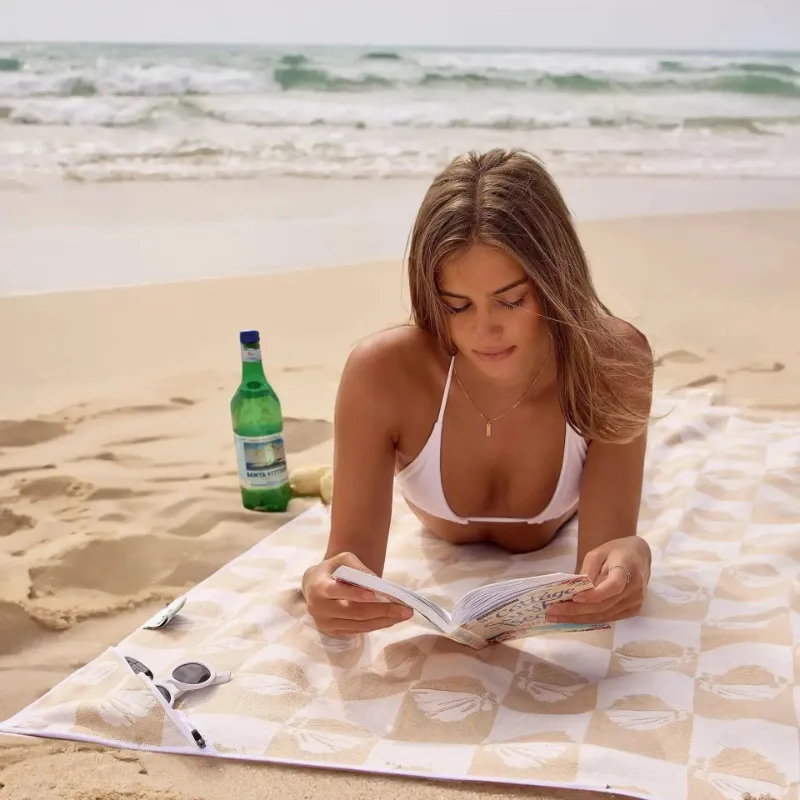
The aussie sand-free microfibre beach towel dries in roughly half the time of traditional cotton alternatives, typically reaching bone-dry in 45 to 90 minutes depending on humidity.
Both the aussie sand-free microfibre beach towel and the gold coast beach use lightweight polyester-polyamide blends that wick moisture to the surface and release it quickly. If you’ve ever stuffed a damp cotton towel into your bag and regretted it an hour later, microfibre solves that problem. Below we break down drying speed, sand resistance, pack size, and which towel suits your beach routine.
Drying Speed Comparison: Microfibre vs Cotton
Microfibre generally outperforms cotton by a wide margin for drying speed. The aussie sand-free microfibre beach towel’s thinner weave means less water to evaporate, which helps if you’re island-hopping or hitting multiple beaches in a day.
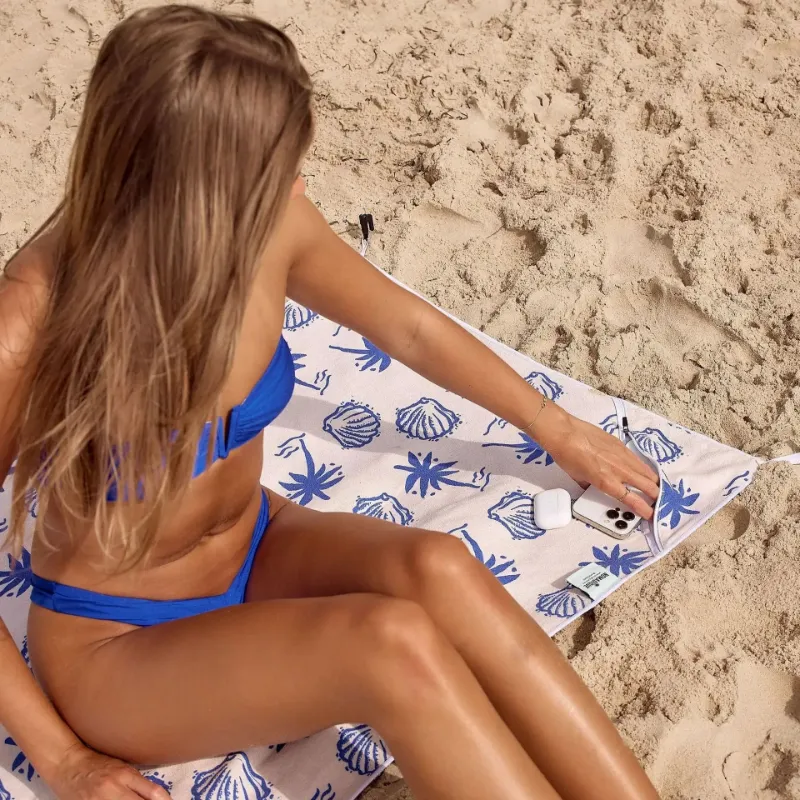
In high humidity or overcast conditions, microfibre still dries two to three times faster than cotton. The sand proof towel behaves similarly since it shares the same fabric technology. For current pricing on any of these options, check our Nomadique Co discount code page where you’ll find 10% off all orders.
Sand Resistance and Shake-Off Performance
Sand clings to wet cotton fibers and burrows into terry loops. Microfibre’s tight, smooth weave gives sand nowhere to hide.
- Aussie sand-free microfibre beach towel: roughly 95% of sand falls away with two shakes; the rest brushes off easily when dry
- Gold coast beach: similar performance, around 90 to 95% removal, with slightly more cling when the towel is very wet
- Cotton towel: retains 60 to 70% of sand even after repeated shaking; requires a full wash to remove
Both microfibre towels live up to the “sand-free” claim. The aussie version uses a slightly tighter 250 GSM weave that repels sand marginally better, but in real-world use the difference is negligible. Either towel will save you from that gritty car ride home.
Pack Size and Travel Convenience
Microfibre compresses to a fraction of cotton’s bulk. Packed size and weight for each towel:
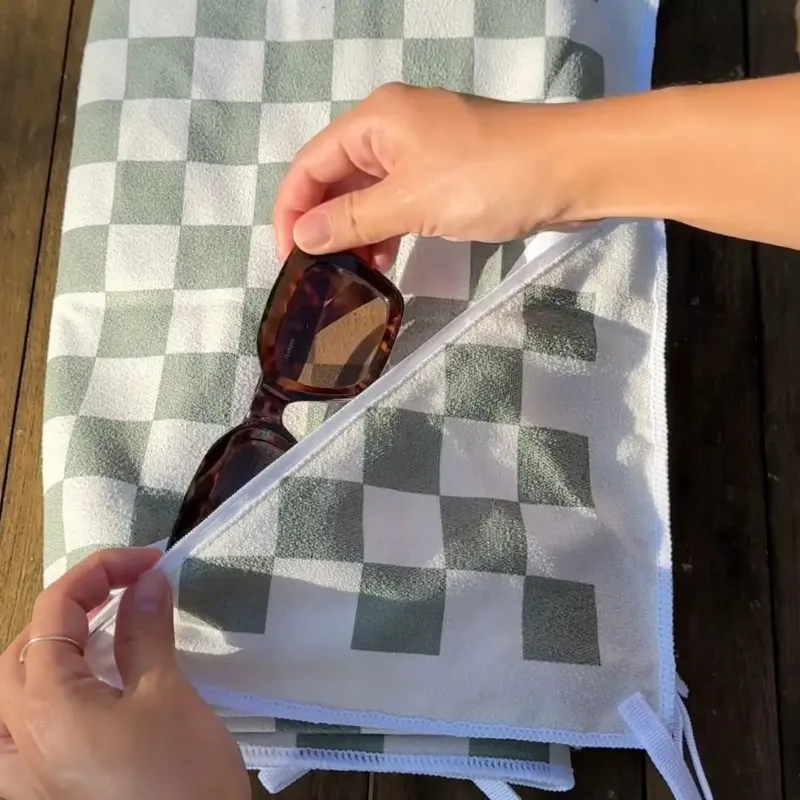
- Aussie sand-free microfibre beach towel (160 × 80 cm), packs to roughly the size of a water bottle, around 900 g
- Gold coast beach (170 × 85 cm), slightly larger roll, about 1,100 g
- Pack a towel (smaller travel size, 120 × 60 cm), packs even tighter, around 400 g, ideal for backpackers
If boot space or carry-on weight matters, microfibre is the clear winner. The aussie sand-free microfibre beach towel fits easily into a daypack or beach tote, and because it dries so fast you can rinse it in the shower and repack it the same evening. For longer trips where every kilogram counts, the pack a towel offers the smallest footprint without sacrificing much drying performance.
Absorbency and Feel: What to Expect
Microfibre absorbs roughly three times its weight in water, which sounds impressive until you compare it to plush cotton. Cotton feels softer and more luxurious against your skin, but it also stays wet longer. Microfibre has a smoother, almost suede-like texture that some people love and others find less cozy.
We prefer microfibre for active beach days: surf sessions, paddleboarding, snorkeling. You dry off quickly, the towel doesn’t stay soggy, and you’re ready to go again. For lazy sunbathing where you want to sprawl on something plush, cotton still has a place.
Both the aussie sand-free microfibre beach towel and the gold coast beach wick moisture efficiently. If you sit on a damp microfibre towel, your boardshorts or bikini will dry faster than on cotton because the fabric doesn’t trap water against your skin.
Durability and Care Instructions
Microfibre towels last for years if you treat them right. Wash in cold water with mild detergent, skip the fabric softener (it clogs the fibers and kills absorbency), and line-dry or tumble on low.
Avoid bleach and high heat, which can melt the synthetic fibers. If your towel starts to smell, soak it in a vinegar solution (one part white vinegar to four parts water) for 30 minutes, then wash as usual. Microfibre dries so fast that mildew is rarely an issue, but proper storage in a dry spot keeps it fresh between trips.
Which Towel Should You Choose?
Pick the aussie sand-free microfibre beach towel if you want the fastest drying time, lightest pack weight, and maximum sand resistance. It’s the most versatile option for travelers, surfers, and anyone who visits the beach multiple times a week.
Choose the gold coast beach if you prefer a slightly larger surface area and don’t mind an extra 200 grams in your bag. It dries almost as fast and handles sand just as well.
Go for the sand proof towel or pack a towel if you need an ultra-compact option for hiking, camping, or festivals where space is at a premium.
For the best deal on any of these towels, grab the Nomadique Co discount code before you order.
Questions
How long does the aussie sand-free microfibre beach towel take to dry completely?
In warm, breezy conditions it reaches bone-dry in 45 to 75 minutes after wringing. Overcast or humid weather may extend that to 90 minutes, which is still two to three times faster than cotton.
Can I use fabric softener when washing microfibre beach towels?
No, fabric softener coats the fibers and destroys their absorbency. Wash with mild detergent in cold water and line-dry or tumble on low heat for best results.
Does microfibre really keep sand off better than cotton?
Yes. Microfibre's tight weave prevents sand from burrowing into the fabric, so around 95% falls away with a quick shake. Cotton terry loops trap sand and require a full wash to remove it.
Which is lighter to pack, the aussie sand-free or the gold coast beach towel?
The aussie sand-free microfibre beach towel weighs around 900 grams and packs slightly smaller. The gold coast beach is about 1,100 grams and offers a bit more surface area.
Are microfibre towels as soft as traditional cotton beach towels?
No, microfibre has a smoother, suede-like texture rather than plush terry. It's less cozy but dries faster and performs better for active beach use like surfing or snorkeling.
Can I tumble-dry my sand-free microfibre towel?
Yes, but only on low heat. High temperatures can melt synthetic fibers and shorten the towel's lifespan. Line-drying is faster anyway since microfibre air-dries in under an hour.
Products in this guide
Shopping at Nomadique Co? See the discount code
10% OFF All Orders
More in this series
What Makes a Towel Sand-Free?2 Sep 20263 minPack a Towel Review: Does This Travel Towel Really Fit in Your Carry-On?2 Sep 20264 minHow to Wash and Care for Sand Proof Towels Without Losing Absorbency2 Sep 20264 minAre Microfibre Beach Towels Worth It for Travel and Beach Days?2 Sep 20264 minHow to Keep Sand Off Your Beach Towel: Do Sand-Free Towels Actually Work?2 Sep 20265 min