 A Bringnox guide
Do Zebra Blinds Block Enough Light for Bedrooms?
Zebra blinds provide flexible light filtering for bedrooms but fall short of complete blackout performance.
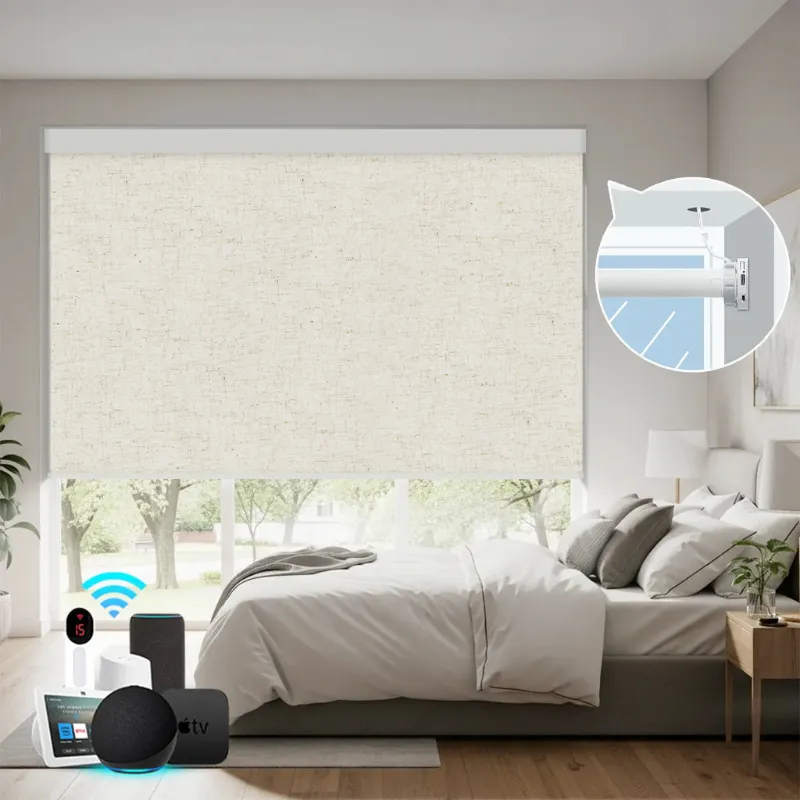
Zebra blinds offer adjustable light control that works well for most bedroom sleepers, but they don’t deliver complete darkness. The dual-layer fabric design lets you shift between sheer and opaque stripes to dim morning sun or soften afternoon glare, yet light seeps through the edges and between layers when privacy demands total blackout. For light-sensitive sleepers or shift workers who need pitch-black conditions, pairing zebra shades with blackout curtains or choosing dedicated electric blackout blinds will serve you better.
How Zebra Blinds Control Light
Zebra blinds stack two layers of fabric with alternating sheer and opaque horizontal bands. When you align the opaque stripes, the fabric blocks most direct sunlight and softens the room. Shift the bands so sheer sections overlap, and diffused daylight flows through. Align sheer over opaque, and you create a middle ground that preserves privacy while filtering bright rays.
This adjustable system gives you three positions in a single shade, which makes them popular for bedrooms where lighting needs change throughout the day. The opaque bands typically filter 70 to 85 percent of incoming light, depending on fabric weight and color. Darker fabrics in charcoal or espresso block more than ivory or beige, and thicker weaves outperform lightweight polyester.
Edge gaps remain the biggest limitation. Because the fabric rolls inside a cassette or bracket, a narrow gap runs along each side and bottom rail where light leaks through. In a bright bedroom with east or south exposure, you’ll notice a glowing outline at sunrise even when the blinds are fully closed.
Zebra Blinds vs Blackout Options for Sleep
If you occasionally sleep past dawn or prefer a gently dimmed bedroom, zebra shades deliver enough darkness. Shift workers, insomniacs, or anyone who wakes at the first hint of daylight will find them insufficient on their own.
| Feature | Zebra Blinds | Blackout Blinds |
|---|---|---|
| Light blocking | 70 to 85% in closed position | 95 to 100% |
| Adjustability | Three positions (open, filtered, closed) | Typically one (fully closed) |
| Edge light leakage | Moderate (side gaps) | Minimal with side channels |
| Daytime privacy | Excellent when aligned | Excellent |
For maximum darkness, electric blackout blinds or electric blackout curtains eliminate edge gaps with side channels or overlapping fabric panels. You can also layer zebra blinds under blackout curtains, using the blinds for daytime filtering and pulling the curtains for overnight sleep.
We recommend zebra blinds for bedrooms where you want flexible light control during waking hours and can tolerate soft morning glow. Check current pricing and our discount code to compare both styles.
Motorized Zebra Blinds for Convenience
Motorized zebra blinds add programmable schedules and remote control, which proves especially useful in bedrooms. Set the shades to close automatically at sunset and open to the filtered position at your wake-up time, so you never stumble across the room to adjust cords in the dark.
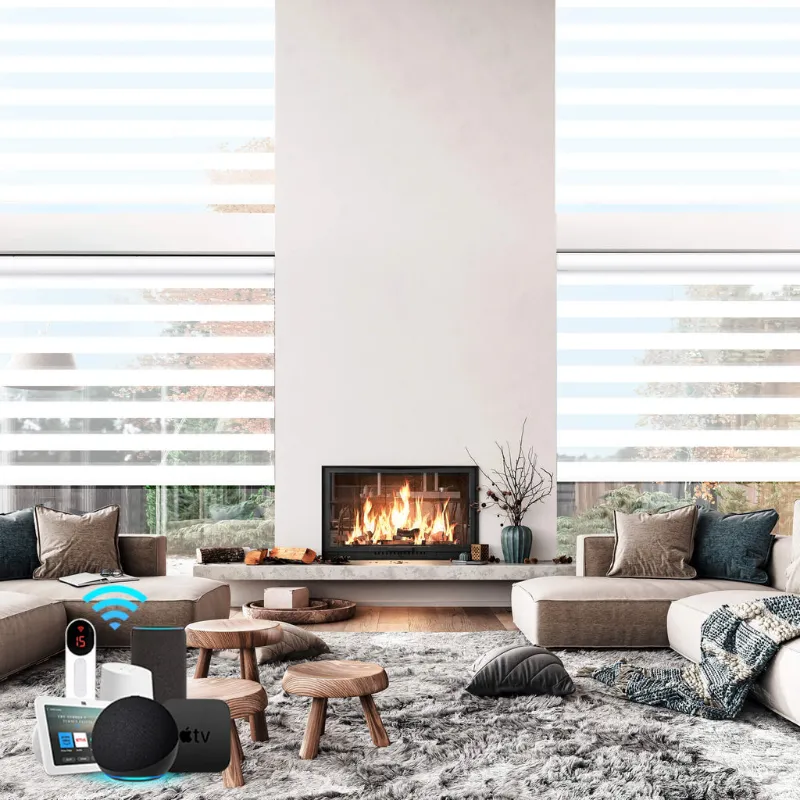
Motorized blinds pair with smart-home systems, letting you group bedroom windows and adjust them by voice or phone app. Battery-powered models install without rewiring, while hardwired versions integrate into whole-home automation. Motorized options cost more upfront, but the convenience pays off if you have multiple bedroom windows or high, hard-to-reach placements.
If you’re comparing motorized styles, motorized shades and motorized roman shades offer similar automation with different fabric aesthetics. Zebra blinds stand out for their dual-layer adjustability, which gives you more granular light control than a simple up-and-down roller.
Choosing Fabric and Color for Better Darkness
Fabric weight and color directly affect how much light zebra blinds block. Heavier polyester blends with tighter weaves reduce transparency in the opaque bands, while sheer sections remain translucent by design. Darker colors absorb more light than pale tones, so charcoal, navy, or chocolate brown will dim your bedroom more effectively than white or cream.
Some manufacturers offer zebra blinds blackout versions with a foam or vinyl backing laminated to the opaque stripes. These hybrids push light blocking closer to 90 percent but add weight and reduce the soft, layered look that makes zebra shades popular. Standard models balance aesthetics and function for everyday bedroom use.
When ordering, request fabric samples if possible. Hold each sample up to a window in full sun to gauge real-world opacity. Online photos rarely show how much light penetrates the material, and the difference between 75 percent and 85 percent blocking becomes obvious during early morning hours.
Installation Tips to Minimize Light Gaps
Proper measurement and mounting reduce edge leakage. Measure your window recess width at the top, middle, and bottom, then use the widest dimension and add a half inch for inside-mount shades. For outside mount, extend two to three inches beyond the frame on each side so the fabric overlaps the wall and blocks peripheral light.
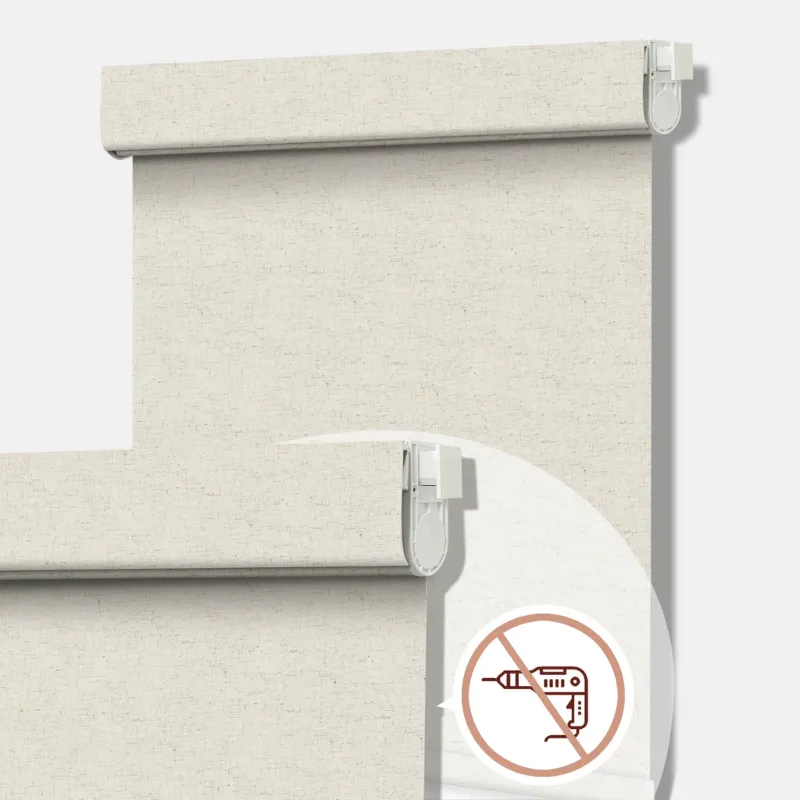
Inside-mount zebra blinds sit flush with the window frame, which looks clean but leaves larger side gaps. Outside mount covers the frame and reduces leakage, though you’ll still see a slim glow line where the fabric meets the wall. If total darkness matters, consider pairing outside-mount zebra shades with blackout side tracks or installing no drill blinds that press directly against the glass to minimize gaps.
Valances and cornices hide the top cassette and block overhead light spill. For bedrooms with transom windows or arched openings above the main window, a fabric-wrapped cornice board extends coverage without adding a second set of blinds.
Who Should Choose Zebra Blinds for Bedrooms
Zebra blinds suit bedrooms where you want style, privacy, and moderate light control without full blackout. They work best for:
- Light sleepers who prefer dimmed rather than pitch-black rooms and enjoy waking to soft filtered light.
- Guest bedrooms and multi-use spaces where daytime flexibility matters more than total darkness.
- Bedrooms with layered window treatments, pairing zebra shades with drapes or curtains you can close for deeper darkness.
- Homes in moderate climates where extreme sun glare isn’t a daily challenge.
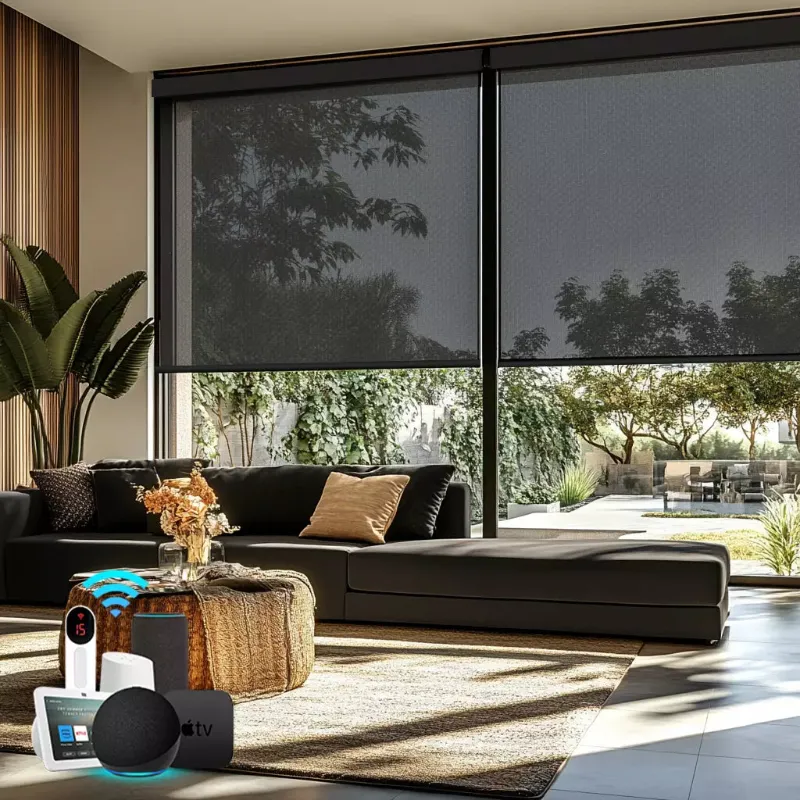
If your bedroom faces a bright streetlight, has floor-to-ceiling east-facing glass, or you work night shifts and sleep during the day, we recommend starting with dedicated blackout solutions. You can always add light filtering roller shades or top down bottom up window shades for rooms that need precision control without sacrificing aesthetics. Grab our Bringnox discount code to save on whichever style fits your sleep routine.
Zebra blinds balance form and function for everyday bedroom use, as long as you understand their light-blocking limits and plan accordingly.
Questions
Can zebra blinds achieve total blackout in a bedroom?
No, standard zebra blinds block 70 to 85 percent of light in the closed position, leaving edge gaps and some transparency. For complete darkness, pair them with blackout curtains or choose dedicated blackout blinds with side channels.
Do motorized zebra blinds block more light than manual versions?
Motorization doesn't change light-blocking performance; the fabric and installation determine opacity. Motorized versions offer convenience and scheduling but use the same dual-layer material as corded models.
What color zebra blinds block the most light?
Darker colors like charcoal, navy, and espresso absorb more light than white or beige. Heavier fabric weaves also improve opacity, so request samples and test them in direct sunlight before ordering.
How do I reduce light gaps around zebra blinds?
Mount the blinds outside the window frame so fabric overlaps the wall by two to three inches on each side. Add a valance or cornice at the top, and consider blackout side tracks for bedrooms that need maximum darkness.
Are zebra blinds better than roller shades for bedrooms?
Zebra blinds offer more adjustability with three light positions, while roller shades provide simpler up-and-down control. For bedrooms, zebra blinds give flexible daytime filtering, but blackout roller shades win if total darkness is the priority.
Can I install zebra blinds without drilling holes?
Some zebra blind models use tension rods or adhesive brackets for no-drill installation, though these work best on lightweight fabrics and smaller windows. For larger bedroom windows, traditional brackets provide more secure mounting.
Products in this guide
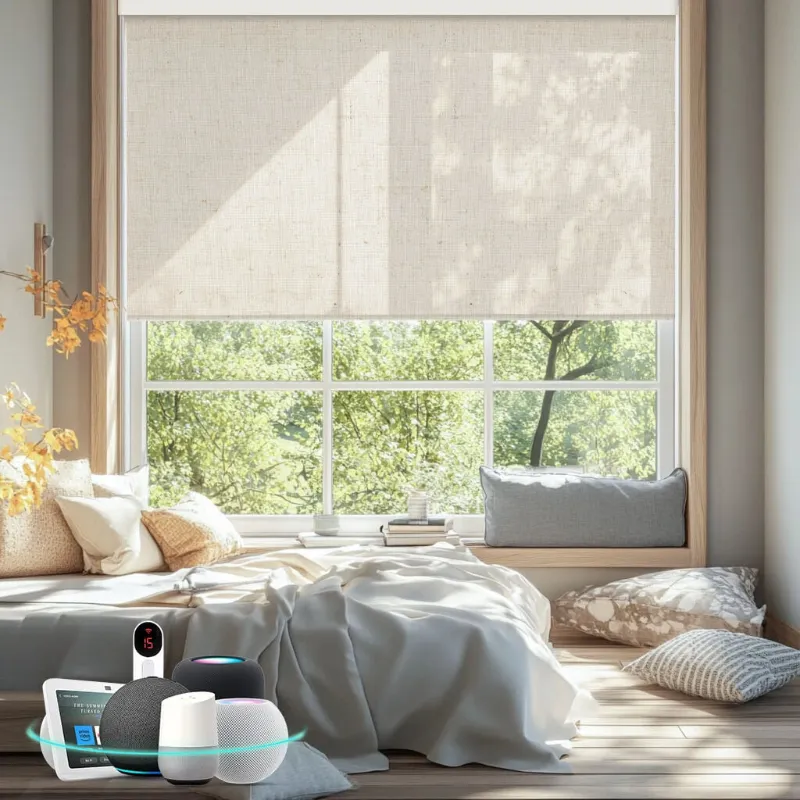
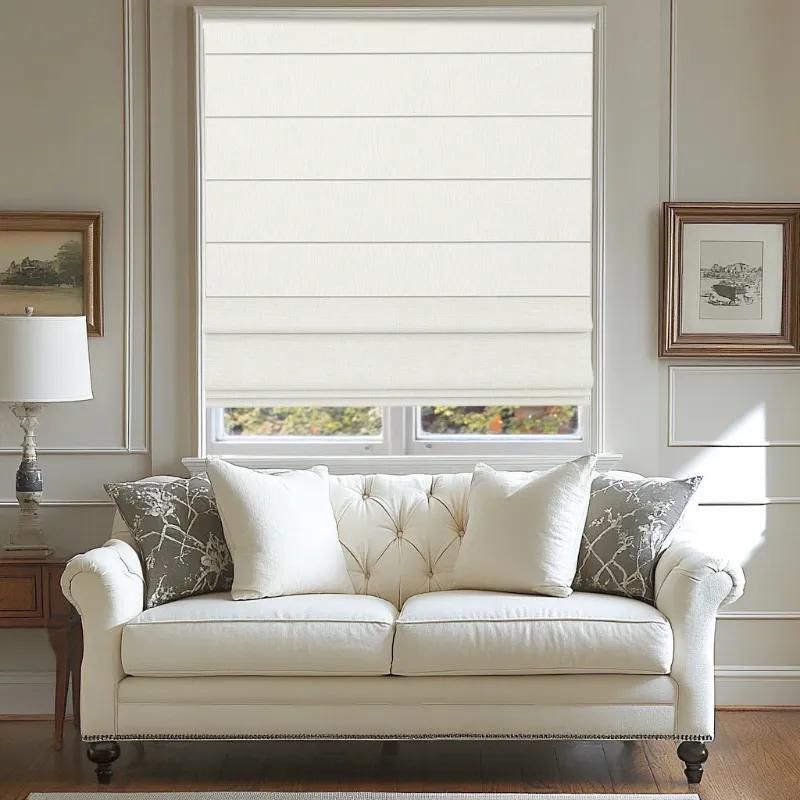 Shopping at Bringnox? See the discount code
10% OFF Sitewide
Shopping at Bringnox? See the discount code
10% OFF Sitewide
More in this series
Troubleshooting Common Issues with Electric Blackout Blinds and Curtains25 Aug 20266 min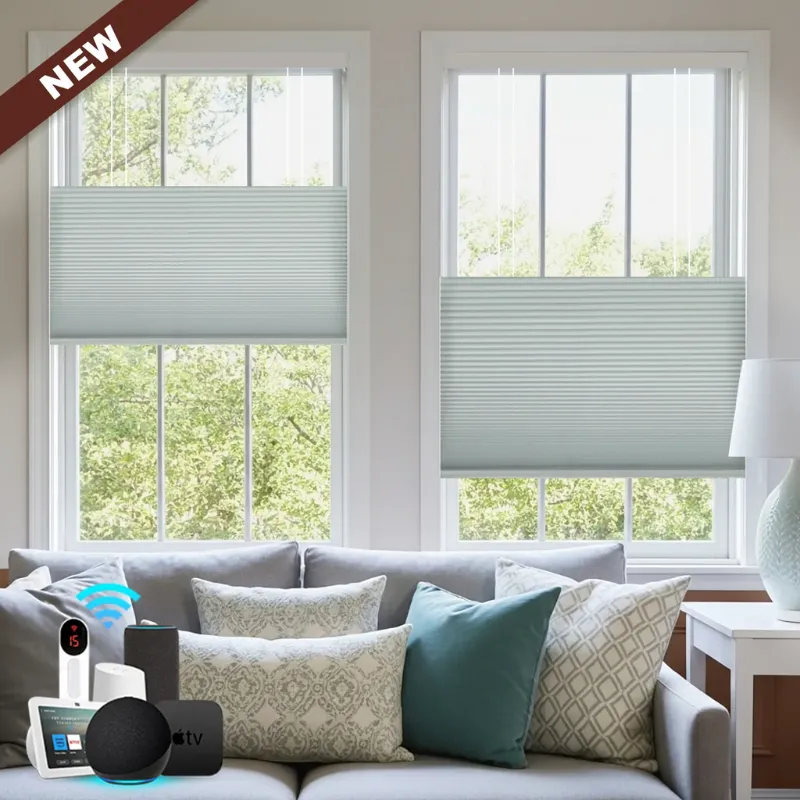 Top Down Bottom Up Window Shades: Complete Buyer’s Guide for Privacy and Light Control25 Aug 20265 min
 How Long Do Wood Blinds Last in High Humidity Rooms?25 Aug 20264 minMotorized Blinds vs Motorized Shades: Which Smart Window Covering Is Right for You?25 Aug 20265 minHow to Install No Drill Blinds Without Damaging Your Window Frame25 Aug 20264 min