 A Vegbed guide
Do Vegbed Growing Mats Need Soil or Special Nutrients?
Microgreen mats are designed to replace soil completely, requiring only water and optional liquid nutrients for healthy, fast growth.
Do Microgreen Mats Need Soil?
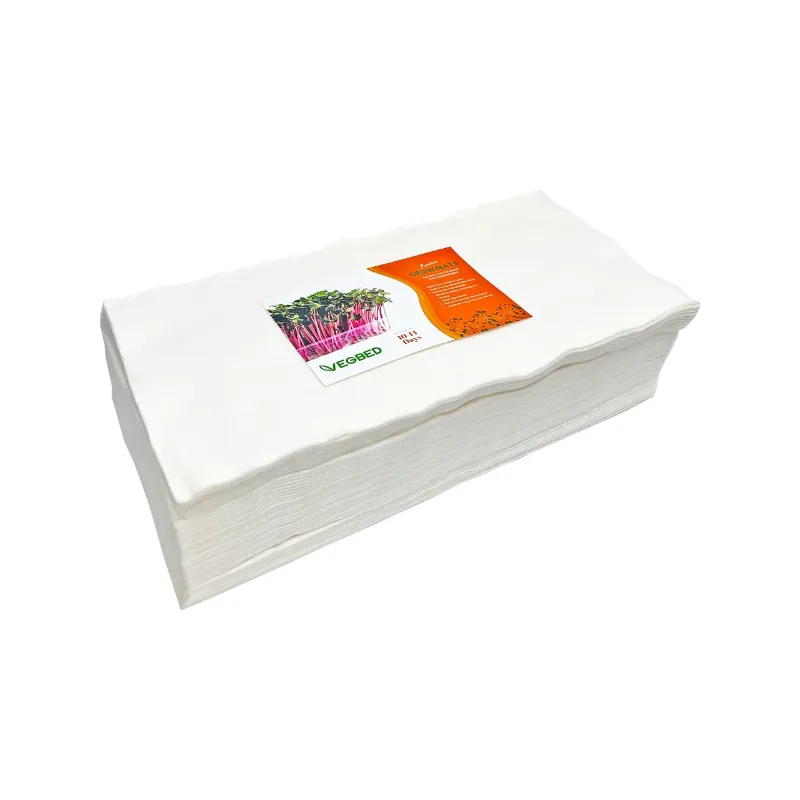
No. Microgreen mats are designed to replace soil completely, giving you a cleaner, faster way to grow greens indoors without any dirt. These fiber-based grow substrates hold moisture and anchor roots while you supply water and, optionally, light liquid nutrients. Vegbed’s microgreen mats use natural hemp and jute fibers that biodegrade after harvest, so there’s no soil to clean up or store.
If you’re deciding between soil and mats, understanding what each system requires will help you pick the right setup for your space and schedule.
What Microgreen Mats Are Made From
Most commercial microgreen grow mats rely on natural plant fibers that wick water and support root growth. Hemp, jute, coconut coir, and wood pulp are the most common base materials because they hold 4 to 8 times their dry weight in water and biodegrade cleanly. Biodegradable fiber mats break down in compost after a single growing cycle, unlike foam or plastic alternatives.
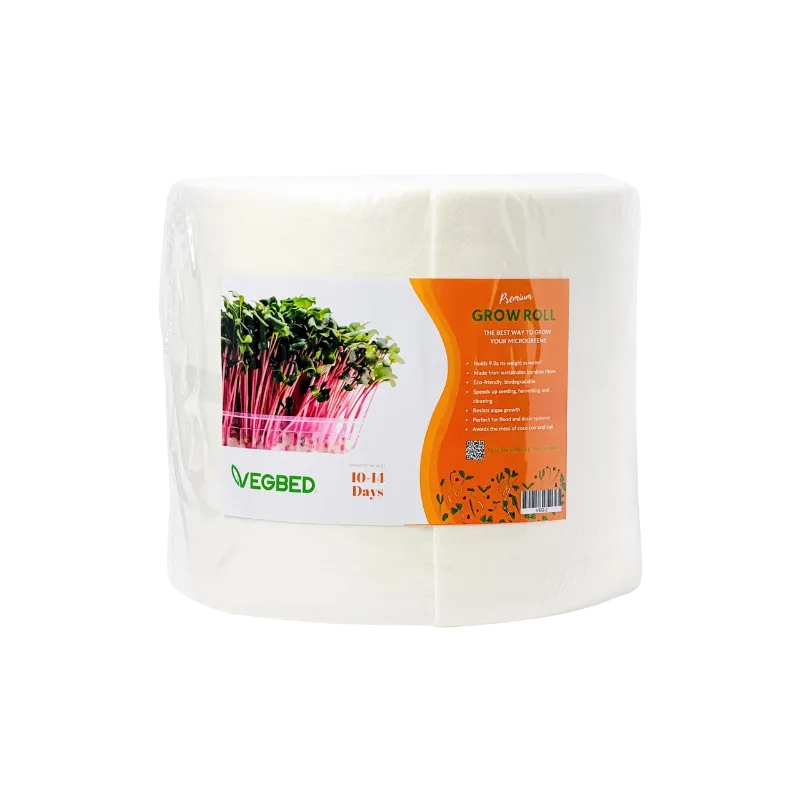
Vegbed’s Microgreens Grow Roll uses a layered hemp and jute blend with a fine mesh backing that prevents root matting while allowing full drainage. The material arrives pre-cut or on a roll you trim to fit your trays, and it hydrates in under a minute when you pour room-temperature water over it.
Synthetic options like silicone mesh for microgreens exist but serve as reusable trellises rather than growth media. They require pairing with a separate substrate or a hydroponic nutrient film, so they add complexity unless you’re running a commercial rack system.
Do You Need to Add Nutrients?
It depends on the seed variety and how long you plan to grow. Seeds carry enough stored energy to produce the first true leaves without any external fertilizer. For fast-harvest greens like arugula, radish, and mustard that you cut at 7 to 10 days, plain water is usually sufficient. We grew three full trays of radish microgreens on grow roll using only tap water, and every seedling reached full cotyledon size with vibrant color.
Slower varieties like sunflower, pea shoots, and basil microgreens benefit from a dilute liquid nutrient solution after day four because they stay in the mat longer and exhaust the seed reserves. A balanced hydroponic fertilizer at one-quarter label strength (roughly 200 to 300 ppm) keeps leaves dark green and prevents yellowing near harvest. Natural-fiber growing media itself contains no macro nutrients, so anything the plant uses beyond the seed must come from your water or fertilizer.
If you want the simplest workflow, stick to fast greens and skip nutrients entirely. For variety or longer cycles, keep a bottle of liquid kelp or hydroponic blend on hand and check current pricing alongside your mat order.
How to Use Microgreen Mats Without Soil
Using a fiber mat is faster than filling trays with soil. Here’s the process we follow:
- Trim the mat to fit your tray with about a quarter-inch clearance on each side for drainage.
- Soak thoroughly by pouring water over the mat until it swells and feels uniformly damp. Pour off any standing water after two minutes.
- Sprinkle seeds evenly across the surface at the density recommended on the packet (usually 1 to 2 tablespoons per 10×20 tray).
- Cover and mist with a humidity dome or second tray for 2 to 3 days, misting once daily to keep the mat moist but not pooling.
- Uncover and water from below by pouring a half-cup of water into the tray edge once or twice a day, letting the mat wick it up.
- Harvest and compost by cutting greens at the stem, then lifting the entire mat and roots into your compost bin.
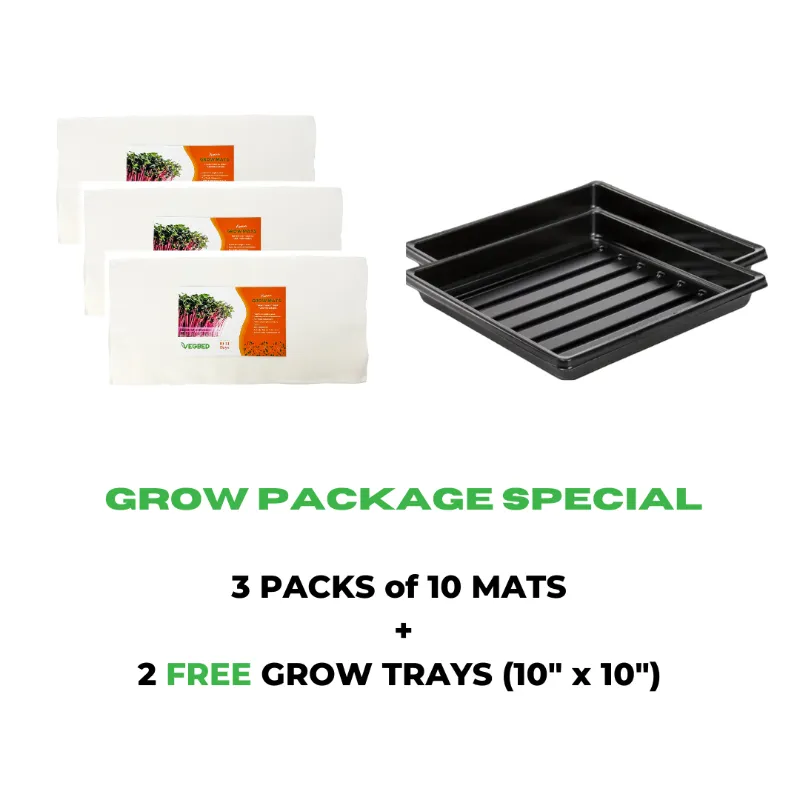
The Microgreen Grow Mat Bundle includes pre-cut sheets sized for standard nursery trays, which saves the trimming step and gets you planting in under five minutes. No soil mixing, no perlite dust, and no heavy bags to haul.
Comparing Mats to Soil and DIY Options
| Method | Prep Time | Mess Level | Cost per Tray |
|---|---|---|---|
| Fiber mat | 2 minutes | Minimal | ~$0.50 to 1.00 |
| Potting soil | 5 to 8 minutes | High (dust, spills) | ~$0.30 to 0.60 |
| DIY grow mat | 10+ minutes | Moderate | ~$0.20 to 0.50 |
Soil delivers excellent results and costs less per tray, but it requires sifting, mixing with perlite, and disposing of wet, heavy substrate after every harvest. Mats versus soil comes down to whether you value convenience or the lowest per-unit cost.
A diy microgreen grow mat approach using burlap, paper towels, or hemp fabric scraps works if you already have materials on hand. For a single trial tray it’s fine; for consistent weekly harvests, purpose-made mats save troubleshooting time.
Who Should Choose Soil-Free Microgreen Mats
Fiber mats suit anyone growing indoors who wants to avoid soil storage, counter mess, or heavy lifting. They’re ideal if you:
- Live in an apartment or have limited storage for bulky soil bags
- Grow on kitchen counters, shelving, or near living spaces where dirt tracked around is a nuisance
- Want faster tray turnaround with minimal cleanup between plantings
- Prefer composting your spent substrate rather than finding disposal for soil
If you’re scaling up or testing dozens of varieties each month, the speed and consistency of mats quickly outweigh the slightly higher material cost. Grab the 10% discount code to bring the per-tray price closer to soil while keeping the convenience.
Soil still makes sense for slower, deeper-rooted crops or if you already maintain a worm bin or garden bed where you can recycle spent potting mix. For pure microgreens cut at the cotyledon or first-leaf stage, mats handle the job with less effort and no sacrifice in flavor or nutrition.
Storing and Reusing Growing Mats
Most natural-fiber mats are single-use by design because roots penetrate and bind the fibers during growth. After harvest, the mat is structurally intact enough to lift out in one piece, but the root network and residual moisture make it prone to mold if you try to dry and reuse it. Composting is the simplest end-of-life route since hemp and jute break down fully in 60 to 90 days.
Unused mats stay fresh for months when stored in a cool, dry space away from direct sunlight. We keep our rolls in a sealed bin in the garage, and they’ve shown no degradation or mold growth over six months. If you buy a multi-pack or the Microgreen Grow Mat Bundle, label the storage container with the purchase date so you use older stock first.
Silicone mesh inserts are the exception. They’re reusable across dozens of cycles if you rinse, sanitize with dilute hydrogen peroxide, and dry completely between plantings. Pairing them with a thin coir or paper layer gives you partial reusability, though you’ll still replace the disposable substrate each time.
Getting Started With Vegbed Mats
If you’ve been growing in soil and want to test the mat workflow, start with a single grow roll and one fast variety like radish or arugula. You’ll see full germination within 48 hours and harvest-ready greens in a week, which gives you a clear comparison to your soil trays without a large upfront investment.
For regular production, the bundle packs offer better per-sheet pricing and eliminate the need to measure and cut each time. Check the latest bundle pricing and discount to see current offers, then stock up on whatever quantity matches your monthly tray count. No soil, no guesswork, and no cleanup beyond rinsing your trays.
Questions
Can you reuse microgreen mats after harvest?
No, natural-fiber microgreen mats are designed for single use because roots bind the fibers during growth. After harvest, compost the mat and roots together since hemp and jute break down fully in 60 to 90 days.
Do I need fertilizer when growing on fiber mats?
Fast-growing varieties like radish and arugula harvested in 7 to 10 days need only water because the seed provides enough energy. Slower greens like sunflower and pea shoots benefit from dilute liquid nutrients after day four to prevent yellowing.
How do you water microgreens on a grow mat?
Bottom-water by pouring a small amount into the tray edge once or twice daily, letting the mat wick moisture up to the roots. Avoid top-watering after germination to reduce mold risk and keep leaves dry.
Are microgreen mats better than soil for indoors?
Mats eliminate soil mess, speed up tray prep, and compost cleanly, making them ideal for apartment or kitchen growing. Soil costs less per tray but requires mixing, disposal, and more cleanup.
What are Vegbed microgreen mats made of?
Vegbed mats use a blend of hemp and jute fibers with a fine mesh backing that supports roots and allows drainage. The material is fully biodegradable and holds several times its weight in water.
Can I make my own DIY microgreen grow mat?
Yes, burlap, paper towels, or hemp fabric work for testing, but they lack the uniform thickness and drainage of commercial mats. This can lead to uneven germination and mold in dense areas, especially across multiple trays.
Products in this guide
Shopping at Vegbed? See the discount code
10% OFF All Orders
More in this series
What’s the Difference Between Vegbed’s Grow Roll and Traditional Growing Mats?3 Sep 20264 minTroubleshooting Common Issues With Microgreen Grow Rolls3 Sep 20265 minHow Long Do Microgreen Growing Mats Last Before Replacement?3 Sep 20265 minVegbed Microgreen Grow Mat Bundle Review: Is the Bundle Worth It?3 Sep 20264 minHow to Choose Between Microgreen Mats and Grow Rolls for Your Setup3 Sep 20264 min