 A Power Queen guide
Trolling Motor LiFePO4 Battery Size: How to Choose the Right One
Choose a trolling motor LiFePO4 battery by matching the motor's voltage, estimating amp hours from its draw, and checking weight and battery box size.
The right trolling motor LiFePO4 battery size comes from three checks: match your motor’s voltage exactly, pick enough amp hours for the time you spend on the water, and make sure the battery fits your boat’s weight and battery box. Power Queen lists the voltage, capacity, weight and size of each battery on its product pages, so you can compare them against your motor’s manual. You can find the current code on our Power Queen discount code page.
Start With Your Motor’s Voltage
Voltage is not a choice you can trade off. The motor’s label or manual states whether it runs on 12V, 24V or 36V, and the battery bank must match it.
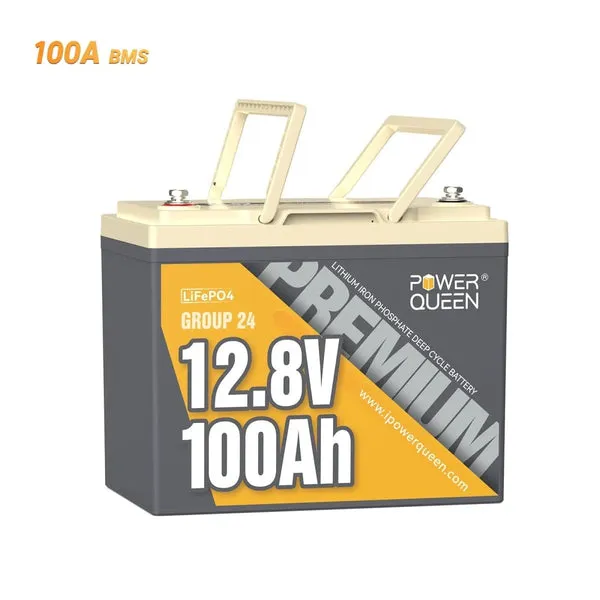
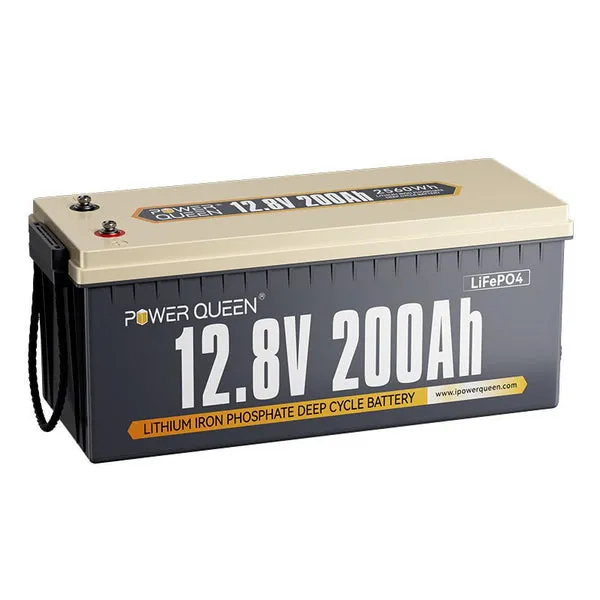
- 12V motors run on a single 12V battery, such as the Power Queen 12V 100Ah Group 24 battery or the 12V 200Ah LiFePO4 battery.
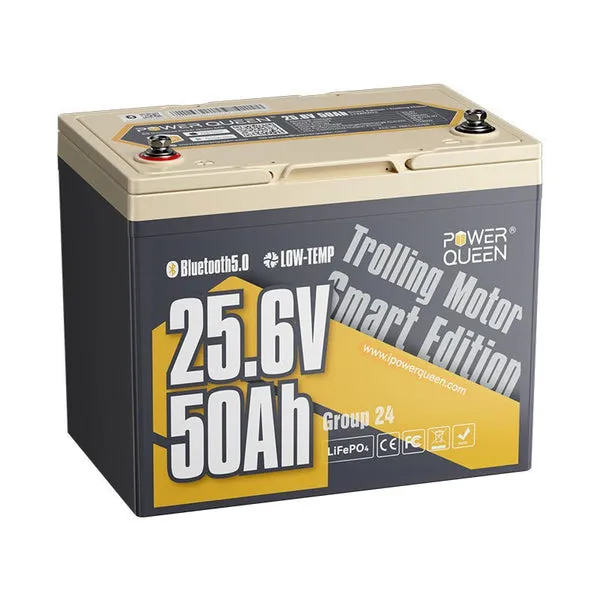
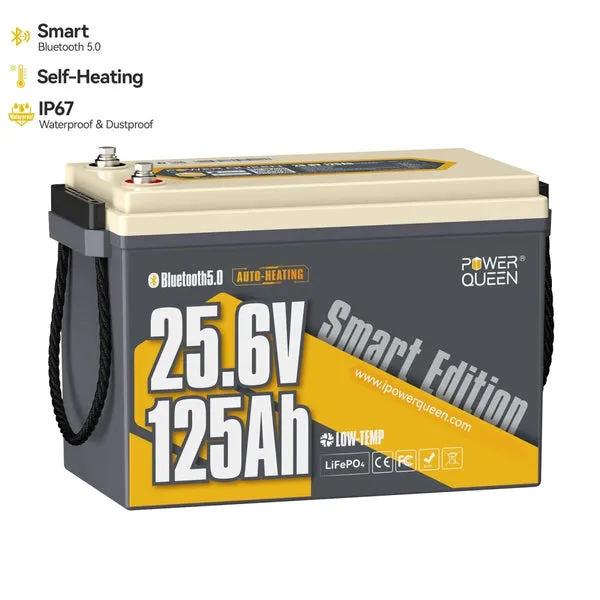
- 24V motors run on two identical 12V batteries wired in series, or on one 24V battery. Power Queen lists its 24V 50Ah smart lithium battery for 24V trolling motors up to 100 lbs of thrust, and its 24V 125Ah trolling motor battery for 70 to 100 lb thrust motors.
- 36V motors need three identical 12V batteries in series, or a dedicated 36V pack.
Never connect a higher voltage than the motor is rated for. If you are unsure, check the motor maker’s manual before you buy.
Work Out Amp Hours From Your Motor’s Draw
Amp hours (Ah) tell you how long a battery can supply current. The rough sum is simple: divide the battery’s amp hours by the average current your motor draws. Your motor’s manual lists its maximum draw; your real average depends on how fast you run it, wind, current and boat weight.
For example, if a 12V motor averaged 20 amps, a 100Ah battery would last about 5 hours (100 divided by 20), and a 200Ah battery about 10 hours. At an average of 40 amps, the same batteries would last about 2.5 and 5 hours. Real results will be lower if you run at high speed, hold position against wind, or fish in cold water.
| Battery capacity | At 20A average | At 40A average |
|---|---|---|
| 50Ah | about 2.5 hours | about 1.25 hours |
| 100Ah | about 5 hours | about 2.5 hours |
| 200Ah | about 10 hours | about 5 hours |
This is arithmetic, not a runtime promise. Power Queen rates its 12V 100Ah Group 24 at 4000 cycles at 100% depth of discharge, and says it delivers its full 1280Wh, while it says a lead-acid battery releases only about half of its energy. That is why a lithium battery of the same rating can be run further down.
Check Weight, Size and Your Battery Box
Measure your battery compartment before choosing a capacity, because more stored energy needs a bigger, heavier case. Figures from Power Queen’s spec tables:
- 12V 100Ah Group 24: about 22.16 lbs, 10.24 x 6.61 x 8.27 inches, IP65. Power Queen says it fits Group 24, 27 and 31 battery boxes.
- 12V 200Ah: about 43.98 lbs, 20.94 x 8.15 x 8.5 inches, IP65, sized for a BCI Group 6D battery box.
- 24V 50Ah smart battery: about 21.2 lbs, the same 10.24 x 6.61 x 8.27 inch footprint as the Group 24, IP65, with Bluetooth monitoring.
- 24V 125Ah trolling motor battery: 3200Wh, IP67, Bluetooth and self-heating, according to the product page.
On a kayak or small boat, weight affects balance as much as runtime, so a smaller battery you can carry and place well may serve you better than the largest one that fits.
Series, Parallel and Matching Batteries
When one battery is not enough, you can wire several together:
- Series (positive of one to negative of the next) adds voltage. Two 12V 100Ah batteries make a 24V 100Ah bank.
- Parallel (positive to positive, negative to negative) adds capacity. Two 12V 100Ah batteries make a 12V 200Ah bank.
Power Queen lists a maximum expansion of 4P4S for its 12V 100Ah Group 24, which means up to four in series and four in parallel. Use identical batteries of the same model, capacity and age in one bank, and check the limits on each product page before you wire anything.
Charging and Cold-Weather Features
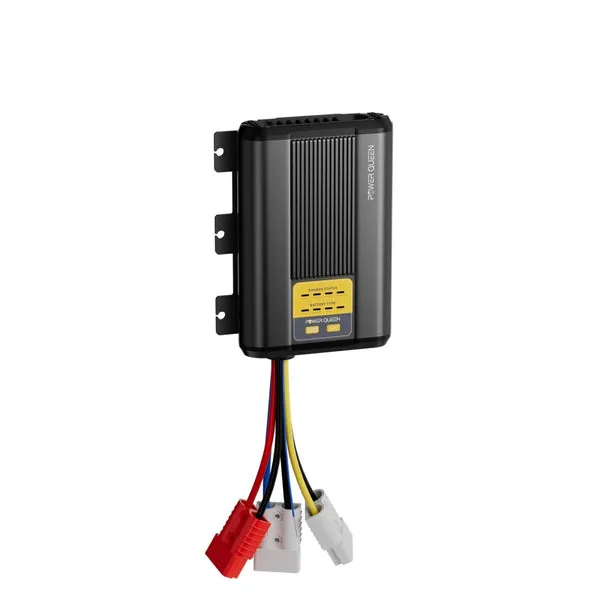
Use a charger made for LiFePO4. Power Queen lists a charge voltage of 14.4V plus or minus 0.2V and a recommended charge current of 20A for the 12V 100Ah, and 28.8V plus or minus 0.4V with 10A recommended for the 24V 50Ah. If you charge from a tow vehicle or solar on the way to the water, Power Queen’s 12V 40A DC to DC charger charges a service battery from the vehicle and from solar panels, and the store says it works with lithium, AGM and gel batteries.
Cold matters if you fish early or late in the season. The 12V 100Ah and 200Ah spec tables list a charge temperature range of 32 to 122 degrees F and no low-temperature protection, so do not charge them below freezing. The 24V 50Ah stops charging below 32 degrees F and resumes above 41 degrees F, and the 24V 125Ah has self-heating. Power Queen also states that its 12V 200Ah is not meant for starting engines or other high-power uses, so keep it on deep-cycle duty.
Questions
What size LiFePO4 battery do I need for a 12V trolling motor?
Divide the battery capacity by your motor's average amp draw to estimate hours. If your motor averaged 20 amps, a 100Ah battery would last about 5 hours and a 200Ah about 10 hours. Check the motor manual for its draw and size up if you run fast or hold position often.
Can I use a 24V battery on a 12V trolling motor?
No. The battery bank must match the motor's rated voltage. A higher voltage can damage the motor.
Which Power Queen batteries are made for 24V trolling motors?
Power Queen lists its 24V 50Ah smart battery for 24V trolling motors up to 100 lbs of thrust, and its 24V 125Ah trolling motor battery for 70 to 100 lb thrust motors. You can also build a 24V bank from two identical 12V batteries in series.
How much does a Power Queen 12V 100Ah Group 24 battery weigh?
Power Queen lists it at about 22.16 lbs, with a size of 10.24 x 6.61 x 8.27 inches.
Can I charge a Power Queen 12V battery in freezing weather?
The 12V 100Ah and 200Ah spec tables list a charge range of 32 to 122 degrees F and no low-temperature protection, so do not charge them below freezing. The 24V 50Ah has low-temperature charge protection, and the 24V 125Ah has self-heating.
Products in this guide
 Shopping at Power Queen? See the discount code
6% OFF All Orders
More in this series
Power Queen 12V LiFePO4 Battery Care: Charging, Storage and Mistakes to Avoid16 Aug 20263 min Can You Use a DC Charger with Power Queen 48V Batteries? Compatibility Guide16 Aug 20265 minHow Many Charge Cycles Do Power Queen LiFePO4 Batteries Have?16 Aug 20263 minPower Queen 12V vs 24V Lithium Battery: Which Voltage Do You Actually Need?16 Aug 20264 min